



 Carry Awards
 Insights
 Liking
 Projects
 Interviews
 Carry Candy
 Community and Marketplace
Industry
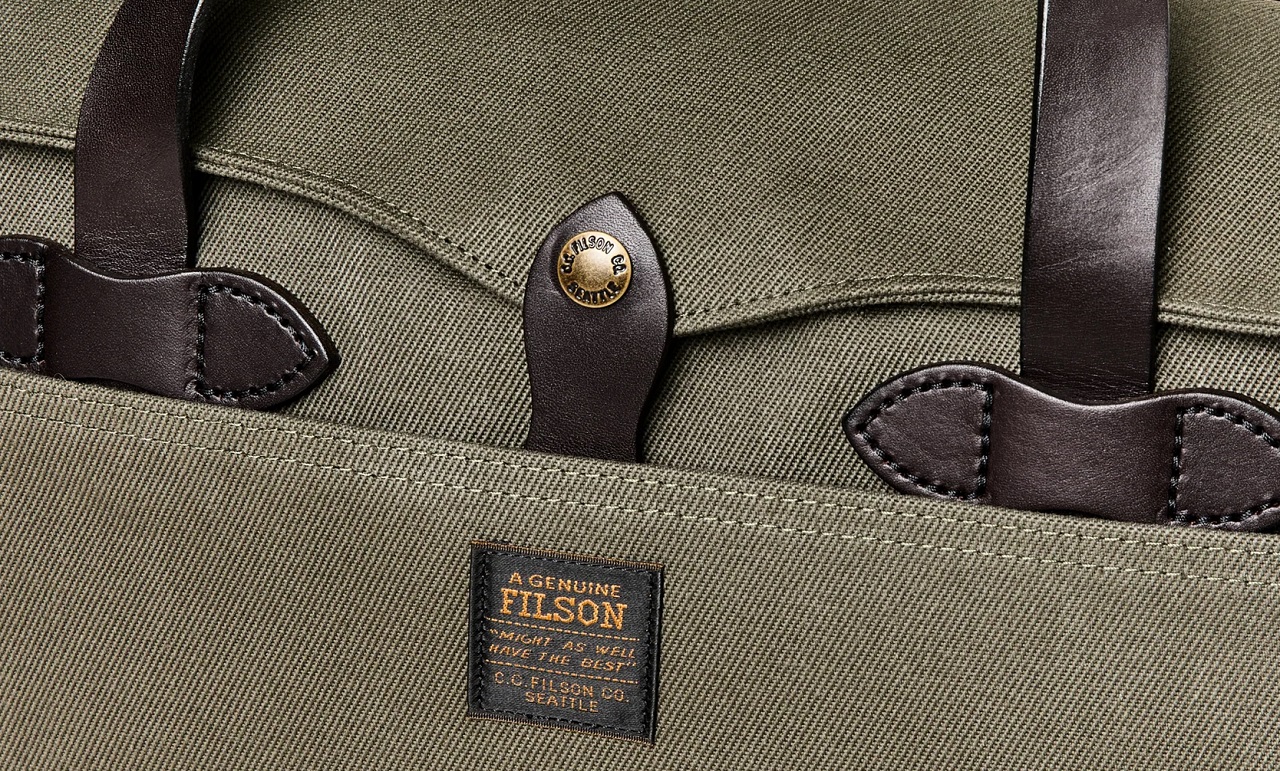
You’ve probably never stood in a gear shop, run your thumb across a bag panel, and thought: “Huh. Someone invented this.” But they did. Every diagonal rib on your twill daypack traces back to a specific moment in human history when someone figured out a better way to cross threads over threads.
Weaves are the unsung heroes of the carry world. We obsess over denier counts, DWR coatings, and YKK zippers. But the weave — the fundamental architecture of the fabric itself — quietly does more work than almost anything else on your bag. It helps determine how your pack handles abrasion, how it drapes, and yes, how it looks slung over your shoulder at the airport.
So let’s slow down and actually meet these weaves, one at a time.
Plain Weave: The One That Started Everything
Born: Somewhere around 6,000 BCE. Probably in the Fertile Crescent. Nobody sent a press release.
Somewhere in what is now Turkey or Iraq, early civilizations were already using woven reeds and grasses to construct baskets, mats, and vessels — functional objects that preceded even the earliest cloth. The leap from weaving plant fibers into containers to weaving spun threads into fabric was less a single invention than a slow, inevitable logic: if you can cross one material over another to make something rigid, you can cross finer materials to make something flexible. Plain weave was the answer that emerged from that process, and it was so fundamentally correct that nobody has ever really improved on its core idea.
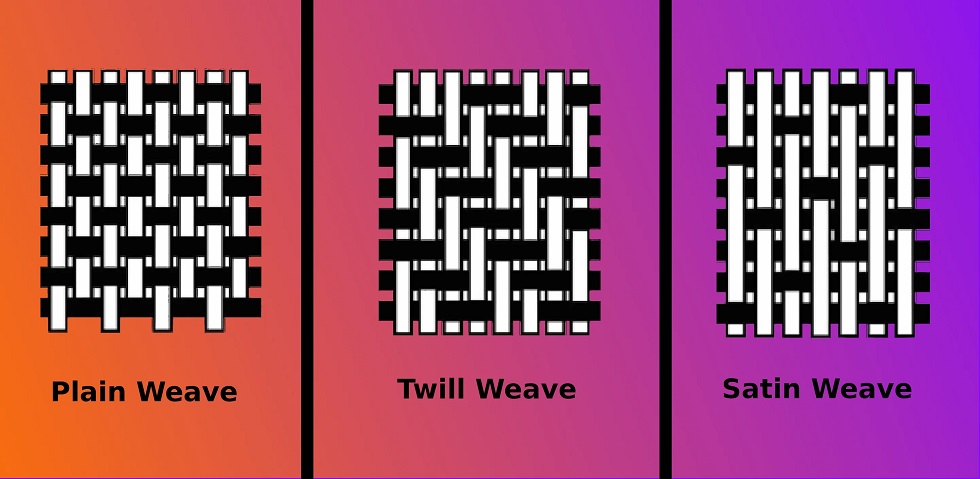
Plain weave is the OG. The one-up-one-down. The checkerboard. Warp threads run vertically, weft threads run horizontally, and they alternate over-under-over-under in the most democratic, egalitarian pattern imaginable. Every thread gets equal time on top. No thread is more important than another. It’s basically the Switzerland of weaves.
The name “tabby weave” — one of its many aliases — traces back through medieval Latin and French to a district of Baghdad called Attabiya, where a particularly fine silk-and-cotton version was manufactured during the Islamic Golden Age. The word eventually gave us tabby, as in the cat. Yes, your tabby cat is named after a weave. You’re welcome.
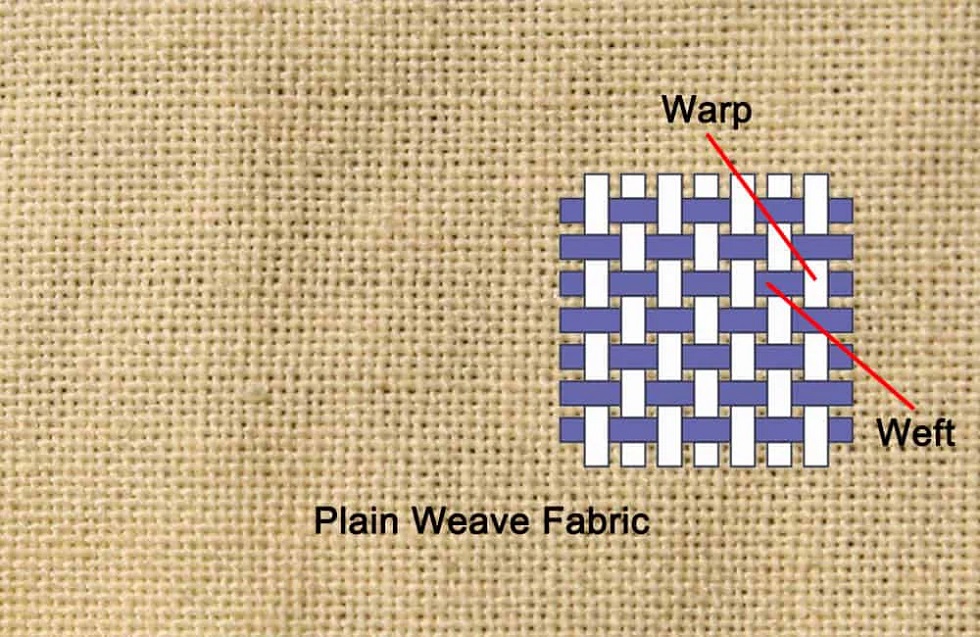
Why it’s great for bags: Plain weave is strong, stable, and cheap to produce. The tight interlacing means threads can’t slide around, which gives the fabric excellent dimensional stability — it holds its shape under load. Canvas, the workhorse material of everything from army ducks to waxed-cotton heritage bags, is a plain weave. Muslin, taffeta, organza — all plain weave. It’s the foundation upon which much of human civilization was literally built.
The catch: All those interlacings that make it strong also make it stiff. Plain weave fabrics don’t drape particularly well, and they’re more prone to wrinkling than their diagonal-ribbed cousins. They also show abrasion more readily on the surface — that flat, smooth face catches every scuff. For a bag that’s going to be dragged across airport floors and shoved under bus seats, plain weave alone can feel a little… exposed.
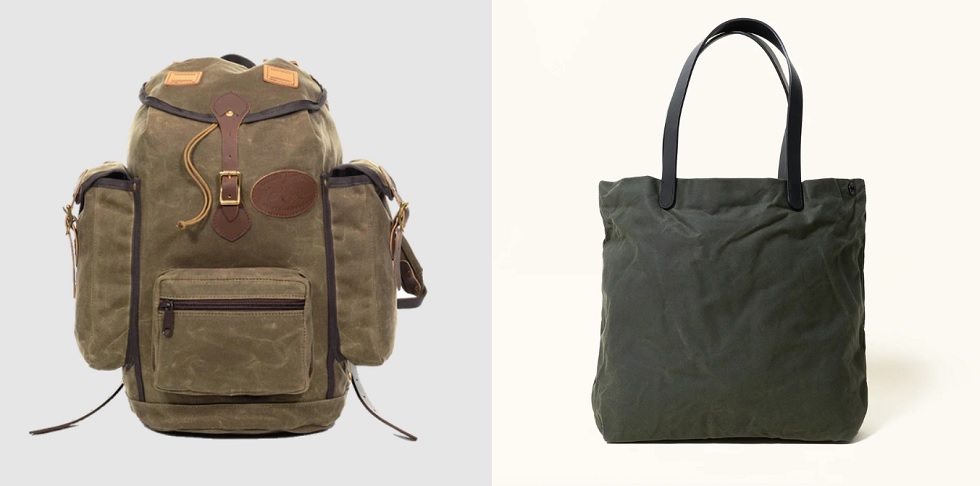
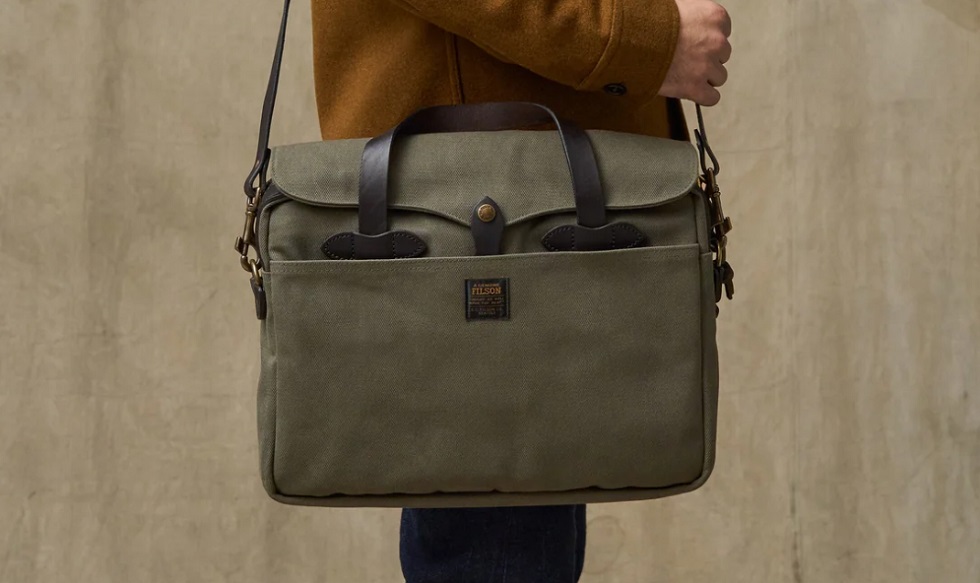
In the wild: Waxed canvas bags (think Filson, Frost River, Tanner Goods), cotton duck, many budget nylon bag fabrics.
Twill Weave: The Diagonal That Changed Everything
Born: Ancient. Possibly 3,000 BCE or earlier. Found in Bronze Age Europe, ancient India, and Han Dynasty China simultaneously.
It’s 1853, and a young man named Levi Strauss has just arrived in San Francisco with a bolt of canvas. He’s planning to make tents. The Gold Rush miners, it turns out, don’t need more tents — they need pants that won’t disintegrate. A tailor named Jacob Davis suggests a denim fabric from Nîmes, France — a sturdy 3/1 warp-faced twill that the French called “serge de Nîmes.” Levi doesn’t know it yet, but that diagonal rib is about to become the most recognizable fabric pattern on the planet.
Twill is the second of the three fundamental weave structures, and it’s the one that makes textile nerds genuinely emotional. Instead of the simple over-one-under-one of plain weave, twill threads pass over two or more warp threads before going under, with each row offset by one thread. The result is that unmistakable diagonal rib — the wale — running across the face of the fabric.
The fraction tells the story: a 2/2 twill means “two up, two down.” A 3/1 twill — the structure of denim — means three warp threads over, one under. The higher the float, the more pronounced the diagonal, the softer the hand, the better the drape.
Twill was being woven in Bronze Age Europe (archaeologists have found diamond twill fragments in Swiss lake dwellings dating to around 1000 BCE), in ancient India, and across Asia. It’s one of those ideas that humanity kept independently rediscovering because it just works.
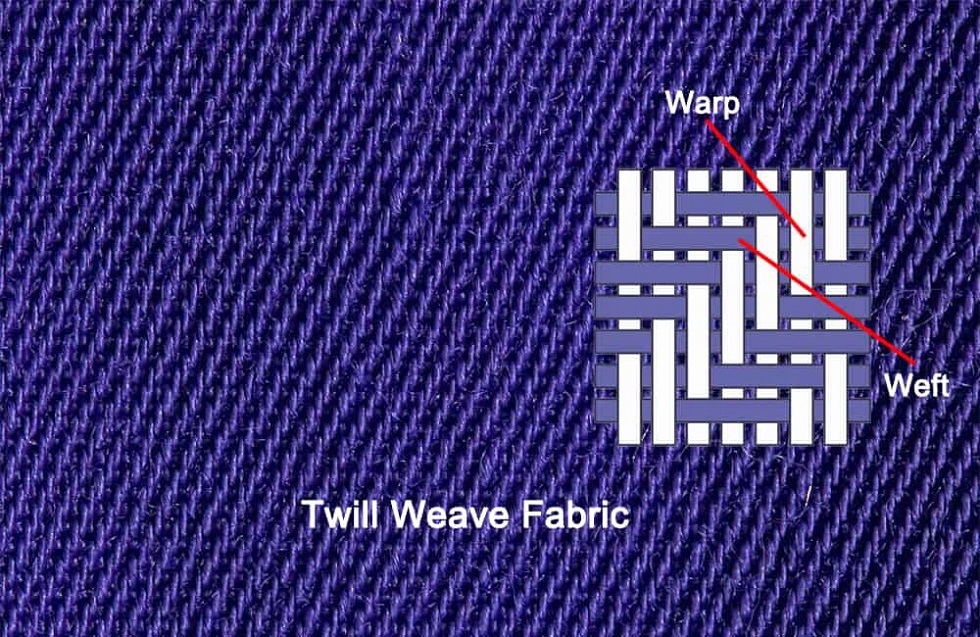
Why it’s great for bags: Where plain weave is rigid and flat, twill is supple and forgiving. The longer floats mean yarns can pack more tightly together, creating a denser, more abrasion-resistant surface. Stains and dirt are less visible on twill’s textured face — a practical feature that the medieval peasantry appreciated just as much as the modern commuter does. Twill also recovers from creasing better than plain weave, which matters when your bag is stuffed under an airplane seat for six hours.
The diagonal structure also gives twill excellent strength-to-weight characteristics. High-count twills — where threads are packed very tightly — can be genuinely water-resistant without any coating at all, simply because the weave is so dense.
The catch: Twill requires more complex loom setups (at minimum three harnesses) and more yarn than plain weave, which means it costs more to produce. The diagonal structure also means the fabric has a “technical face” and a “technical back” — it’s directional, which adds complexity in cutting and sewing. And while twill resists abrasion well, it can snag more readily than plain weave because of those longer thread floats.
In the wild: Denim (3/1 twill), gabardine, chino, herringbone, many woven nylon bag fabrics, and the beloved waxed twill used by heritage brands like Barbour and Filson.
Oxford Weave: The Gentleman Basketweave
Born: Scotland, 19th century. Named after a university it had no formal connection to (which is very on-brand for the 1800s).
Somewhere in a Scottish textile mill in the 1830s, a weaver is experimenting with a variation of the plain weave. Instead of crossing single threads over single threads, he bundles two weft threads together and weaves them as one over a single warp thread. The resulting fabric is softer, more breathable, and has a subtle lustre that plain weave lacks. He names it after Oxford. He names another variation after Cambridge. He names one after Harvard and one after Yale. Only Oxford survives into common usage today.
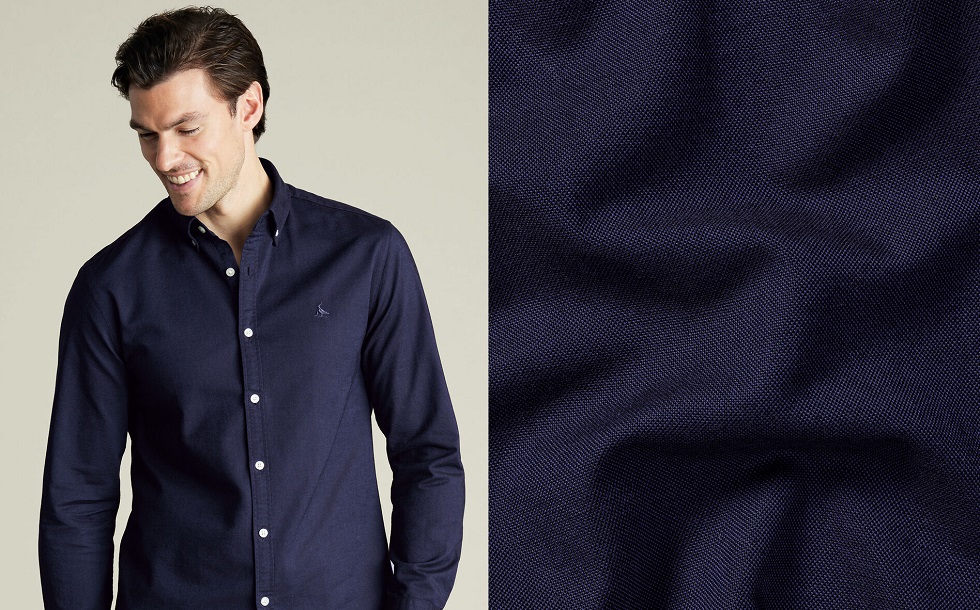
Oxford cloth is a basketweave variant — a plain weave in which two or more threads are bundled and woven as one. The classic Oxford structure pairs two weft threads against a single, finer warp thread, creating a fabric with a characteristic soft texture, slight sheen, and excellent breathability. It emerged in the 18th century and expanded in popularity with the Industrial Revolution.
You know Oxford cloth best as the fabric of the OCBD shirt — the Oxford Cloth Button-Down, cornerstone of Ivy League style and the unofficial uniform of every creative director who wants to look casual but also like they’ve thought about it. But Oxford has quietly found its way into the bag world too, particularly in the form of polyester Oxford — a heavier, more technical interpretation of the weave that’s become ubiquitous in budget and mid-range bags.
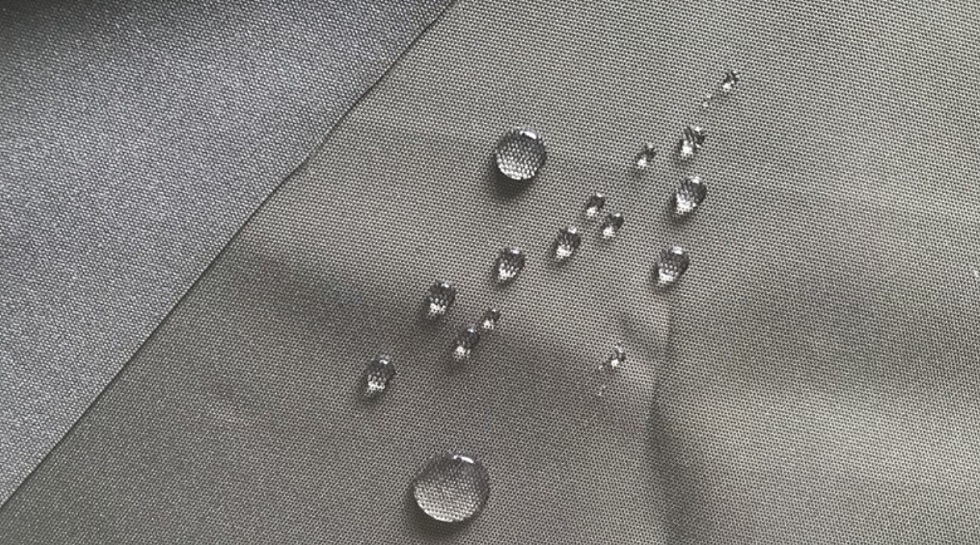
Why it’s great for bags: Polyester Oxford (typically 600D or 900D) is one of the most cost-effective durable fabrics in the bag world. The basketweave structure gives it good abrasion resistance, decent tear strength, and a satisfying heft that communicates quality even at entry-level price points. It’s also easy to apply coatings to, making it a natural candidate for PU-coated water-resistant bag fabrics. The slight texture of the weave also hides minor scuffs and dirt better than a smooth plain weave.
The catch: Polyester Oxford is not the most exciting fabric in the world. It’s the sensible sedan of bag textiles — reliable, affordable, a little anonymous. Higher-denier Oxford fabrics can be quite heavy, and the basketweave structure, while good at resisting abrasion, doesn’t have the tear-propagation resistance of ripstop or the elegant density of a high-count twill. It also tends to look and feel… budget. Which, to be fair, it often is.
In the wild: The vast majority of affordable daypack and laptop bag fabrics. If you’ve ever bought a bag under $80, you’ve almost certainly owned Oxford cloth.
Satin Weave: The Beautiful Disaster
Born: Tang Dynasty China, roughly 7th–10th century CE. Arrived in Europe via the Silk Road in the 12th century. Named after a city that no longer exists by that name.
The word “satin” comes from Quanzhou, a port city on China’s southeastern coast that Arab merchants called “Zayton” during the Yuan Dynasty. They referred to the lustrous silk fabric imported from there as “zaituni.” By the time it reached medieval Europe via Arab traders, the word had softened into “satin” — and the fabric had become the exclusive preserve of kings, cardinals, and anyone else who could afford to be that impractical.
Satin is the third of the three fundamental weave structures, and it is, frankly, the drama queen of the family. In a satin weave, warp threads “float” over four or more weft threads before passing under just one. Those long floats mean the surface is almost entirely composed of parallel threads running in the same direction — and because light hits them all at the same angle, it reflects uniformly, producing that characteristic glossy sheen.7
Chinese weavers were producing satin in the Tang and Song dynasties, using silk to create fabrics of extraordinary lustre. The six-end warp satin weave was likely derived from an earlier six-end warp twill — a reminder that weave innovation is often evolutionary rather than revolutionary. When satin arrived in 12th-century Europe, it was so expensive and so beautiful that it was reserved for royalty and the upper clergy.
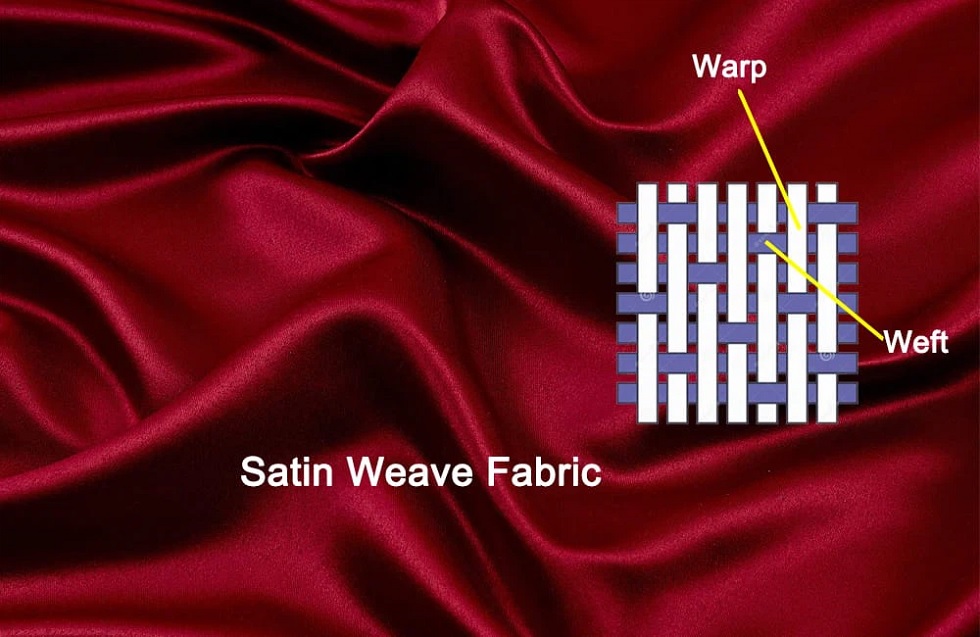
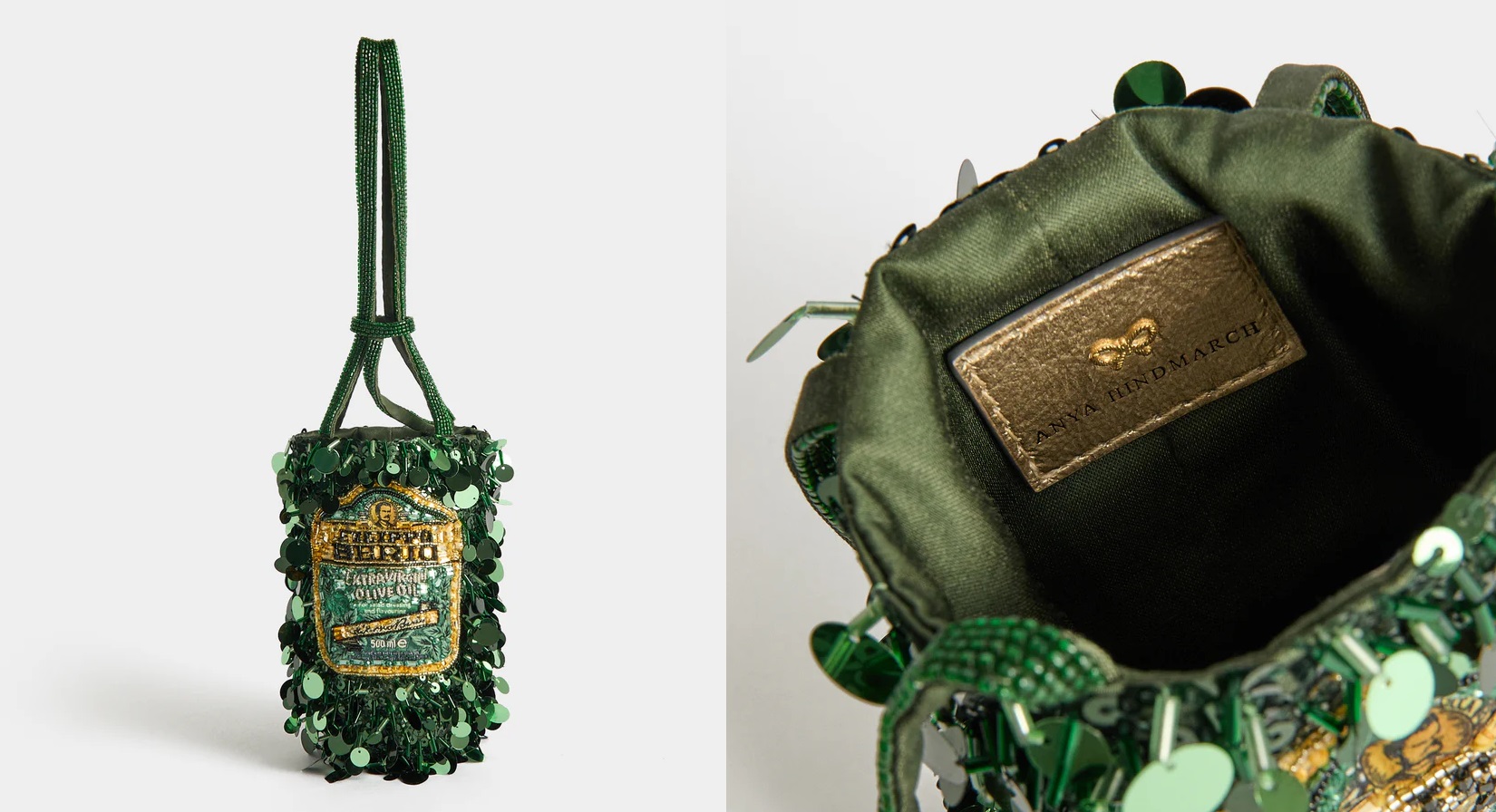
Why it’s relevant to bags: Satin weave is not commonly used as a primary bag fabric — its long floats make it prone to snagging, and it’s not particularly abrasion-resistant. But satin-weave fabrics appear in bag linings (that smooth, slippery interior that lets your laptop slide in and out effortlessly), in some high-end fashion bags, and — crucially — in technical applications. Carbon fiber and fiberglass composites are often woven in satin patterns (4HS, 5HS, 8HS) because the long floats allow the fabric to conform to complex curved shapes without wrinkling. Some ultralight structural bag panels use satin-weave Dyneema composites for exactly this reason.
The catch: Satin snags. Badly. Those beautiful long floats that create the lustre are also loops of thread waiting to catch on anything with a rough edge. Satin-weave fabrics are also less stable than plain or twill weaves — the threads can shift under stress. For most bag applications, satin is a supporting actor, not the lead.
In the wild: Bag linings, fashion bags, some technical composite panels, and the interior of every fancy suit jacket you’ve ever tried on.
Jacquard: The Weave That Invented the Computer
Born: Lyon, France, 1804. Named after a silk weaver’s son who survived the French Revolution, nearly drowned in the Rhône, and accidentally kickstarted the information age (I’ll explain).
It’s 1801, and Joseph Marie Jacquard is standing in front of Napoleon Bonaparte, demonstrating a loom. Napoleon is not, as a rule, a man who gets excited about textiles. But what Jacquard has built isn’t really a loom — or rather, it’s not only a loom. It’s a programmable machine. A device that reads a sequence of punched cards and translates holes in pasteboard into physical movement, lifting individual warp threads in any combination, in any order, to produce patterns of unlimited complexity. Napoleon is reportedly impressed. The silk weavers of Lyon are not. They riot. They smash Jacquard’s machines in the street. They understand, correctly, that everything is about to change.
They were right. Just not only about weaving.
Here’s the thing about Jacquard that separates it from every other entry in this primer: it isn’t a weave structure in the way that plain, twill, or satin are weave structures. It’s more accurate to call it a method — a system of loom control that allows any combination of warp threads to be raised or lowered independently on every single pass of the weft. Where a plain weave loom needs two harnesses and a twill needs three or more, a Jacquard head can control thousands of individual warp ends simultaneously. The result is that Jacquard isn’t limited to repeating geometric patterns. It can weave pictures. Portraits. Landscapes. Brand logos. Anything a designer can render as a grid of pixels, a Jacquard loom can render in thread.
The punched cards that controlled Jacquard’s original machine — each hole corresponding to a raised warp thread, each solid section to a lowered one — were, in the most literal sense, binary code. A hole is a one. No hole is a zero. Charles Babbage owned a silk-woven portrait of Jacquard himself, produced on a Jacquard loom using 24,000 punched cards, and it inspired his design for the Analytical Engine. Ada Lovelace wrote what is widely considered the first computer program for that machine. The lineage from Jacquard’s pasteboard cards to the laptop in your bag is not metaphorical. It is direct.
Why it matters for bags: In the carry world, Jacquard shows up in two distinct ways, and it’s worth distinguishing between them.
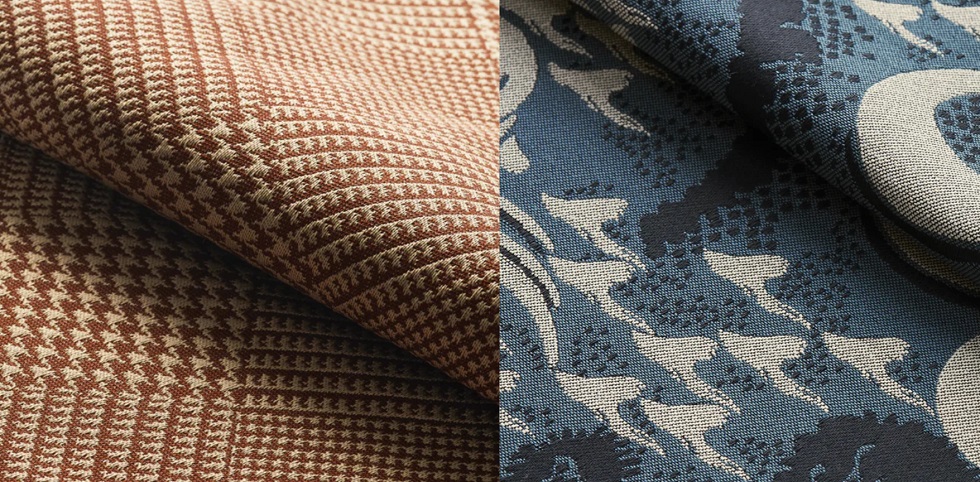
The first is structural Jacquard — fabrics where the pattern is woven directly into the cloth rather than printed or embroidered on top of it. A woven logo on a bag panel, a geometric pattern on a webbing strap, a branded label with raised lettering — these are almost certainly Jacquard-woven. The pattern is integral to the fabric itself, which means it won’t crack, peel, or fade the way a printed or heat-transferred graphic will. This is why serious brands use woven Jacquard labels rather than printed ones: it’s a durability statement as much as an aesthetic one.
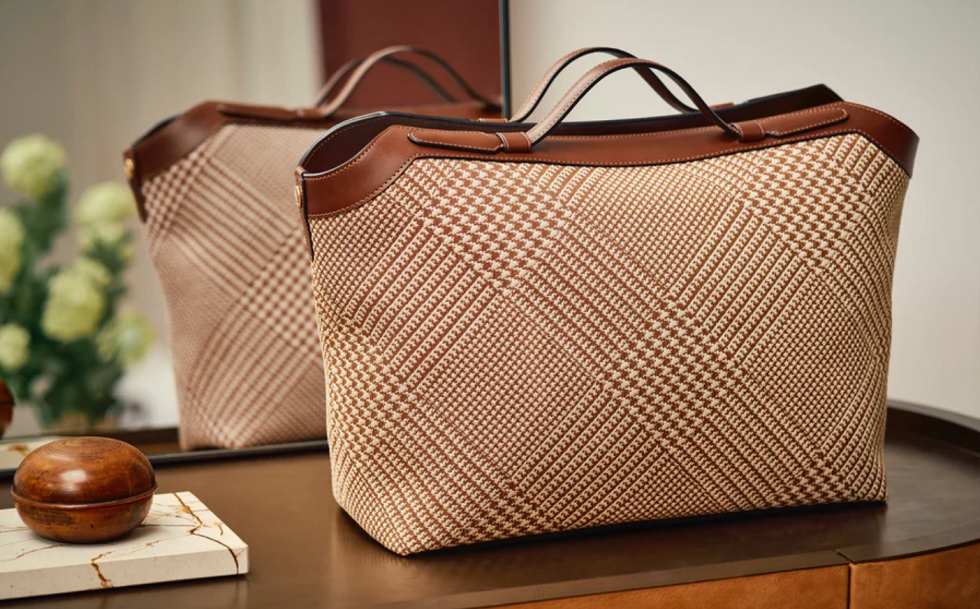
The second is Jacquard fabric — heavier, more complex woven textiles used as primary bag materials. Brocade, damask, and matelassé are all Jacquard-woven fabrics, and while they’re more common in fashion and luggage than in technical carry, they represent the high end of the woven-textile spectrum. A well-made Jacquard fabric can be extraordinarily dense and abrasion-resistant, with the pattern adding structural complexity that a plain-woven equivalent simply can’t match. Some heritage and fashion-adjacent bag makers — think tapestry-style totes, structured luggage, and high-end briefcases — use Jacquard fabrics specifically because the woven-in pattern adds a layer of material integrity that surface treatments can’t replicate.
The catch: Jacquard is expensive. The looms are complex, slow to set up, and require significant investment to retool for new patterns. Threading a Jacquard loom is so labour-intensive that many are never re-threaded at all — subsequent warps are tied in thread by thread, sometimes with the help of a knotting robot. Modern computer-controlled Jacquard machines have reduced some of this friction, but the fundamental economics haven’t changed: you’re paying for complexity, and that cost ends up in the price of the bag. Jacquard fabrics are also heavier than their plain-weave equivalents at the same thread count, and the woven-in patterns can create areas of differential thickness that complicate cutting and sewing.
There’s also a subtler issue. Because Jacquard’s defining characteristic is its ability to produce complex patterns, it’s often used decoratively — and decorative use has a way of cheapening a material’s reputation. A lot of polyester Jacquard in the market is genuinely low-quality stuff, produced quickly on high-speed looms with loose construction and synthetic yarns chosen for cost rather than performance. The word “Jacquard” on a hangtag tells you about the manufacturing method, not the material quality. A silk brocade woven on a Jacquard loom and a $12 tote bag with a woven geometric pattern are both technically Jacquard. Context, as always, is everything.
In the wild: Woven brand labels on virtually every serious bag on the market. Tapestry totes. Structured fashion luggage. Damask-lined interiors. Heritage briefcases. And, if you look closely, the strap on your favorite pack probably has a woven logo somewhere — which means Jacquard has been on your shoulder this whole time, and you never noticed.



Michael Knispel
Editor-In-Chief
Mike’s our editor-in-chief, storyteller, and master traveler. He’s been at the helm for over a decade, spearheading our stories, partnerships, and brand at large.



 WAYS TO CARRY