



 Carry Awards
 Insights
 Liking
 Projects
 Interviews
 Carry Candy
 Community and Marketplace
Industry
There is a question that the outdoor industry has been avoiding for a long time.
If you make gear for people who love the natural world, and that gear is made from petrochemicals extracted from the ground, refined into polymers, and shipped across continents before it ever reaches a factory — how seriously are you actually taking the thing you claim to love?
The answer, for most of the industry’s history, has been: it’s complicated. The materials that make outdoor gear work — the nylons and coated fabrics that shed rain, resist abrasion, and hold their shape under load — are almost entirely derived from crude oil. The performance is real. The environmental cost has been real, too, and sometimes unaddressed.
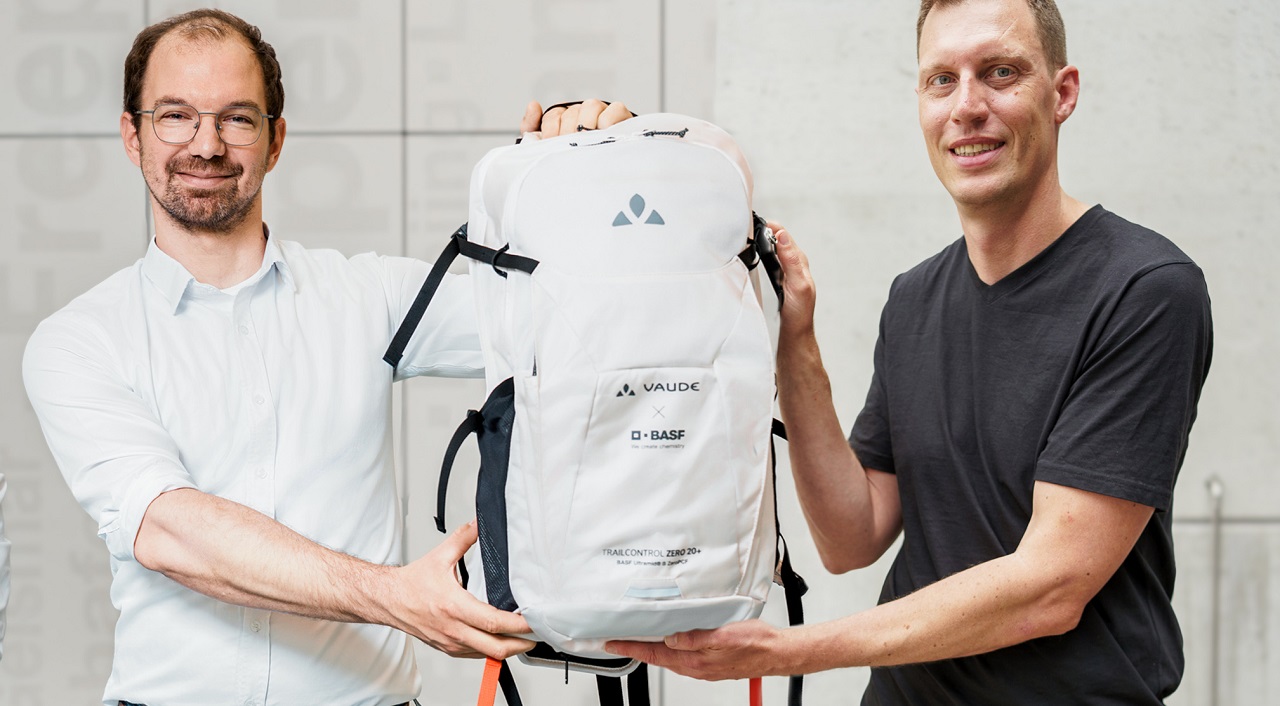
VAUDE, the German outdoor brand headquartered in Tettnang in southern Germany, has been trying to address it for years. In 2025, in collaboration with chemical giant BASF, they built something that makes the argument in the most direct way possible: a backpack made from a material with a carbon footprint of zero.
Not reduced. Not offset. Zero.
The Problem With Nylon
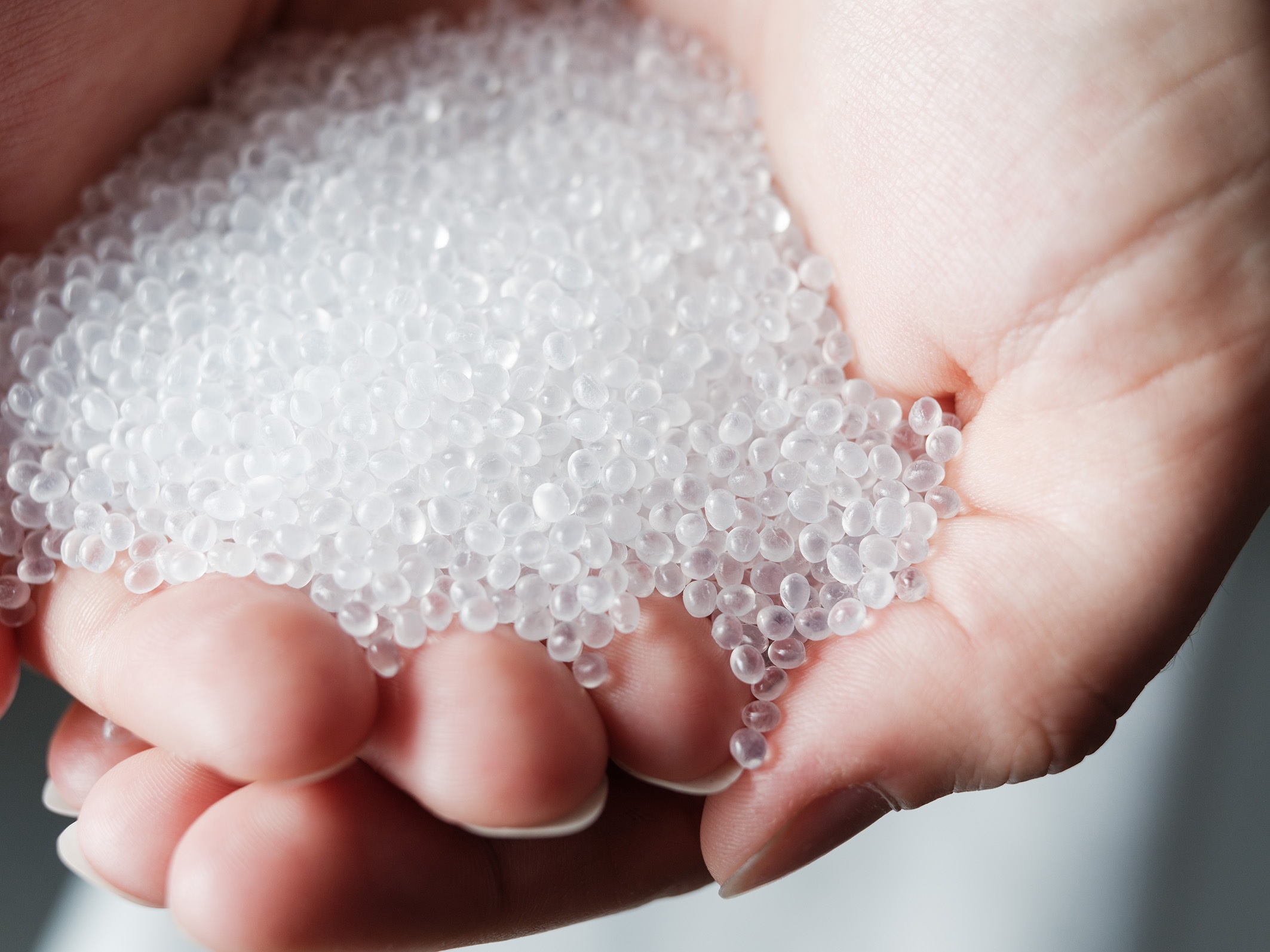
Most serious cycling, hiking, and technical packs are built from a material called polyamide 6 — you probably know it as nylon. It is the fabric that made the modern backpack possible. Tough, flexible, and available in a range of weights and weaves, nothing else performs quite as well across the full range of demands. It resists abrasion. It holds its shape. It sheds water. It survives the kind of treatment that would destroy lesser materials.
Here is the problem. Nylon, in its conventional form, is made entirely from crude oil. The process starts with oil in the ground, runs through a series of chemical refinements, and ends with the pellets that get melted and spun into fabric. The energy required to run that process comes, in most cases, from burning more fossil fuels. Every kilogram of nylon produced this way releases a meaningful amount of carbon dioxide into the atmosphere — and because nylon is used in enormous quantities across the gear industry, those kilograms add up fast.
The outdoor industry has known this for years. The responses have ranged from the genuinely meaningful — recycled nylons, reduced-impact dyes, supply chain transparency — to the performative. What has been largely absent is a solution that addresses the problem at the very beginning, before the fabric is even made.
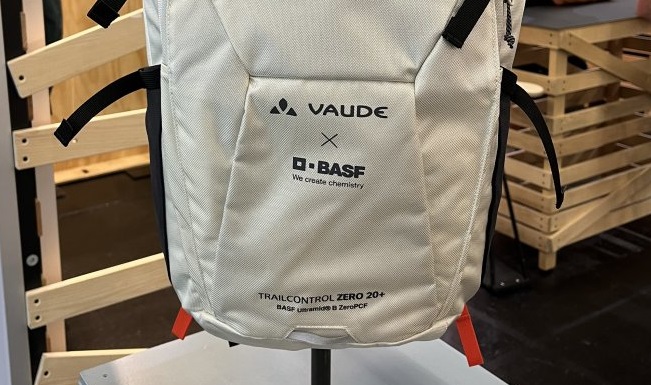
That is what BASF’s Ultramid® ZeroPCF is.
The Chemistry of Zero
Think of making nylon like baking a cake. The ingredients you start with determine what ends up in the final product. Conventional nylon starts with oil-based ingredients. Ultramid® ZeroPCF starts with something very different — and that swap is what changes everything.
BASF makes Ultramid® ZeroPCF by changing three things about how nylon is normally produced.
First: the electricity. The factories run on power from renewable sources, including an offshore wind farm called Hollandse Kust Zuid in the North Sea, in which BASF has a stake. No coal, no gas — just wind.
Second: the heat. Industrial production requires enormous amounts of heat, usually generated by burning natural gas. Here, that gas is replaced with biomethane — essentially the same gas, but made from organic waste rather than extracted from the ground. Think of it as the difference between burning fossil fuel and burning the gas that comes off a compost heap.
Third, and most importantly: the raw materials. This is where the story gets interesting. Conventional nylon starts with ingredients derived from crude oil. Ultramid® ZeroPCF replaces those oil-based starting materials with alternatives made from used cooking oil — the fat left over from frying — and other biological waste. The same chemistry happens. The same nylon comes out. But the carbon that goes into it came from plants and food waste rather than from oil drilled out of the ground.
Now here is the part that gets the footprint all the way to zero, and it requires one more idea to understand.
When a plant grows, it pulls carbon dioxide out of the air and locks it into its structure. That carbon stays locked in as long as the plant material — or anything made from it — exists. So when you use plant-based or food-waste-based raw materials to make nylon, you are essentially taking carbon that was already in the atmosphere, locking it into a material, and keeping it there. That absorbed carbon counts against the emissions produced during manufacturing. Add it all up — renewable electricity, biomethane for heat, plant-based raw materials — and the total carbon released equals the total carbon absorbed. Net zero.
The whole process is independently verified. An organization called TÜV Rheinland has checked the maths. The certification follows an internationally recognized standard for measuring a product’s carbon footprint. It is not a marketing claim. It is an audited number.
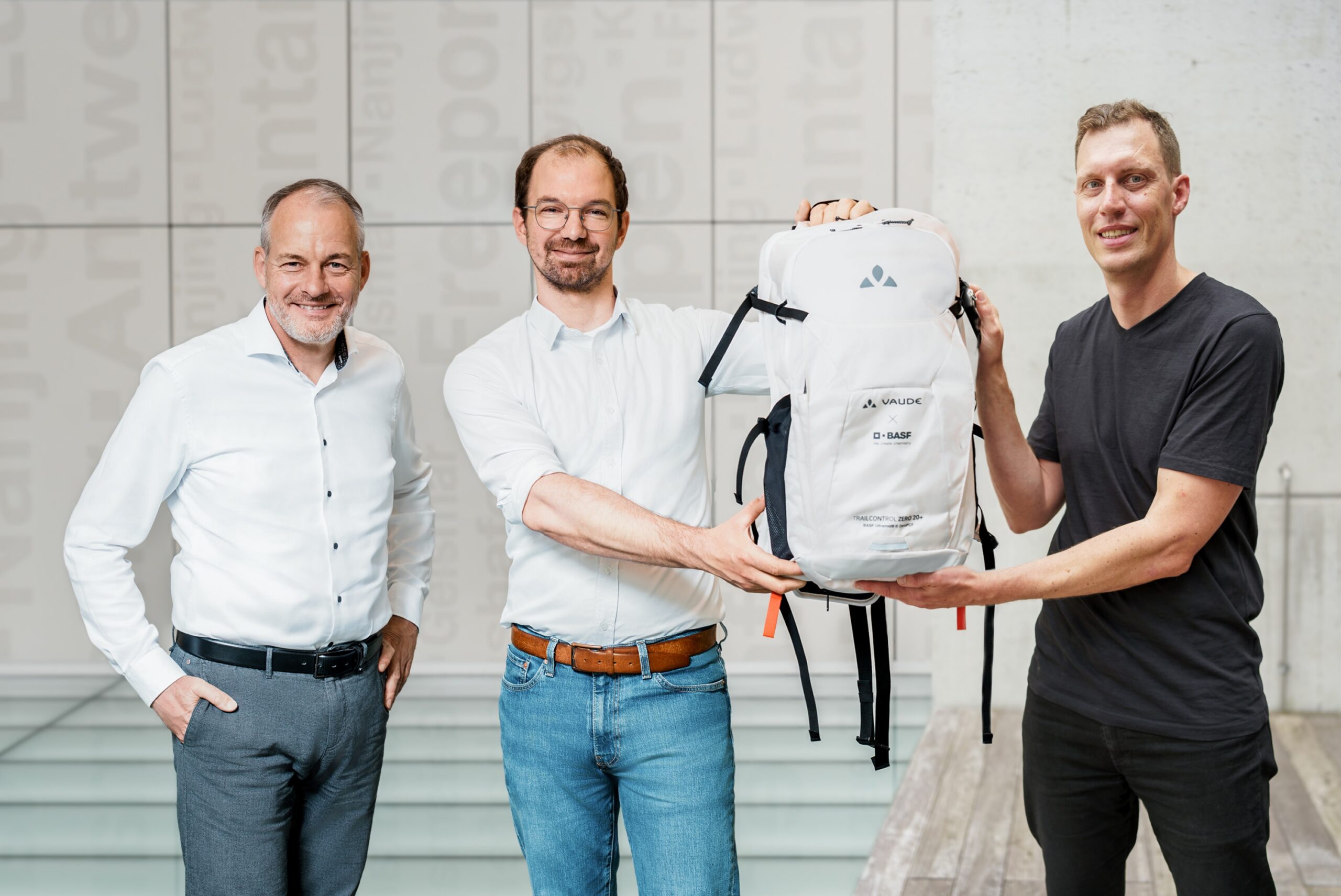
“Thanks to all these measures and the benefits we derive from the efficient production methods of our BASF Verbund, we are reducing the CO₂ footprint of the polyamide to zero,” says Marcel Schmitt, Global Strategic Marketing, Polyamide 6 at BASF.
The critical point is that the material performs identically to conventional nylon. Same strength. Same flexibility. Same durability. Same feel. No reformulation, no performance trade-off, no new equipment required. The same nylon, made a completely different way.
The First Backpack
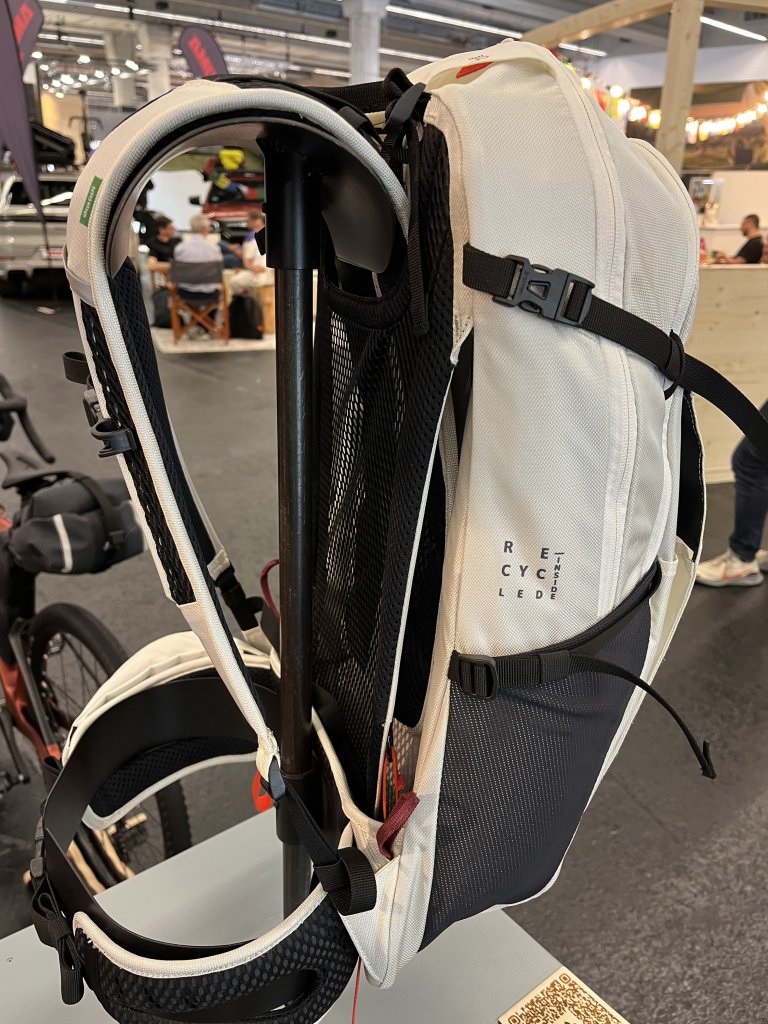
Following an initial media showcase in June 2025, VAUDE and BASF officially debuted the Trailcontrol Zero PCF 20+ functional blueprint in October 2025 at the world’s largest plastics trade fair in Düsseldorf. The bag was a landmark demonstration project, serving as the first true functional prototype featuring this new, net-zero carbon material.
The bag is the Trailcontrol Zero PCF 20+, a 20-litre mountain bike backpack built to VAUDE’s existing Trailcontrol specification — a design developed for riders who need a pack that stays locked to the back at speed, manages heat, and carries a hydration system without getting in the way.
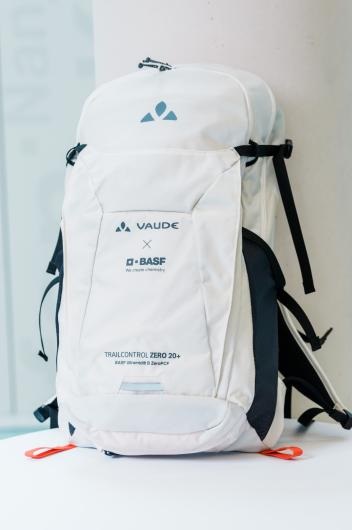
The choice of a cycling backpack as the vehicle for this debut is not accidental. Bike packs are among the most demanding use cases for technical fabrics: they need to resist abrasion, shed weather, and hold their shape under load while a rider is moving hard. If a material can perform here, it can perform almost anywhere in the carry world.
VAUDE’s ambition with the project is explicitly stated and worth taking seriously. The brand has committed to cutting the carbon emissions embedded in the materials it buys by 50% by 2030. Materials are where the majority of a product’s carbon footprint lives — not the factory, not the shipping, but the raw ingredients themselves. Changing the material is, by some distance, the most effective lever available.
“With this flagship project, we want to stimulate discussions about how materials with a carbon footprint of zero can contribute to climate neutrality,” says René Bethmann, Senior Material Innovation Manager at VAUDE.
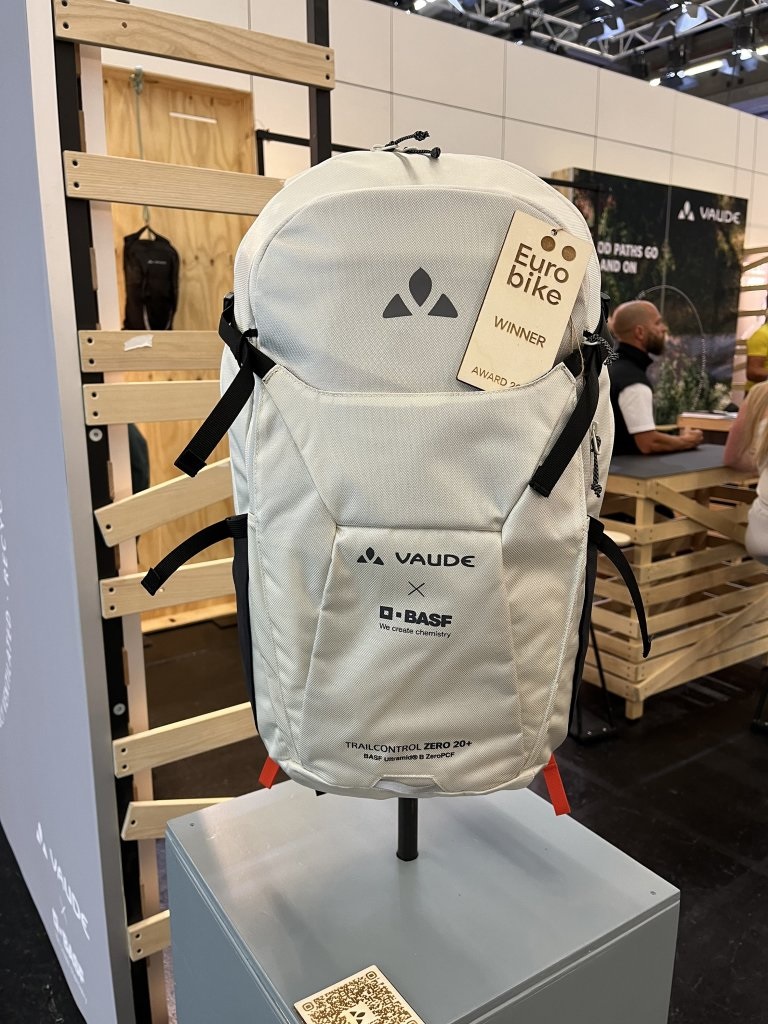
The Trailcontrol Zero PCF 20+ won the Eurobike Green Award 2025 at the Frankfurt bike trade fair — recognition from an industry that has seen enough sustainability claims to be appropriately skeptical of them.
Why This Matters Now
The outdoor and carry industries are at an inflection point that has been coming for a long time.
Regulatory pressure is building. New rules in Europe will soon require brands to back up environmental claims with verified evidence, or face legal consequences. The era of vague sustainability language — “eco-conscious,” “planet-friendly,” “responsible” — is ending. What replaces it is a demand for specificity: specific materials, specific footprints, specific numbers, specific proof.
Ultramid® ZeroPCF is exactly the kind of solution that survives that scrutiny. The numbers are auditable. The certification is independent. That matters in a world where auditable is becoming the baseline requirement rather than a differentiator.
It also matters because the solution is scalable in a way that many sustainability innovations are not. This is a drop-in replacement for conventional nylon. It requires no new machinery, no reformulation, no retraining of production staff. Any brand currently using nylon in its products — which is to say, almost every brand making technical carry gear — could, in principle, switch to a zero or reduced carbon variant without changing anything else about how it makes things.
The question is whether they will. The answer will come down to cost, availability, and whether the market rewards the choice. VAUDE has made a bet that it will. The Eurobike Green Award suggests the industry is paying attention.


Michael Knispel
Editor-In-Chief
Mike’s our editor-in-chief, storyteller, and master traveler. He’s been at the helm for over a decade, spearheading our stories, partnerships, and brand at large.


 WAYS TO CARRY