



 Carry Awards
 Insights
 Liking
 Projects
 Interviews
 Carry Candy
 Community and Marketplace

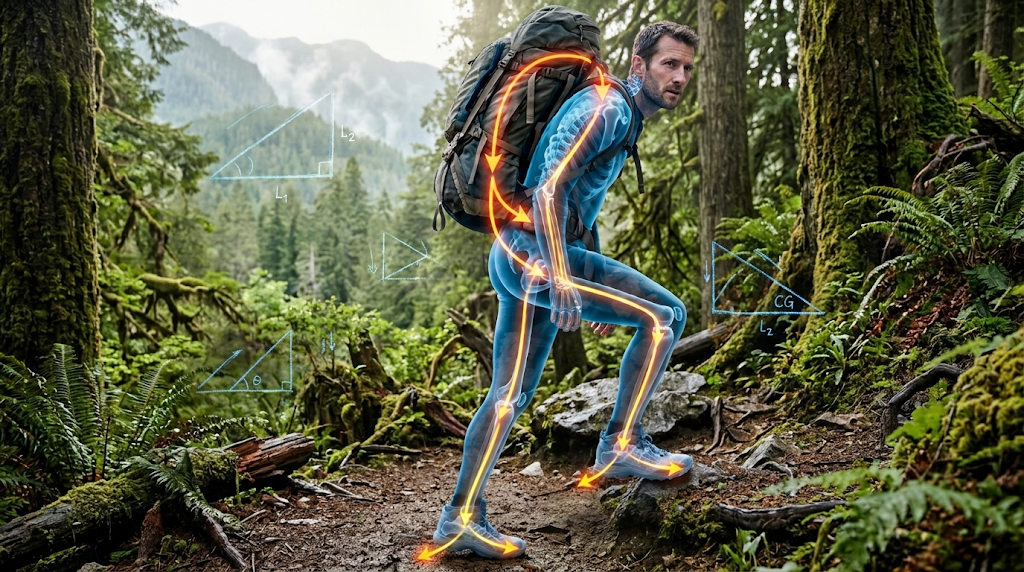
When you’re carrying, there’s more happening than you think. There’s weight being dispersed in many different ways depending on how you’re carrying.
So to explore this further, let’s begin with the load, for example.
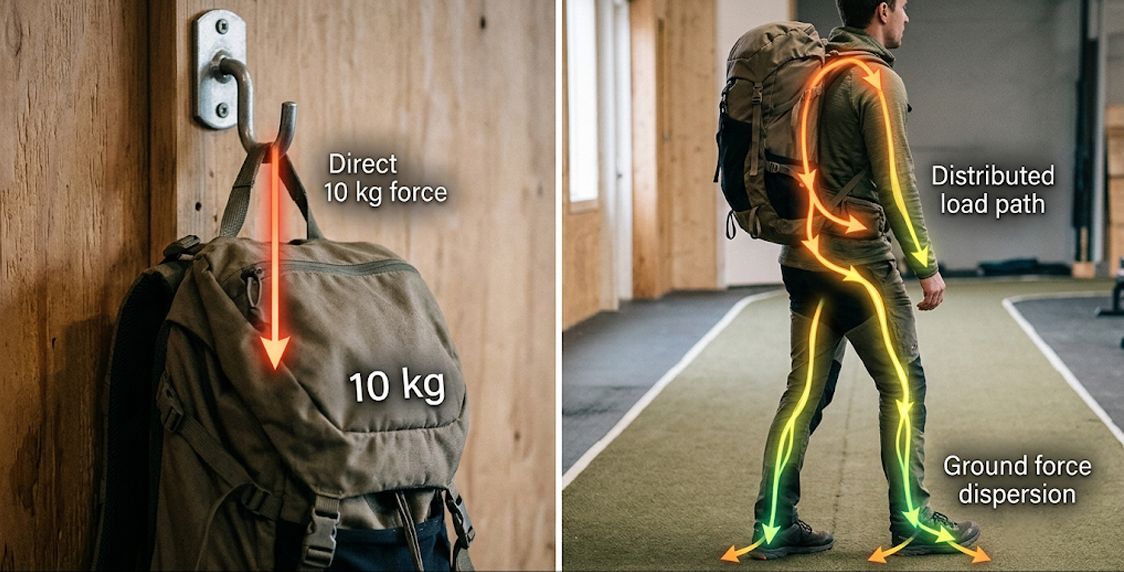
If you throw 10 kg into a backpack and hang it from a hook; that hook feels the full 10 kg of force (assuming a hook can feel anything, of course).
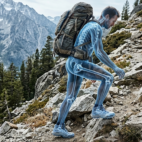
Put that same 10 kg load on your body and things get a little more interesting. The load doesn’t just park there. Its force travels through the pack, into your shoulders and hips, through your trunk and pelvis, down the legs, through the feet and into the ground.
Carrying, in other words, is a load path.
Within that path, where the load sits relative to your own centre of mass matters a lot.
Hold that 10 kg weight against your chest, and then hold it at arm’s length. The weight hasn’t changed, but the demand on your body absolutely has. The further a load sits from your centre, the greater the torque, and the more work your muscles have to do to control it.
Ideally, rather than having your muscles constantly fighting to hold everything in place, your skeleton and joints transmit as much of the load through the body’s structure as possible.
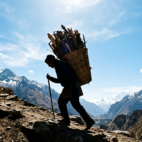
As mentioned, methods like head carrying, where the load sits close to the body’s vertical axis, have endured for centuries for good reason.
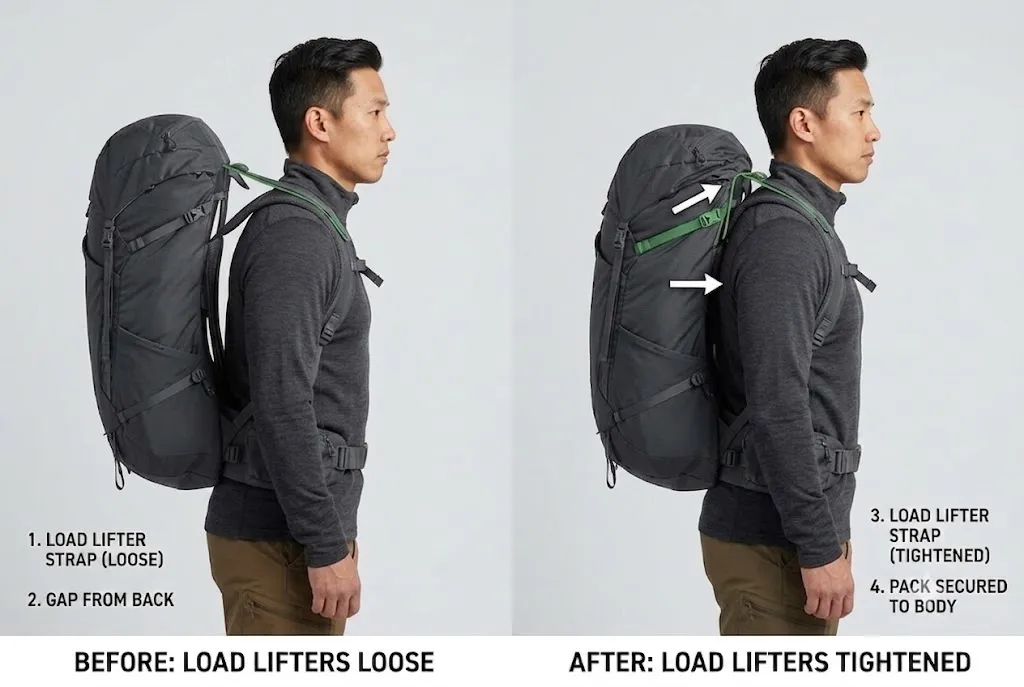
As for modern interventions, hip belts and load lifters are a solid example of changing the load path. Rather than having the shoulders carry the entire burden, a properly fitted belt transfers some of that load into the pelvis, where it’s transmitted into the large bones of the legs and, ultimately, the ground. Load lifters draw your load closer to your centre of mass.
This same principle explains why a badly designed pack can feel infuriatingly heavier than the number on the scale suggests. If the load sits too far from the body, shifts around as you move, or isn’t transferred effectively through the hips, those muscles of yours have to spend more of every step controlling it.
At this point, carrying becomes less a question of weight than one of geometry.
A weight scale doesn’t factor in where those 10 kgs are, how they move, or how long you have to carry them. Your body does.
The difference between carrying 10 kg in a well-fitted pack for an hour and carrying it in one hand is considerable. Your trunk has to resist rotation, your shoulders and arms work differently, and your gait starts making small adjustments to keep you moving efficiently.
Even a well-balanced backpack changes the way you walk. Your stride, posture and muscle recruitment all have to adapt to the additional mass. The heavier the load, the more pronounced those adjustments become. All of this costs energy.
When the Backpack Meets the Body
When you start to think about carrying as a ‘load path’, it puts a lot of modern backpack design philosophies into perspective.
The modern pack is simply the latest expression of a very old relationship between the human body and useful stuff. It’s more than just a bag that happens to sit on your body. When working well, it’s a piece of equipment designed to work with a locomotor system that already has its own geometry, movement, and load paths.
Good pack design keeps mass close to the body’s centre, minimises unwanted movement, and transfers load into the strongest parts of the body, allowing the hips, trunk and legs to do their thing while keeping the load moving with the body rather than against it.
As for the hardware, the frame creates structure and controls how the load behaves. The hip belt transfers load into the pelvis and legs. Load lifters pull the upper pack closer to manage leverage. A sternum strap stabilises the shoulder straps and keeps the system moving with you, while pack depth changes the torque and centre-of-mass relationship.
A great pack doesn’t necessarily make a heavy load feel light – It makes the load feel integrated.
Pick up that 10 kg pack again from earlier. If the load is sitting in the right place, close to the body, properly supported and moving with you, something interesting happens: you stop thinking about the backpack altogether.
We evolved a body exceptionally good at moving through the world while carrying useful stuff.
The backpack is a modern attempt to cooperate with that system.
And that’s really the sweet spot we hope to find ourselves in. Where luggage stops feeling like luggage, and simply becomes part of the way we move.





 WAYS TO CARRY