



 Carry Awards
 Insights
 Liking
 Projects
 Interviews
 Carry Candy
 Community and Marketplace


Drive By :: DSPTCH Ruckpack
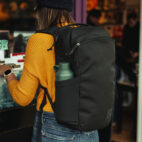
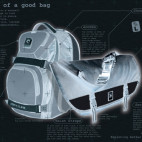
The DSPTCH Ruckpack is masculine, insanely functional and seemingly adapts to whatever comes your way. It’s an impressive evolution from a company that started selling a paracord wrist strap. But when you talk to Richard Liu, founder of DSPTCH, that was all part of the plan. This second generation Ruckpack has quickly become my go-to bag for everything short of business meetings.

Who It Suits
The guy looking to up his everyday bag game with a true workhorse.
Who It Doesn’t
Depending on where you work, this might not be the most “work appropriate” bag but you’ll want to bring it anyway.
The Good
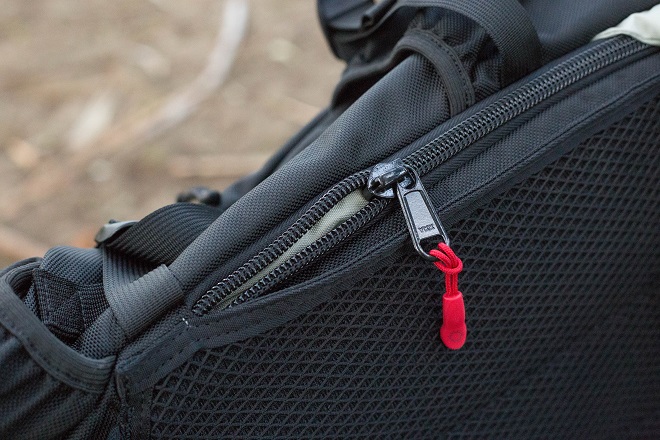
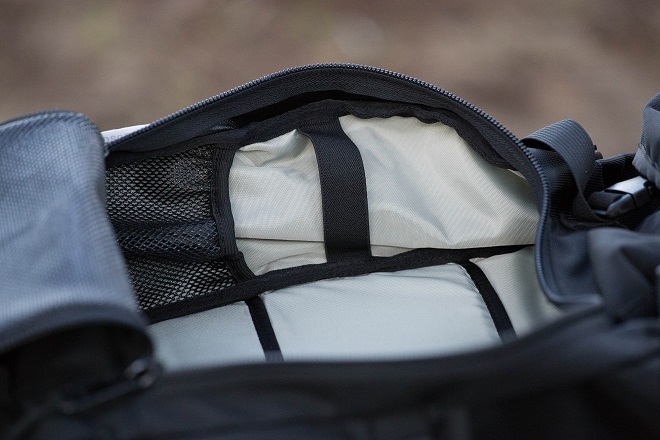
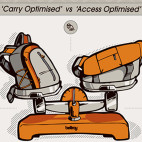
I’ve tested my fair share of packs for Carryology and this pack hands down regularly blew me away with how much you can stow in the main compartment. Listed with a 23L capacity, I was able to stuff everything from blankets and comforters to small boxes/packages with room to spare. The trick is the ingenious clamshell panel for easy access to the main compartment.

Part of what impressed me the most was the thought that went into each detail of the pack to make your life just that little bit easier. In addition to the main compartment access panel, there is a separate laptop compartment and storage sleeves for files, notebooks or Field Notes. There’s even a mesh pocket in the corner for your water bottle.
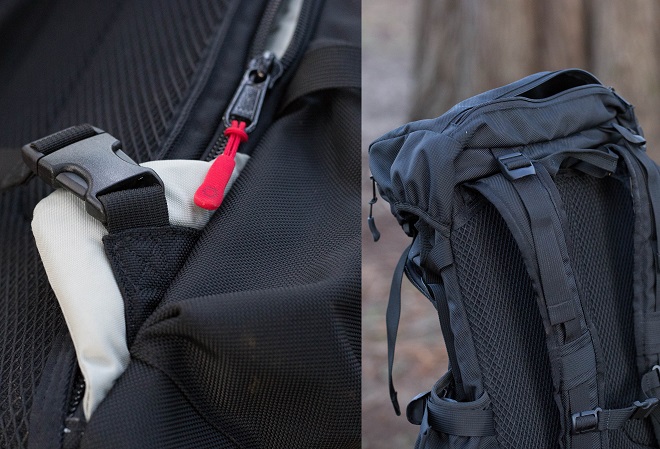
At every turn, DSPTCH seems to have nailed it. Take the back of the pack for example. Included with each Ruckpack is a rigid HDPE (High Density Polyethylene) and aluminum back support to help reduce fatigue. The materials are all top quality, from the ballistic nylon to MIL-SPEC webbing to Duraflex buckles. The mesh back padding is extremely comfortable and breathes well.
The Not So Good
When you look at photos online and see the bag in person, the first thing that sticks out is how large the overall profile is. I found it difficult at times to commute with it depending on how much I had stuffed in it. Between the shoulder adjustments and standard belt loops it was easy to adjust but it is not a small pack by any means.

While I loved the pen pocket up front, it always felt a bit too small. It was big enough to hold your pens but felt like they were going to fall out before you could zip up the bag. That said, this wasn’t a deal-breaker or even an annoyance. Just an observation having spent a ton of time with the pack.
Other Considerations
If you’re looking for a highly versatile bag with a similar military-inspired aesthetic, look no further than Triple Aught Design’s Litespeed and GORUCK’s GR1. The other company I would look at that perfectly combines utility and killer hardwear is Mission Workshop.

Conclusion
The DSPTCH Ruckpack is hands down one of the best EDC bags I’ve ever owned or tested. It continues to impress me with its storage capability. I marvel at how I can throw seemingly anything at it and it takes it like a champ.






 WAYS TO CARRY
Wow, this looks like a great backpack! I wish they’d make a bigger one, like 40L or 50L, and add a padded waistbelt. That would make it perfect for a couple of weeks of urban backpacking.
How would it hold up on a short overnight hike? I’m looking for something versatile for a work commute and a weekend camp/hike pack. My major concern is the lack of hip straps.
I thought you guys didn’t like airmesh on the back? *grins*
I am curious what sort of mesh back padding they’re using there though – the holes look larger than what I’m normally used to?
Still premium pricing, still (unless I miss my guess) 1680d ballistic. Still don’t get it, though working the panel-load option into a classic top-loading format was pretty clever.
I don’t get it the front panel loading at all. I thought the point of a classic cinch top was to improve weatherproofing since it reduces exposed zips and seams, as well as simplify the amount of hardware, thus improving the longevity of the bag.
But in this case the completely exposed zip on the front panel means water will be able to much more easily enter into the main compartment. The shape of the zip seems to me that in the event of rain (or snow), water will pool directly over the horizontal zip, and thus seep into the main compartment.
Also, it seems to me the use of two entry points into the bag makes one or the other redundant. In other words, I suspect users will probably always access the bag via the massive front panel or the top. In that case – why have both? Why not make it one or the other? Having both seems like inefficient design to me.
I think part of it is aesthetics. I love the way a classic top load ruck looks. On the other hand, I dislike having a top opening being my only access point on a 30L pack’s main compartment. Some makers run a zipper down one side to allow quick access. My Timbuk2 pack has this and it is a feature I really appreciate. This DSPTCH pack is different because, as you say, the panel opening seems to offer enough access that the top opening would be superfluous a lot of the time.