



 Carry Awards
 Insights
 Liking
 Projects
 Interviews
 Carry Candy
 Community and Marketplace
Tech
Ever snapped out of a social media scroll and realized you just torched the better part of an hour? Or felt your hand drift toward your pocket for the fifteenth time today, pulled by some invisible force toward that little glass rectangle? Maybe you’ve noticed a creeping lethargy lately—a fog that settles over your get-up-and-go, making everything feel like more effort than it should.
Well, there’s a few things happening around us that we might not be aware of. You see, we use our phones and laptops for everything—news, reading, writing, organizing, entertainment—but they quietly take far more hours and attention than we ever intended. And there’s growing research and commentary that this constant drip of notifications and novelty can flatten mood, drain energy, and make sustained focus harder.
Welcome to “The Attention Economy”.
The basic deal goes like this: most of the apps on our phone are free because we are the product. Our eyeballs, our minutes, our engagement—that’s what gets sold to advertisers. And the longer we stay glued to the screen, the more money someone makes. So these platforms aren’t just designed to be useful. They’re engineered to be irresistible. Infinite scroll. Autoplay. Push notifications that hit at just the right moment. They draw us back to them like a bee to honey.
The 2020 Netflix documentary The Social Dilemma uncovered this world, featuring the very engineers who built these systems now sounding the alarm. Turns out, the people who designed the “like” button and the pull-to-refresh gesture knew exactly what they were doing.
And there’s hard science behind why it works so well. Every time we get a like, a comment, a new message, or even just see something novel and interesting, our brain releases a little hit of dopamine—the neurochemical linked to pleasure and reward. Feels good. So we do it again. And again. Psychiatrist Dr. Anna Lembke unpacks this mechanism in her book Dopamine Nation, and the picture isn’t pretty. Our brains are wired for balance: pleasure on one side, pain on the other. Flood the system with too many easy rewards, and the brain compensates by dialing down the baseline. Suddenly, ordinary life feels flat. A book can’t hold our attention. A walk feels boring. We need more stimulation just to feel normal.
Sound familiar? Well, there’s some good news too. A growing number of people are asking a simple question: What if the device isn’t the problem—but the everything-device is?
Smartphones and laptops promised to consolidate our lives. And they did. Reading, writing, communication, entertainment, news, navigation, music, work—all collapsed into glowing rectangles we carry everywhere. But consolidation came with a cost. Every task now lives alongside an infinite feed or sea of open tabs. Every moment of friction—boredom, difficulty, uncertainty—is one tap away from relief. And that relief, Lembke argues, is slowly recalibrating our brains.
And I’m not so sure I’m down with the whole recalibration thing; how about you guys? So there’s a few choices: abandon technology and return to book, paper, pen (and maybe even living like a recluse in a hut by a river. Trust me, it’s crossed my mind). Or perhaps the answer isn’t to abandon technology. The answer is to disaggregate it.
And a growing group of designers and brands are thinking about just that, with a burgeoning stable of new tools that are pushing back.
The Rise of Single-Purpose Tools
A new class of products is emerging from designers, startups, and hardware tinkerers who’ve decided enough is enough. Their philosophy is refreshingly simple: a tool should do one thing well, then get out of the way. No feeds. No notifications. No algorithmic nudges. Just the task at hand and the quiet satisfaction of completing it.
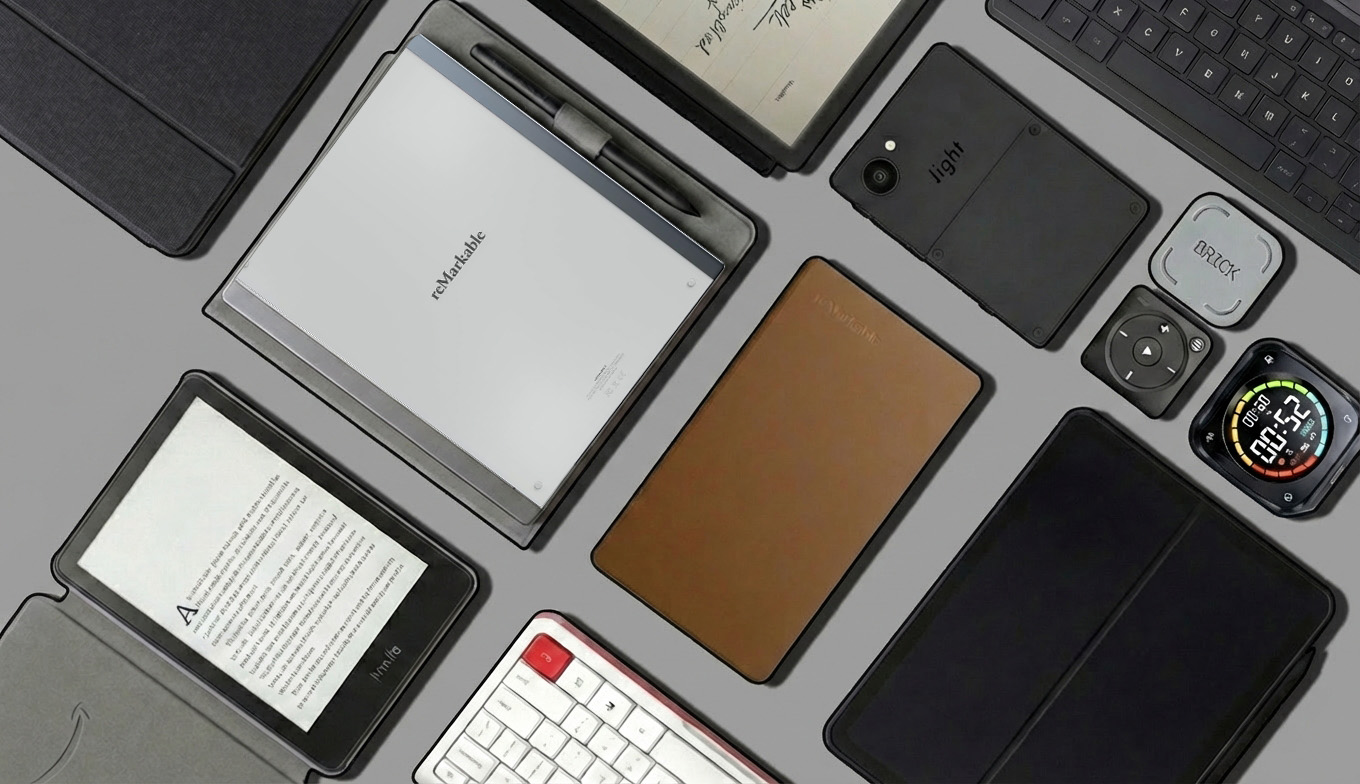
Call it a focus tech stack—a carryable kit of devices, each purpose-built for a specific mode of thinking: reading, writing, annotating, communicating, listening, timing, and simply stopping. Together, they form an alternative to the everything-device. A way to stay digitally capable without being digitally captured.
So what could that stack actually look like? Glad you asked.
Kindle
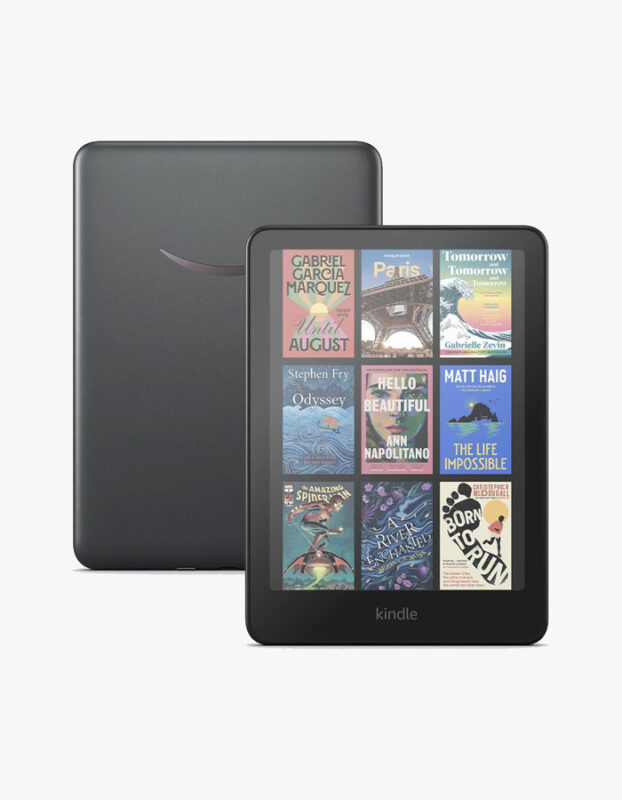
The Kindle isn’t new, but its role in our lives has quietly shifted. What started as a convenience has become something closer to a refuge. E-ink is its biggest innovation because it has no blue light like a phone, resembling the experience of paper so it doesn’t trigger a part of our brain that keeps us awake or overstimulated. In science speak, it doesn’t mess with our “circadian rhythm”. So when we’re done reading and want to get some shut-eye, our brains aren’t still flicking through a million thoughts as we try to go to nighty-night.
There’s also no browser worth using. No notifications. We open it, we read, we close it. That’s the whole interaction.
The magic? The absence of else. On a phone or tablet, besides their blazing blue lights, a book competes with everything. On a Kindle, the book is the only thing. For anyone trying to rebuild a reading habit eroded by years of scrolling, this is the obvious starting point.
And hey, they come in colour now, so graphic novels are back in (and this deserves a quiet fistpump).
reMarkable Paper Pro
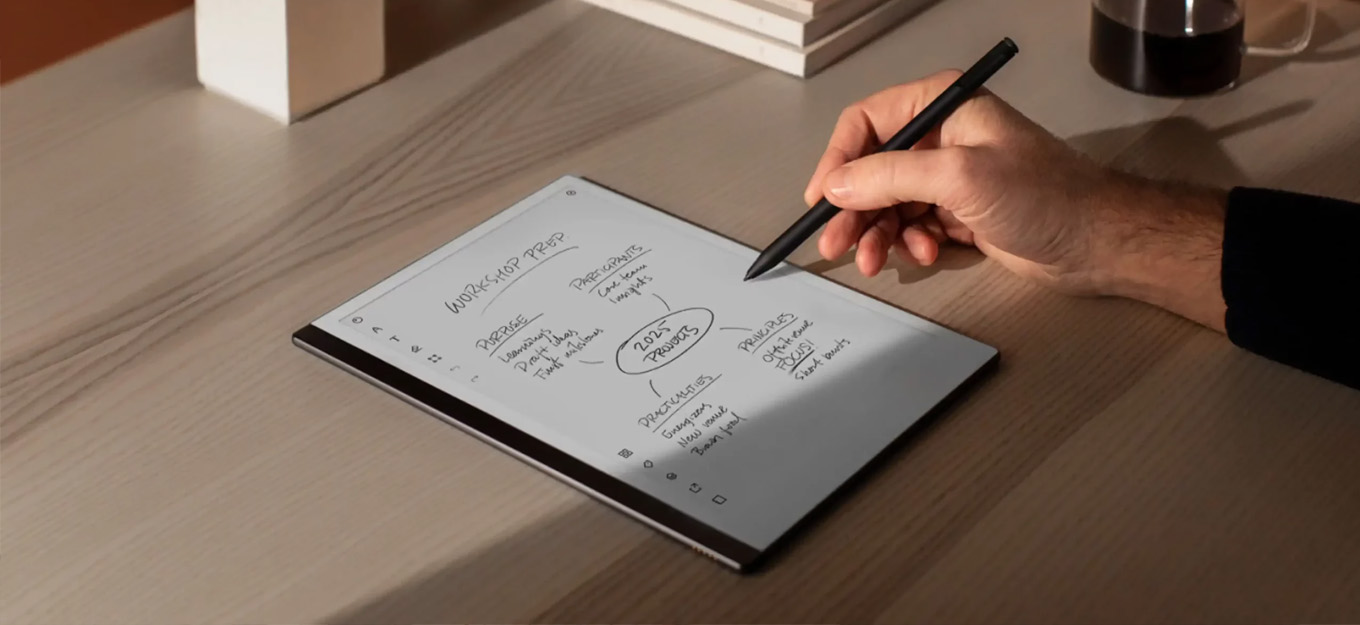
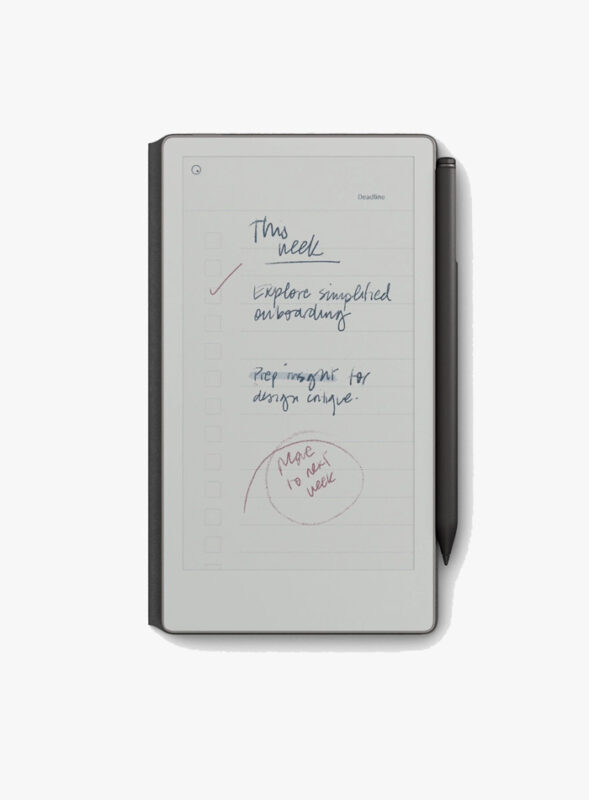
The reMarkable is a digital notebook that feels like paper (another benefit of e-ink technology). No app store. No color screen. No dopamine-bright interface. Just a stylus, a textured surface, and the quiet act of writing, sketching, or annotating by hand.
It’s designed for slow thinking: outlining an argument, marking up a PDF, connecting ideas across pages. The sort of cognitive work that evaporates the moment we switch to check a notification.
What makes it powerful is its deliberate restraint. Where tablets try to be everything, the reMarkable flat-out refuses.
You can write, sketch, and think without distraction, and everything syncs up to the cloud automatically, so you can dive in at a later date and fine-tune and use the apps available to you on your laptop to build and expand things out.
I’ve been testing this for the past two weeks, and it’s really slowed everything down for me. Helping me build a more deliberate creative process. It’s a refreshing feeling. And it kinda feels like something’s been unlocked.
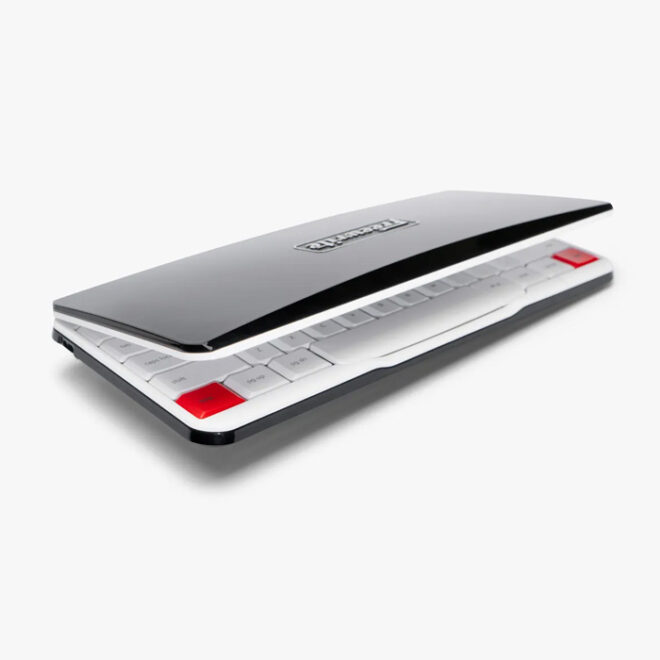
Freewrite Traveler
The Freewrite Traveler is a portable, distraction-free writing machine. Good keyboard. Small e-ink screen. No browser. No apps. No way to “just quickly check” anything.
On paper, the spec sheet sounds almost comically limited. Then we try to write something meaningful on a laptop and notice how often our fingers drift toward a new tab. The Traveler removes that escape hatch entirely. We sit with the work. We tolerate the friction. And somewhere in that friction, the words should start to flow.
In a world that offers endless exits from effort, the Traveler locks the door and only hands us the keys when the work is done. So if you’re trying to write your first novel and are struggling to make progress, something like this might be for you.
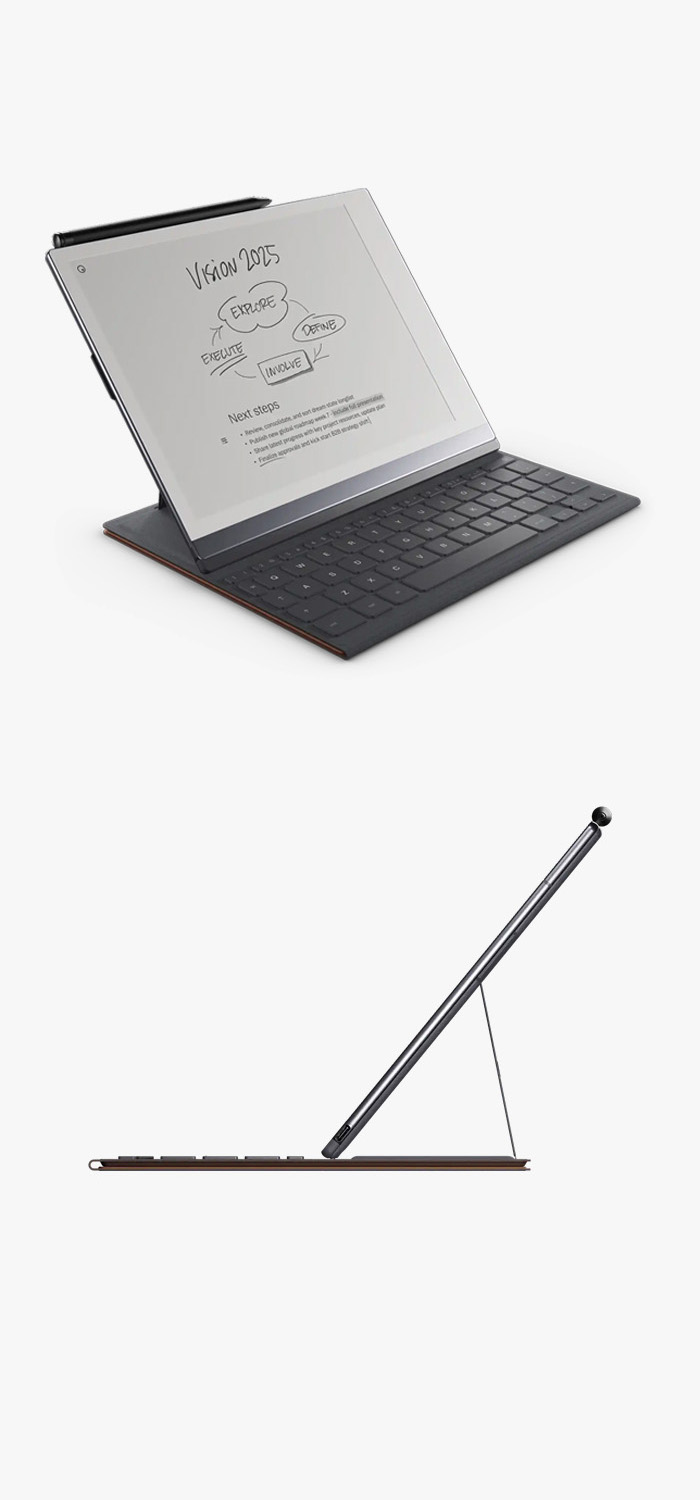
reMarkable 2 + Type Folio
For those who love the reMarkable philosophy but prefer typing to handwriting, there’s another option worth considering: the reMarkable 2 paired with the Type Folio keyboard.
The reMarkable 2 is the slimmer, lighter sibling of the Paper Pro. Same distraction-free e-ink display. Same paper-like texture. Same commitment to keeping the app casino at bay. But snap on the Type Folio, and suddenly you’ve got a full keyboard attached to a device that still refuses to let you check Instagram.
It’s an interesting alternative to the Freewrite Traveler. Where the Traveler is a dedicated writing machine and nothing else, the reMarkable 2 + Type Folio combo gives you flexibility. Type out a draft, then detach the keyboard and sketch out ideas with the stylus. Annotate a PDF in the morning, bang out a thousand words in the afternoon. Switch between modes without switching devices.
The keyboard itself is surprisingly good—responsive, well-spaced, with a satisfying click that doesn’t feel cheap. And because it doubles as a folio cover, the whole setup stays protected and portable. Toss it in a bag and you’ve got a writing and thinking tool that travels light.
Everything still syncs to the cloud, so drafts and notes are waiting on your laptop when you’re ready to polish them up. But the beauty is in the separation: the creative work happens here, in this quiet, focused space. The editing and formatting can happen later, somewhere else.
For writers who want distraction-free typing and the ability to sketch, annotate, and think with a stylus, this combo threads the needle nicely. Two tools in one, and neither of them trying to sell you anything or steal your attention.
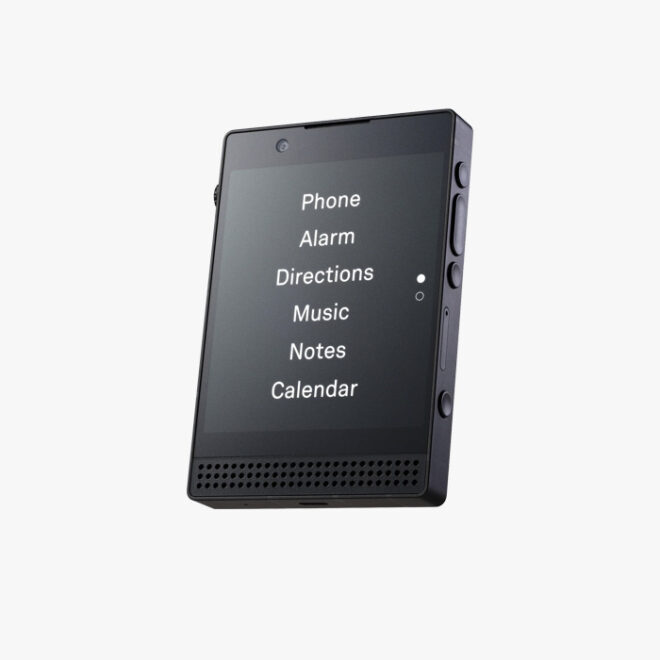
Light Phone III
The Light Phone III won’t win any beauty pageants but it’s a minimalist phone stripped down to the essentials: calls, texts, a few basic tools. No social media. No infinite scroll. No browser designed to keep us browsing.
Think about it: the smartphone in our pocket isn’t just a communication device—it’s a portal to every distraction ever invented. The Light Phone closes that portal and leaves only the human stuff. A call from a friend. A text from a partner. Directions to the restaurant.
Early adopters describe a strange sensation after switching: the phantom urge to check something that isn’t there. And then, after a few days, something unexpected. Relief. The itch fades. The pocket stops vibrating. Sounds kind of nice, doesn’t it?
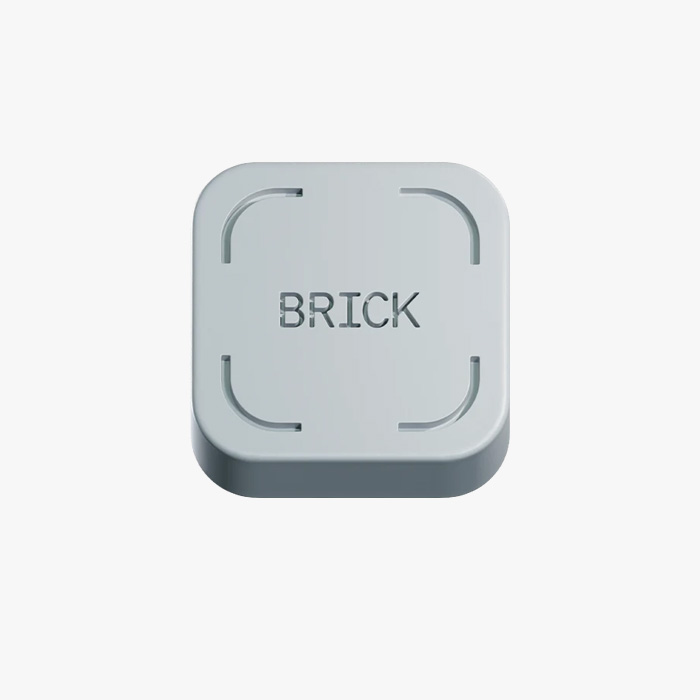
BRICK
BRICK does exactly what the name suggests: it turns our smartphone into a brick. Dock it, lock it, step away. A physical ritual—and a boundary you can see and touch. You can select the apps that are distractions and they’ll be disabled as soon as the BRICK touches it.
Because here’s the thing about willpower: it’s a leaky resource. Telling ourselves not to check our phone while it sits on the desk, glowing with possibility, is a losing game. We’ve all been there. BRICK changes the environment instead of relying on resolve. When you reach for your phone, it kindly reminds you that “this is a distraction” and you feel your habit being eroded away.
Dr. Lembke emphasizes this principle in her clinical work: environmental control beats self-control. BRICK makes that insight tangible—a small, deliberate act that says not now and actually means it.
TickTime TK3 Timer
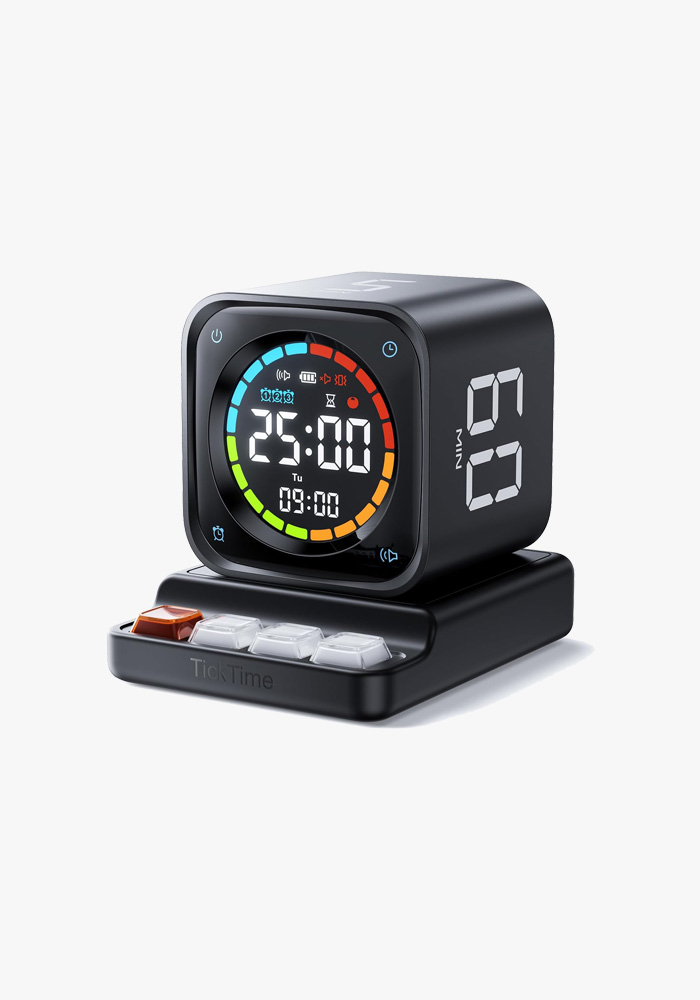
The TickTime TK3 is a digital timer. No screen. No sync. No account. We simply set our interval or flip the cube to one side to set it—25 minutes, 45, 60—and it counts down. When it rings, we stop.
It can be used to set our focus time. Within that ticking timeframe we should solely focus on the job at hand. And that little clock actually does wonders for our internal discipline.
Almost absurdly simple, right? And that simplicity is exactly the point. Using our phone to set a focus timer means picking up the very device we’re trying to avoid. The TK3 breaks that loop. It sits on the desk, holding us accountable to a promise we made to ourselves.
The Pomodoro Technique has been around for decades. But doing it with a physical object—something we hear ticking in the background—turns time management into something almost meditative. No optimizing. No apps. Just working, one interval at a time.
Mighty Vibe 3
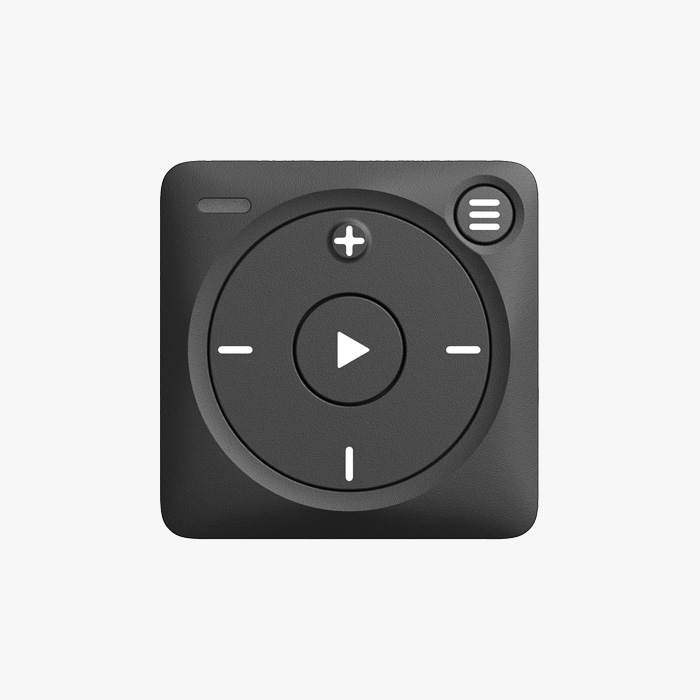
The Mighty Vibe is a small, screenless music player (remember the iPod?). Load up Spotify playlists or local files, clip it to a bag or jacket, and press play. No phone required.
This one solves a problem most of us don’t even realize we have: every time we reach for our phone to change a song, we’re one swipe away from everything else. The Mighty removes that risk entirely. Music stays music. The rabbit hole stays closed.
For runners, commuters, and anyone who’s ever “just checked one thing” and lost twenty minutes, the Mighty offers a small freedom that compounds over time.
And hey, if you’ve ever run with your phone latched to your leg or arm, you’ll know it’s not ideal—and wreaks havoc on your running rhythm, am I right?
The Payoff?
None of these tools are magic. They won’t fix a distracted life overnight. But together, they represent something important: a deliberate choice to build an environment that supports our focus rather than constantly fighting against it.
I’ve spent a month testing this approach with my own collection of the above and I can report a common arc. First, the phantom itch. My hand reaches for a phone that isn’t there. The low-grade anxiety of missing something. Then, gradually, a shift. Boredom becomes tolerable. Deep work becomes possible. My mind stopped scanning for the next hit and started settling into the task at hand.
Dr. Lembke calls this “recalibration”—but this time, in the right direction. A slow return to a baseline where ordinary life feels rewarding again. A book holds our attention. A walk feels like enough. An hour of writing passes without the urge to escape.
And honestly? It feels pretty damn good.
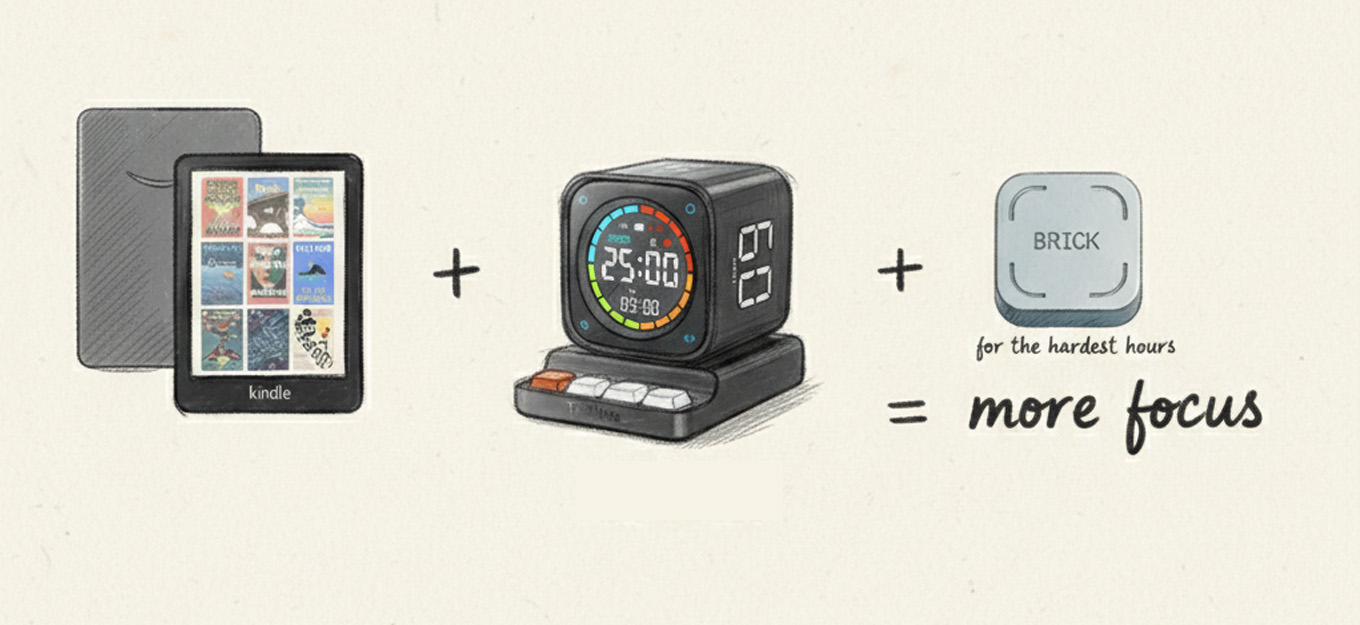
This focus tech stack represents a choice to use tools that respect our attention. Devices that help us do what we set out to do and then get out of the way.
Maybe we don’t need all of them. Maybe we start with one: a Kindle for reading, a timer for structure, a BRICK for the hardest hours of the day. The gear matters less than the intention behind it.
And, let’s be real, the everything-device isn’t going anywhere. But it doesn’t have to be the only option. We get to choose what we carry—and how much of our attention goes with it.







Michael Knispel
Editor-In-Chief
Mike’s our editor-in-chief, storyteller, and master traveler. He’s been at the helm for over a decade, spearheading our stories, partnerships, and brand at large.



 WAYS TO CARRY