



 Carry Awards
 Insights
 Liking
 Projects
 Interviews
 Carry Candy
 Community and Marketplace
Industry

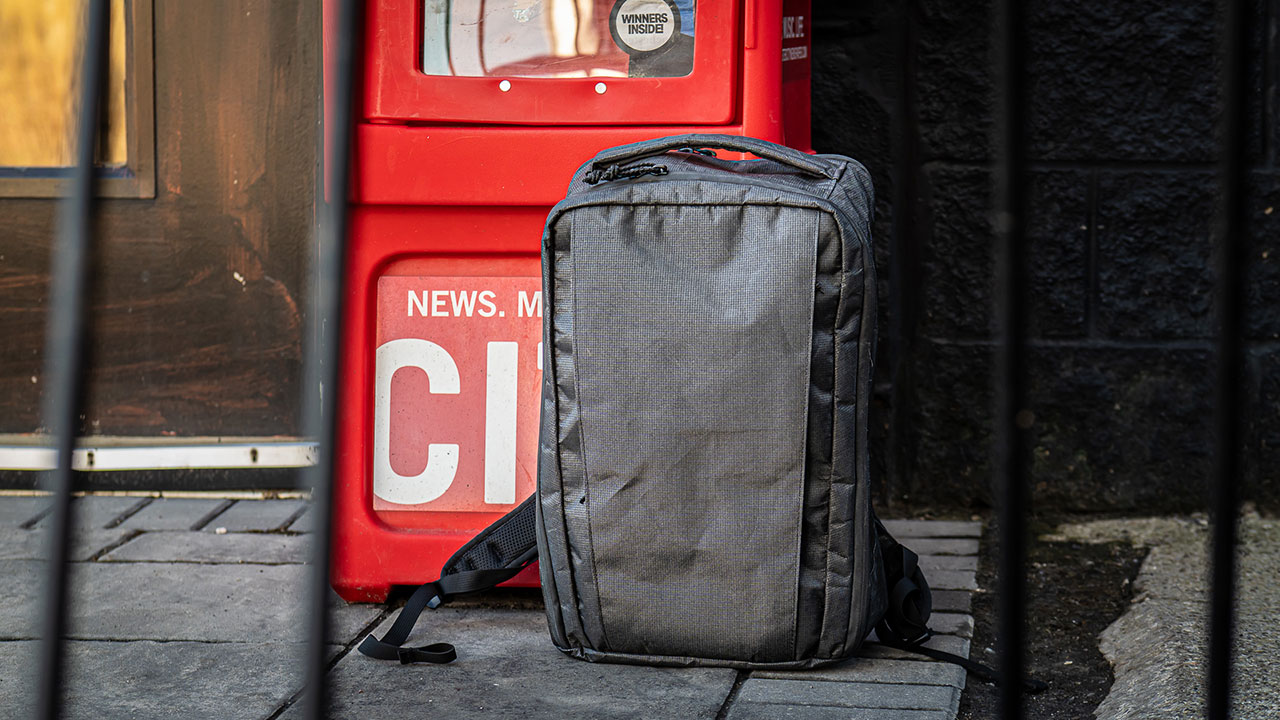
The distance between hiking the Alps and riding the subway isn’t as far as you’d think. For years, sleek everyday bags and rugged ultralight hiking gear lived in completely separate worlds. City gear was organized and polished. Trail gear was stripped down and rough around the edges.
But something has been changing. A few pioneering ultralight brands, born on famous trails like the Appalachian and Pacific Crest, have brought their wilderness expertise to city streets and travel world. They’re not just bringing lightweight materials. They’re bringing an entire philosophy: do more with less.
The Ultralight Mindset
The ultralight hiking community isn’t really about hitting a certain weight number. It’s about a way of thinking. Yes, ultralight backpackers track their base weight (that’s all their gear minus food, water, and fuel). But the real focus is on efficiency and self-reliance.
Two principles define the culture:
Ruthless Elimination
The key question is always: “Do I really need this?” The answer is usually “no.” Ultralight hikers give up traditional comforts in exchange for speed, endurance, and freedom of movement.
The Multi-Use Approach
Everything should do more than one job. A trekking pole becomes a tent support. A cook pot doubles as a mug. This forces designers to create simple, clever solutions.
The result? An optimized system built for pure performance in Earth’s harshest environments.
Two Different Worlds Meeting
When you compare ultralight philosophy with everyday carry and travel needs, you see why this crossover matters. Ultralight packs prioritize movement with simple, open spaces and high-performance materials. Everyday packs focus on easy access and organization, using heavier, tougher fabrics, and more complex construction and layout.
But now we’re seeing these ideas merge. Everyday bags are getting lighter. They have less traditional organization. Their straps and harnesses are more carefully designed for comfort.
Strength In Time
Some of today’s travel and everyday bags use advanced laminated fabrics that started in the ultralight hiking world. These materials came from hikers searching for gear that was strong, waterproof, and incredibly light.
Ultralight designers led the way with Dyneema Composite Fabric (DCF) in the early 2000s. DCF uses ultra-strong polyethylene fibers sandwiched between thin films. The result was completely waterproof and extremely lightweight gear. But DCF had problems. It crinkled loudly, cost a fortune, and scratched easily. These issues kept it mostly on hiking trails.
Then X-Pac fabric arrived in the mid-2000s and changed the game. Sailcloth makers developed this multi-layered material that stayed waterproof and held its shape better than DCF. X-Pac became the bridge between trail gear and city bags. It was tough enough for urban use while keeping that ultralight DNA.
The landscape shifted again around 2022 when Challenge ULTRA arrived. ULTRA weaves those ultra-strong polyethylene fibers directly into the outer fabric before adding protective layers. This makes the surface much tougher and stronger than DCF, solving a major durability problem for rugged everyday bags.
The material race keeps accelerating. Now we have Dyneema Woven Composites (DWC) and ALUULA. DWC is Dyneema’s answer to ULTRA. It bonds a 100% Dyneema woven outer layer to a Dyneema core, creating a fabric up to 10 times more abrasion resistant. Hyperlite Mountain Gear pioneered this latest advancement, proving that the ultralight industry is still the testing ground for the world’s best bag materials.
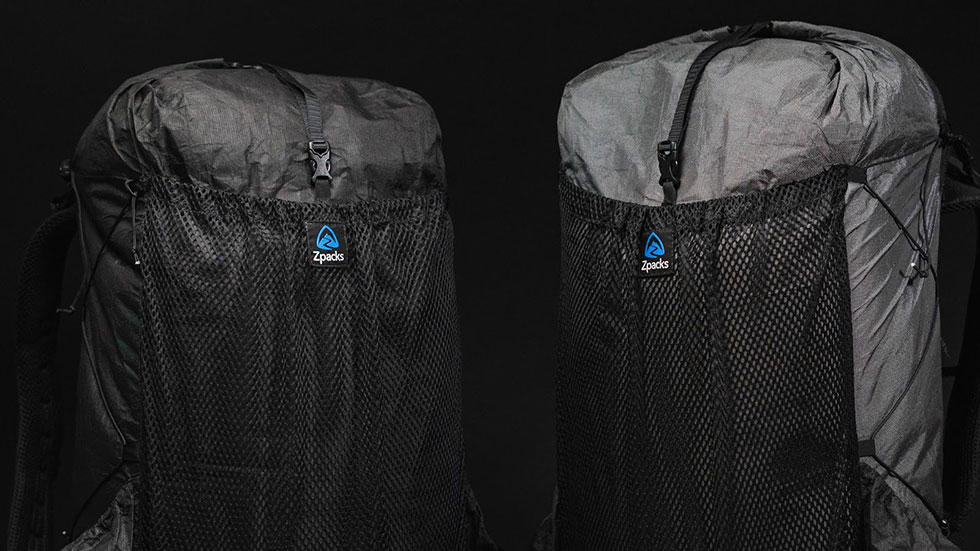
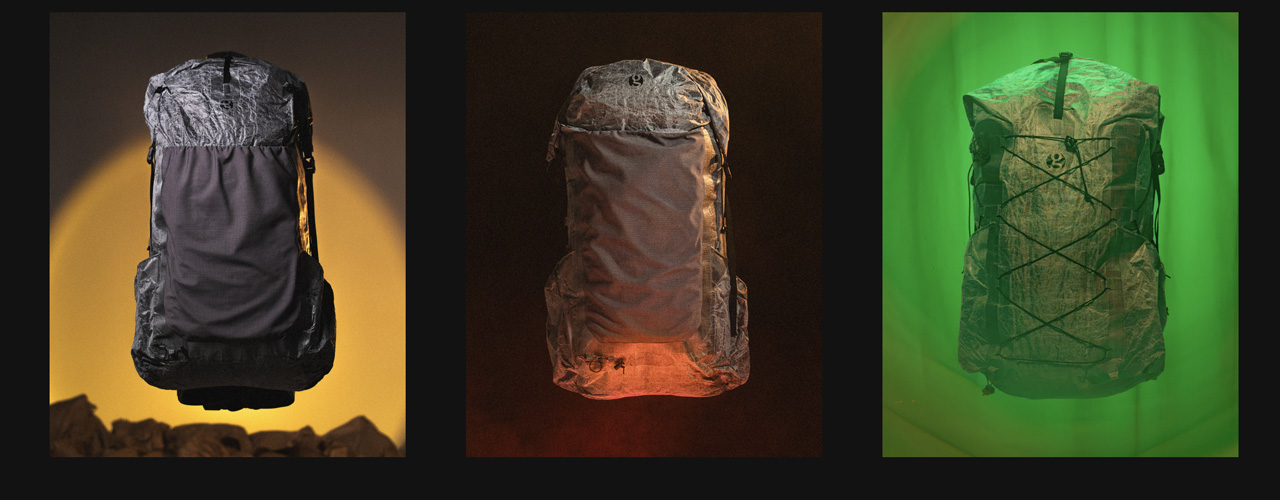
Up north in Canada, ALUULA is creating weldable fabrics fused together without the use of any glue, to again better the UL sailcloth experience by circumventing the problem with some sailcloths delaminating over time.
Gossamer Gear is one of the first pioneers to get this fabric into the field with their new Alchemy line.
The UL User Experience
The ultralight mindset didn’t just change bag materials. It transformed how bags work with your body through three key design shifts focused on efficiency and comfort.
Straps and Support Systems
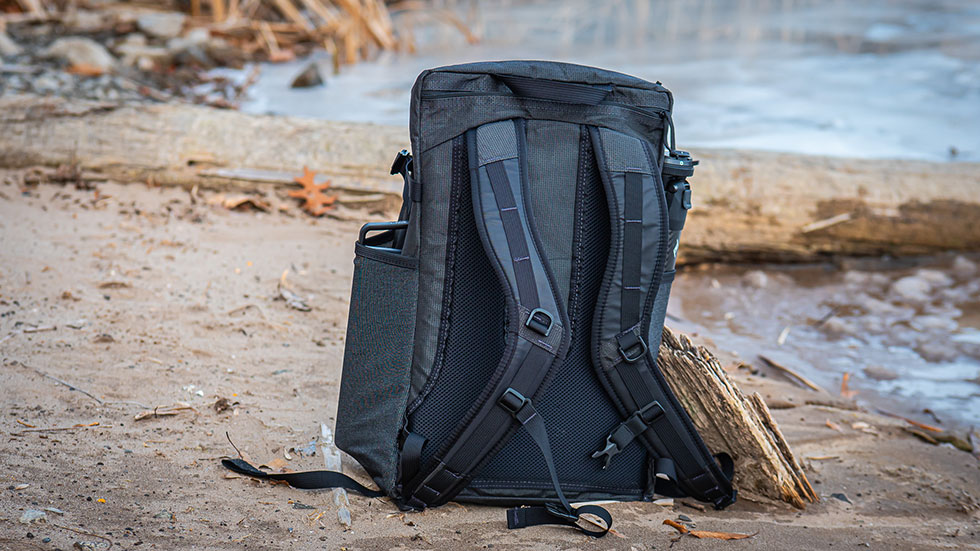
How a pack sits on your body is the foundation of ultralight design. This is the ultralight community’s biggest gift to everyday carry comfort. Bulky, over-padded straps are out. Light, minimalist performance is in. You can see this transfer in three ways.
Ultralight packs built for fast hiking prioritize a close, stable fit over bulky mesh panels. The focus is on total body connection. This stops the pack from shifting or bouncing. Many crossover everyday bags now use this same approach for comfortable, secure carry during movement.
Designers make this work by using thinner, high-density foams. These provide better cushioning and structure than the thick, puffy padding on traditional outdoor packs.
Brands like ULA pioneered custom fits with options like J-shaped straps, S-shaped straps, and multiple hip belt sizes. This commitment to personalized comfort is now spreading to everyday bags.
Pouch-Driven Organization
UL packs are traditionally simple, often frameless tubes built to compress sleeping bags and quilts; not to organize pens and cables. This emphasis on unstructured internal volume was a key influence on crossover EDC bags. Rather than building heavy, sewn-in admin panels, UL-influenced packs often provide minimal internal division and large, external slip pockets. This design choice intentionally pushes the user to adopt macro organization; the use of packing cubes, tech pouches, and even slings. This is a direct cultural transfer from the trail, where every item is individually packed for efficiency, weight distribution, and weather defense.
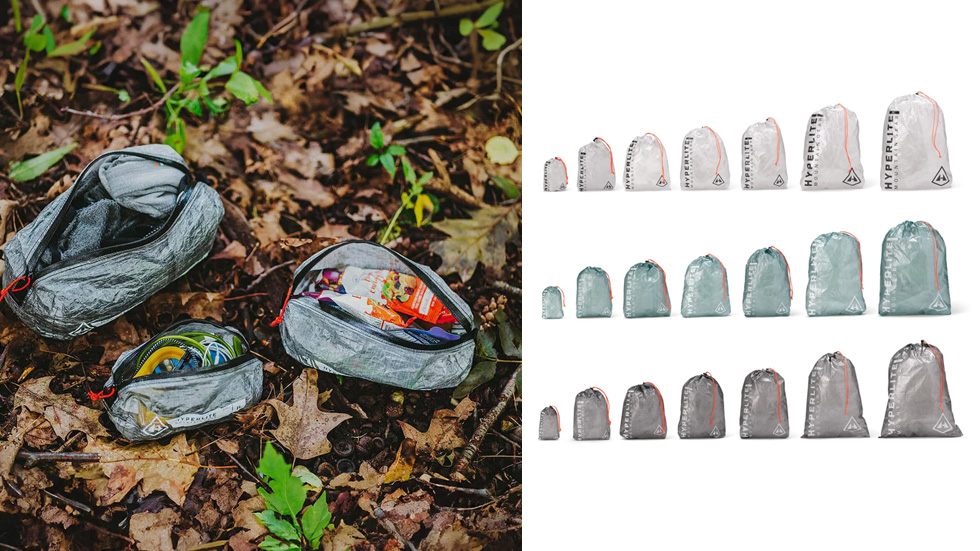
Modularity As An Ecosystem
The ability to customize a pack with exterior pockets and attachments is foundational to UL for hikers to scale up and down. The use of large external stretch pockets (seen on ULA’s Dragonfly) for quick access is a direct lift from hiking. However, the influence on modularity brings more than that. While UL packs bring detachable sternum straps and hip belts, the modularity ecosystem draws equally from the traditions of military, tactical, and even backcountry packs like those from Hill People Gear. The convergence has created a user-defined carry experience: tactical modularity meets the UL imperative for lightweight efficiency.
Trail Veterans Take To The Road
The evolution of UL brands from the trail to the cityscape is a fascinating chapter in modern EDC design. For decades, pioneering companies founded by thru-hikers sought to strip gear down to its essence, prioritizing lightweight, durable, and comfortable load carriage. Now, many of these veteran brands are leveraging that trail-tested DNA to create crossover packs that excel in the city.
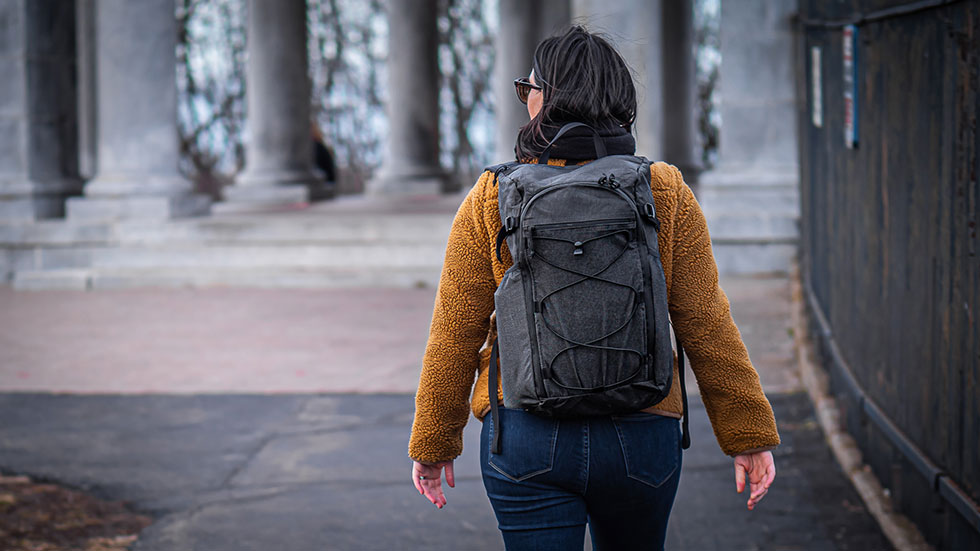
This shift isn’t just about applying a new logo; it’s a fundamental translation of UL principles into EDC functionality. Brands like ULA Equipment were built on the belief that ‘backpacks should last you a lifetime of hiking’. They’ve taken their famously comfortable harnesses and integrated them into front-loading, clamshell-style travel packs like the incredibly popular Dragonfly. They retained the large external pockets, a signature of many UL packs, which translate perfectly from holding wet tarps on the trail to quickly stashing a hoodie or light jacket in the city.
“The biggest thing that we had to get past was when you design ultralight, long-distance backpacking packs, you are concerned about meeting at the crossroads of durability, comfort, and ultralightness. In the everyday carry travel group, that group is really not as finicky about the weight. So, we still get to be concerned about the weight of the product, but we really get to lean more into the design, the durability aspect of it… We wanted to make a sporty crossover bag because we knew we could. And then all of a sudden people got really drawn to the simplistic design of the Dragonfly. Based on the success of that, customer feedback, and customer requests, that’s why we wanted to make an everyday carry bag.”
– Peter Longobardi, Owner, ULA Equipment
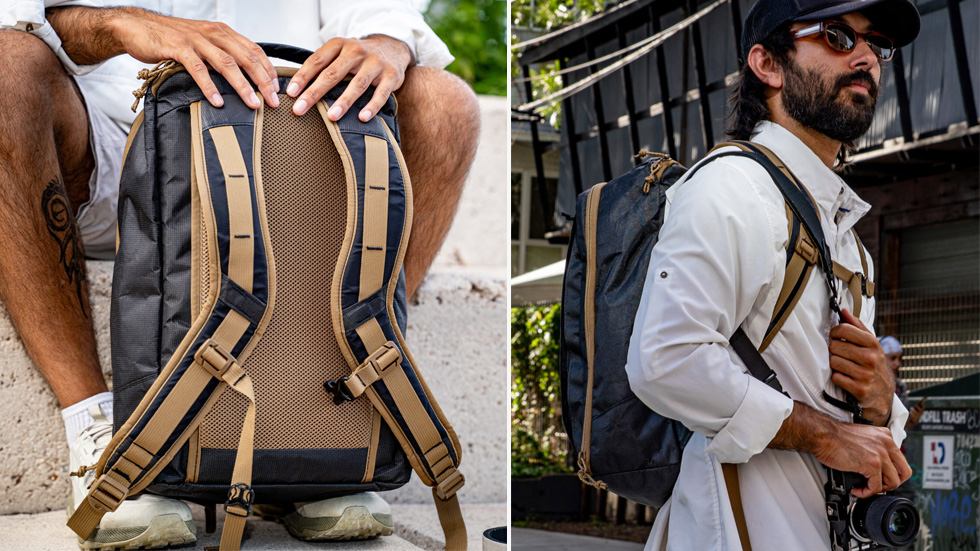
More recently, ULA Equipment has introduced the Cicada, which bleeds even further into EDC; removing the large external pockets to focus on a more sleek silhouette. Outside of the distinct harness, you’d never know this bag’s roots were on the trail. It’s got plenty of macro-level pocketing, a cushy laptop sleeve, and even an integrated passport pocket and luggage passthrough. In my humble opinion, ULA is leading the way in this evolution.
“We like to design our product lines to meet people on their journey of “taking less,” and our UL pack line has a linear methodology that supports that. The UL world is still new to many beginning backpackers, so we needed to figure out what level people are finding us at… We assumed it would be the same with travel and EDC. With our offerings, we aren’t appealing to the roller-bag crowd, but can we appeal to the first-time one-bagger? Or, with our more minimalist ideals, do we only appeal to the more experienced traveler? We decided to take a two-pronged approach.”
“The Aero Jet was made to be a good match for a beginner one-bagger, and the Vagabond Jet can be aspirational and doable for the experienced one-bagger. We might not have nailed the product line exactly yet, but that’s what keeps driving us toward the right assortment and features. We didn’t realize how controversial opening styles and luggage dividers could be within the travel and EDC crowd. Originally, we were just making gear that worked for us. Now, we get to close the feedback loop and keep tinkering.”
– Gossamer Gear Team
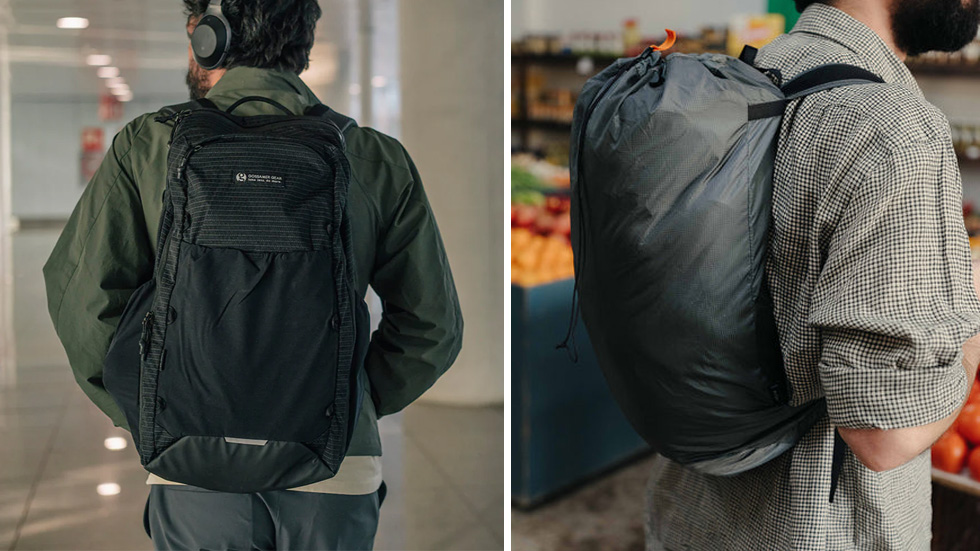
However, they’re far from alone. Gossamer Gear, another staple UL brand, has had urban models in their lineup for the better part of this decade. The Vagabond Jet focuses on clean, unique geometry that adds features essential for EDC, like structured back panels for laptop protection, while keeping their signature lightweight materials and the larger, unstructured pockets of the UL world. They’ve also released a travel pack this year, the Aero Jet, which acts as the Vagabond’s larger, front-loading sibling.
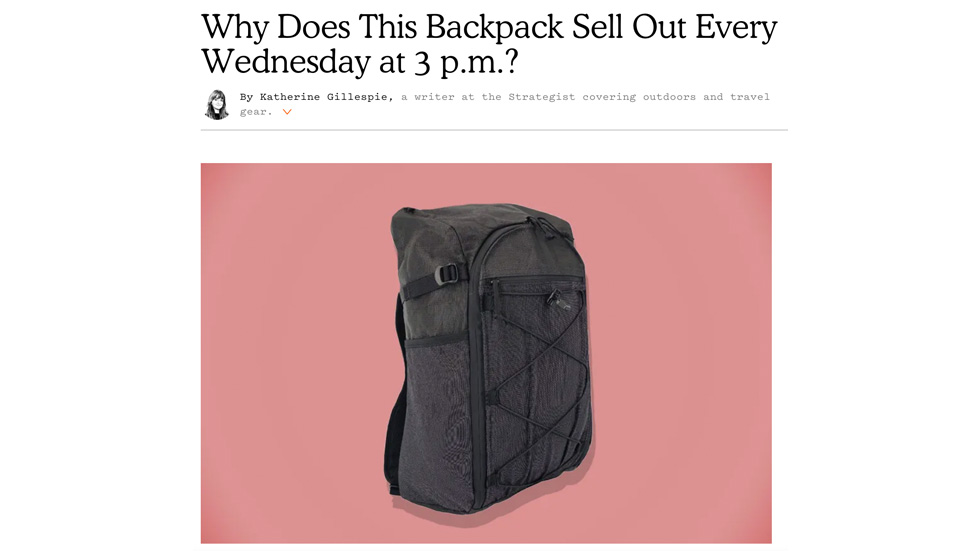
Other brands approach the tarmac as an extension of the trail. Hyperlite Mountain Gear (HMG) built their identity around Dyneema Composite Fabrics (DCF), creating bombproof, entirely waterproof shells. Some of their packs, like the smaller Daybreak, are less about internal organization and structure and more about creating a single, rugged, sealed compartment; the ultimate expression of the UL principle that the bag is simply a lightweight, protective vessel. It’s also a daypack that’s at home just about anywhere in the world.
Six Moon Designs (SMD), known for their incredibly capable, adjustable, vest-style harnesses, applied just that into a full-panel-loading travel bag. It might be the truest example of UL-meets-travel in this entire editorial.
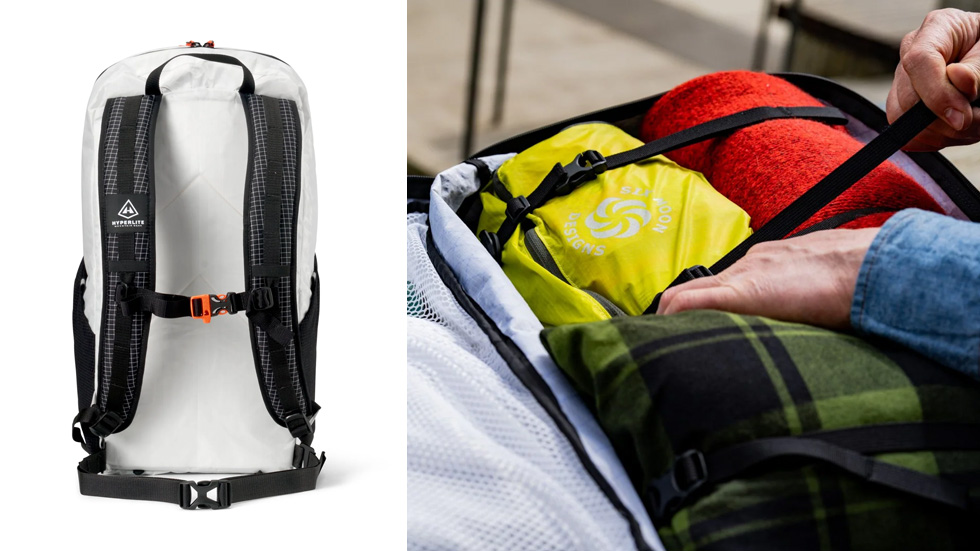
Collectively, these brands illustrate a powerful trend: the expertise honed on the toughest trails is proving to be the perfect foundation for the modern challenges of EDC and travel.
The Cultural Transfer
The deepest impact is the philosophical transfer that guides the design choices. UL design is about eliminating every unnecessary stitch, layer, and ounce. Not to save money, but to ensure long-distance structural integrity under stress. When a UL brand builds an EDC pack, they don’t over-engineer it with complex panel work and organization panels.
The truth is, the fundamental question asked by UL hikers, “Do I really need this?”, has moved from the backcountry to the business district.
“As much as they are different, both communities are full of passionate people who value quality, innovation, fit, comfort, and customization or tinkering. In trying to bridge the gap, there’s been a lot of education around the idea that lightweight can still mean tough and strong when the right materials and construction techniques are used. The motto “take less, do more” applies to many aspects within both communities. When a customer truly starts to understand the impact of not being weighed down by excess gear, it can be very liberating. They begin to apply that mindset to many aspects of their life, not just backpacking.”
– Gossamer Gear Team
For decades, EDC bags were heavy by default; weight signaled quality and protection. Now, post-UL, performance is defined by efficiency. The ultralight hiker’s obsession with structural integrity under stress has become the urban traveler’s benchmark for resilience.
The new wave of crossover packs are not just lighter; they are a distillation of necessity. They prove that the principles learned from crossing a continent on foot are equally valuable when navigating the airport terminal or the office commute. By adapting the gear required for the most demanding environments on Earth, UL companies have created a more resilient, efficient, and thoroughly modern approach to everyday carry.





Brandon Vulaj
SENIOR EDITOR
Brandon, Senior Editor, always understands the finer details. He can talk for hours about softgoods, brands and fabric innovation, so hit him up for a chat, on or off the record.



 WAYS TO CARRY