



 Carry Awards
 Insights
 Liking
 Projects
 Interviews
 Carry Candy
 Community and Marketplace
Carry Collaborations
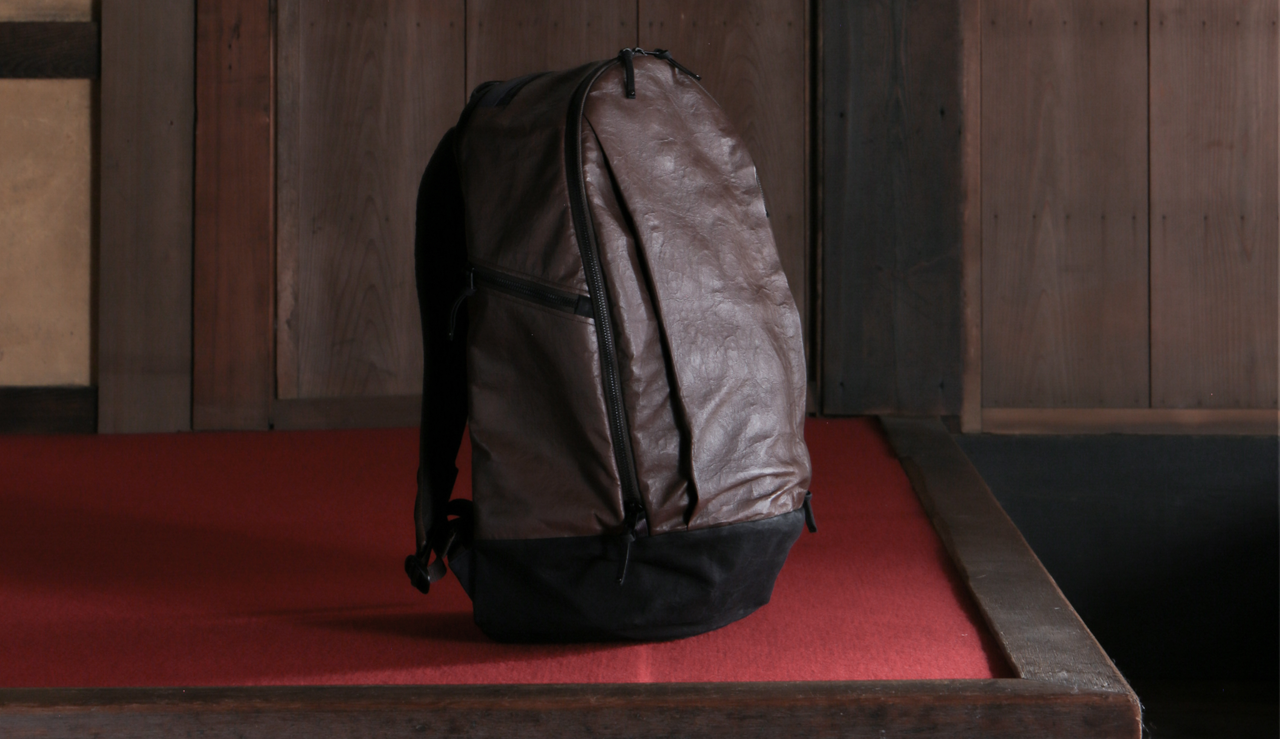
CARRY COLLAB LXII
Carryology x rofmia Daypack | An Ode to Tradition and Tomorrow
The Pilgrimage
It takes sixteen hours by air and four and a half hours across three different trains to reach Minokamo—a pilgrimage of sorts, a deliberate crossing from the roar of modern life into a quieter, more contemplative world.
Minokamo lies in the center of Gifu Prefecture. With a population of fifty thousand, the town beats at a slower rhythm. For Futoshi and Hiroko Takeuchi, founders of rofmia, this is precisely the point.
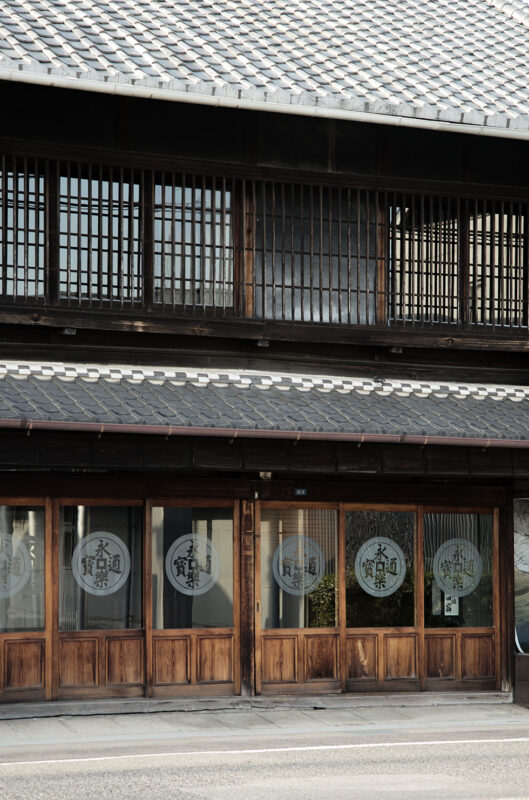
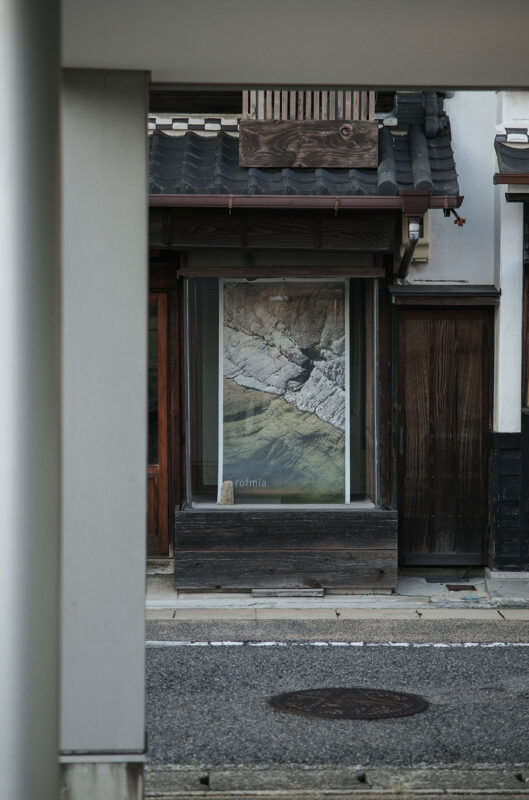
They chose this place for clarity. In the wide spaces and slow pace of the countryside, they found what cities could not offer—room to think, to work, to live without distraction.
“The space is wide, there are fewer people, and we can work calmly and live quietly. There is abundant nature. Living in the countryside means that people travel long distances to come meet us, and we also must spend a lot of time traveling to meet people. The distance makes it so that we can only meet those we truly want to. This makes our relationships deeper and stronger.”
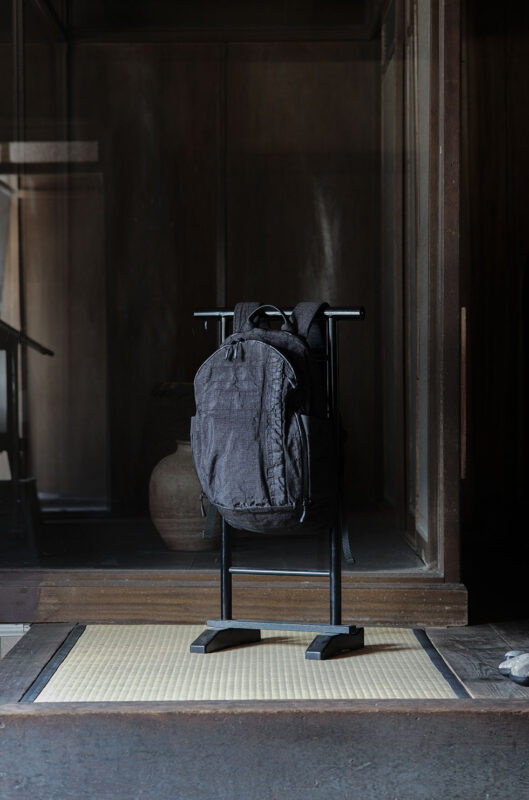
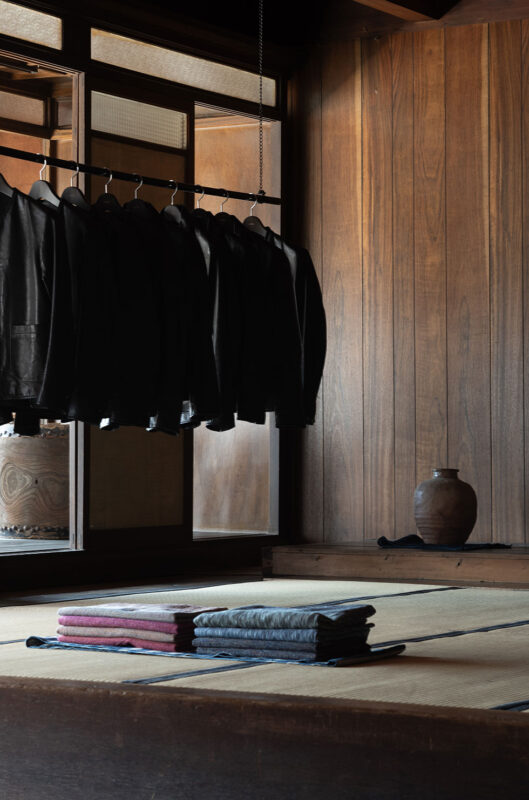
We cannot show their faces. They choose anonymity not out of secrecy, but because the brand should remain the focus.
Both grew up with grandmothers who were artisans—one a kimono seamstress, the other a futon maker. From childhood, they absorbed the rhythms of sewing, watching and imitating the hands that came before them.
“We aimed to make a living by using sewing machines. This is because both of our grandmothers were artisans. My grandmother was a kimono seamstress, and my wife’s grandmother was a futon maker. Since we were children, we were exposed to their work and learned to use sewing machines by imitation.”
Years later, destiny led them to a building that would shape everything that followed.
The Workshop
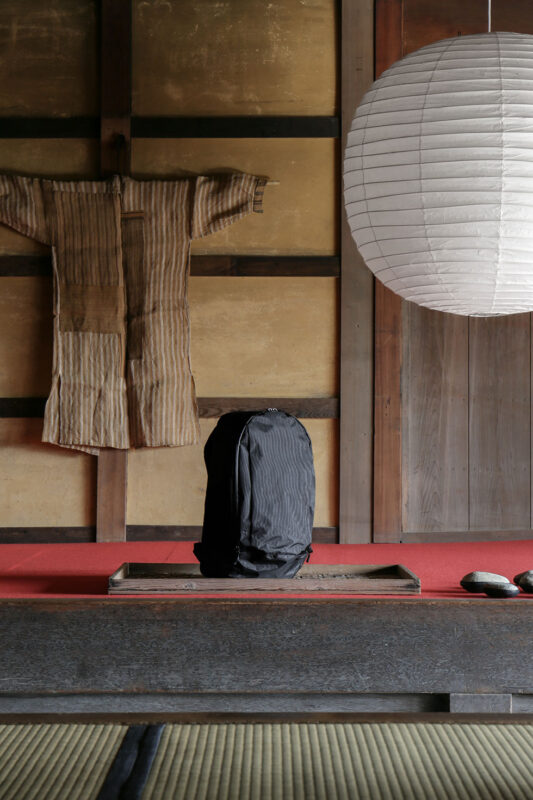
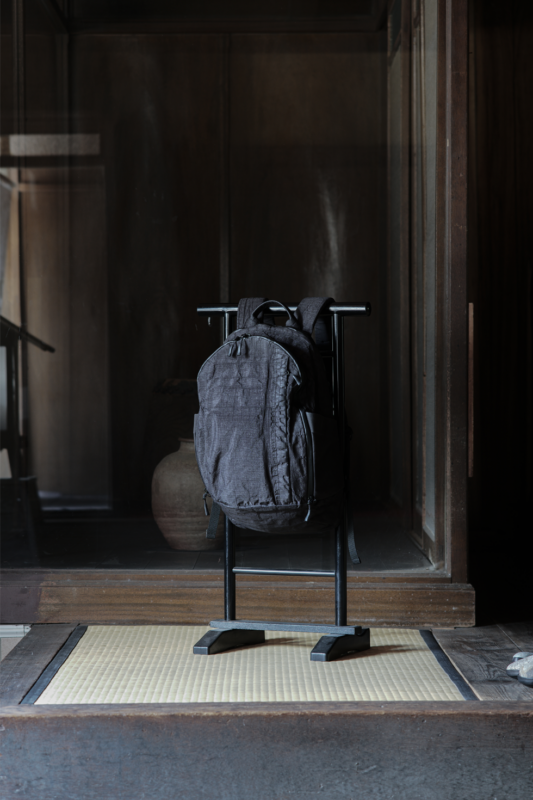
Their workshop is their home—a 100-year-old former kimono shop, preserved much as it was centuries ago. Sliding shoji panels divide rooms with gentle precision. Gold-flaked walls, designed before electricity, catch sunlight and scatter it softly. Every beam, every crease of washi paper, carries a sense of history.
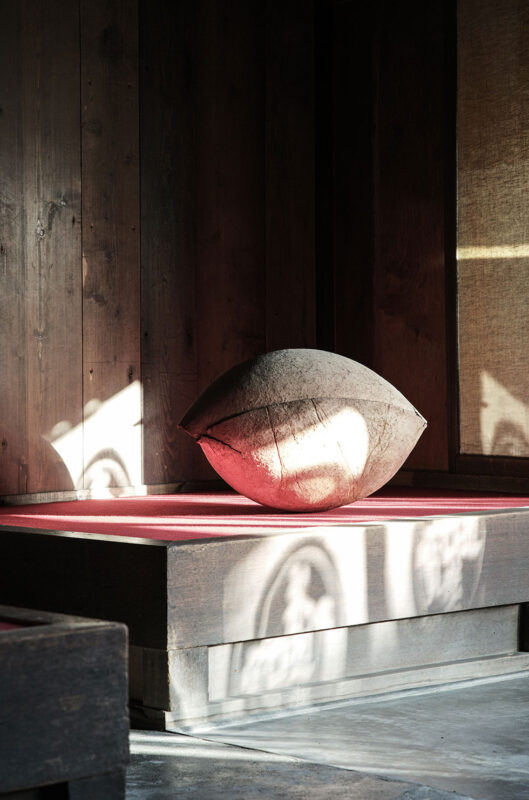
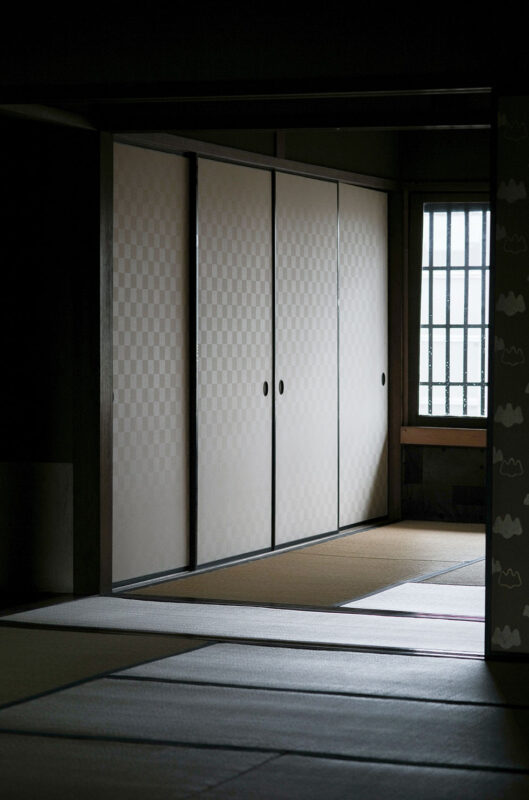
“When the time came for us to become independent in the sewing industry, we encountered an old house that used to be a kimono shop. It was not only suitable as a sewing workshop but also a place where we could gain great inspiration for making things. We started rofmia with the concept of creating a brand that naturally stands within this house. rofmia exists by offering our skills in response to the inspiration we receive from the house.”
It is here that rofmia’s philosophy was formed.
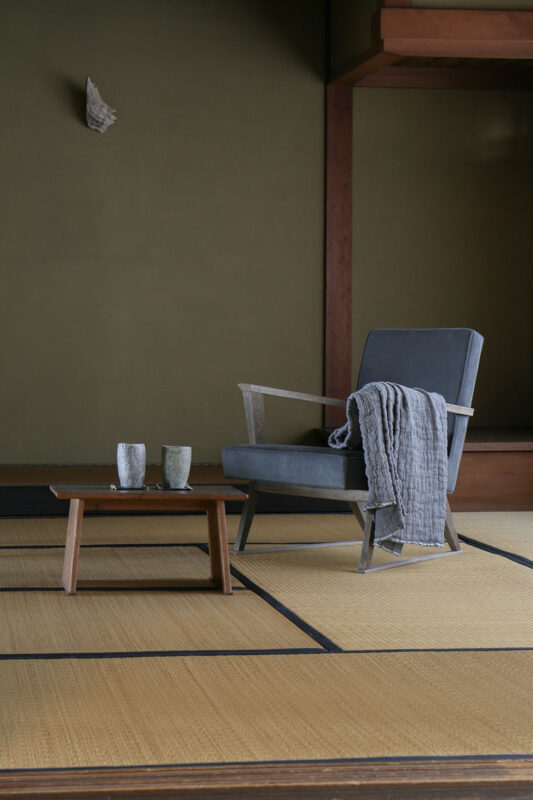
“One of the things we learned by living in this house is the functionality of the Japanese-style room. A Japanese room is always empty, and it becomes something only when necessary. Lay out futons and it becomes a bedroom; bring out a desk and it becomes a study; set dishes and it becomes a living room; display flowers and it becomes a guest room; remove the sliding doors and connect rooms, and it becomes a hall for banquets or ceremonial occasions. It is not that things are already provided—its expansiveness and flexibility come from the presence of empty space.”
From this, they drew a parallel: a backpack is like a small room. It should not be burdened with excess. It should adapt to its owner’s shifting needs.
“A backpack is, in a sense, a small room. Because you cannot equip it with everything, you must incorporate empty space that allows it to adapt to the user’s needs, just like a Japanese room. By removing unnecessary decoration and clarifying the concept, the object gains a composed presence that guides refined actions, and as a result, I believe we arrived at a minimalist philosophy.”
The Form
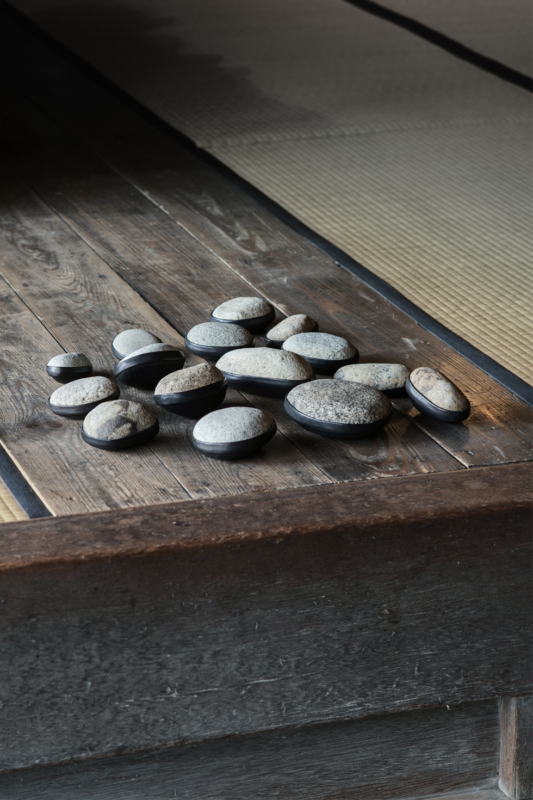
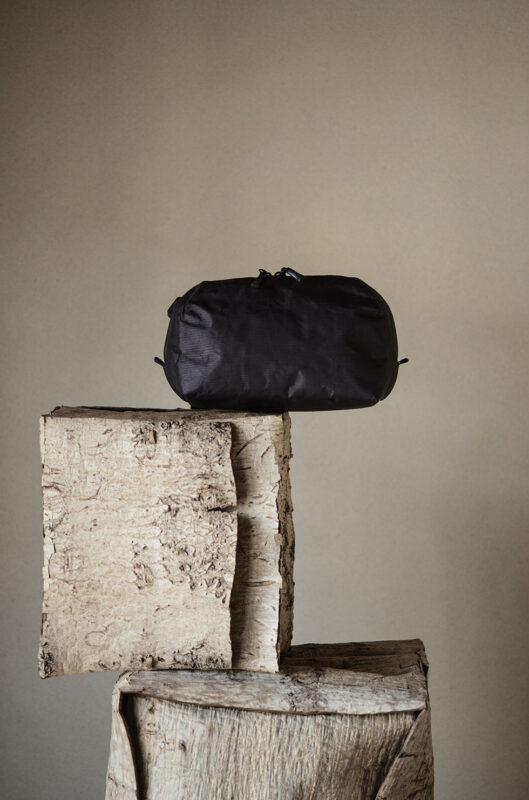
Another influence flows from nature. The countryside around Minokamo is filled with rivers—steady forces that smooth stones over decades. Futoshi often walks these banks, collecting rocks polished by time and water. Their curves and softened edges inspire rofmia’s silhouettes.
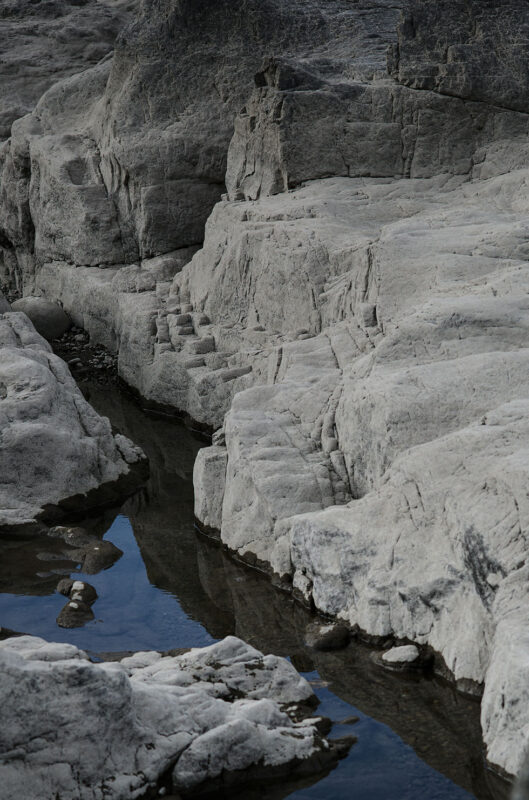
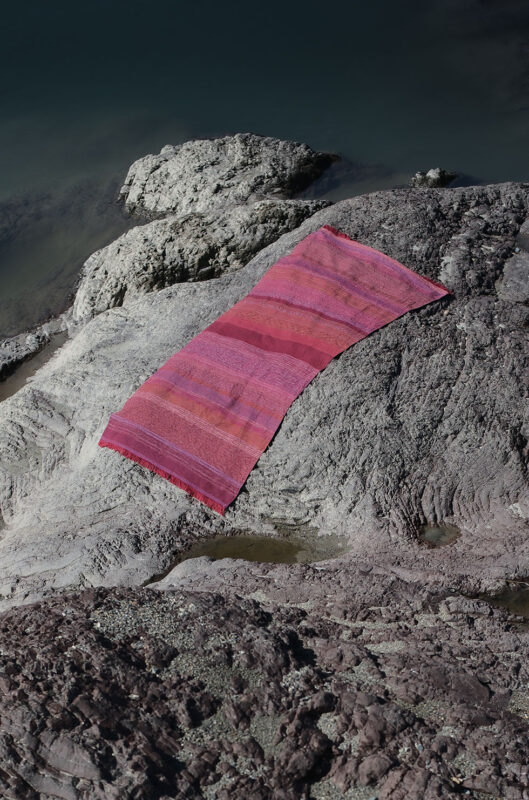
Rather than rigid, box-like shapes, the bags favor soft, organic forms—calm, rounded, understated. This subtle curve allows the bag to flow seamlessly against the human form, a principle rofmia calls ‘Shift’: the connection between the city and nature, daily life and travel.
They also sell these hand-selected river rocks at their headquarters, wrapped in hand-stitched leather. They are not available online, only for those who make the pilgrimage.
The Craft
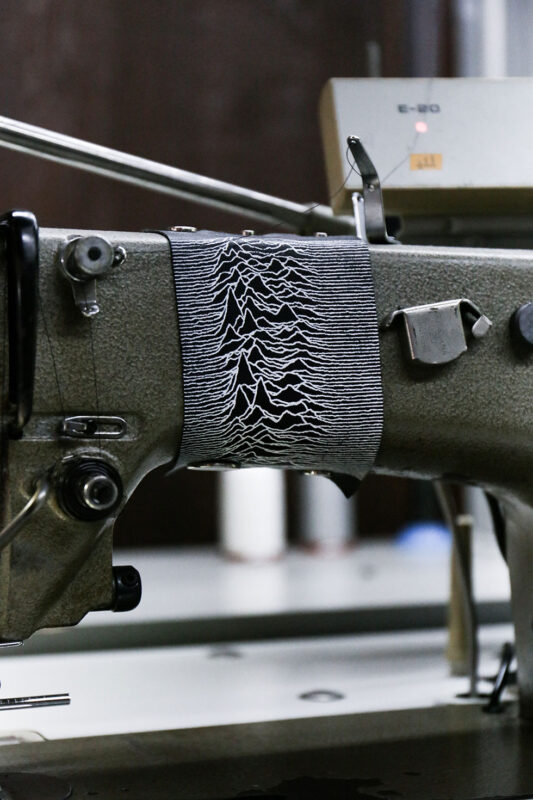
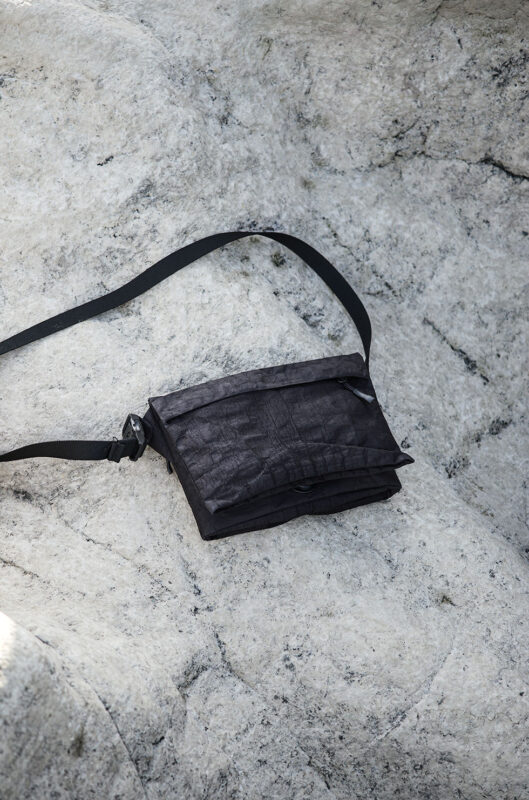
Today, every rofmia bag is touched by only two pairs of hands. There are no employees, no outsourcing, no assembly line. Each cut, stitch, fold, and seam passes through their hands hundreds of times before completion. In an age of automation, this devotion is rare. And because of it, rofmia will never scale, staying true to Mingei, the Japanese Folk Craft Movement. This makes for special, genuine and authentic product. And, moreover, a brand that requires you to enter a lottery to receive it.
Their sources of inspiration remain rooted in tradition:
1. The former kimono shop house that rofmia is based in
2. Mingei (Japanese Folk Craft Movement)
3. Takuma Nakahira, ‘Why an Illustrated Botanical Dictionary?’
The Collaboration
In December last year, we made our pilgrimage to Minokamo, Japan to visit with Futoshi and Hiroko Takeuchi. We shared a day and good food, and decided at the end to come together, to make something special, something to not only tell rofmia’s story, but to trace lines to Japanese culture and craft as well.
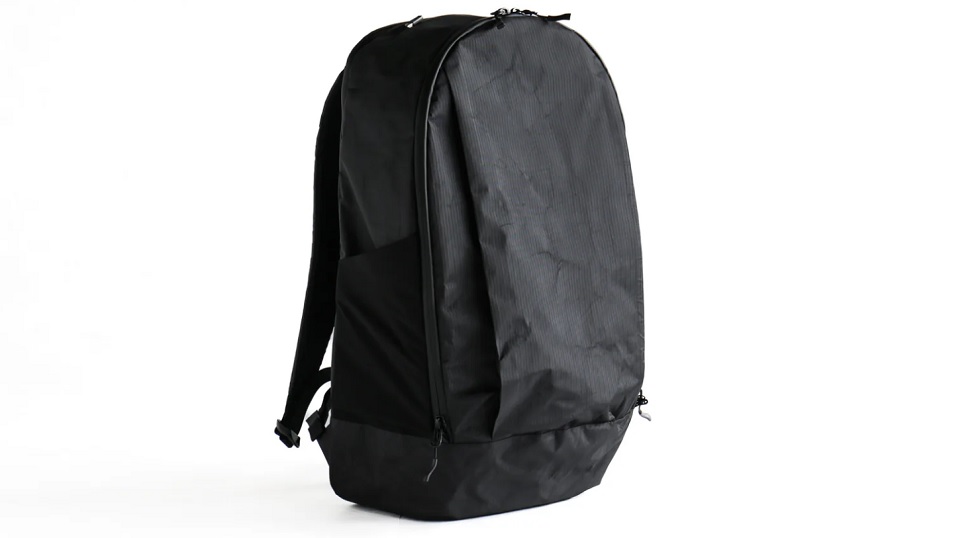
We would begin working and the Daypack V2 L would be our foundation. A pack that seamlessly connects work and daily life.
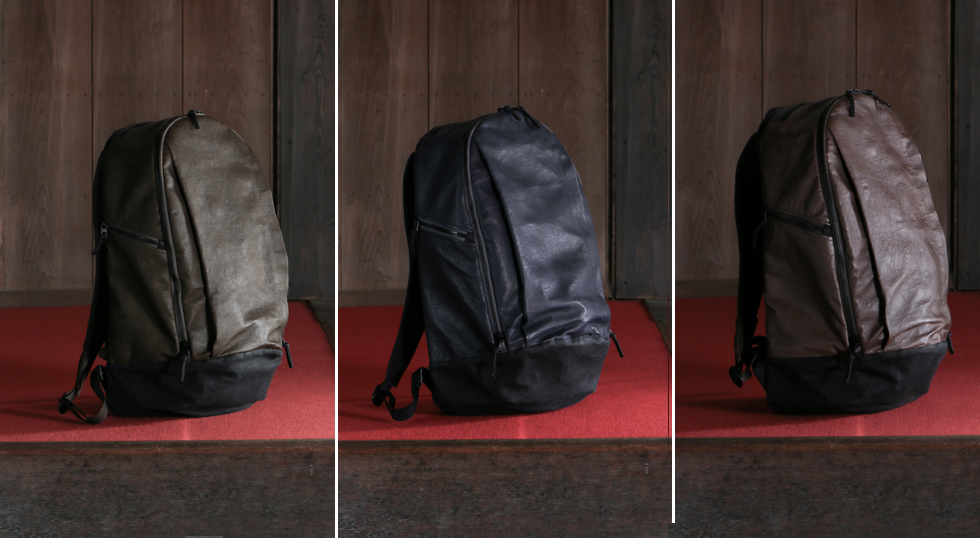
The Hut
This collaboration centers around: the hut. Not the pristine cabin of architectural magazines, but the improvised shed of rural Japan, built from whatever materials are available, pieced together with care and necessity.
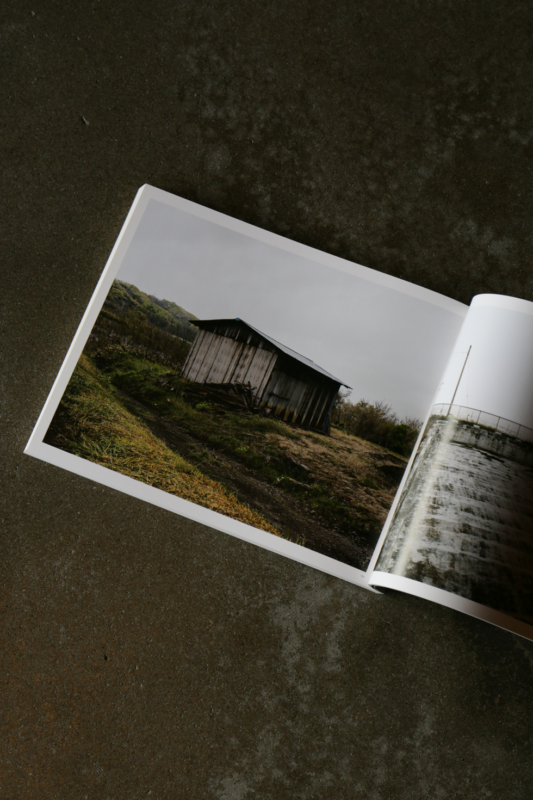
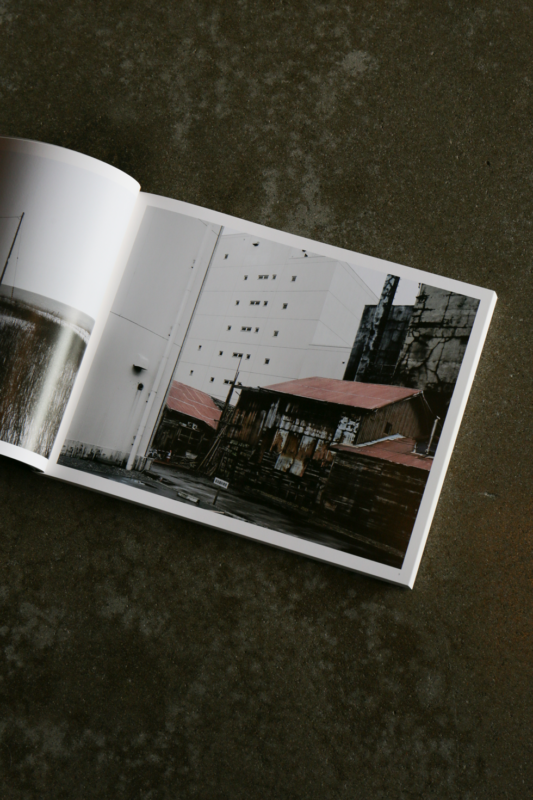
A patchwork, if you will, of materials.
“Huts are made from whatever materials are available. So this time, I gathered leftover leather no one chose, left behind at a Japanese leather trading company.”
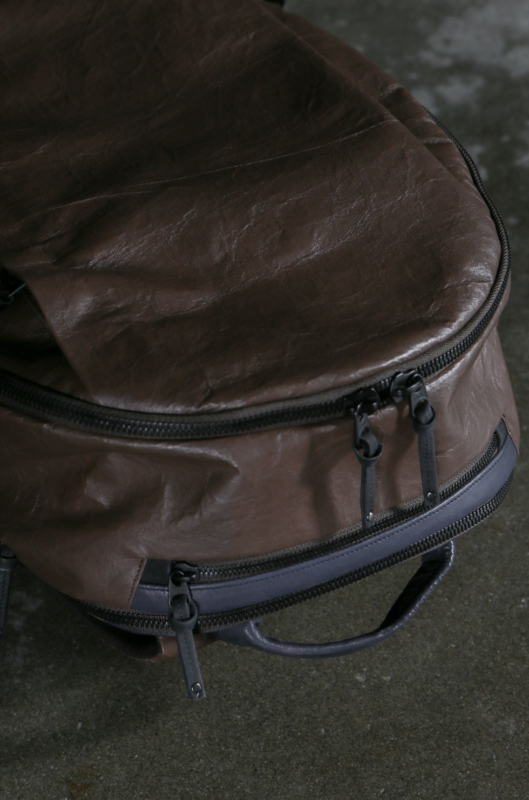
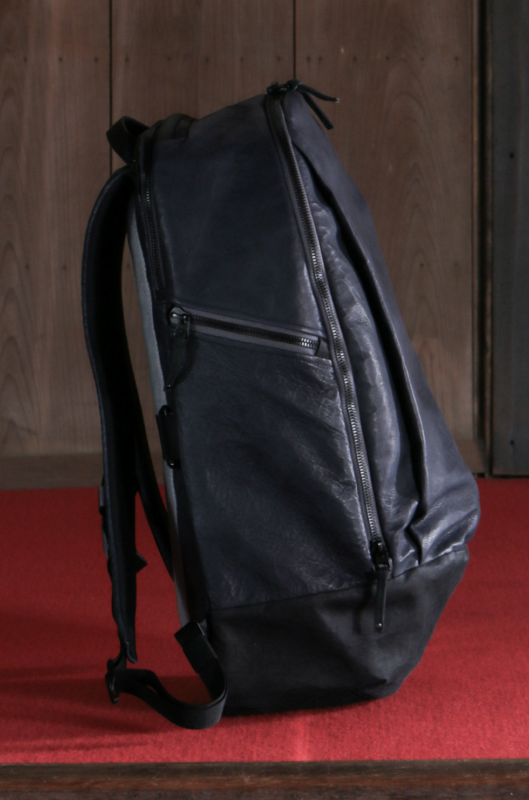
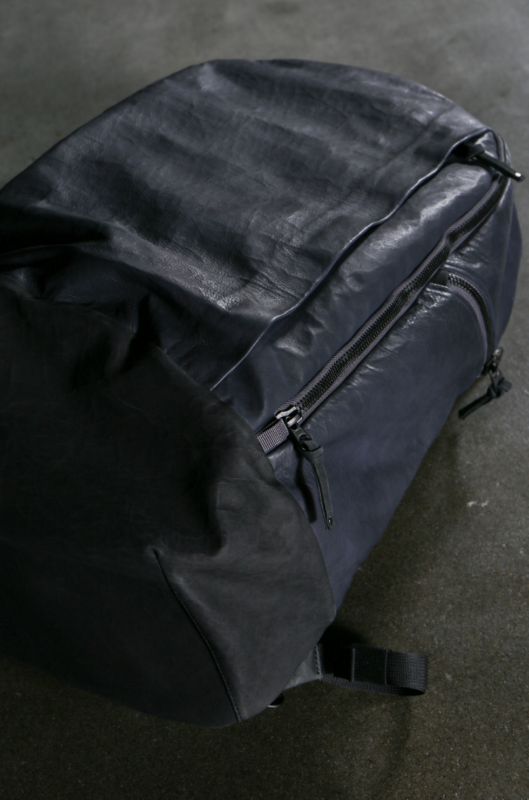
The bags feature brown and khaki smooth Dyneema leather, combined with black Dyneema nubuck and navy Dyneema smooth leather—materials rescued from Japanese warehouses, given new purpose.
“By gathering and combining these pieces, we wanted to express the Japanese practice of valuing fabric and the unique patchwork combinations that emerged as a byproduct of this effort. This patchwork concept can still be seen in the Japanese landscape today. Think of simple farm tool sheds built from scrap materials. Or like work clothes and the art of Boro, these are also made from whatever materials are available.”
The Material
Now for all of rofmia’s traditional spirit, their work is not nostalgic. It embraces one of the most modern materials: Dyneema Composite Fabric. But Dyneema seems at odds with the centuries-old wooden workshop, right?
But Futoshi and Hiroko have found harmony:
“The rofmia house is a quiet, weathered Japanese-style building that strongly evokes Japan. In contrast, DCF is a highly functional material with a metallic feel and complete waterproofness, possessing characteristics that are the opposite of a traditional Japanese space.
However, the two also share many similarities. DCF is as thin as a sliding paper door, as light as a lantern, can be folded like origami to create three-dimensional structures, and with use, it changes into a texture resembling the wrinkles of washi paper. In these aspects, it has a strong affinity with Japanese aesthetics. From one angle, they appear completely different, yet from another, they seem very close.”
But for this collaboration, we decided to go one step further, and make our first ever collaboration using Dyneema Leather, an innovation first created by Sruli Recht.
This collaboration uses ECCO’s FSDX Dyneema®︎ Leather. Dyneema is bonded to 0.4mm-0.6mm cowhide leather, making it lightweight, strong, and water-repellent.
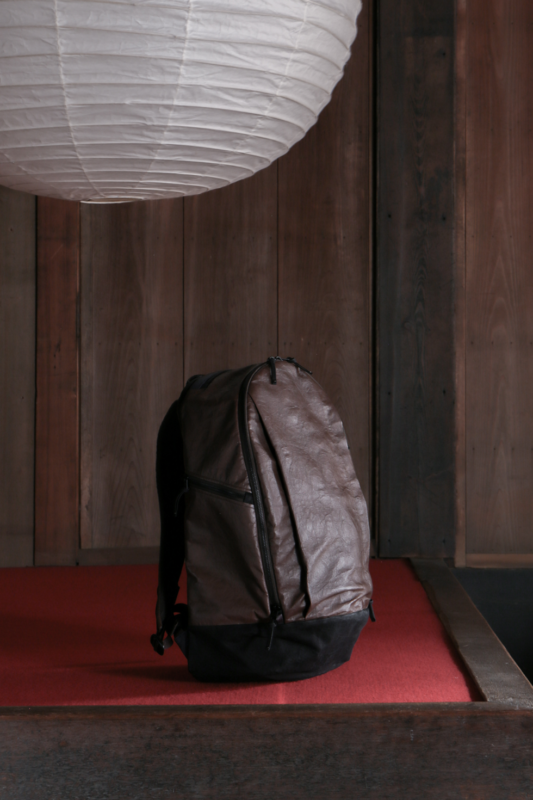
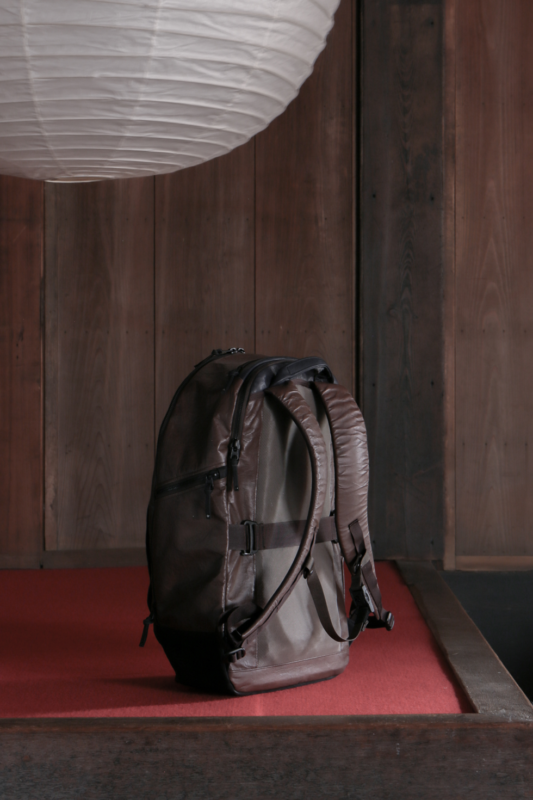
“Dyneema Leather similarly appears robust and substantial, yet feels impossibly light in hand—unlike any leather product. Its extreme thinness, unattainable with leather, allows for complex layered structures and intricate stitching. Dyneema Leather is a fascinating material that lets you experience the best of both natural and high-performance fabrics. We’re deeply drawn to the sensation of these opposing qualities coexisting within it.”
The Boro
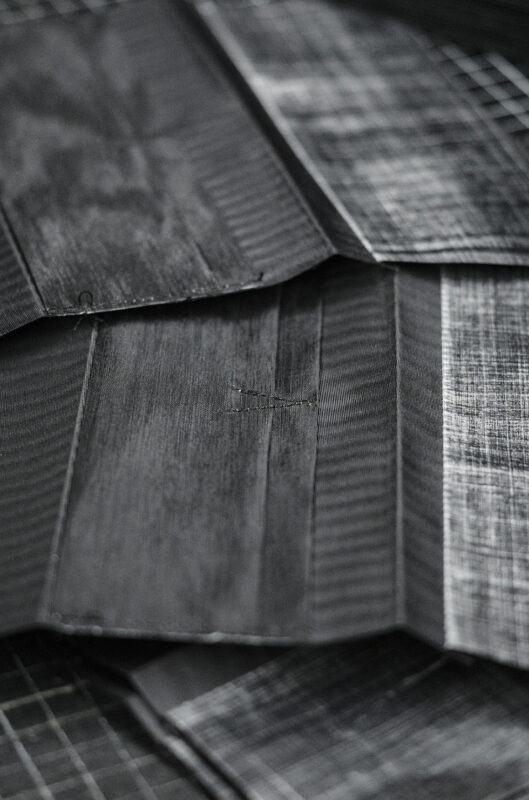
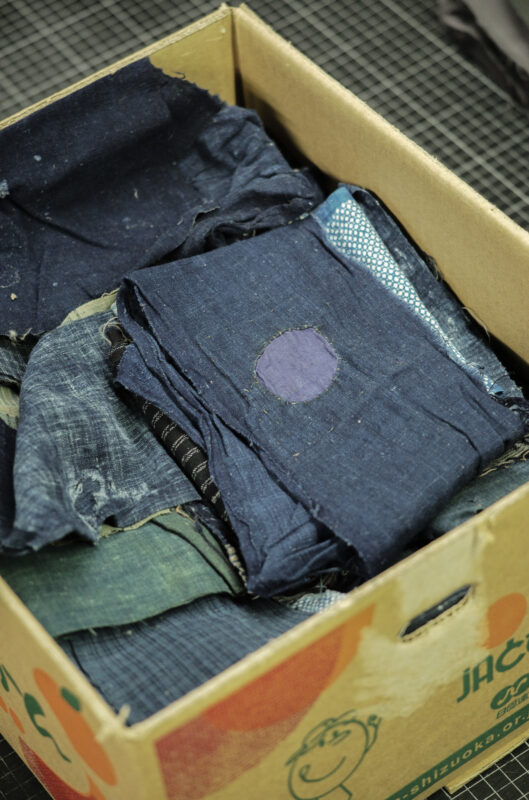
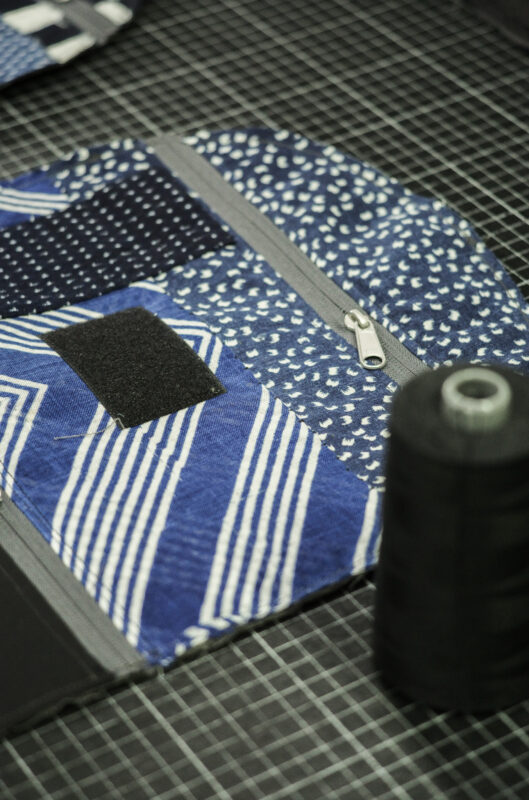
The inner fabric tells its own story, it’s a patchwork made from workwear made roughly 100 years ago, possibly dating to the 1910s-1930s, with some pieces perhaps from the end of the Edo period. The primary pattern is called “YUKINKO,” meaning snow, created through kasuri—a technique where bicolor yarns are dyed before spinning. On top of this textile, checkered patterns (ICHIMATSU) and bat-patterned vintage fabrics are patchworked. Each piece is hand-sewn, and the pattern combinations are unique to each item.
The concept runs deeper still, connecting to Futoshi’s own roots:
“My grandmother was from the Tohoku region. She came to my hometown in Aichi Prefecture during the postwar mass evacuations and began working in sewing. So my roots lie in the Tohoku region. Workwear from Tohoku is represented by patchwork and embroidered farm clothes. The Tohoku region is extremely cold, and cotton doesn’t grow there, so even a little cotton fabric was treated with great care. They pieced these scraps together meticulously, reinforced them with stitching, and thickened the fabric with embroidery to withstand the harsh cold. That’s how boro garments came to be. I was deeply drawn to this culture, collected work clothes, and learned a great deal from the craftsmanship of that era. My roots lie not in extraordinary technical skill, but in things created out of necessity in daily life.”
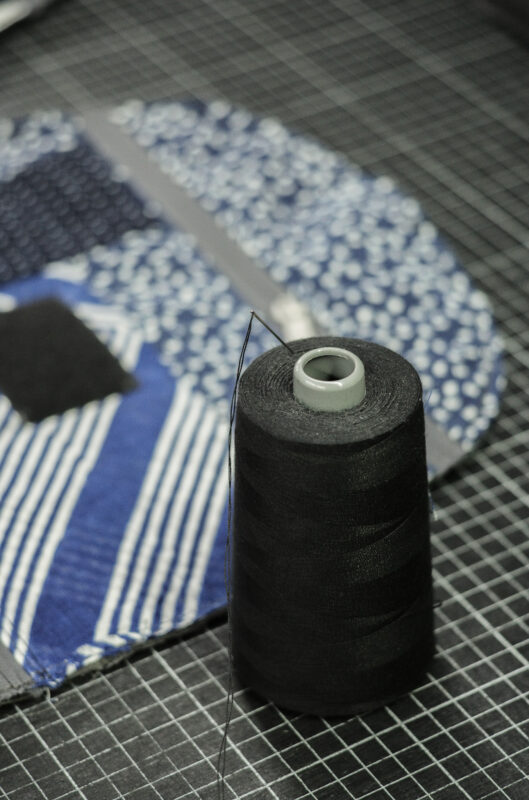
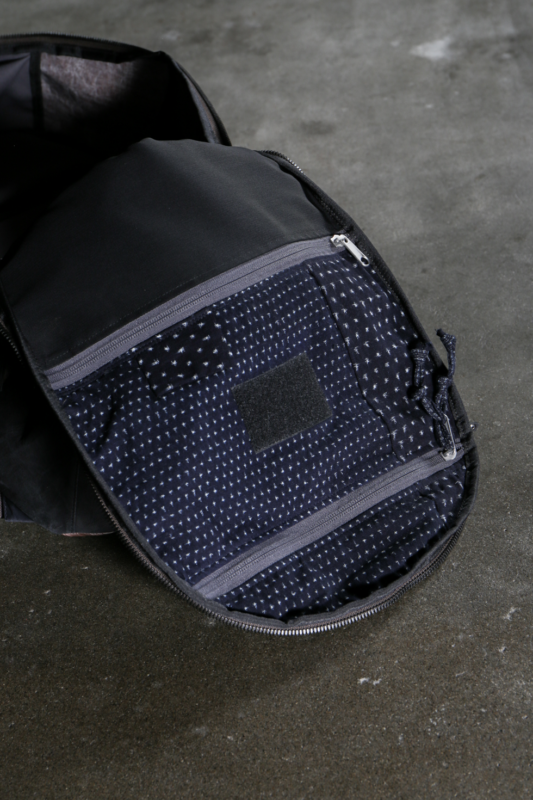
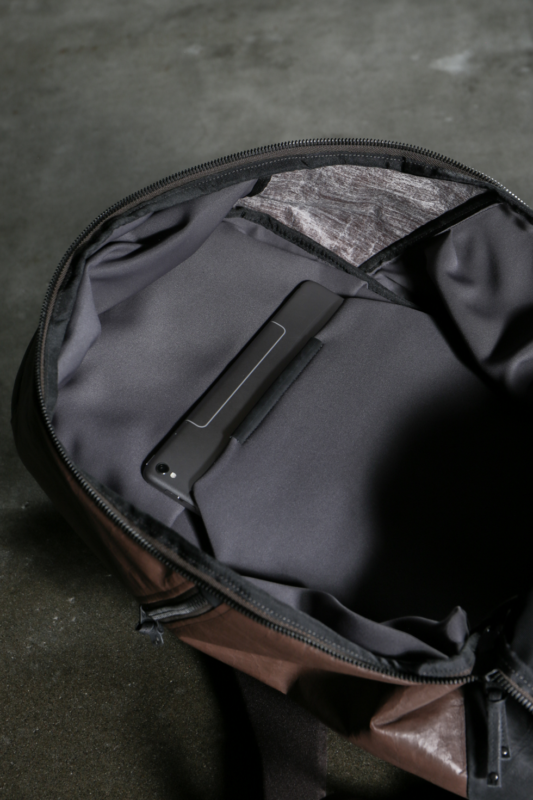
To accompany the boro interior panel, two horizontal slip pockets line the main compartment for smaller essentials.
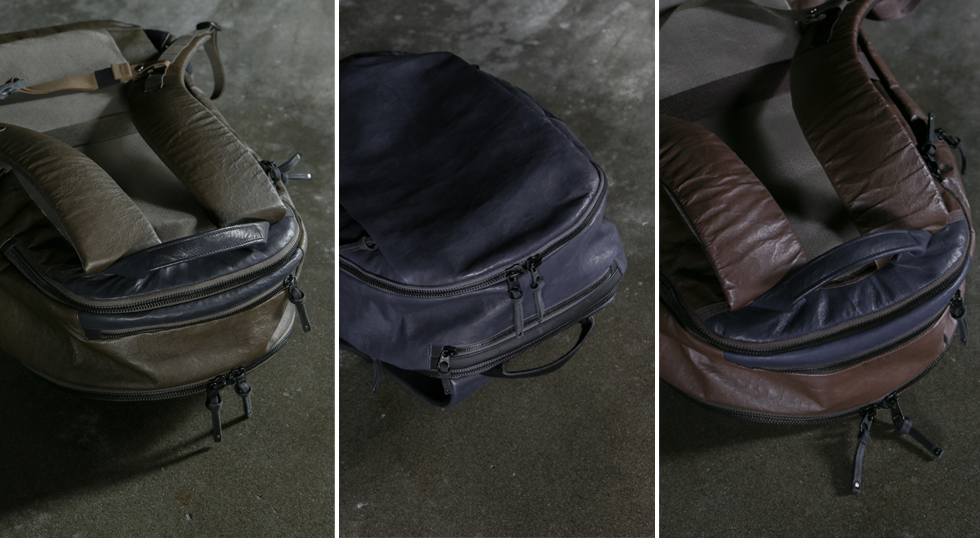
The top zipper puller is made from twisted Boro fabric for cohesion and a soft and secure handfeel.
And the interior lining uses 100% polyester stretch fabric made in Japan. The pocket lining is made from the same fabric.
The Charm
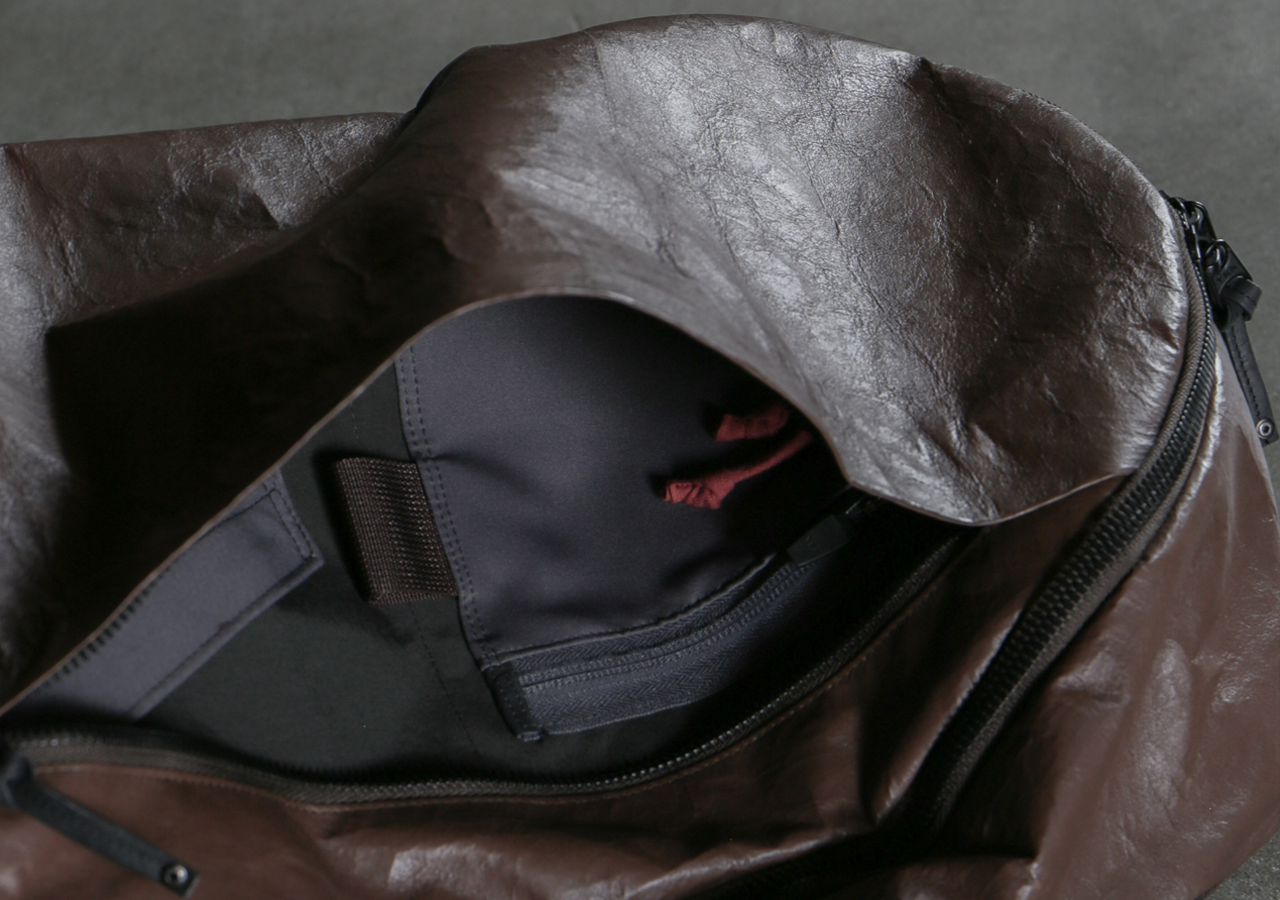
Inside the front external vertical pocket, you’ll find a red charm for your keys. This loop is made from traditional Mikawa cotton fabric, native to the Mikawa region. This fabric is woven on old-fashioned looms. However, there are no longer any artisans who can operate the old looms that once produced it. So this textile is now extinct.
“The red cord has long been used as the inner strap on work clothes. The reason is as a charm against evil spirits. We incorporated that essence into the bag as well.”
The Patch
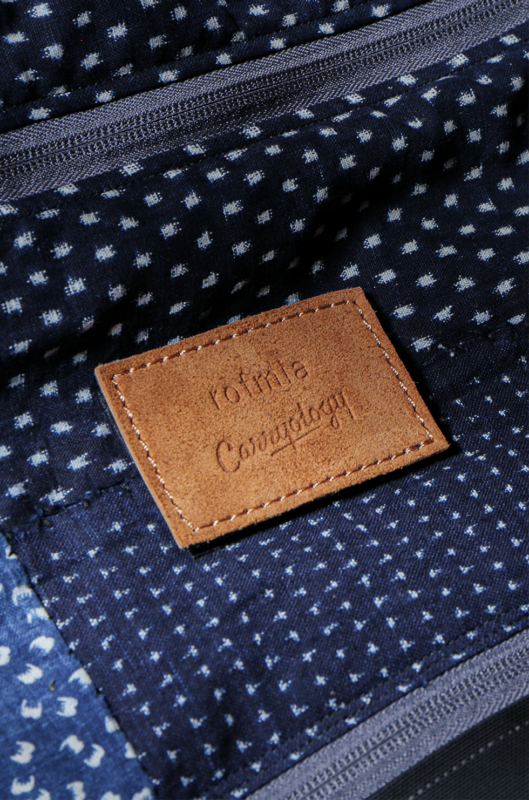
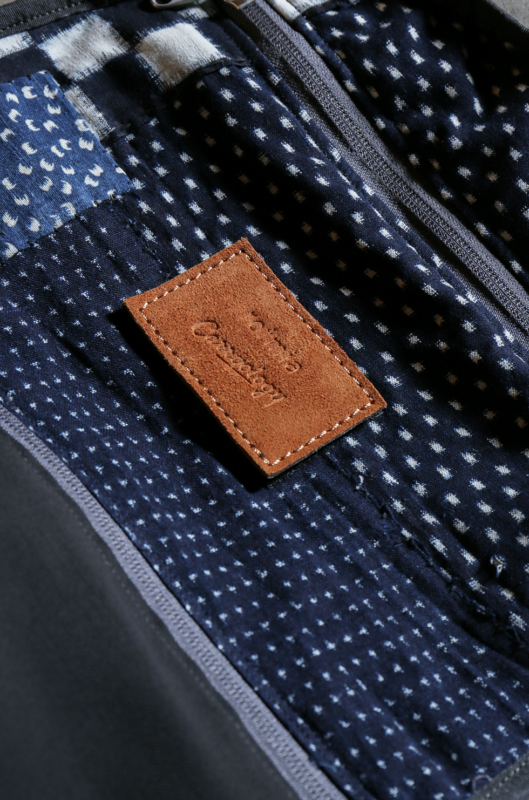
The patch is Japanese deer suede in a camel-colored tan, it has its grain side facing up for a textural look, and is double-branded with both Carryology and rofmia logos. Simple. Minimal. And in harmony with the bag.
The Side Pockets
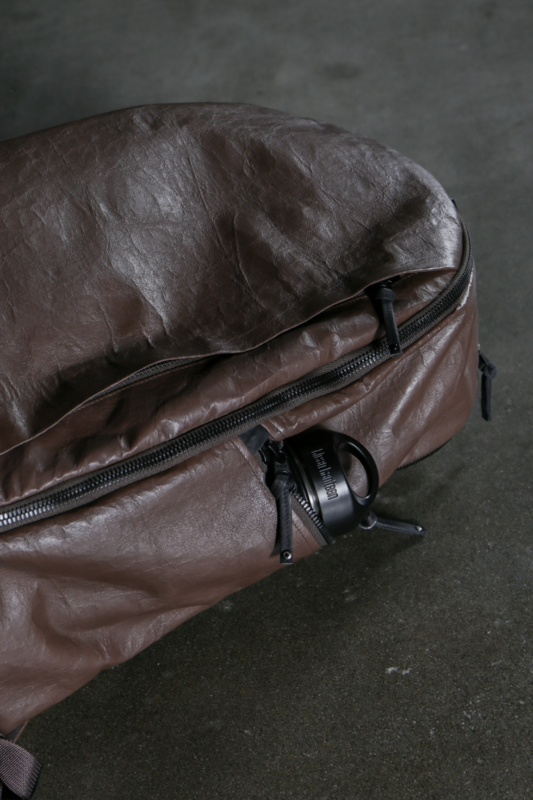
Unlike rofmia’s in-line Daypack V2 L, this collaboration has two added external side pockets, slightly angled, to add more organization and versatility. These were designed based on feedback emailed in from the Carryology community.

The Zippers
We’ve used premium YKK Excella, YKK’s highest-grade metal zipper with a luxurious touch and smooth operation.
The zipper pull is crafted from black nubuck Dyneema leather. It is made from thin strips of leather cut from the scraps left over when the bag was made.
The Luggage Pass-Through
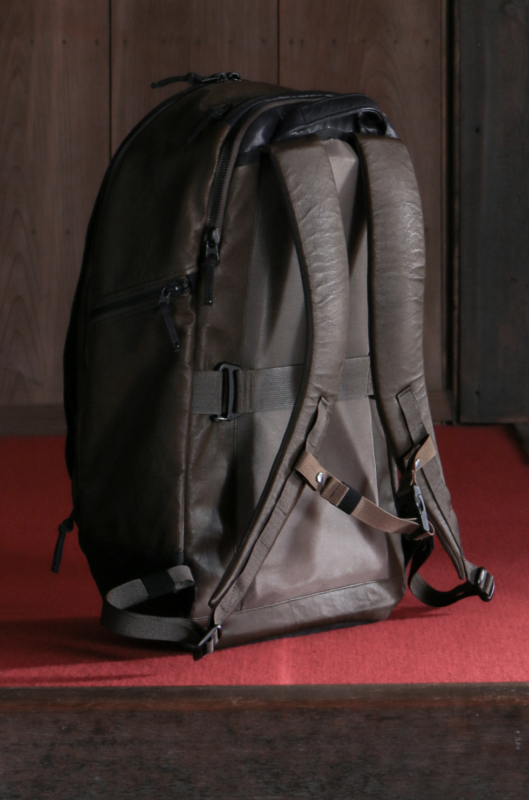
A simple luggage pass-through sits on the back panel. This has been adopted based on customer feedback. It can be removed for those who don’t use it.
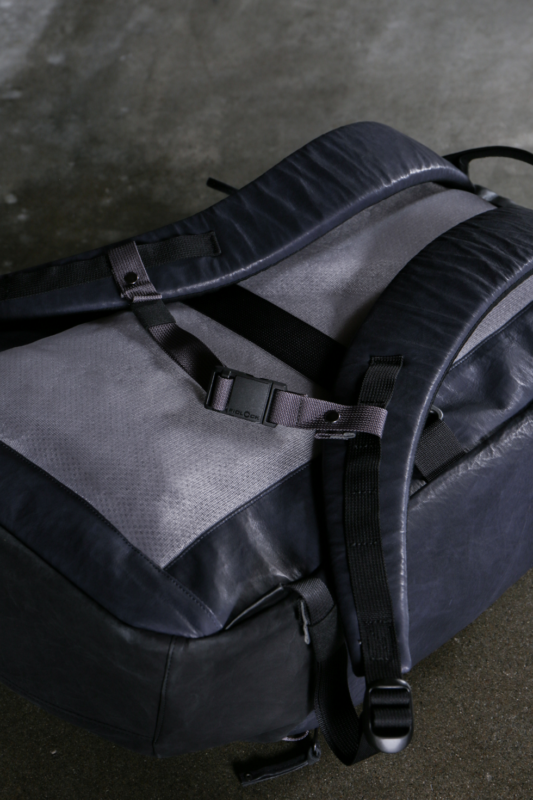
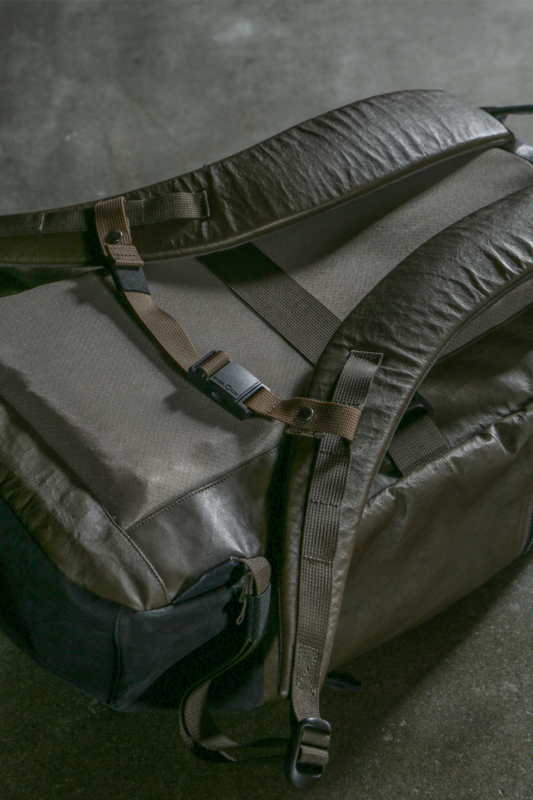
Liner and Back Panel
The inner liner uses a stretch polyester fabric. This material offers a supple texture and is a lightweight, durable, thick fabric with volume. It features water-repellent, oil-repellent, stain-resistant, and anti-static treatments, making it ideal for bag interiors.
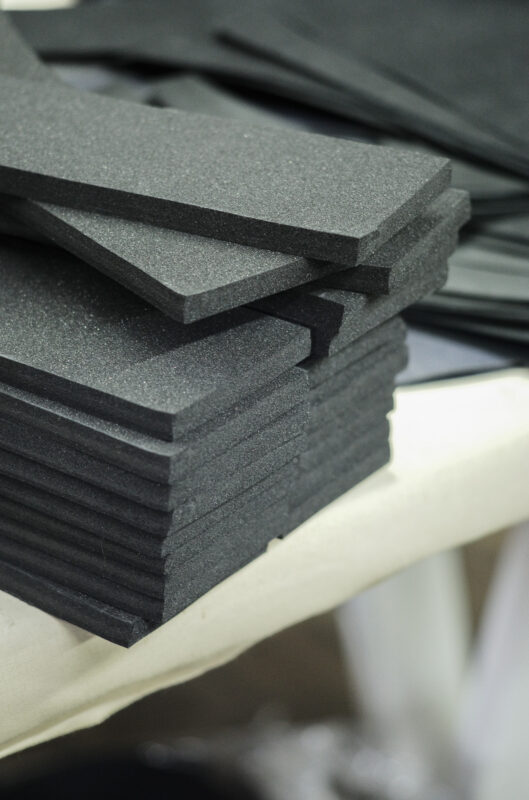
The back panel features lightweight Russell mesh on the outer layer, with highly cushioned and breathable 3D mesh on the inner layer. Since the Daypack V2 L has a large capacity and tends to become heavy, we prioritized back cushioning. Using Russell mesh on the outer side improves glide and reduces stress on delicate clothing materials.
The Production
Sixteen bags in total.
Three colorways, each in limited quantities:
Khaki × Black × Navy: 6 pieces
Navy × Black × Black: 7 pieces
Brown × Black × Navy: 3 pieces
Pricetag: ¥260,000
The Lottery
The lottery will be held from 0:00 AM on December 20 (Sat) to 11:59 PM on December 22 (Mon), Tokyo time.
Entries for the lottery can be submitted via the dedicated page on rofmia’s online store. After registering as a rofmia member, you may apply once per color.
Lottery results will be notified to winners on Tuesday, December 23rd.
To ensure fairness during the lottery, card information is entered and the purchase process is completed. Payment is held at the time of entry. When winners are announced, payment is finalized for winners and canceled for non-winners.






Michael Knispel
Editor-In-Chief
Mike’s our editor-in-chief, storyteller, and master traveler. He’s been at the helm for over a decade, spearheading our stories, partnerships, and brand at large.



 WAYS TO CARRY