



 Carry Awards
 Insights
 Liking
 Projects
 Interviews
 Carry Candy
 Community and Marketplace
Industry
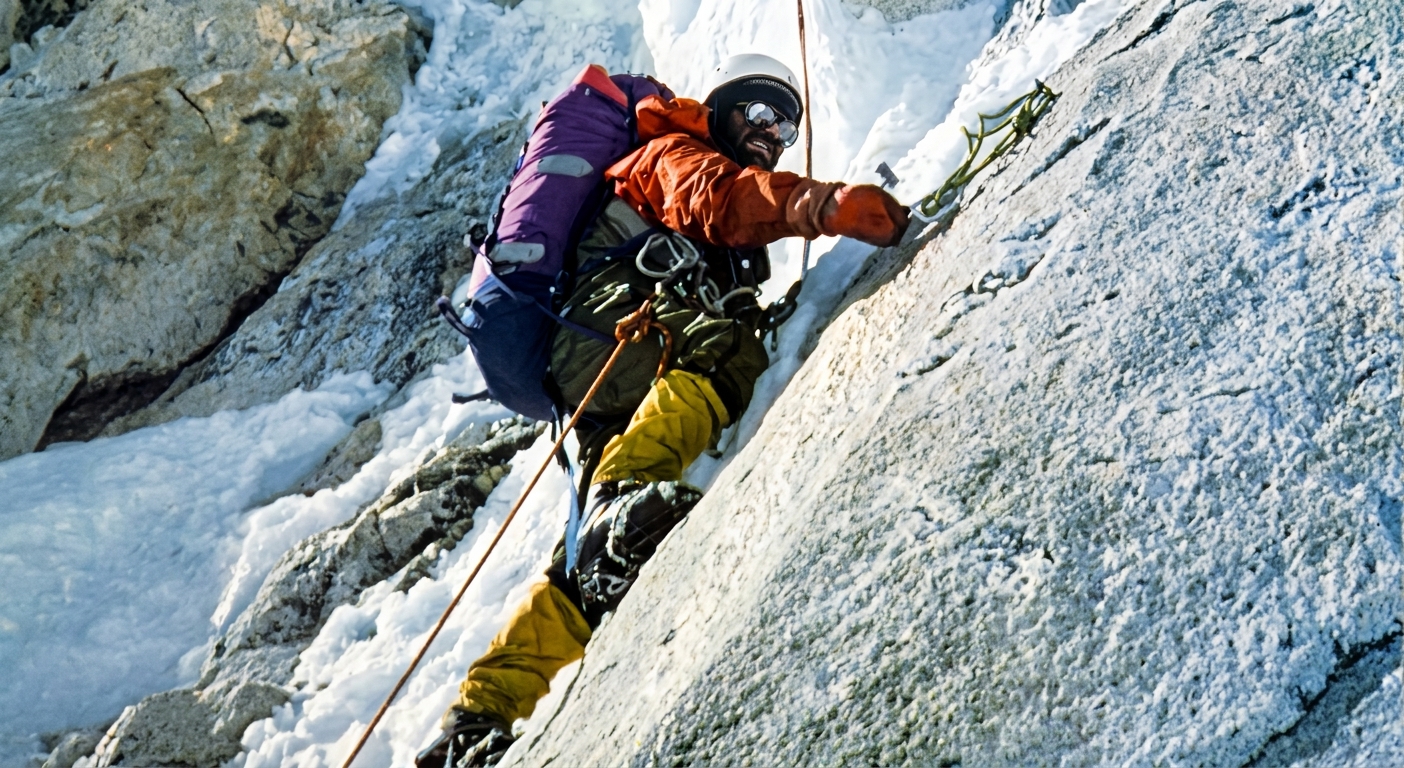
Few people around the wold know the Karrimor name these days — even fewer know how influential the brand once was to some of the most radical climbers in Britain. The Karrimor name was born from the very determination their products would help climbers grasp. It depended on one man’s sheer tenacity in the face of serious struggle. That, and his diehard love of cycling. And it’s a generational story worth telling.
In the depths of the Great Depression, Lancashire, England was suffering. Its renowned cotton textile industry was suffering too, as people struggled through intense poverty amidst job losses and destitution. The constant knocks and gruelling deprivation were enough to make anyone give up. But Karrimor founder Charles Parsons did exactly the opposite.
Despite everything that was happening in the world, Charles found a way to connect his passion to productivity in a flailing economy. He managed to open a small bicycle shop in the mill town of Waterfoot, with help from a fellow enthusiast. The deal was this: his mate worked the days in the shop and Charles would take the evenings, tinkering late into the night on repairs. But a slip of the tongue from one of their customers sent him in a new direction. They mentioned to Charles that they’d come by the shop in the morning hours to find it closed. If his mate was bunking off? Charles would go his own way. He flew the coup and started his very own shop right down the street.
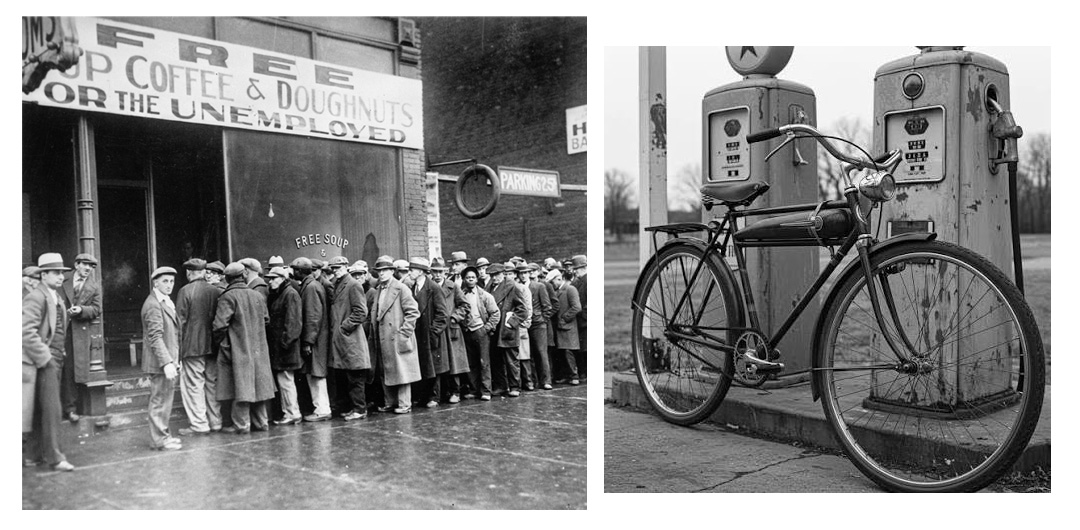
Every customer counted. But in these tough times, Charles Parsons revealed a resilient streak that would come to define the Parsons family for generations: independence, self-belief, and an unwavering dedication to the product.
Despite this, tragedy struck. Late one night when Charles was working in the shop, hydrochloric acid was splashed in his eyes. He was lucky enough to undergo a hopeful procedure in London during the years of WWII. But when German air raids forced them to pause mid-surgery, the procedure was compromised, and what should have restored his eyesight became a years-long journey of complications. Charles carried on. With gear increasingly hard to come by and resources scarce, he and his wife Mary decided to face the realities of war-time Britain head on. What they couldn’t access, they would make themselves.
Simple Origins
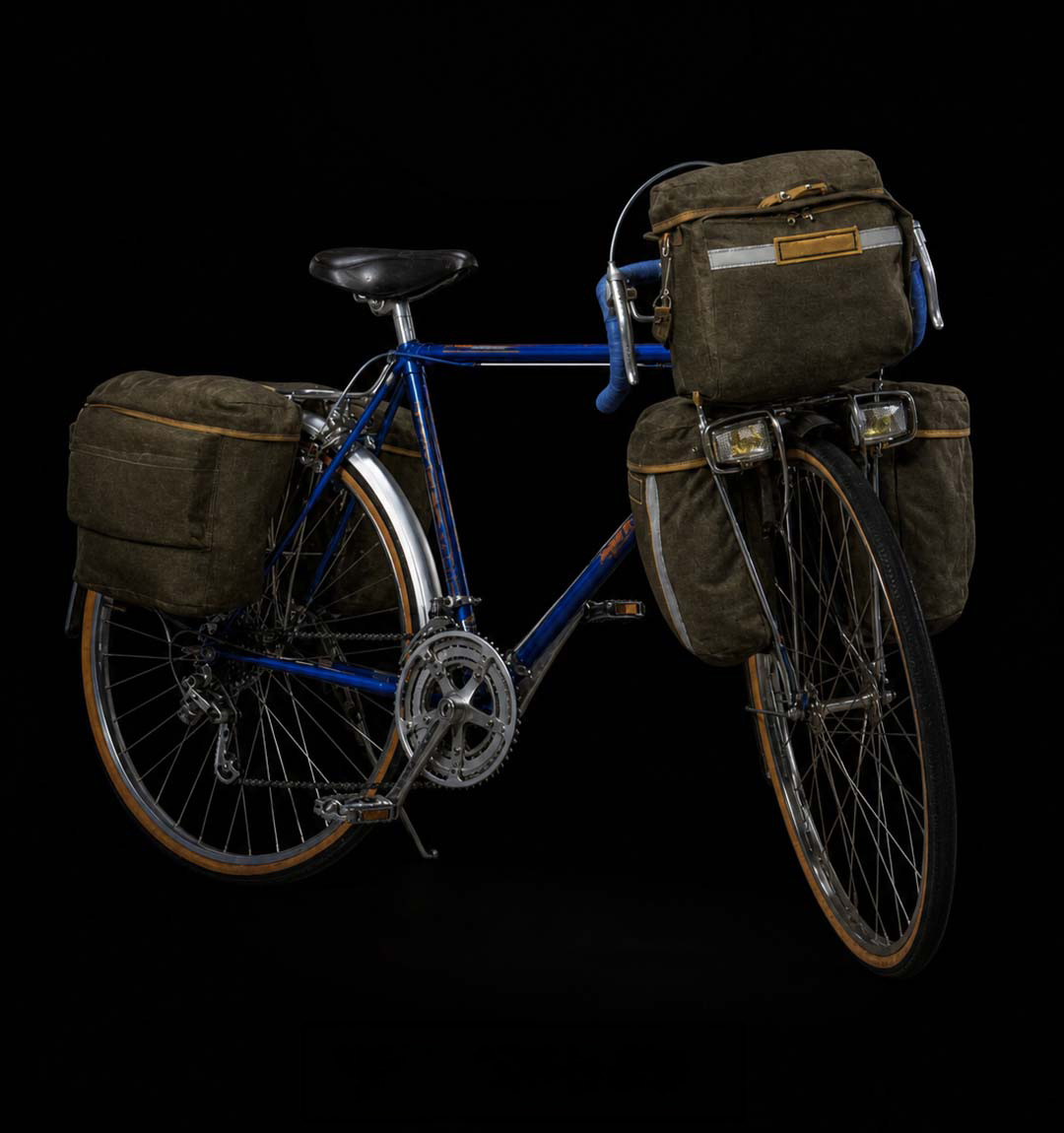
Both Mary and her sister Grace were skilled seamstresses and they began to hand-sew bike panniers and saddlebags using cotton-duck cloth — a raw fabric that was luckily available. They didn’t know it yet but in their small attic above the bike shop, they had just laid out the groundwork for one of the most successful outdoor brands of the near future. They named it Karrimor: direct meaning “carry more”.
By 1946 Karrimor was a formal brand. Their products were durable, tailored, and affordable, which was everything the post-war era relied on. They grew from a small workshop into a serious business, standing shoulder to shoulder with competitors like Dunlop and Carradice. But it wasn’t enough to save Charles’s vision. His eyesight was still failing, and by the 1950s he would be completely blind. Luckily, a protégé had been born — their son, Mike.
Taking It to the Top
A young and eager Mike Parsons was coming up the ranks. But the business? No such luck. Social change and a rapid deterioration of the bike market meant that the Karrimor brand was dwindling. Bikes were out and cars, walking — even hiking — were in.
“British climbing and skiing opened up to the working classes,” Mike wrote in his blog Outdoor Gear Coach. “Outdoor education pervaded schools, influenced by the ascent of Everest in 1953. Many new [outdoor] activities boomed.”
The British Mountaineering Council (BMC) had formed in 1944, the first of its kind in the UK. They published Climbing in Britain, and the shift was stratospheric for the droves of people coming back from the war. Alpinism was no longer a sport for the elite, and everyday people were starting to take to the mountains. For bike companies, this was a nosedive. By the late ’50s people weren’t interested in bikes anymore, which meant no one wanted bike bags. Karrimor had to make a decision: sink or swim. The only way was up.
Community Business
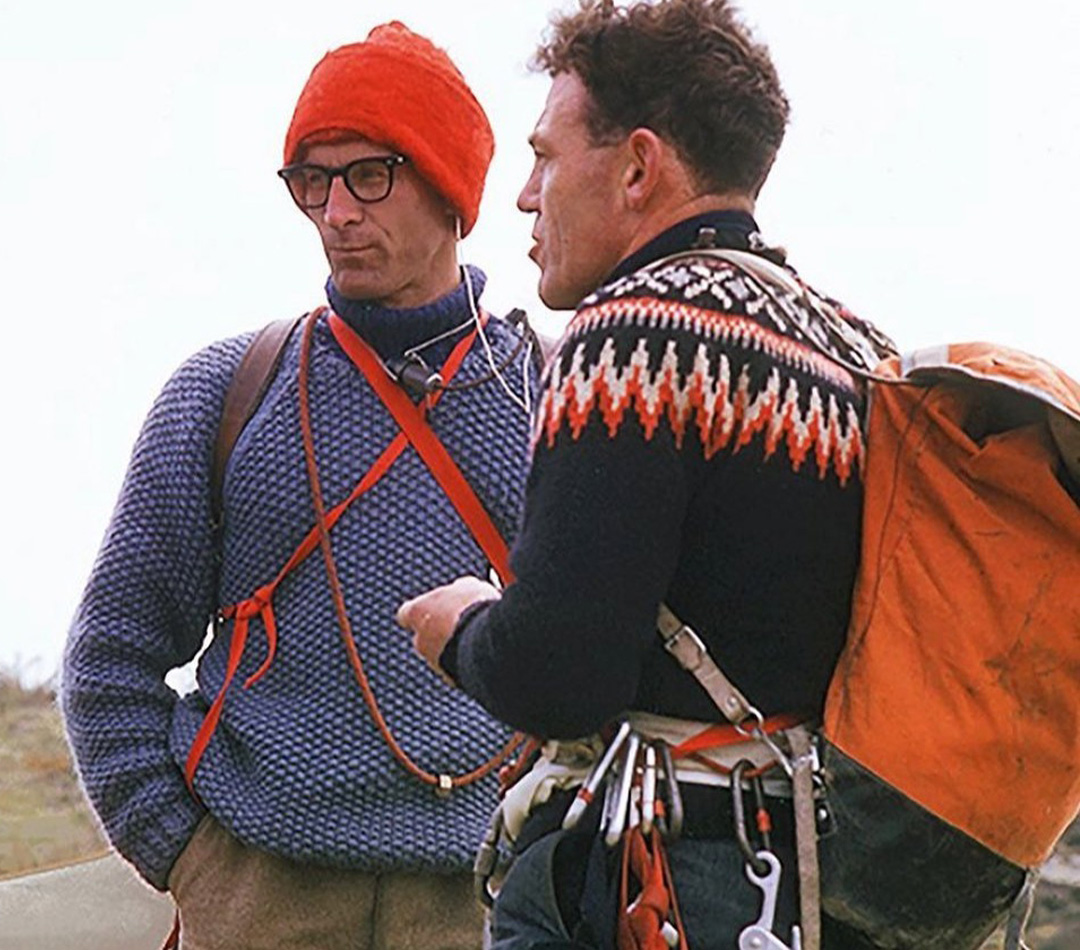
Mary’s sister Grace was still upstairs in the shop making bags when Mary began to use the French-inspired camping boom (a rise in family camping inspired by paid leave) to bring new ideas to the Karrimor store. Working-class climbers got wind of the shop and began trickling through the doors for custom-made items. Mountaineer Don Whillans was among the very first, asking politely one day for a custom-made pack “like the one we were making for his mate Joe Brown”. So began Karrimor’s rucksack era.
This new era of talented, everyday alpinists marked the UK’s golden age of climbing (otherwise known as the “Vector Generation”). Between 1960 and 1990, these blue-collar mountaineers tackled the crags of the land with fearless strength. No longer a ‘gentlemen’s sport’, they used basic, effective gear and raw athleticism to ascend the UK’s untouched summits. The times they were a changin’.
The Swingin’ 60s
Still in his late teens, Mike Parsons had been tinkering in the Karrimor shop for a full year learning (now defunct) skills like dealing with cotter pins and building wheels. He spent time on the floor with the machinists. He put functionality at the forefront of the designs. He explored details and continuously refined the product through personal and professional feedback, crediting the golden age of climbing to the cultural change. It was this hands-on approach to design that would eventually put Karrimor in top place for the best gear around, all the while getting direct feedback from the trailblazers who bought it.
Mike understood that the best designers weren’t confined to the drawing board—they were out on the mountains. Instead of relying on advertising alone, he built relationships with the very people who were using their products and pushing themselves to the limit. What began as co-creation became endorsement by default, and by the 1970s Karrimor was a household name.
“At the start of the 1960s there was very little in terms of what we see today, so we were still using traditional materials of wax proof cotton canvas and leather. That’s where I learned my design skills – I got my hands on things and worked with people like Don Whillans.”
– Mike Parsons
To Everest and Beyond
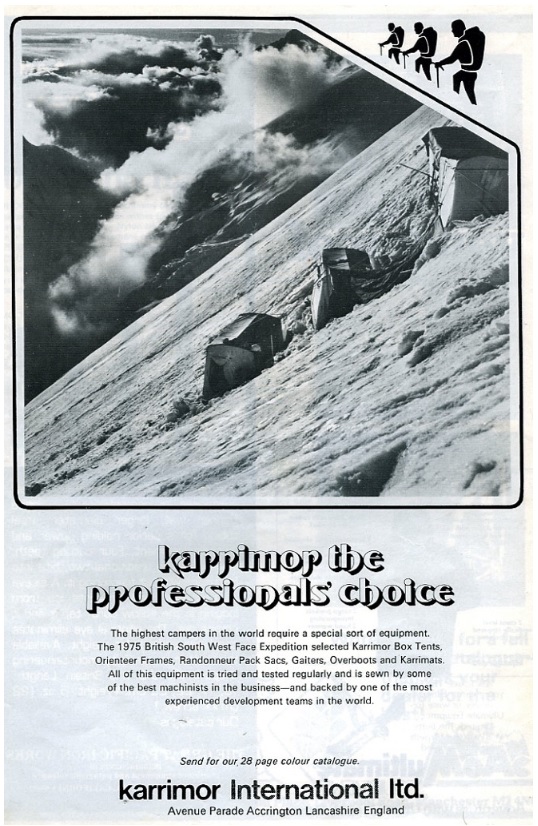
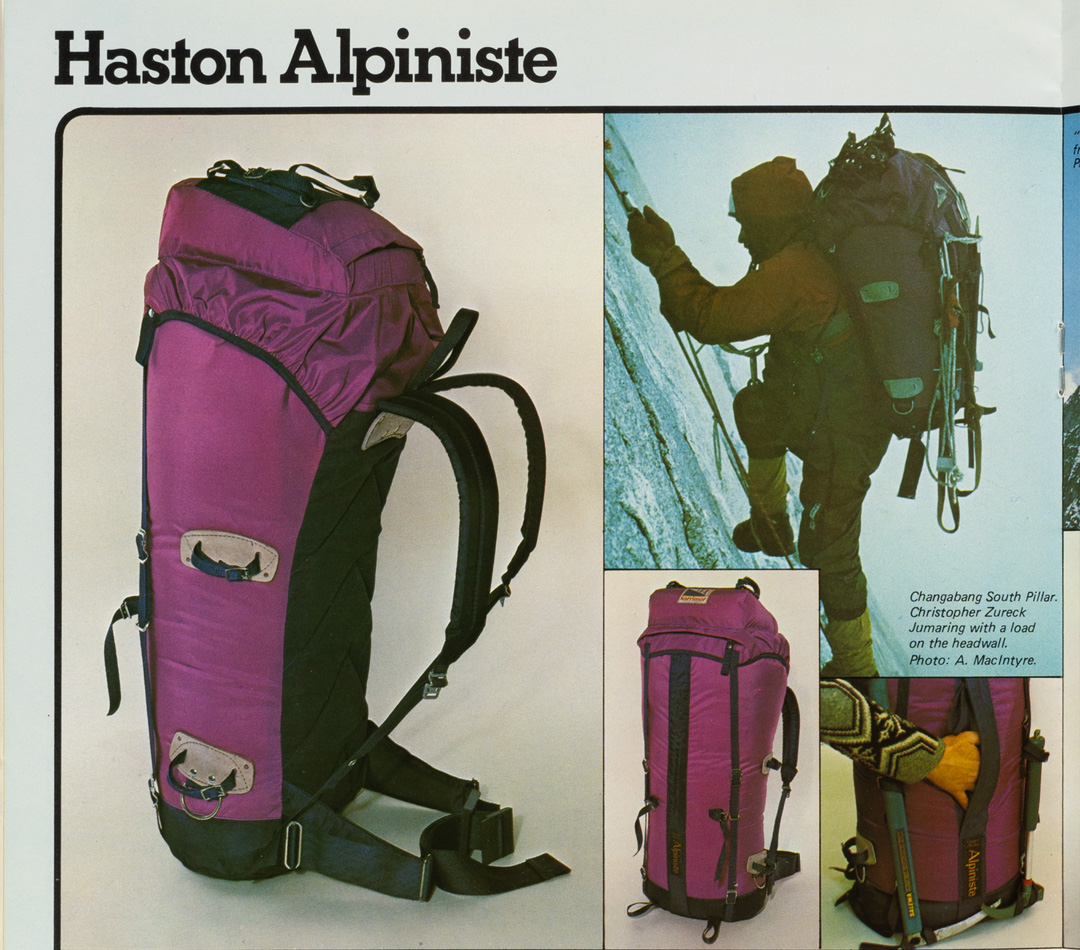
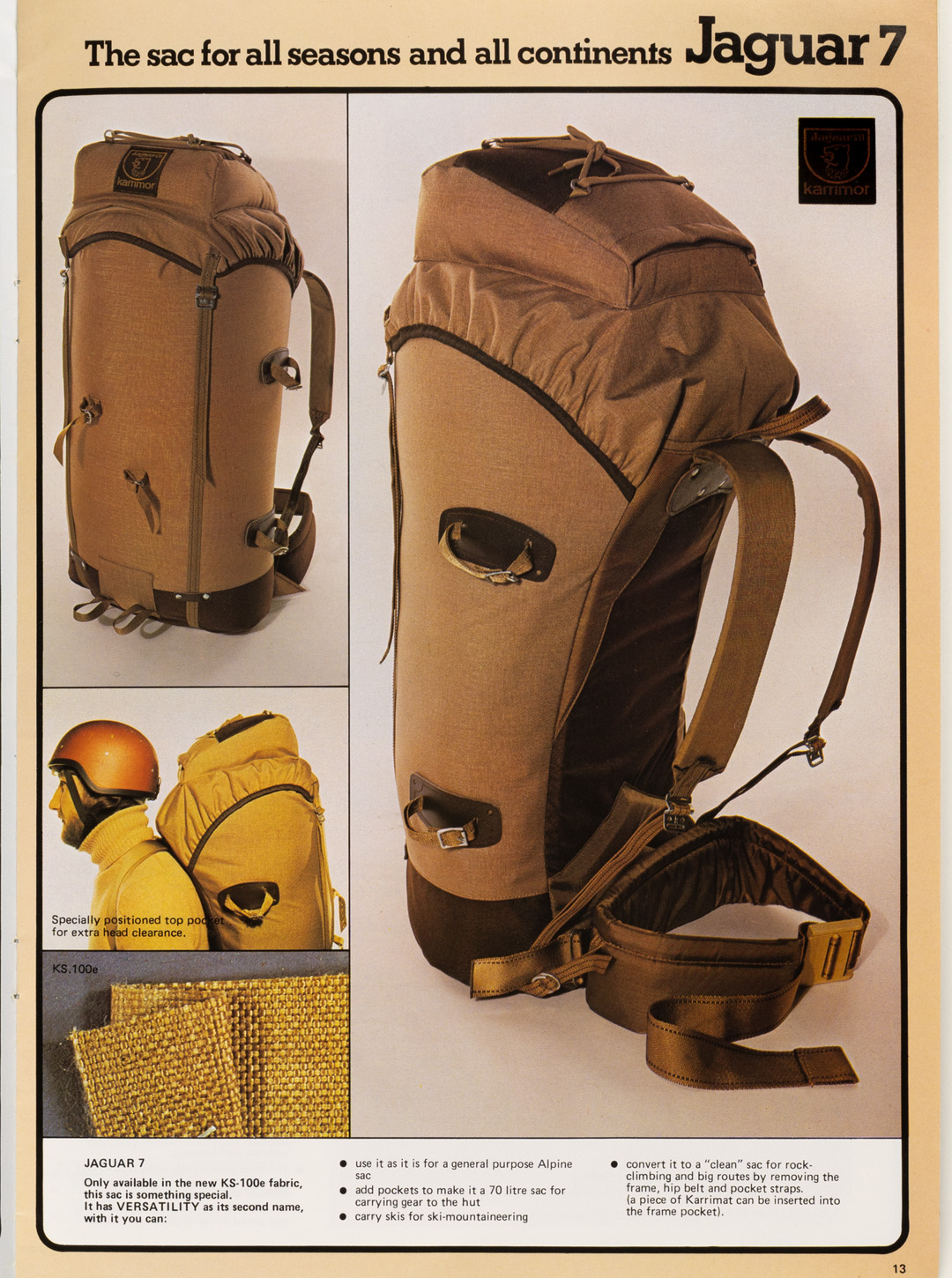
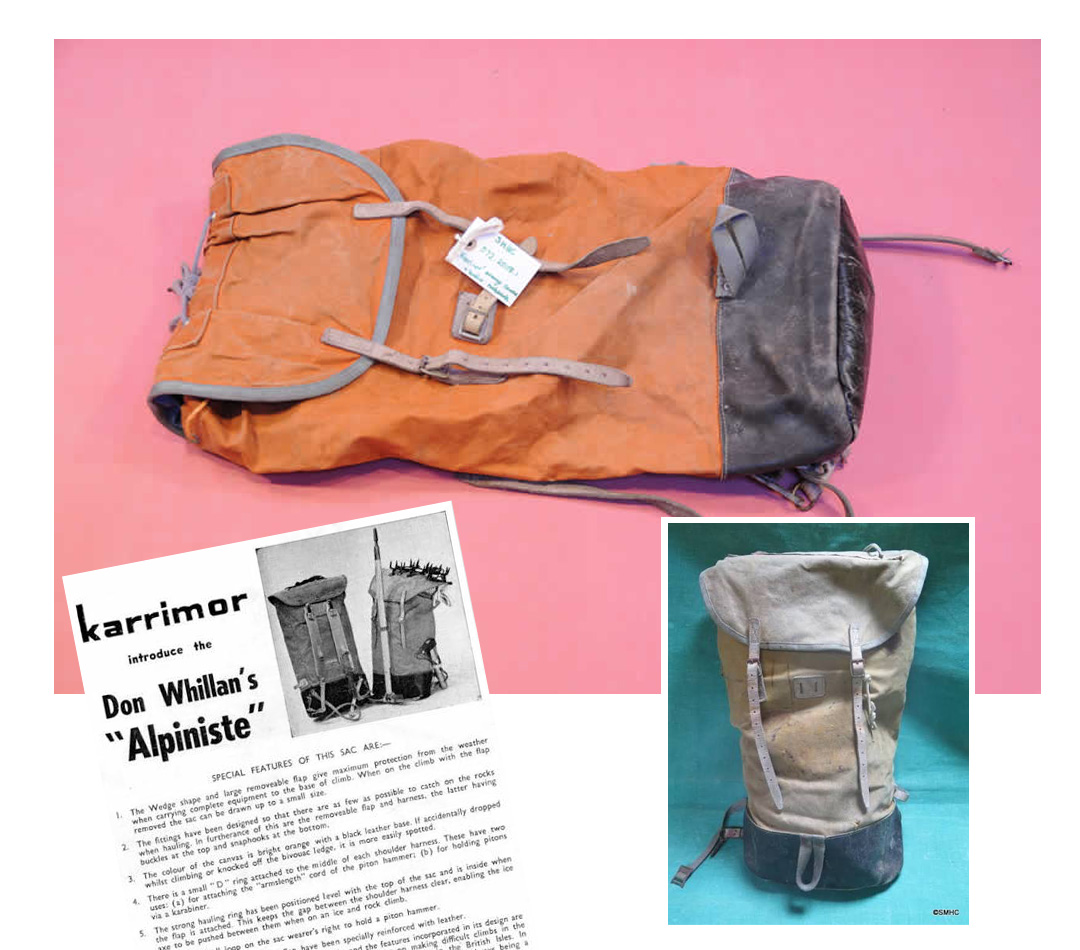
British Mountaineer Chris Bonington became one of the most famous alliances of the Karrimor brand when his team chose their gear to take them up Everest. In 1975 they used cutting-edge Karrimor packs and tents to ascend the Southwest Face, including the Whillans Box Tent (a lightweight nylon and canvas box-shaped tent that maximised space in harsh environments), and the Jaguar and Alpiniste backpacks. It was the exact same year that Japan’s Junko Tabei reached the Everest summit using a Karrimor pack frame. When people saw that Karrimor gear had been used by some of the best climbers in some of the world’s harshest conditions, there was no hesitation that this was the brand they wanted.
Some of Karrimor’s most iconic products were created during Mike Parsons’ reign as Director. After Don Whillans made Mike a request he couldn’t refuse, the Whillans Alpiniste backpack became the original collab pack for British climbers, making rugged alpine bags popular. Weighing approximately 1300g (including straps) and made with canvas and a suede base, it was slim, light and great for technical climbers. In the ’70s it was superseded only by the Haston Alpiniste rucksack, a no-frills Cordura nylon pack developed with Scottish mountaineer Dougal Haston. Featuring twin ice-axe loops and an extra-long snow extension collar, it was leaner, lighter, and stronger than packs before it. With its removable back pad/sleeping mat, the Haston pack is still widely considered the pack that put Karrimor on the map.
The Karrimat
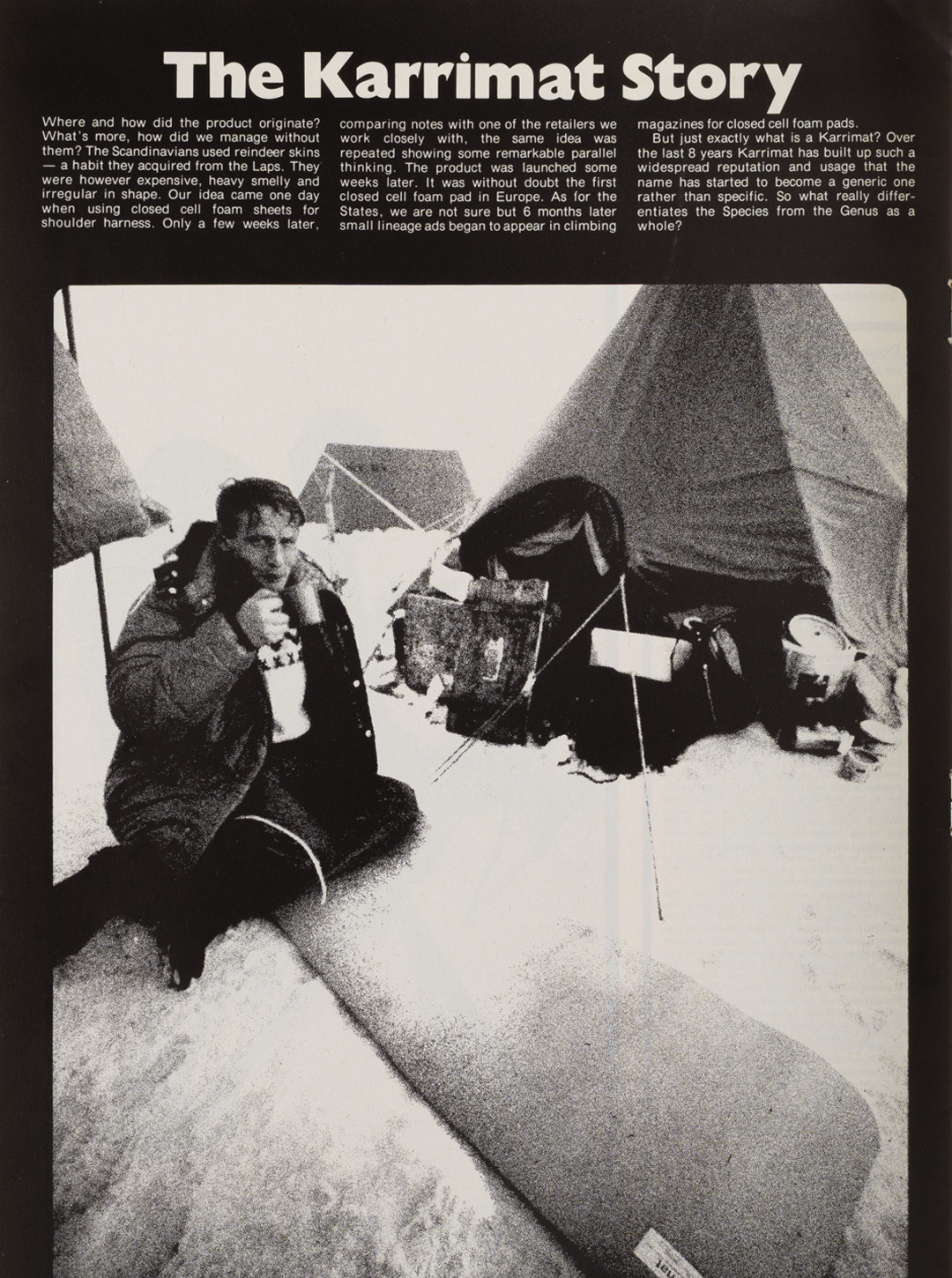
Perhaps it was the Karrimat Sleeping Pad though that takes the cake for Karrimor’s most influential piece of gear. Created by Mike in the mid ’60s, its water-and-cold-repellant closed-cell structure became so popular that to this day people still use it. Much like the Hoover became the colloquial word for vacuum — Karrimat became everyday language for the camping bed-roll.
Gear and a Great Idea
Lancashire famously processed more than three quarters of the world’s cotton in the 1800s, and at its peak harboured more than two and a half thousand cotton mills. This home-ground advantage helped Karrimor invent KS-100e — better known as a breakthrough elastomer-nylon/polymer-coating process that waterproofed fabrics without needless weight or damage to the gear.
Using a texturized thick nylon core as a surface anchor, the outer silicone and polymer-blend coat worked with the pack to prevent wear and tear. Combined with a fluorocarbon DWR (durable water repellent) that protected the nylon and structure, this was an industry first for climbers and gear. Not only did it make gear water resistant, it made it lighter and tougher — and it got global competitors trying to replicate it for years to come.
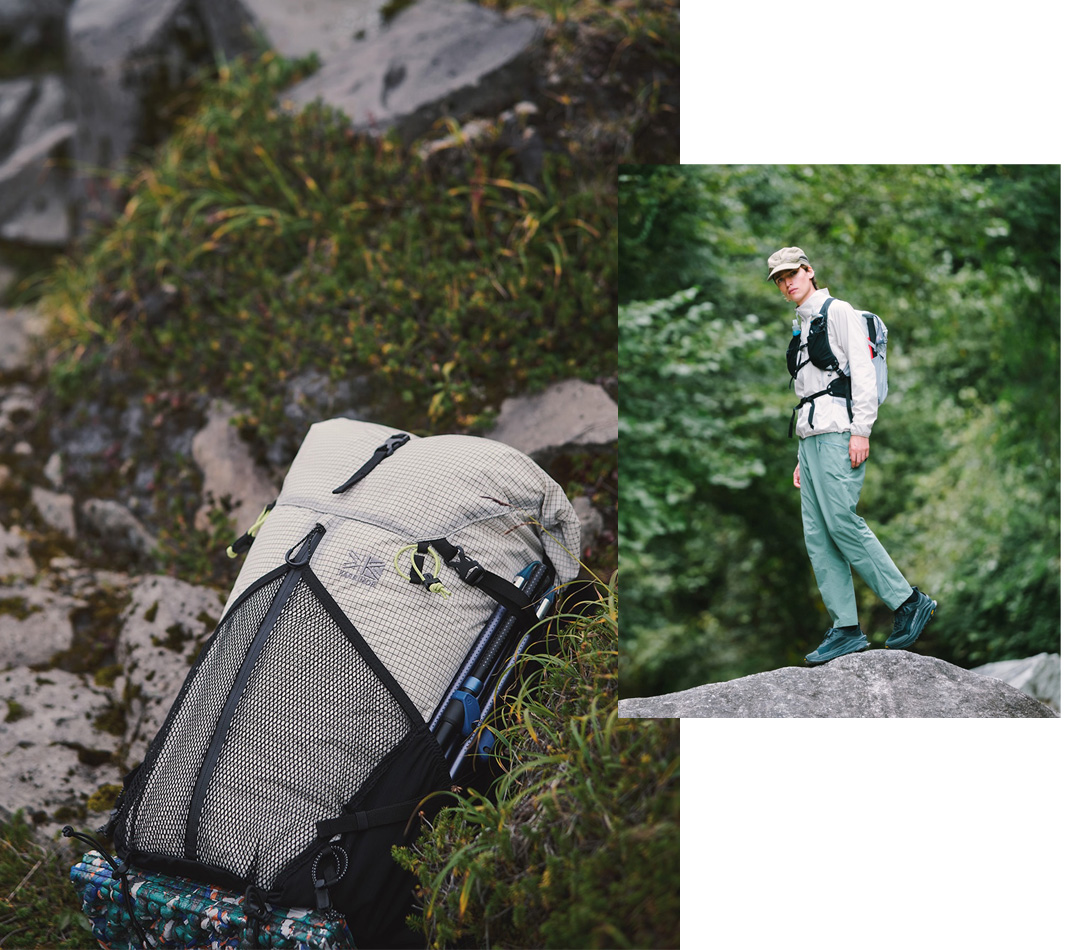
But no good thing can last forever, and lower-cost cheap imports from Asia in the ’90s were a blow to the outdoor market. With growing competition from brands like The North Face and Berghaus (a particular competitor for Karrimor, as noted by Mike), the beginning of the end came calling. Mike Parsons officially left the brand in 1996 and in 2004 Karrimor entered administration, eventually picked up by Sports Direct. The golden years were over. And yet, the best flames tend to have a way of staying lit. Die-hard Karrimor fans will be pleased to know that while the OG Karrimor folded in the mid naughties, the flame still burns in Japan. While the UK counterpart now sells mostly entry-level gear, Japan’s Karrimor still holds the essence of what the brand once was.
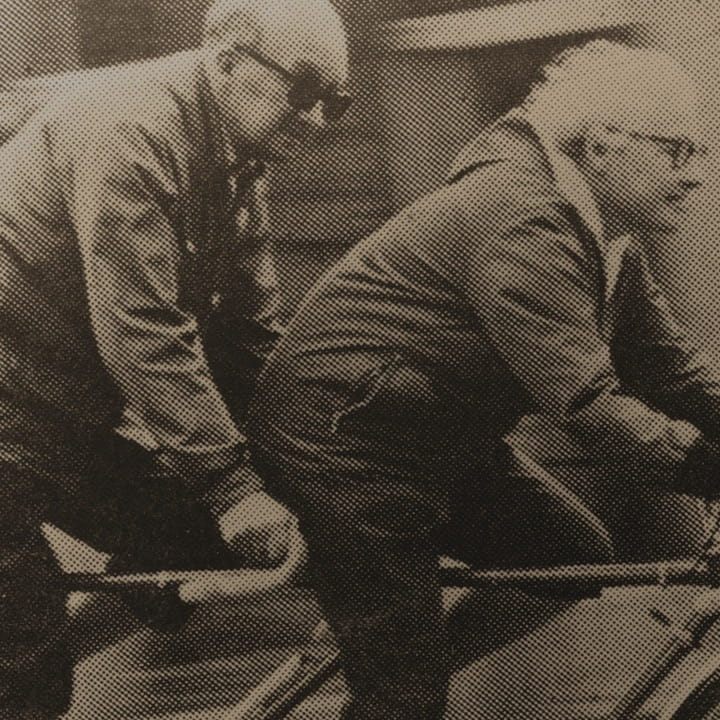
“We rode one or two national blind championships,” Mike told road.cc. “I also came something like 32nd in the Catford Hill Climb, which was the National Championships.”
– Mike Parsons
Buy the Ticket, Take the Ride
Charles Parsons took his last solo bike ride around 1950, finally admitting defeat to his lack of vision. But in his later years Mike got him back in the saddle — on a tandem bike the two of them rode together and then, finally, as a whole family.
The Parsons’ family values indeed proved hard to shake, and the Karrimor legacy cannot be overstated. From such humble origins to supporting some of the greatest moments in climbing history, Karrimor’s is a story that remains golden. And if you’re as keen as we are to know what REALLY happened between Karrimor and Berghaus, keep your eye out for Mike Parsons’ upcoming memoir “The gear that got us there … and back!”
This feature was written by Melbourne-based writer and performer, Esther Rivers.
Archival material provided by the Outdoor Recreation Archive, Utah.





 WAYS TO CARRY