



 Carry Awards
 Insights
 Liking
 Projects
 Interviews
 Carry Candy
 Community and Marketplace
Insights
PRO GUIDE
Bikepacking the African Jungle: A Pro’s Complete Packing Guide
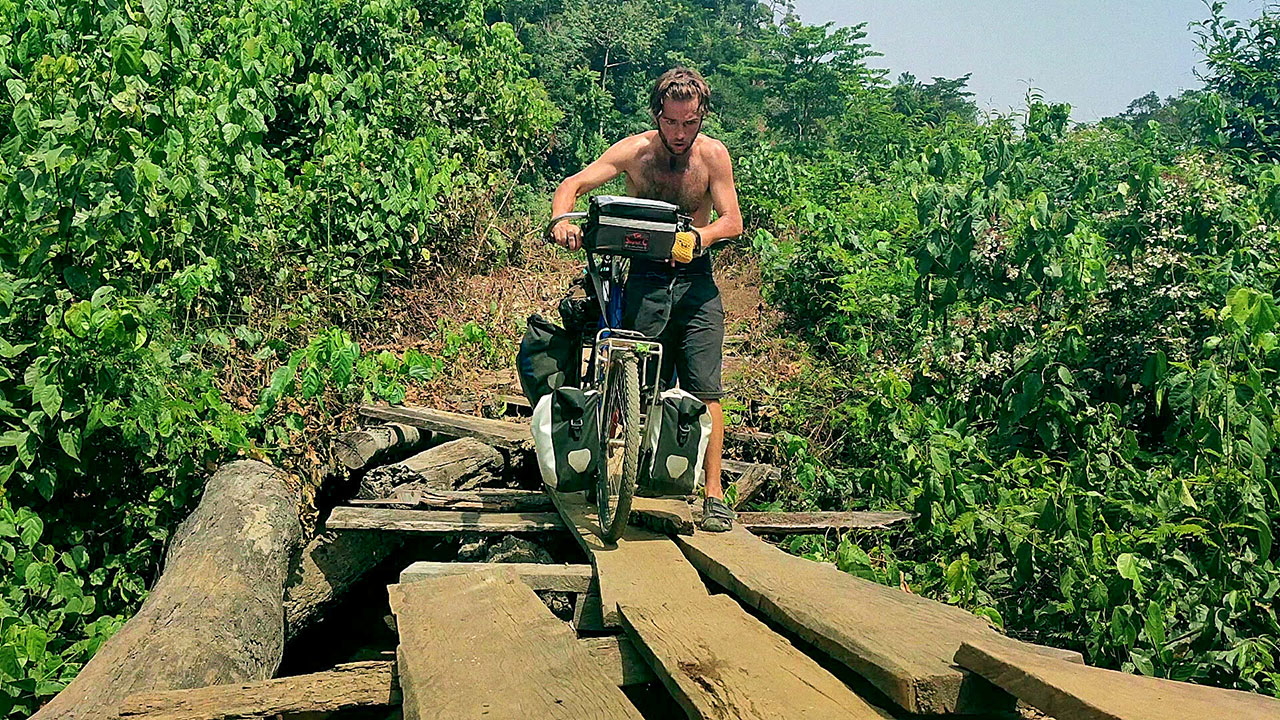
Very few people attempt to cross a rainforest alone on a bicycle. Fewer still do it self-supported, carrying everything they need to survive, navigate and document the journey beneath a canopy that blocks out the sun, the satellites and, at times, any obvious way forward.
I’m an explorer and keynote speaker who documents long-distance, self-supported expeditions in remote environments. Over the past decade I’ve led and undertaken journeys around the world, but my solo crossing of Liberia’s Gola Rainforest remains one of the most technically demanding. The track had largely been abandoned since the civil war. Bridges had collapsed, vegetation had reclaimed the road, and maps were, at best, educated guesses.
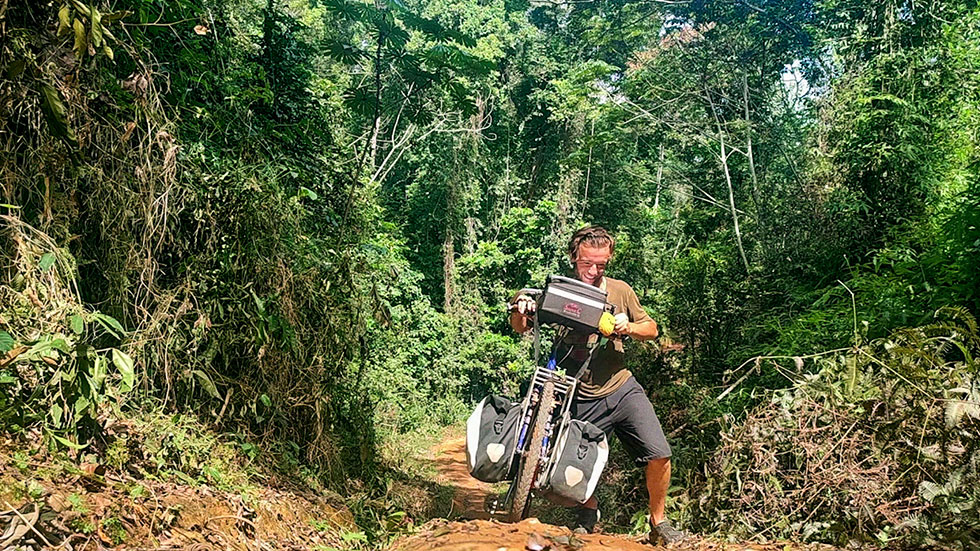
After more than a decade of expeditions, I’ve learned that the jungle exposes weak kit and poor judgment equally quickly. In environments like this, over-preparation is not paranoia, it’s prudence. My tendency to hyperfocus, to think in contingencies and layers of backup, becomes an asset rather than a quirk.
What follows is the equipment that justified its weight (53kg all in). Not the lightest options, nor the most fashionable, but the pieces that allowed me to make calm decisions when the margin for error was thin.
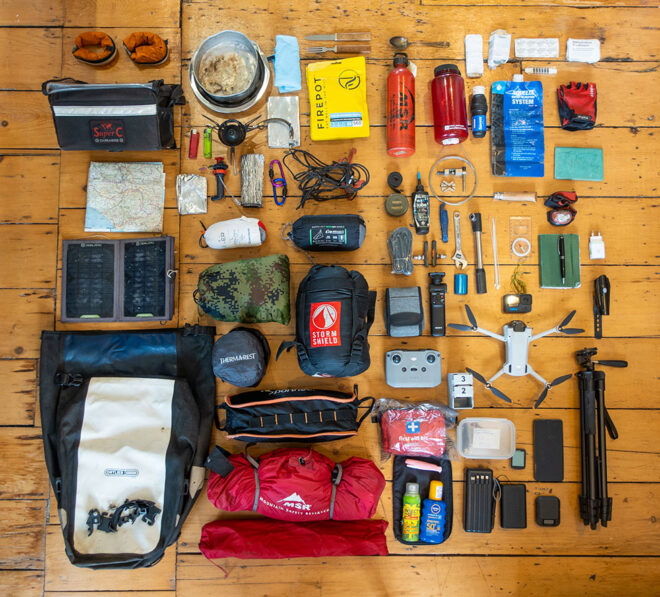
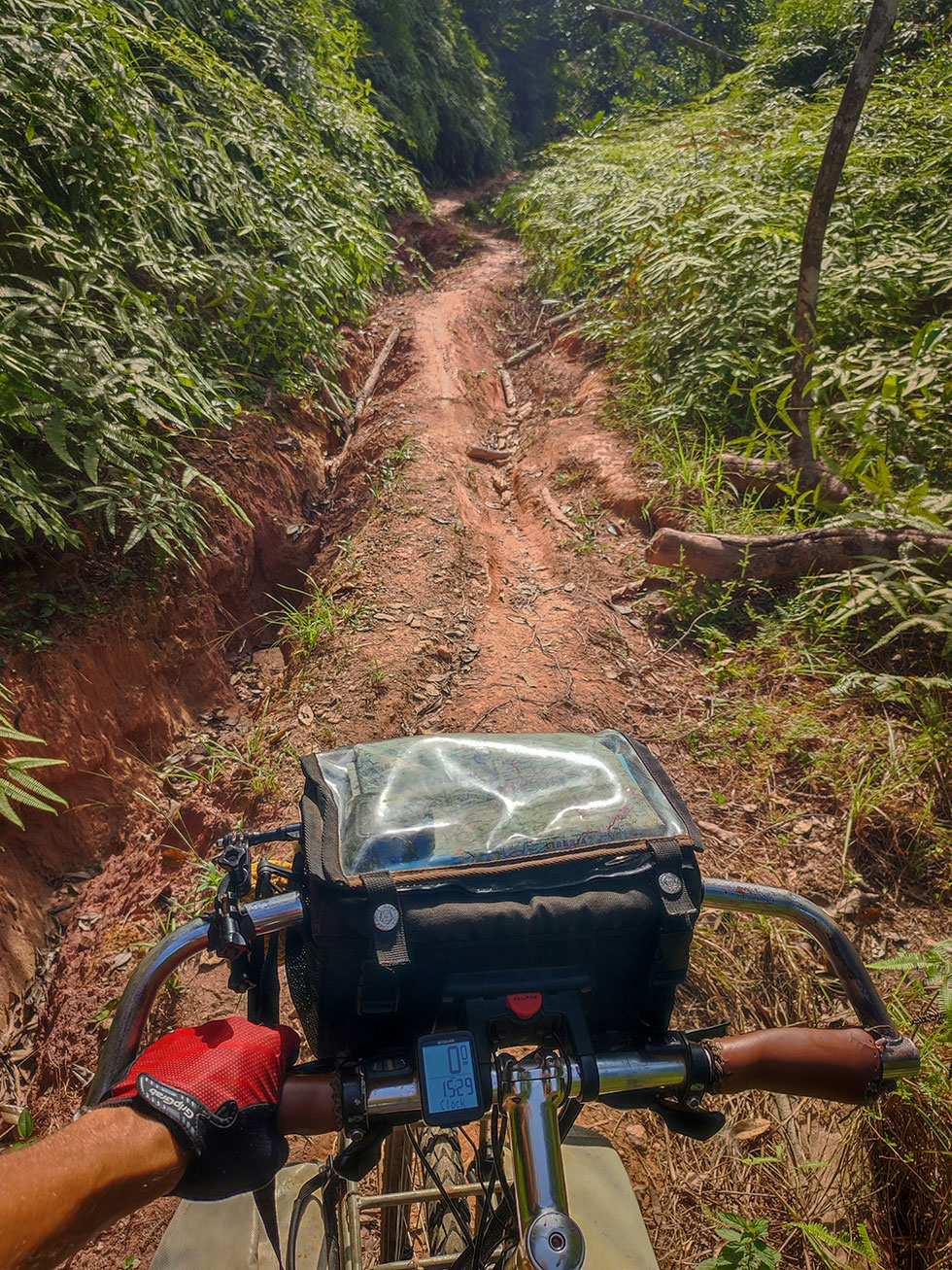
Carradice Super C Handlebar Bag – I think of my handlebar bag as my office on the road. All my small valuables go here: money, phone, GPS, cameras, passport and so on. It has a quick release too, so the idea is that if you ever leave your bike, the handlebar bag comes with you. As you’ll see in my film, Alone Across Gola, the one time I didn’t follow this rule, I paid the price.
It’s also there for general quick access, so I often stash a snack inside – sometimes to eat whilst still riding (although not in the jungle, you need smooth asphalt for that).
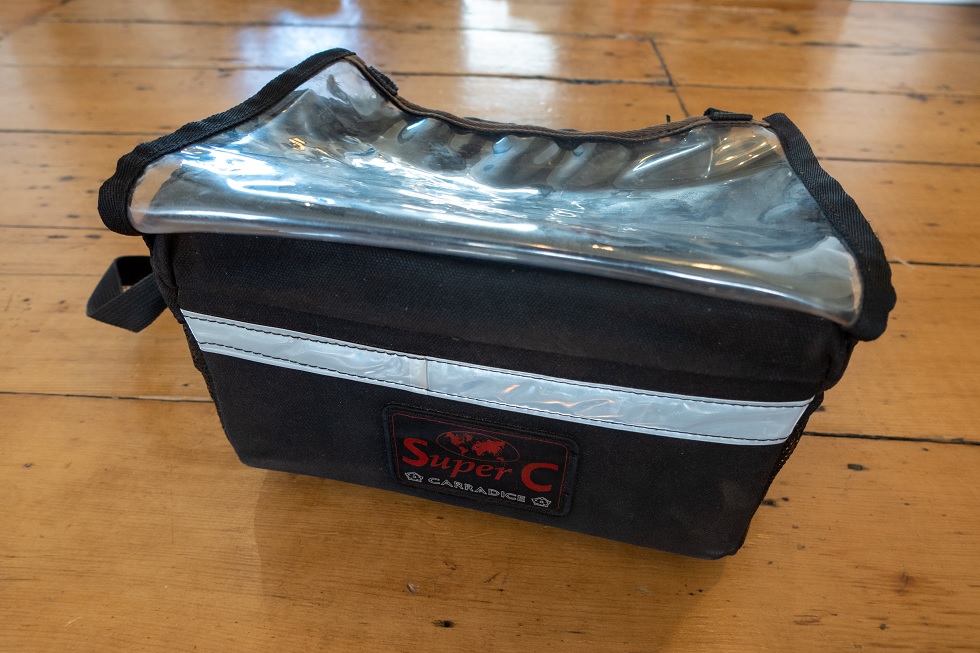
I took a long time researching the right one for me. It had to be rainproof, rigid and have a large, waterproof map case on top. I do just wish they weren’t black inside; it makes it so hard to find small bits at the bottom!
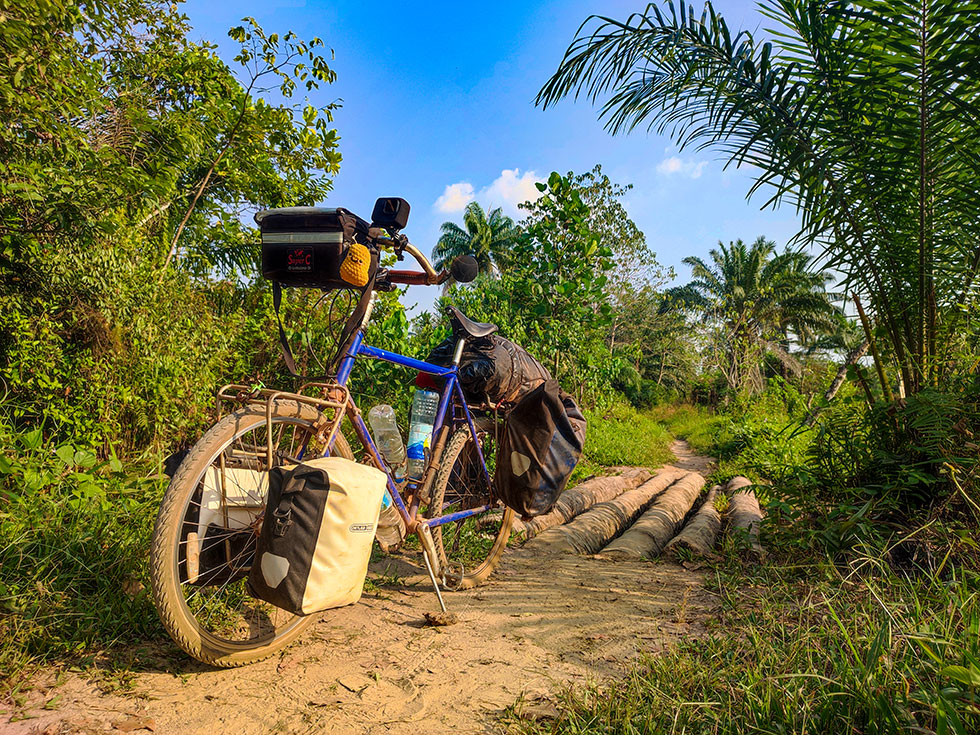
Ortlieb Panniers and Roll Bag – These are a staple of the cycle touring community. Before bikepacking came on the scene, just about every world cyclist seemed to be rocking a pair, or quadruplet, of these. I still use the original rear pair that I carried all the way to India in 2013 (the front pair took one too many scrapes and is no longer with us).
Waterproof and rugged, they store the vast majority of your luggage. Not only do they need to be able to withstand a downpour, but they also need to be genuinely waterproof. I’ve crossed rivers that have fully submerged these, cycled through a Mumbai flood that was so deep my panniers floated off, and watched calmly as my clothes pannier bobbed its way down a Tibetan stream. Once I got my hands back on them, my clothes have always been bone dry.
This reliability is essential not only for keeping your clothes wearable in survival situations, but also your food too. And if, like me, you have a laptop in your pannier, you want to know it’s not getting wet. In the jungle, the threat of water was replaced by piercing thorns, and the panniers’ thick, rubbery outer held up a treat.
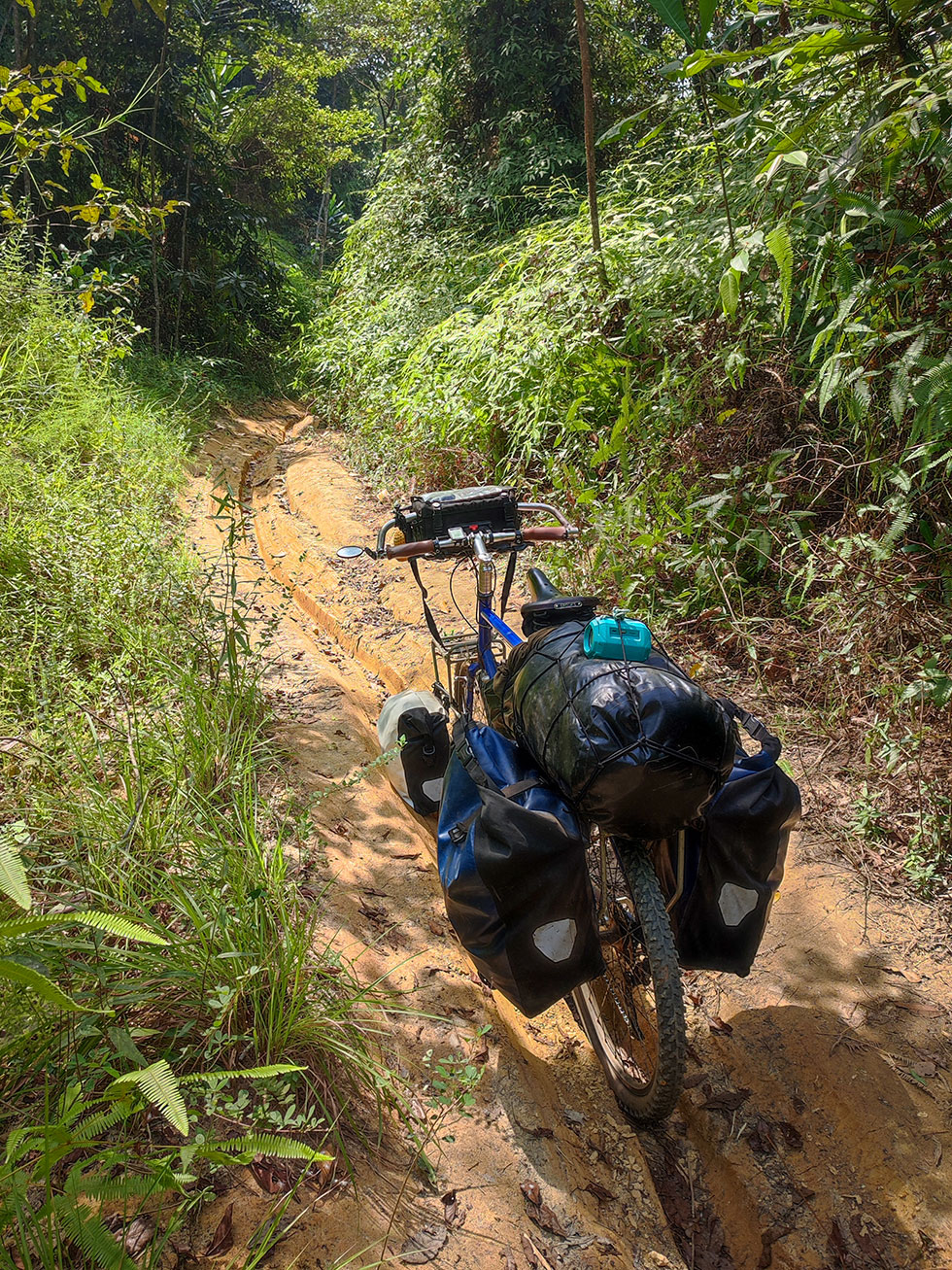
Bungee net – An incredibly cheap but transformative piece of kit. I use it to strap my main camping bag to the top of my rear rack – but you could of course do that with bungees. I like the net shape as it allows me to easily stash layers of clothes if I get too hot, without having to open and close my panniers, which requires hopping off the saddle.
I also use carabiners to attach small bits on the go – for example, if I’ve brought some food from a local village, or when I need to get to a river to wash my dishes and don’t want to put them inside my panniers. Never stash anything really valuable here though as bumpy jungle roads can dislodge items – I lost my best battery pack this way!
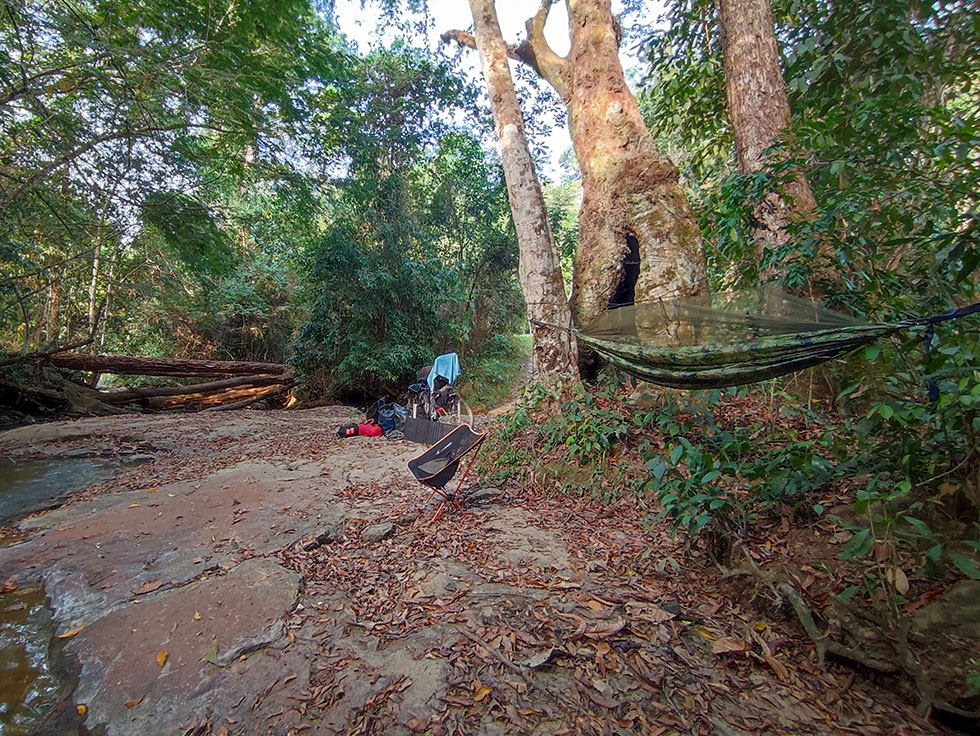
Hammock – A trip through the jungle wouldn’t be complete without a night swinging in a hammock, the chaotic cacophony of frogs, insects and birds chanting around you. Romantics aside, it’s truly essential as the ground is often covered with thorny bushes, swarming with tent-eating ants, or two feet underwater!
As my hammock was only used for a few days in the rainforest, I opted for a cheap (sub £10) one from Amazon and sprayed it head to toe in permethrin – this stops the mosquitoes landing on it as they can easily penetrate a layer or two and get to your skin otherwise.
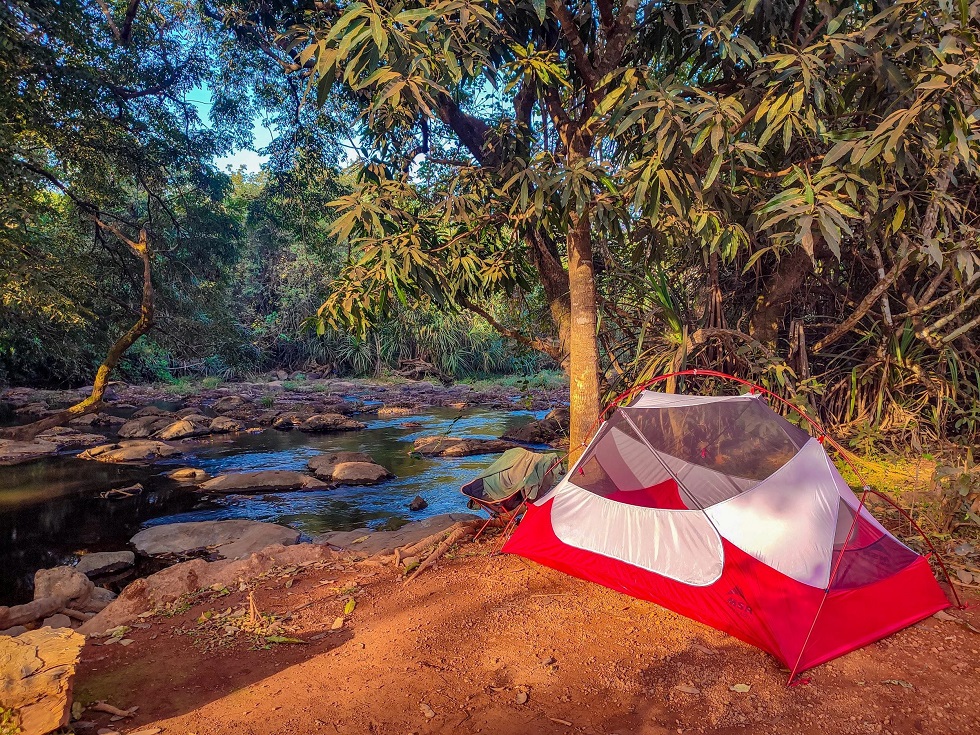
Tent – MSR Hubba Hubba 2 – When the ground wasn’t trying to eat me, I preferred to sleep in a tent for the sake of my back and having room to review and back up my footage from the day.
For longer journeys, always go one size up (so if you’re solo, get a two-person tent), unless you are really watching the kilos. For me, comfort and convenience beats speed any day, especially as the tent is often the only place I would truly relax in the jungle.
Freestanding models are ideal as they don’t require trying to get pegs in the ground.
MSR even make a version that specifically packs into its own bag on your handlebars if you’re bikepacking.
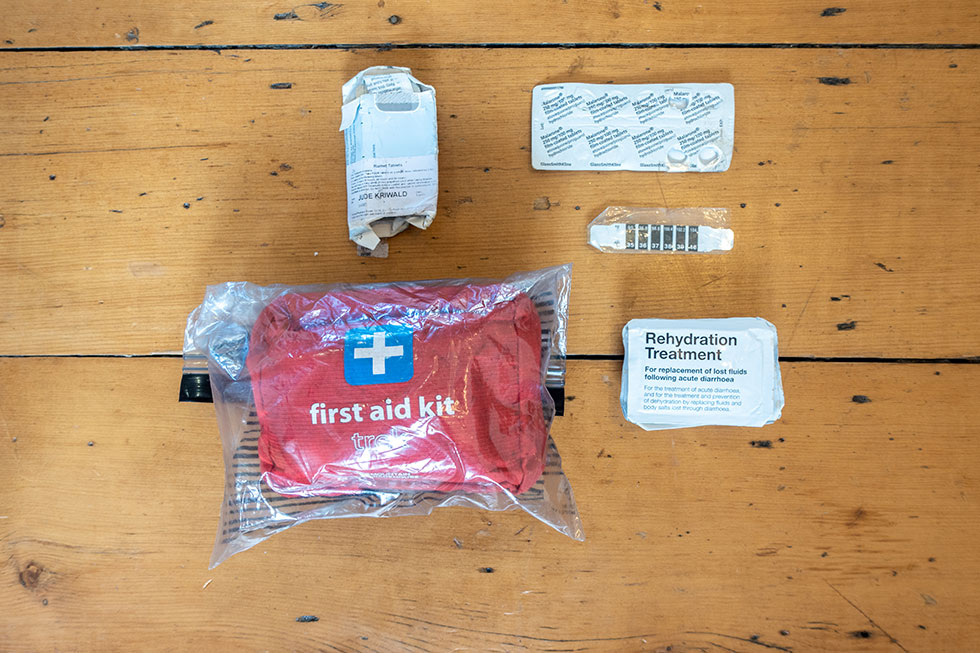
Medical Kit – This varies largely depending on where you’re going and who you’re going with. In my case, I already know what it’s like to have typhoid, giardia and malaria, so I didn’t fancy suffering through that again.
A malaria testing kit is essential if you’re going to be on your own in a high-risk area. In the UK, you can order from specialist online travel pharmacies that will provide you with the drugs you need to cure yourself of malaria (it only takes three days if you strike early).
Speaking to a special travel pharmacist can also equip you well with one or two general antibiotics, as there are plenty of ways to get ill in the rainforest!
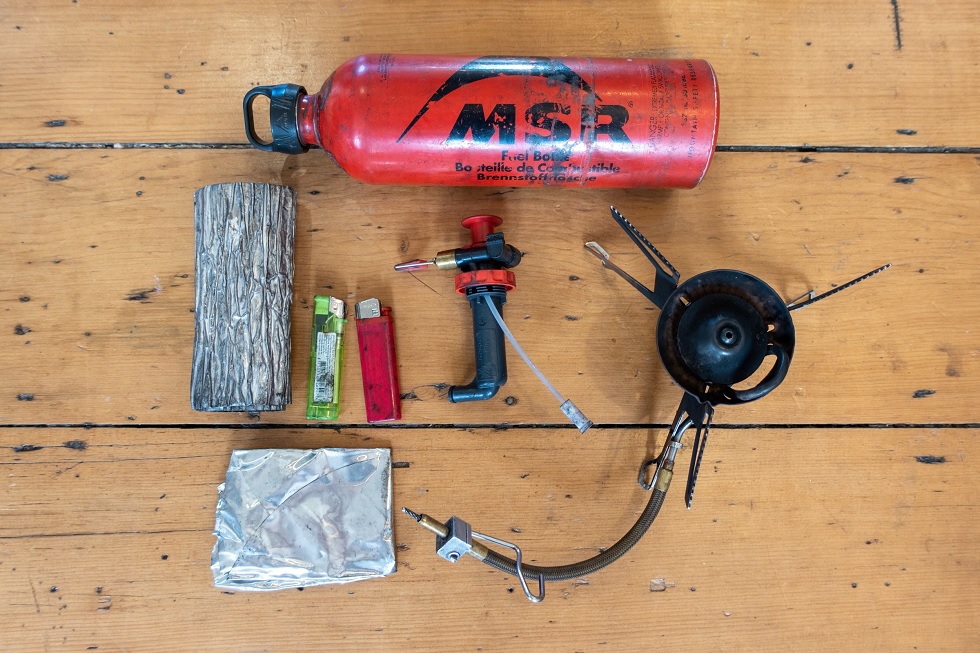
Stove – MSR Whisperlite International – I’ve trusted this stove since I cycled from England to India, aged 19, in 2012 and 2013. It burns anything liquid (give or take). Petrol, diesel, kerosene, white gas (which, in case you don’t know, is actually a liquid).
As a general rule of thumb, where there are humans, there is petrol. So this stove is for world travelers straying off the beaten path. Normal camping gas is great in places accustomed to tourists, but you’re not going to find a Decathlon in the West African jungle.
This thing is rugged as hell and comes with the toolkit and parts you need to conduct in-field repairs.
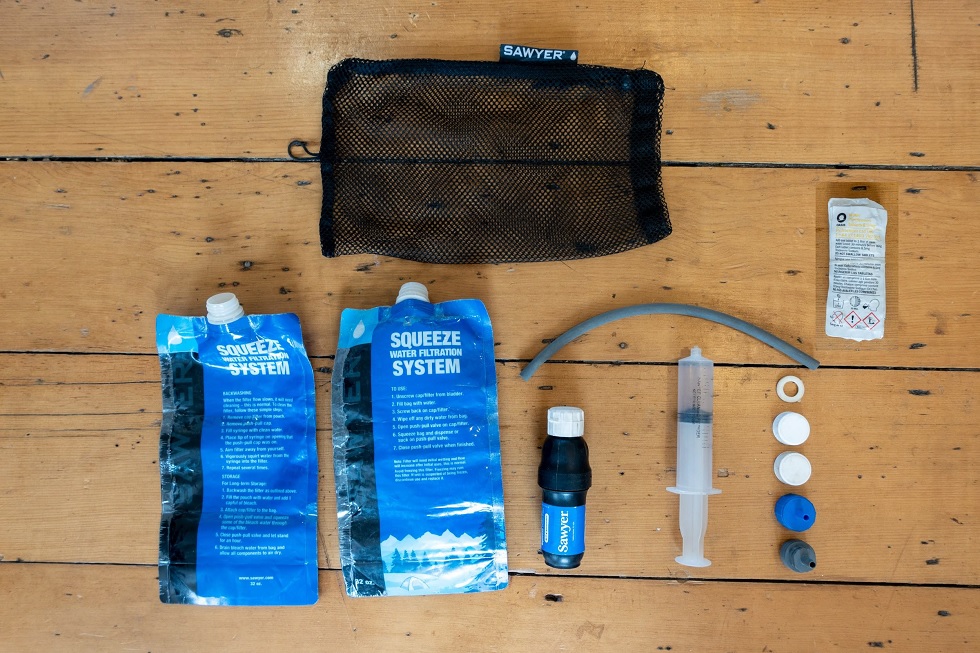
Sawyer Water Filter + Sterilization Tablets – Sawyer and LifeStraw seem to be the two biggest names in this field. With few exceptions (which you should very much check before using), you can literally walk up to a muddy puddle and drink it through one of these straws.
Typically, I don’t actually drink directly from puddles, and instead fill up the pouches and squeeze the water through the filter into a bottle. Perhaps surprisingly, it was a challenge to find water in the Gola rainforest, so I clogged up my filter pretty quickly by pushing filthy water through it. Like any good piece of remote kit, however, it is fixable and can be used again and again.
Water sterilization tablets are a great alternative and backup. Jungle travel isn’t about being tough but about layering systems so that one failure doesn’t become catastrophic. Straws like the one above are what I used most of the time – they filter most bacteria but not most/all viruses, so if I was sourcing water near a settlement, I’d pop in a tablet which kills off the viruses.
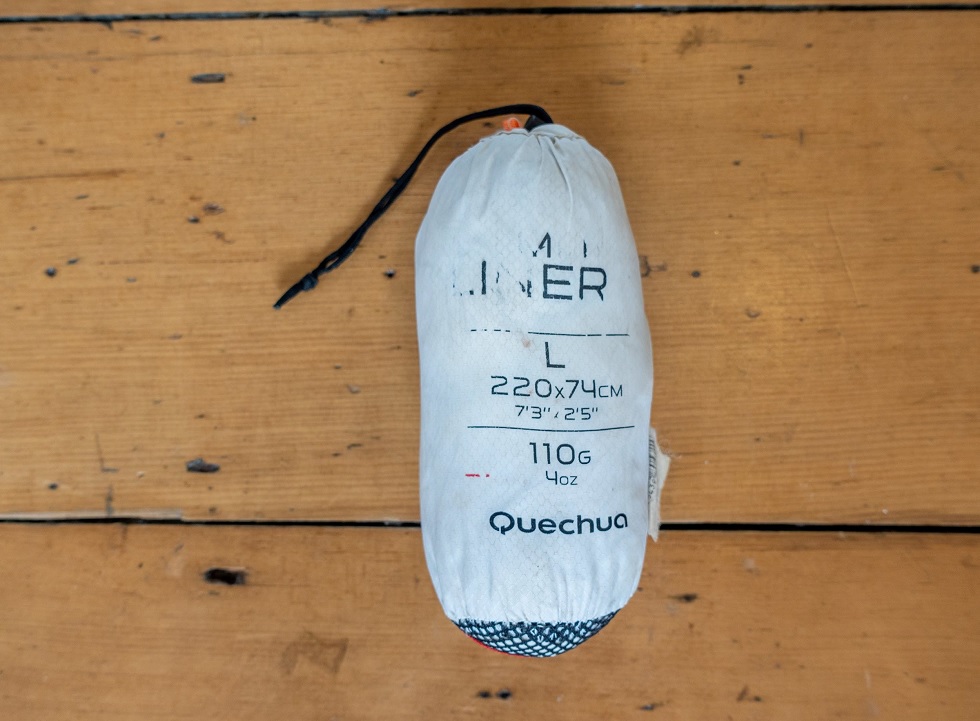
Sleeping Bag Liner – A liner is essential to allow your skin to breathe and to wick sweat. Sleeping bags are often a bit shiny and not so soft on the skin, so a comfortable liner can be the difference between lying in a puddle of your own sweat and just about managing to sleep through.
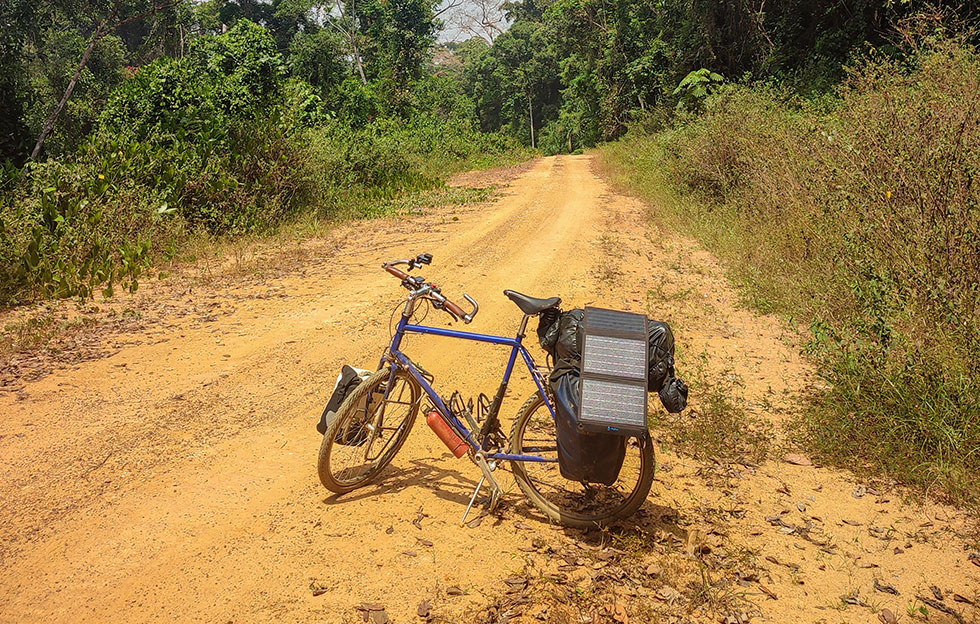
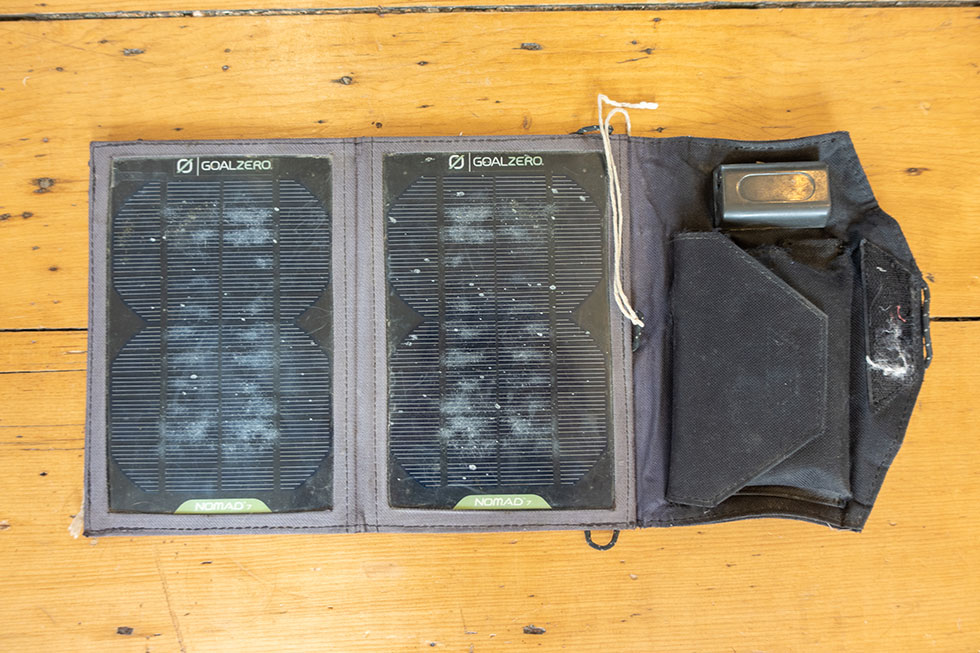
28W Solar Panel – When heading into the jungle, you have two options in terms of power. The first is to take as many battery packs as you think you’ll need and not bother with a solar panel. The other option is to take a battery pack or two and hope you can top them up by finding somewhere to use the solar panel.
It’s not easy finding a spot where the trees clear enough to let the light through, at a moment that you are happy to stop for an hour or two. Even if it’s not relied upon a lot inside the jungle, you’ll almost certainly be happy for it once you leave the canopy.
There is a third option, I suppose, and that’s to champion what I call “Analogue Adventures”, where you’re not reliant on any tech at all. It may sound crazy but it’s how the vast majority of expeditions to this day have been undertaken. Much easier when you can see the sun to navigate, and have a good map, however.
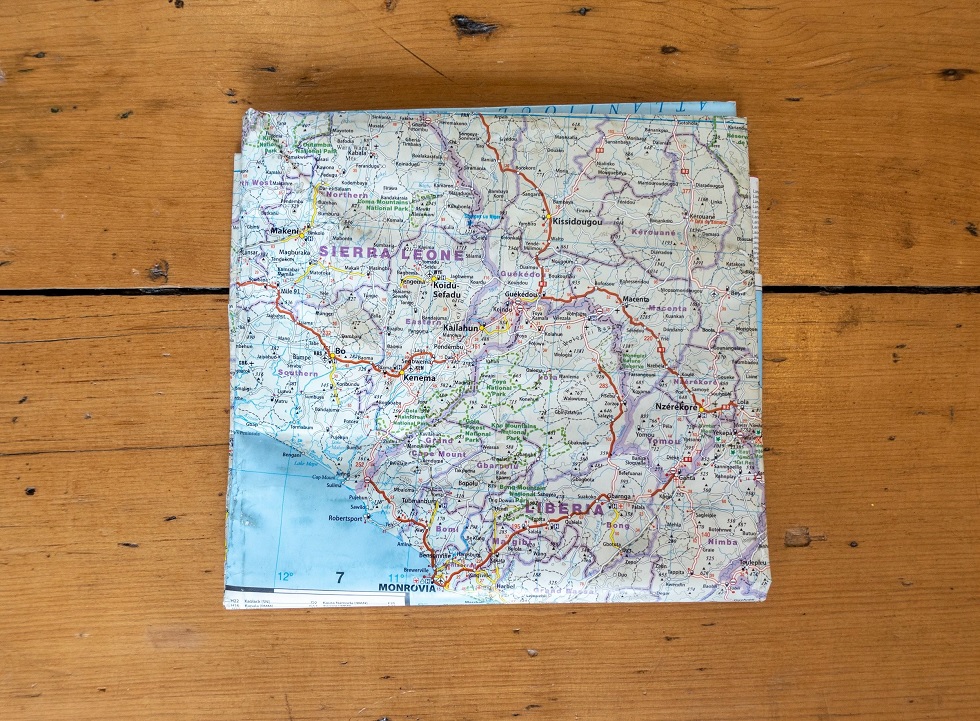
Map – Creating reliable maps of rainforests is notoriously hard. Typically, most maps are based on a combination of satellite and aerial photography. In the rainforest, a track may well exist but, if it’s hidden underneath a thick foliage of trees, how will it ever be mapped? This is part of the allure, of course: the only people who know much about navigating jungles are the locals who’ve spent their lives there.
In my talks, I often describe how I would typically always carry a paper map (phones break or run out of juice), but there isn’t one for the Gola rainforest. Instead, I started on Open Street Map (which anyone can update) and then spent hours poring over Google Earth, trying to spot tracks and clearings along routes I’d read about. There are various apps that can display Open Street Map data – “OSMand” is one of the best.
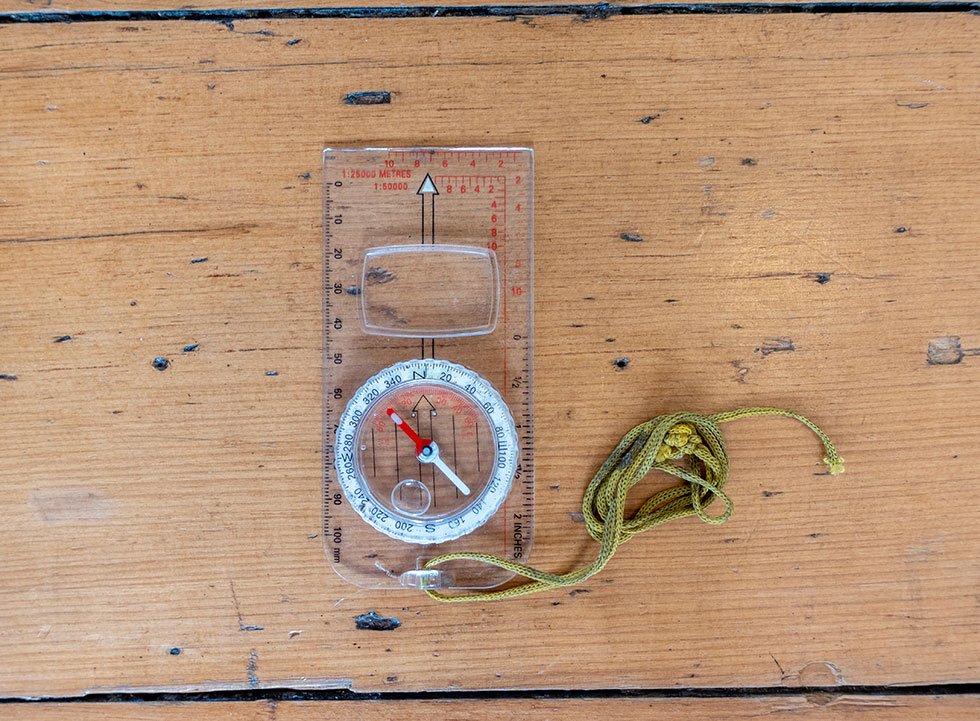
Compass – Towards the end of my crossing of the Gola Rainforest, the track split in two. My maps couldn’t help me, these tracks were uncharted. It was only after half an hour talking things through with my compass that I felt confident enough to make a decision.
In my talks as a motivational speaker, this moment is the one audiences relate to most: standing still, knowing that delay is better than movement without clarity. The compass couldn’t give me certainty, but it did give me enough information to commit. In harsh environments, you’re rarely choosing the right path, just the most defensible one.
Like many explorers, I would usually enjoy navigating approximately by using the sun. In the jungle, that’s rarely possible as the luscious greenery blocks out any sense of the sun’s location in the sky. The same goes for the weak GPS signals trying to reach you from space – beneath the canopy you are truly self-supported!
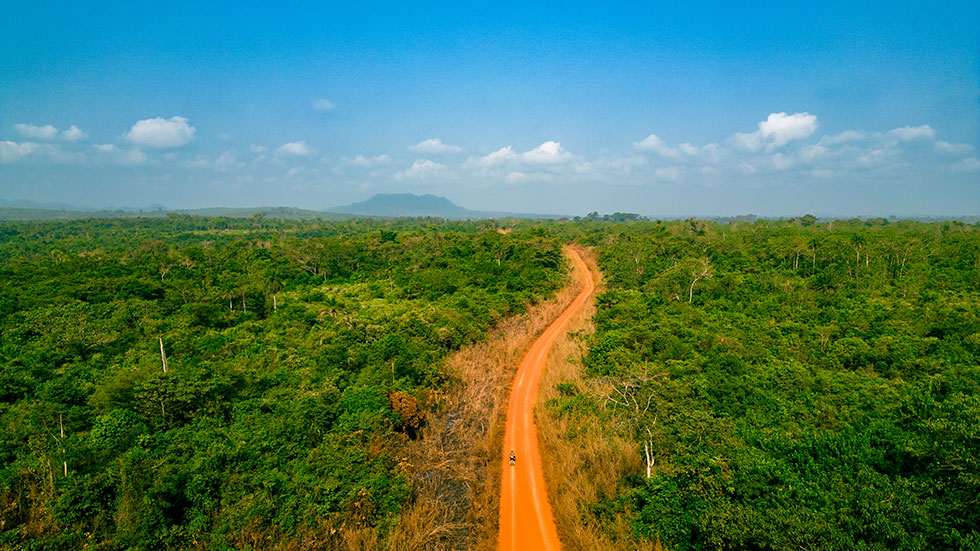
If you head into the jungle alone, it’s not an exaggeration to say that your life can depend on having a compass (and knowing how to use it), as well as having a mental bearing of where you’re going and coming from (e.g. “my destination is 10km SE of here”).
Even with a reliable map, or following a known trail, things can change quickly in the jungle. In the space of a week, a tree can fall and block a path, plants rise up and very quickly you might not be able to see which way to go. A compass is a lifeline I’d never leave without.
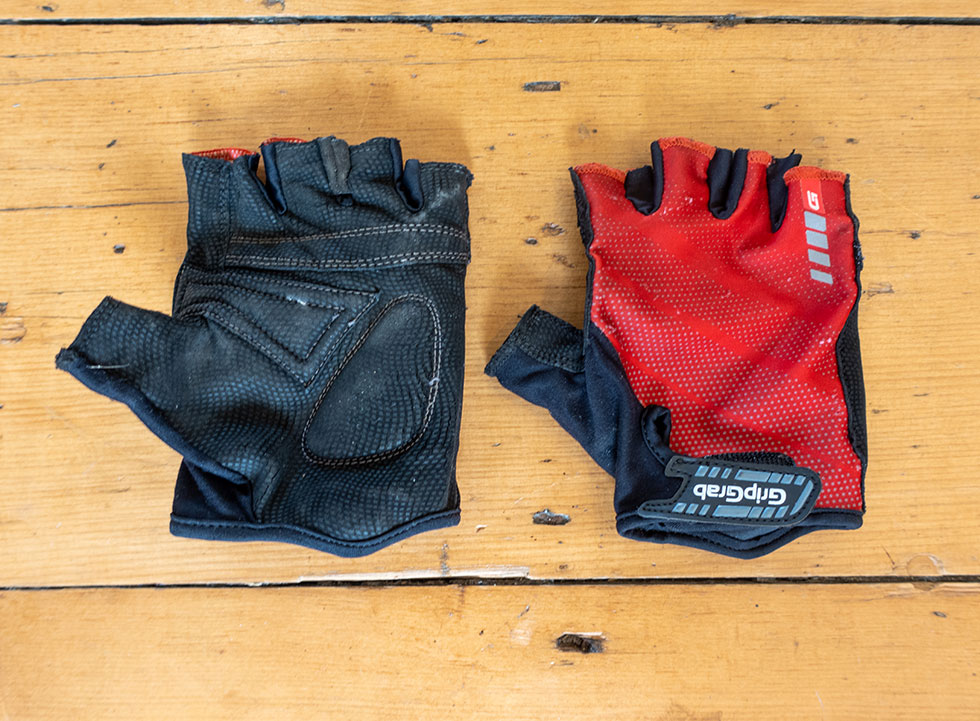
Gloves – It can sometimes feel like everything in the jungle is out to get you. The plants in the jungle are like nowhere else I’ve ever been. The thorns are bigger, stronger and sharper. The ants are hungrier, meaner and seemingly madder.
The track I found myself on had been abandoned since Liberia’s civil war in 2003. So I constantly had to lift huge logs out of my way, hack away at plants, and clamber myself and my bike over fallen trees. Thin cycling gloves won’t stop a snake biting you, but I’m convinced they were the difference between my hand being torn to shreds at the end of the day and being largely intact.
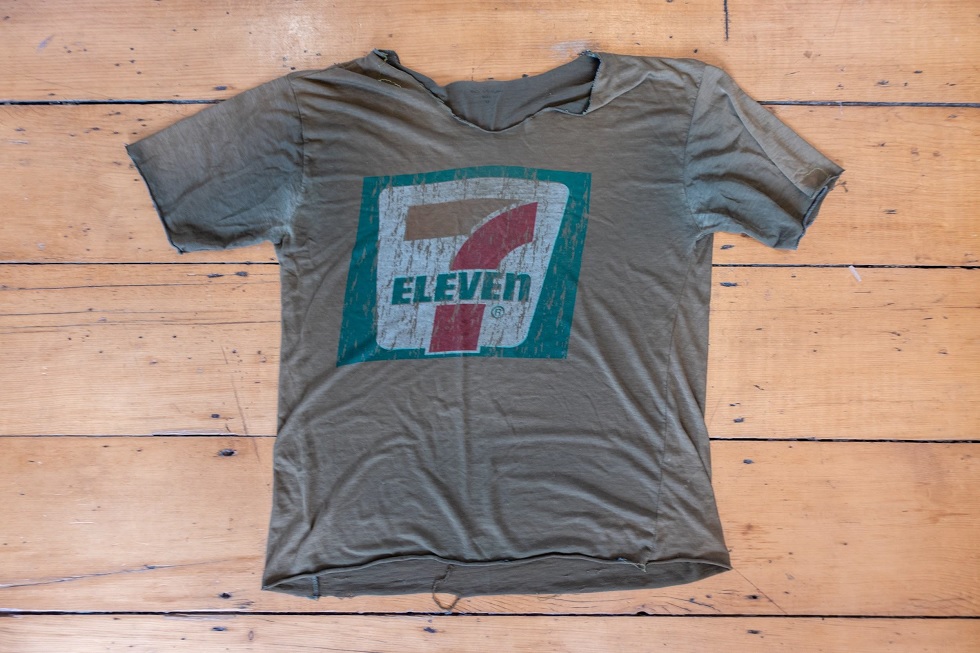
Your favorite fast-wicking t-shirt – My knock-off 7/11 t-shirt, bought for £3 in Thailand when I was 18, is a better “performance” top than any I’ve found elsewhere. So much so that I wear it on every expedition – to the point that people have started noticing and asking if it’s really the same shirt that I cycled to India in.
It’s bombproof, which I assume means it’s made of something artificial. But what I care about is that it wicks sweat incredibly well whilst giving me a thin layer of protection against the sun. It’s also the coolest shirt I own (temperature-wise, obviously), hence earning its place for the hottest, toughest days. There’s a moment in the film when I actually wring a stream of sweat out of the shirt, such were the sweat levels on that expedition!
I did try wearing a full-length shirt to add protection from the sun, thorns and insects, but simply found it too hot and wet. Whatever clothes you opt for, don’t expect any of them to ever truly dry in the humidity of the rainforest, even overnight. Every morning it was a choice of putting on the least wet of my clothes.
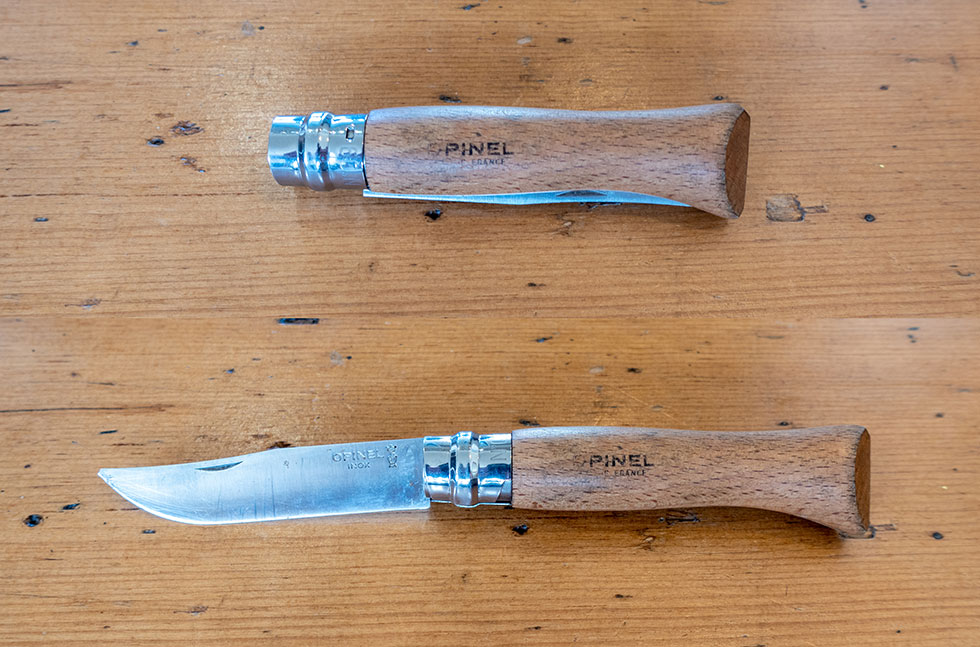
Knife – A sharp and reliable knife is essential for any cycle touring or bikepacking trip. In the rainforest, I used it for everything from cooking, to clearing plants out my path, to cutting off a lump of skin on my knee after I’d taken a fall (I sterilized the blade with a lighter first).
I like one with an ergonomic grip, and be sure that you know how to use it properly. There’s no particular right way that I know of, but there are plenty of wrong ways. A knife is one of those tools that can easily cause more harm than good!
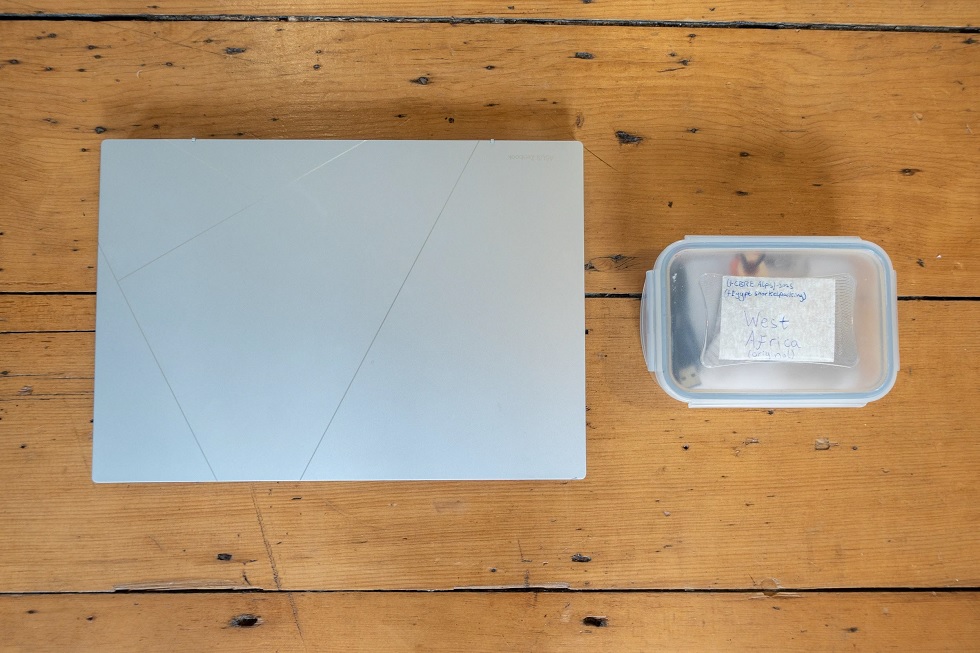
Laptop and hard drive – A laptop is obviously far from essential for a typical rainforest excursion. For me as a filmmaker, however, it was essential. After lugging my bike through the jungle for 12 hours and exhausting liters of sweat, I’d sit up in my tent for an hour each night, transferring footage from my SD cards and onto my hard drive.
It wasn’t so much a backup as making space on the cards, so I could shoot again tomorrow. For three months I carried that hard drive around West Africa—it was my only copy of all the video I shot. I always daydreamed that if someone really tried to rob me, I’d beg them to take my cash and passport but not the hard drive.
If you don’t need to edit on the go and want to travel lighter, there are now USB adapters that allow file transfers between a micro SD card and a portable hard drive using what looks like a USB hub that plugs into an Android phone. You can then use an app on your phone to facilitate the transfer. This is a total game-changer for adventure filmmakers!
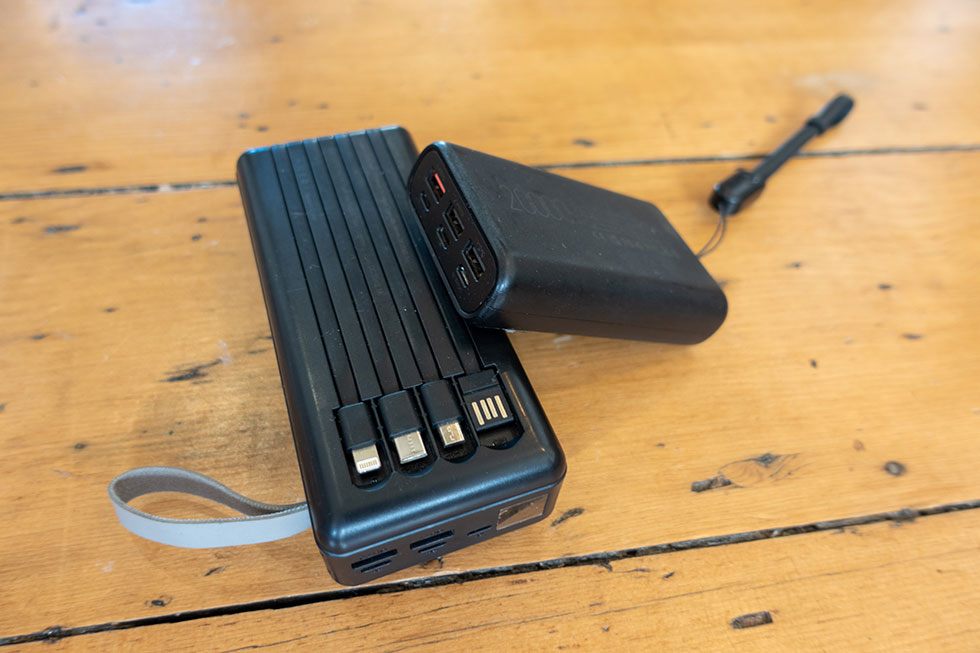
Battery Packs – It can be bizarre to think that people used to head into the great outdoors without a battery pack, such is our modern-day reliance on electronic devices. Whether you’re filming lots, navigating via GPS, or simply wanting to charge your phone or camera, if you’re in any way reliant on tech for your trip, a battery pack is a great asset to have. You can be sure of one thing in the jungle; there isn’t going to be anywhere to charge your phone!
If you also have a solar panel in your arsenal, it’s often better to charge your battery pack from the panel first, and then charge your devices from the battery pack, rather than plugging your phone straight into the panel. Smartphones aren’t great at handling the patchy voltage which panels can output.
I made sure that at least one of my battery packs was capable of charging my laptop – something that most can’t do, so check carefully.
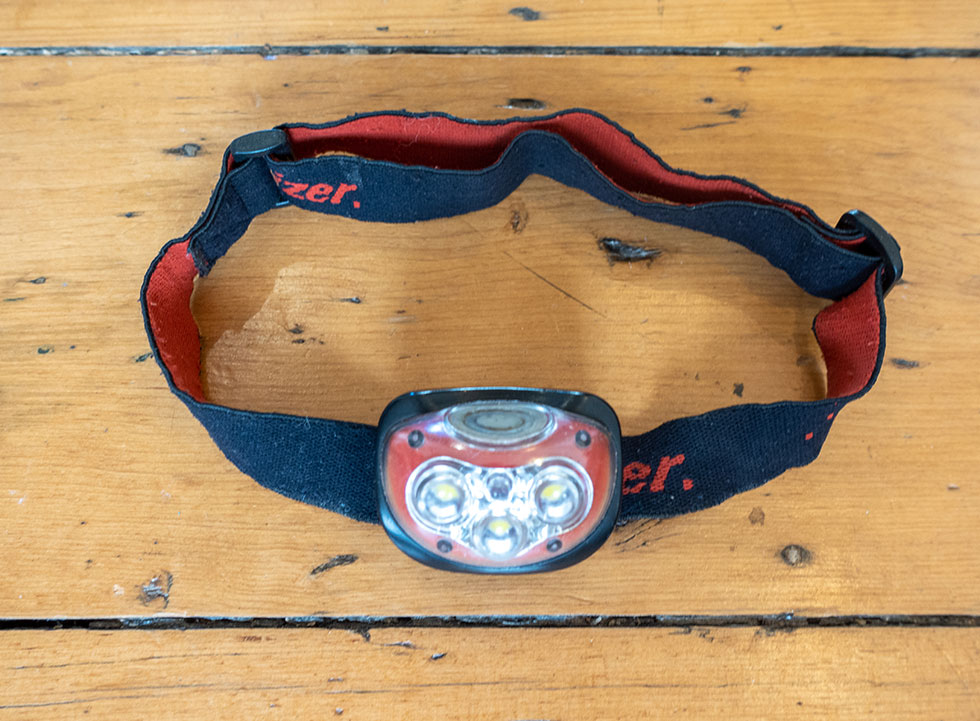
Head Torch – Near the equator, the sun falls rapidly out of the sky. Within half an hour of sunset, it’s pitch black. Although you won’t want to be outside your tent much due to the unforgiving airborne critters (especially with a light), not having a torch could turn a moment’s clumsiness into a serious survival situation.
And I know what some people will be thinking – my phone has a torch! It does, but it also has a battery that runs out significantly quicker, and which you might need for other purposes. It also reduces the number of hands you have free by 50%!
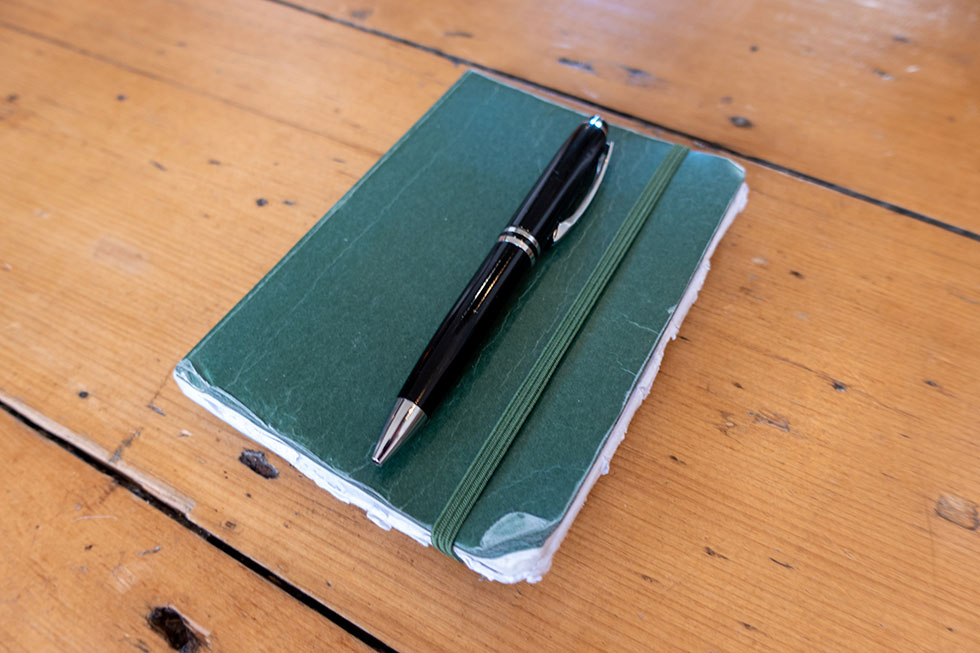
Journal and Pen – Arguably not essential, but I think a huge part of any trip is lost without pausing to reflect most days. As an adventurer, speaker and writer, it’s even more essential to me. As much as I like to think I’ll remember all my hard-fought insights once I’m home and writing my next talk, that’s often not how it goes.
If you’re a writer, just twenty minutes of journaling each day can be the difference between being able to write a book and simply having a few cool memories which can fade with time.
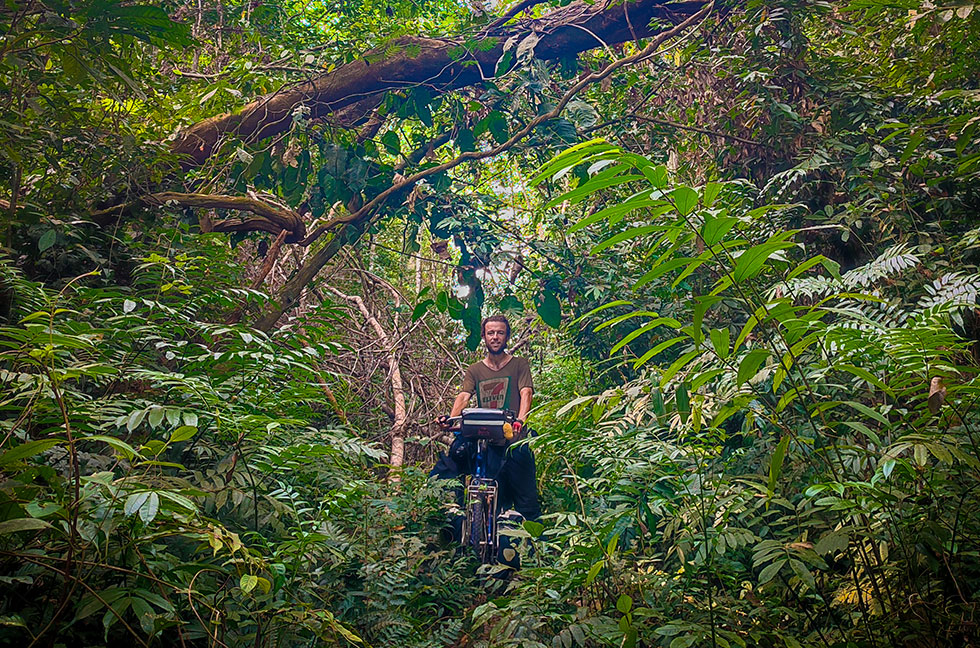
Jude Kriwald is an explorer, speaker and mentor. To find out more about his speaking or mentoring, visit JudeKriwald.com or view his Instagram @JudeKriwald


 WAYS TO CARRY