



 Carry Awards
 Insights
 Liking
 Projects
 Interviews
 Carry Candy
 Community and Marketplace
Insights

On our team, we’ve got no shortage of ideas. We have a long list of concepts and projects that we would love to really dig into, but we just don’t have time to get to all of them. So we play this balancing act of trying to be efficient with our time so that we can get to more of these interesting projects, and also wanting to really dig deep into the current projects and make them the best we possibly can.
We add schedules and milestones, deadlines and meetings. We work with sales and marketing, management and production, customer support and creative; teamwork and collaboration are critical to bringing products to life and getting them into the hands of customers. But if you really focus in on the designer’s role in particular, the simplest way to describe the design process:
F*** around and find out.
You can sketch all day, but there are things you can only learn from a physical product, so make some prototypes, mock-ups, samples, whatever you want to call them. You’ll learn a ton in that process alone. Then use them, and see what happens. Where do they fail and where do they shine? Then share the design, get it in front of people you trust to give you helpful feedback.
In just a couple of succinct steps: Make it, Use it, Review it. I go through the process over and over, again and again. And while that cycle might look similar for most designers, I’m going to share a few things that make each of those steps more efficient or more valuable for me.
Make It
Sketching
I saw a clip of Rick Owens offering advice to designers getting started, where he said, “learn how to make clothes, learn how to make clothes, learn how to make clothes. Don’t do sketches and collages, because that is bullshit… you have to learn how to make clothes.”
While I love the sentiment and agree wholeheartedly that you need to make the thing to really understand it, I don’t think that sketches are bullshit. I sketch bags every day, but it isn’t for the sake of sketching, and it isn’t usually something that gets presented to anyone else, apart from the designers I work most closely with. Sketching is a tool for working through a problem, or communicating a concept in the simplest way possible. It could be an aesthetic problem or it could be a construction problem, but it is almost always done with the next sample in mind. If you let it, a pretty sketch can become the goal, when it should only be one of many tools in your tool belt for bringing a product to life.
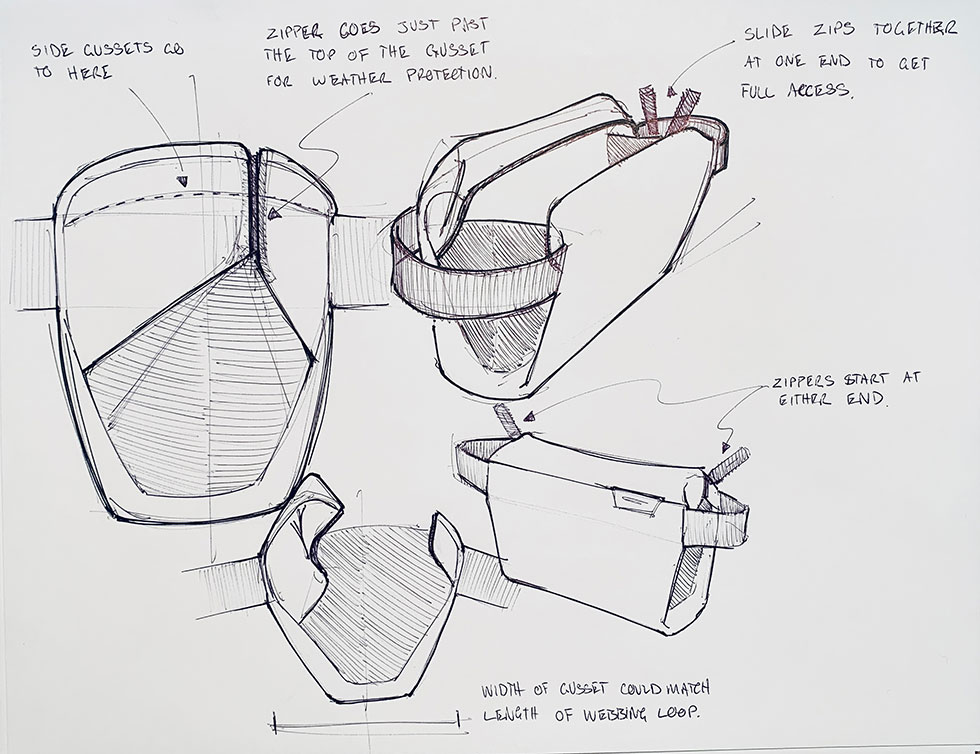
For a long time I used sketchbooks, the nice ones with a leather cover. It made me feel like a designer, carrying this thing around, along with my expensive markers, always ready to jot down an idea. But I found myself not wanting to waste pages on mediocre ideas, or hesitant to start a sketch because I didn’t want to mess up a nice page. There was something too precious about those nice notebooks and markers that I just couldn’t get over. So I switched to printer paper and the cheapest ball-point pens I could find. It was freeing. There was no hesitation in jotting down the smallest idea or scribbling out a few different ways I might solve a pattern issue.
Make That Thing
Being able to make the product yourself is one of the best things about working in soft goods. Where I studied industrial design at university, we didn’t have access to 3D printers and computerised maker tools, so most of the projects lived in a digital space, rarely taking three-dimensional form. With bags and soft goods, I got to see the sketch come off the page, and I was hooked.
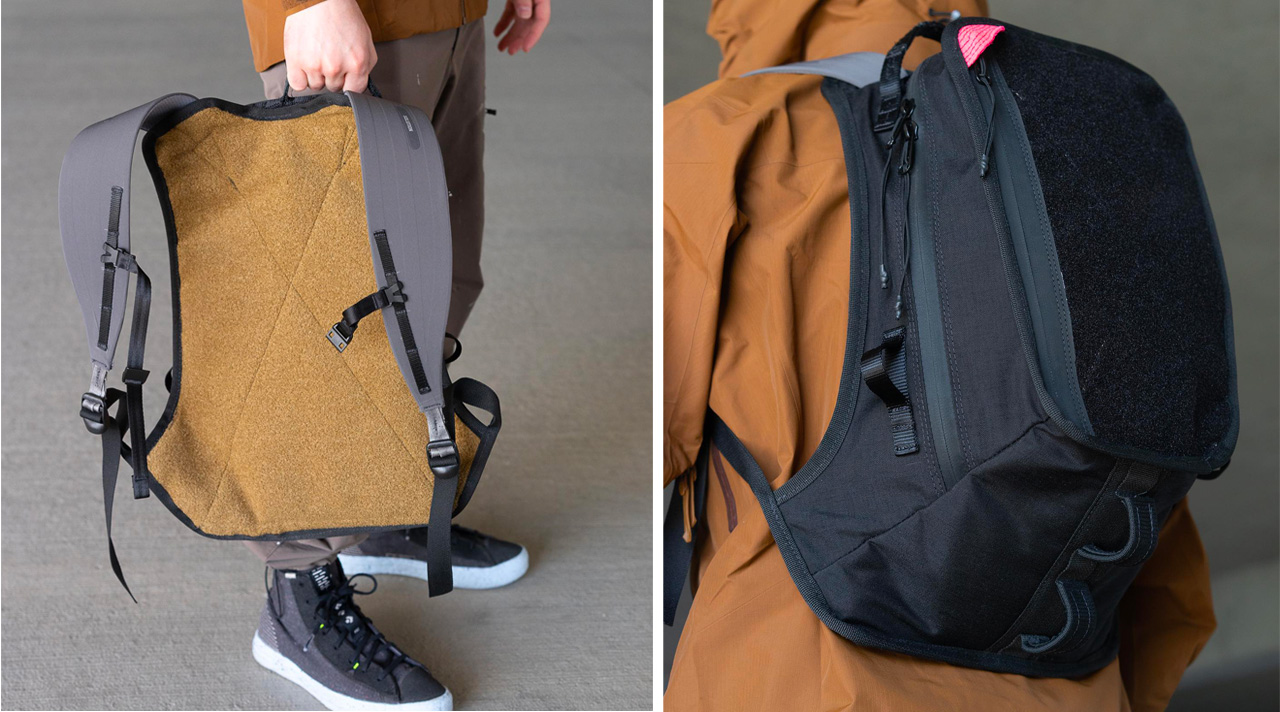
If you’re going to design bags, you should also be making bags. There is so much you learn when constructing a project, and it is part of the process that I really enjoy. You can get started in the morning and then, before you know it, you’ve spent 10 hours in the workshop putting together a sample, this physical manifestation of an idea or concept. When planning a pattern, building a paper mock-up, cutting the materials, and sewing the bag all together, you’re forced to figure things out, things that you didn’t even consider in your sketches. Treat it as deliberate practice. Ask others with more experience for advice.
At Bellroy every project is a little different, and we decide to either request a sample from a supplier, or build a sample in-house, depending on the situation. Look at the timelines, look at the unknowns. I am lucky to work with some amazing suppliers, factories that are extremely good at what they do. They are much, much better at making bags than I will ever be. They are quick and precise, with a whole team of bag makers working together on every sample. Create a good relationship with your supplier and they will help you solve problems. Not all factories are the same, and they don’t treat all customers the same. So work to establish a good working relationship.
To get good samples from the factory, you’ve got to send them a good spec/tech pack. If you can send them a pattern or a sample, that is a huge win, but you’ve got to have good, clear orthographic drawings and detailed construction instructions. Hone your skills in Adobe Illustrator, try out the live paint tool (it is a controversial one on our team).
Goldilocks (How much ‘F*** around’ do I need to ‘find out’?)
There are so many ways to test out a concept, and with experience you learn which ones are right to use for a given situation. Should you spend a week making a perfect, fully lined sample? Or could you spend an hour with some fabric scraps and a stapler and get the answer you need? Knowing the most efficient way to get your answer is just as important as how to make a perfect sample.
Adam Savage knows all about this; just watch an episode of ‘Myth Busters’ or ‘Tested’. In his book Every Tool’s a Hammer, he flips Maslow’s Law of Instrument around, and encourages creatives not to be paralyzed by perfectionism or prescriptive processes, but rather embrace resourcefulness and creativity. Be it the tools you use, or the thing you make, it doesn’t always have to be pretty if it can give you the answer or outcome you’re after. And in my experience, the simplest prototypes can be the most useful.
What is the goal of this sample? Who will I show it to? Will they be able to see past the imperfections to see the promise within or will they get caught up on the flaws? Is the management team going to see it? Will it be enough to convince the team to move forward in this direction?
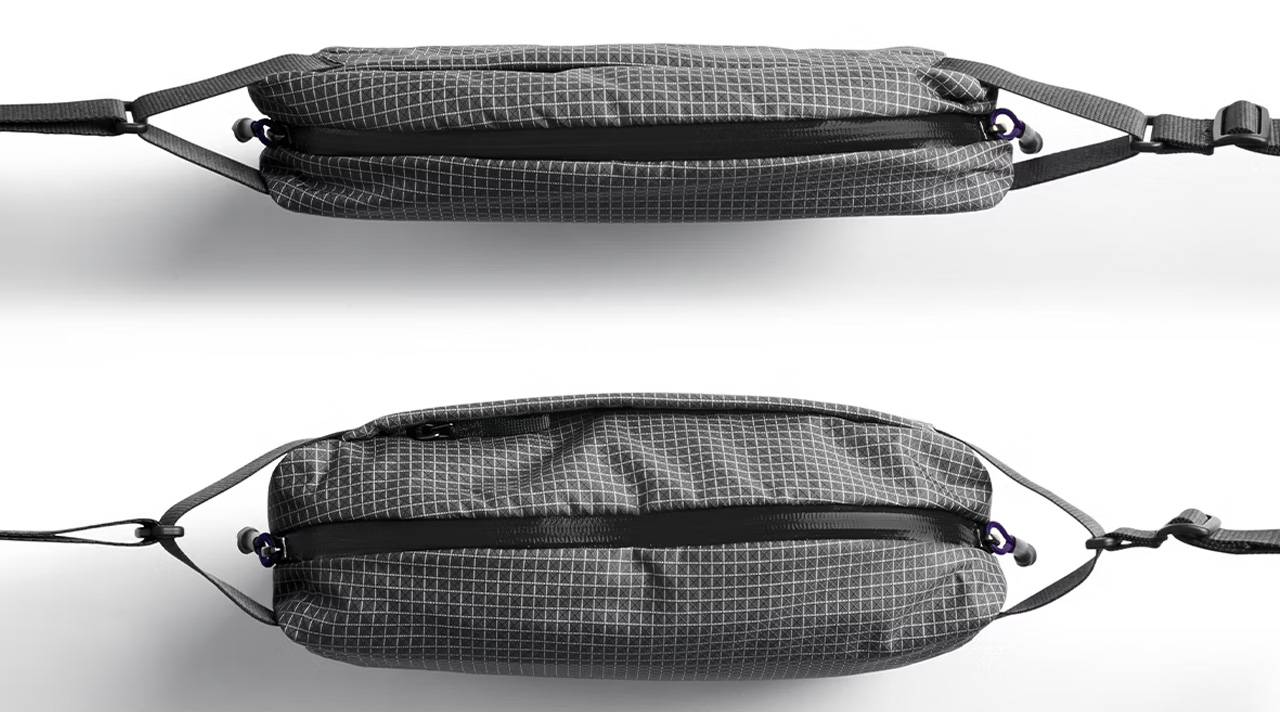
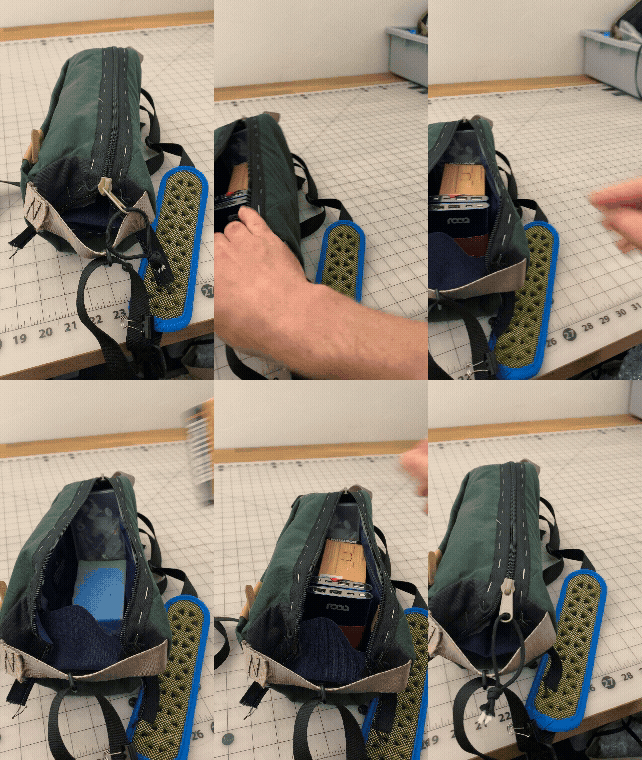
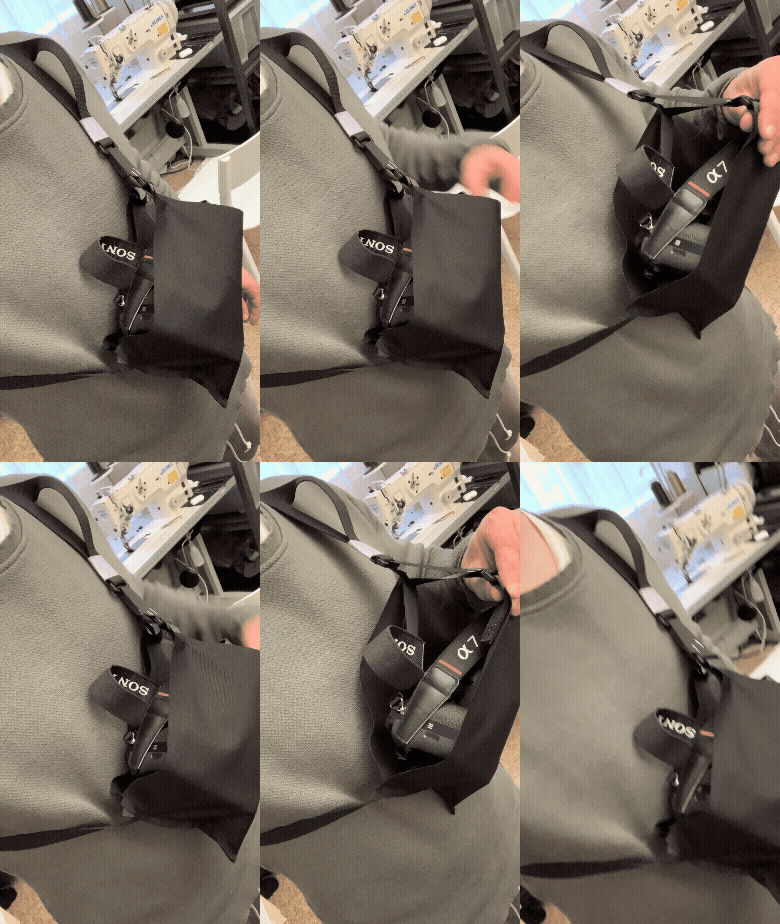
Bellroy’s original sling (which was designed before I ever worked at the company) has this really lovely method of automatically compressing itself using the bag/content’s own weight. The sling, however, suffered from a main zipper opening that just didn’t provide enough access. So the team set out to combine the auto-compression with great access. Those earliest samples were extremely rudimentary, but they were also very illuminating. Fabric scraps, stapled webbing, a bit of tape, random hardware… We experimented with the most basic versions of what a ‘bag’ is made of so that we could move quickly through ideas and concepts, to find a solution, and to better understand the problem. Those messy experiments and samples have turned into a handful of very successful products, and taught us a lot along the way.
Use It
Play Pretend
Fortunately, most of the bags I work on at Bellroy are everyday sorts of bags that I can test out commuting to and from work. If I’m working on one of our Venture bags, I can ride my bike in or head out on one of the walking trails near the office. It helps that I sweat a lot, which makes it pretty clear where the hot points are when we are testing out a new back panel. Spend time using your samples; you’ll learn so much from them.
It is always going to be best to test a product in the actual situation it is designed for, but that isn’t always easy to do. There are times when you can use a little creativity to quickly find an answer and get pointed in the right direction.
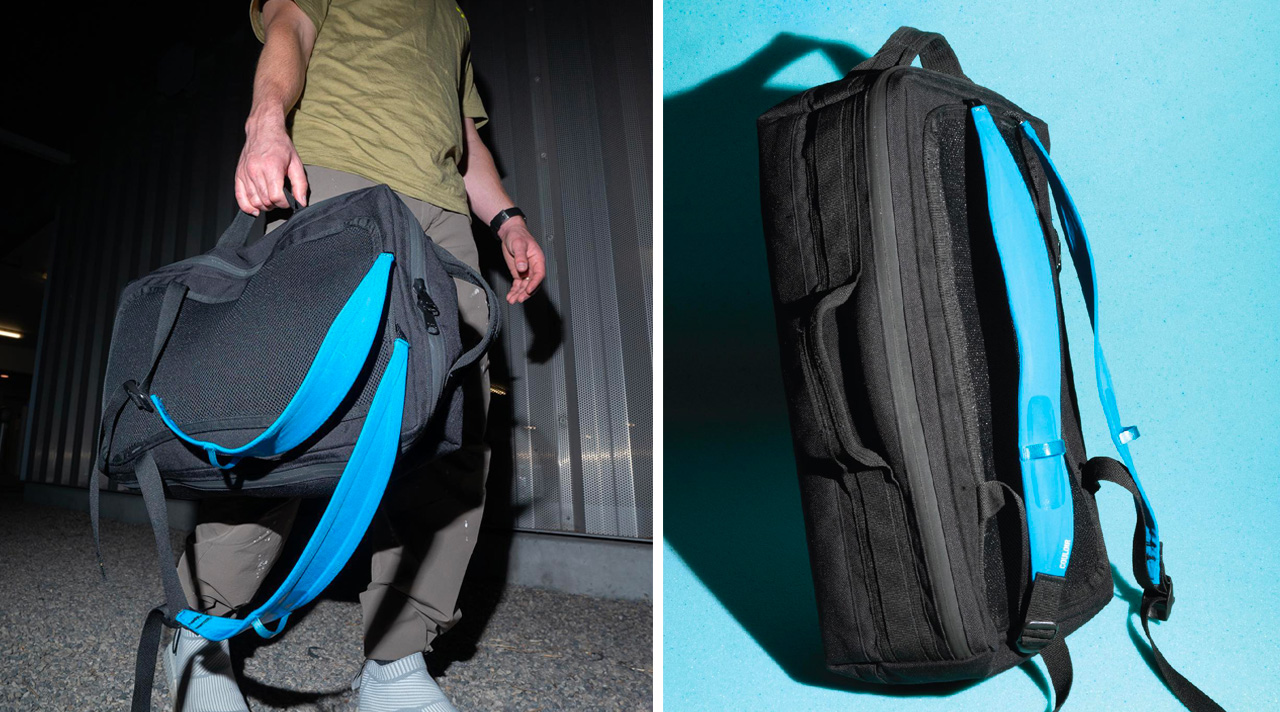
You’ve got a new sample of a carry-on bag but no travel plans… Toss it on top of the fridge – simulating the overhead compartments on an airplane. Can I still access the items I might need mid-flight, or would I need to pull the bag down? Are the handles in the right spot? Does the water bottle fall out onto the head of the person who would have been sitting in the aisle seat? Where is this user going? What are they doing there? It is always going to be better to test the gear in its intended environment, but you can usually get a bit creative and get most of the way there without needing to jump on a plane.
Watching Others
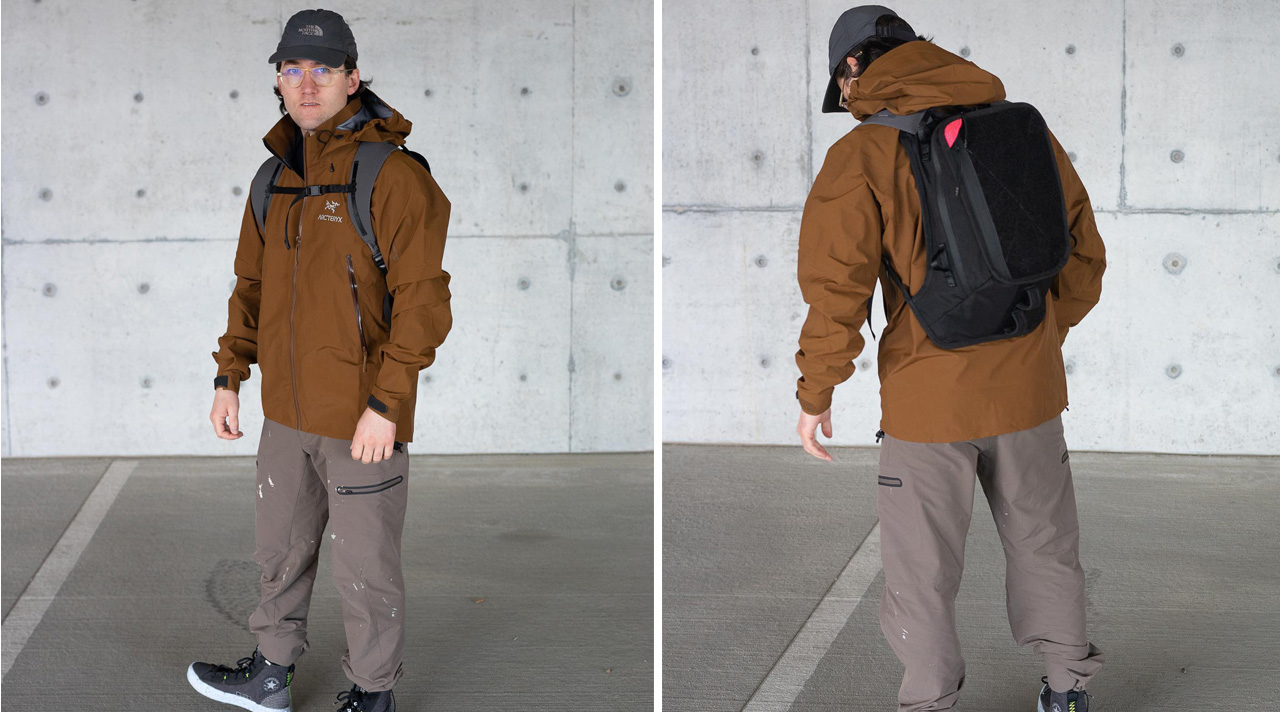
Once you’ve tested it out, get it into other people’s hands. Find those who are NOT bag designers or bag nerds, and watch how they use it, especially their first interaction. I try not to explain too much at first, but give them a simple task to do with the bag, and see how it goes. Let the target user test the bag, and see what works and what doesn’t… are they doing things differently than you thought they would? Do they pack it out the way you imagined? Where are the sticky points and sharp edges? After that, I might give them a prompt about how we imagined it working, to see if that changes how they think about using it.
We are trying to see their two different systems of thought as they use the product: the first system being their immediate and intuitive response, and the second being their slow, deliberate and focused response. Some products we want to be immediately understandable, with no explanation needed, while other times we want to create something new, which could take some learning, but that then becomes the user’s new expectation for the future. (Thinking, Fast and Slow – Daniel Kahneman)
You’ve got to get feedback. You need to get the sample, mock-up, prototype, whatever it is, you need to get it in front of people. What is their immediate reaction? How do they pick it up? What confuses them? Is it something they even want?
Review It
The Power of a Good Design Review
For a lot of creatives, sharing their designs with others can be a stressful situation. What if they don’t like it? You’ve put time and energy and passion into this concept and mock-up, just to have someone say that it is ‘a bit shit’. It can be very difficult to handle. Ego can get in the way pretty quickly. You can get married to an idea and not want to let it go.
On a design team, it is important to create relationships where you can be honest and open during design reviews. There needs to be an environment where you can discuss the problems and potential solutions, where you’re all trying to come up with the best answers. It isn’t about shooting down their ideas. You’re on the same team. When the product is better, you both win.
If you’re doing the reviewing…. Be kind, be tactful, be honest, be helpful/constructive.
If your project is being reviewed…. Be open, be curious, remove the ego.
Get quick and honest feedback from people you trust. If you don’t feel like you can share your honest opinion, that is a problem. Truly listen to what others have to say, and then do the best you can to work out if you should use the advice or ignore it.
My Precious
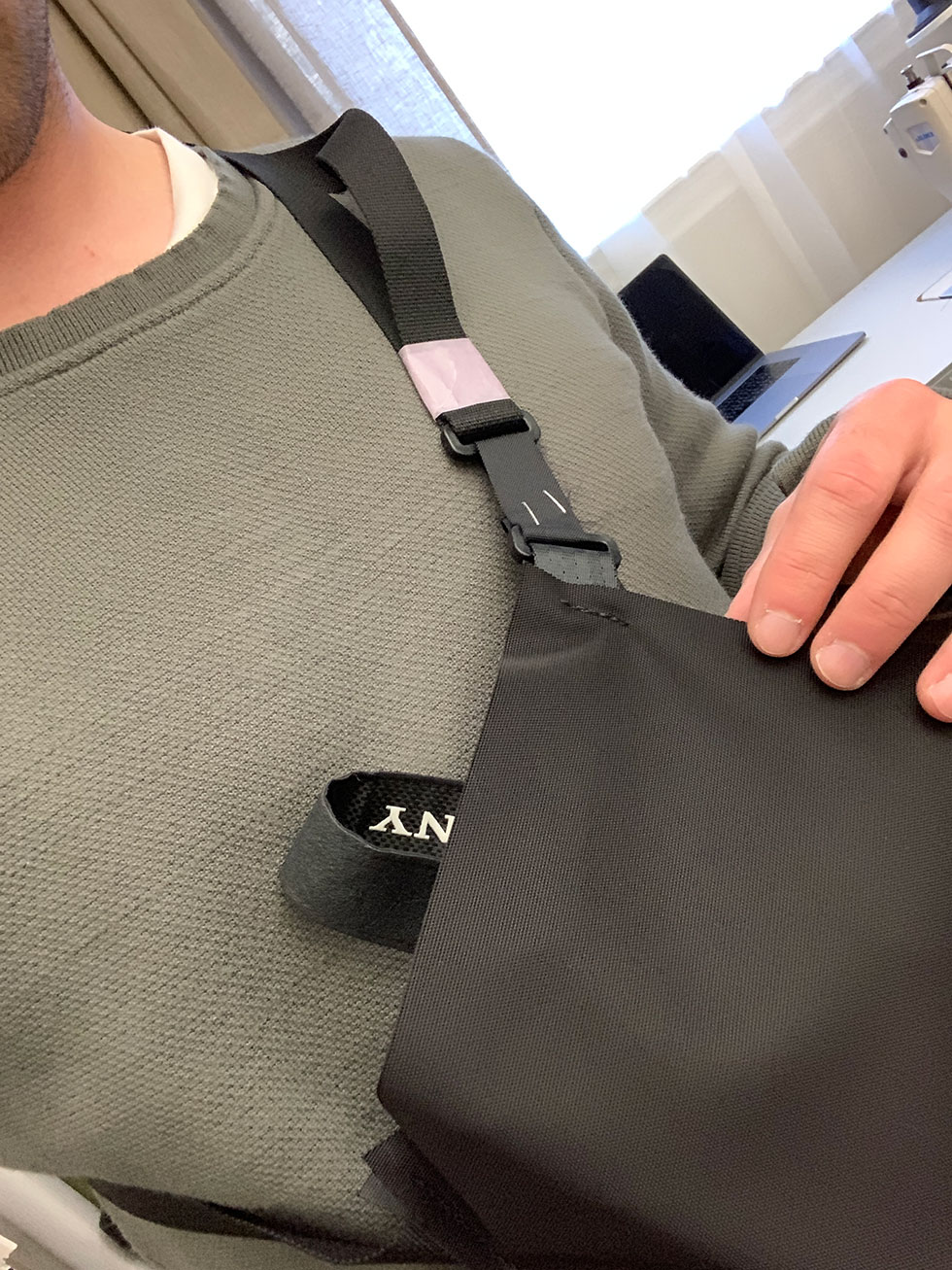
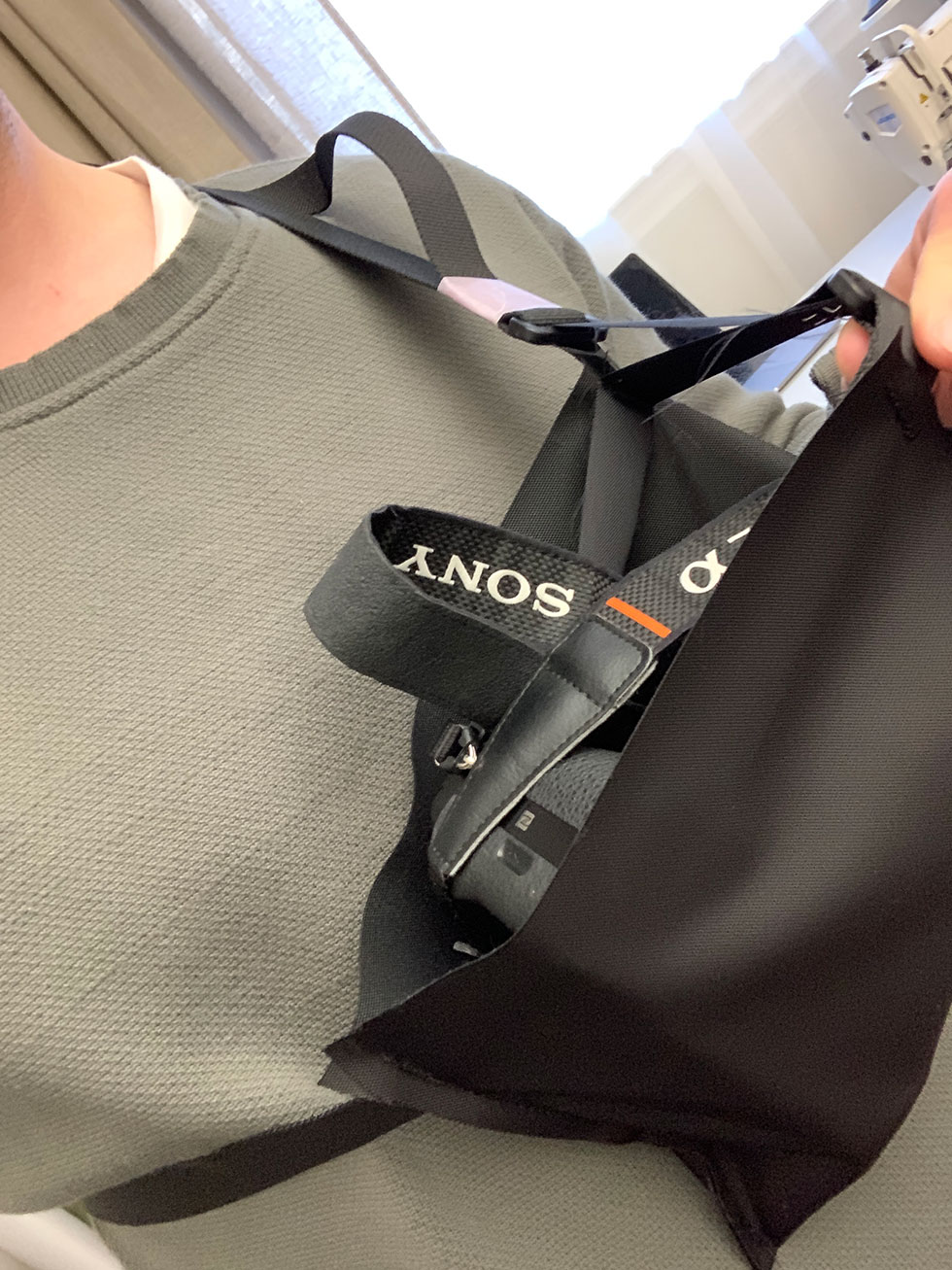
I love bag samples. It could be one that I made, something another designer in the office has put together, or one just unboxed from the factory. It is a bit of a rush knowing that this is the only one of its kind out there. When I started at Bellroy, I never wanted to mess up my prototypes. Because I had put so much energy and care into them, they became precious to me. But the other designers quickly took a pair of scissors and a stapler to that way of thinking.
Pretend you’ve got a few members of the team all huddled together, having a look at the latest sample, which you just spent 2 days building. You take turns pinching it, prodding it, and trying it on, working together to figure out what it needs. Someone in the group picks up the scissors and says, ‘Do you mind?’ … What do you say? ‘Have at it!’ or ‘Hands off!’? It took me a while to get comfortable with that kind of quick hacking of my hard work, but it isn’t about the sample, it is about what it can teach you. Every sample is a hammer… It isn’t precious, it is just a tool for learning the thing you need to learn.
I’ve been lucky enough to work around some really amazing people. Great designers, yes, but even better people. They push you in ways that make you uncomfortable, but always have your back when you need it. They have taught me so much. My last bit of advice… find good people to work with.
Aaron Puglisi is a Senior Soft Goods Designer at Bellroy. Find him at: LinkedIn; Instagram (The Denier Lab)







 WAYS TO CARRY