



 Carry Awards
 Insights
 Liking
 Projects
 Interviews
 Carry Candy
 Community and Marketplace
Insights
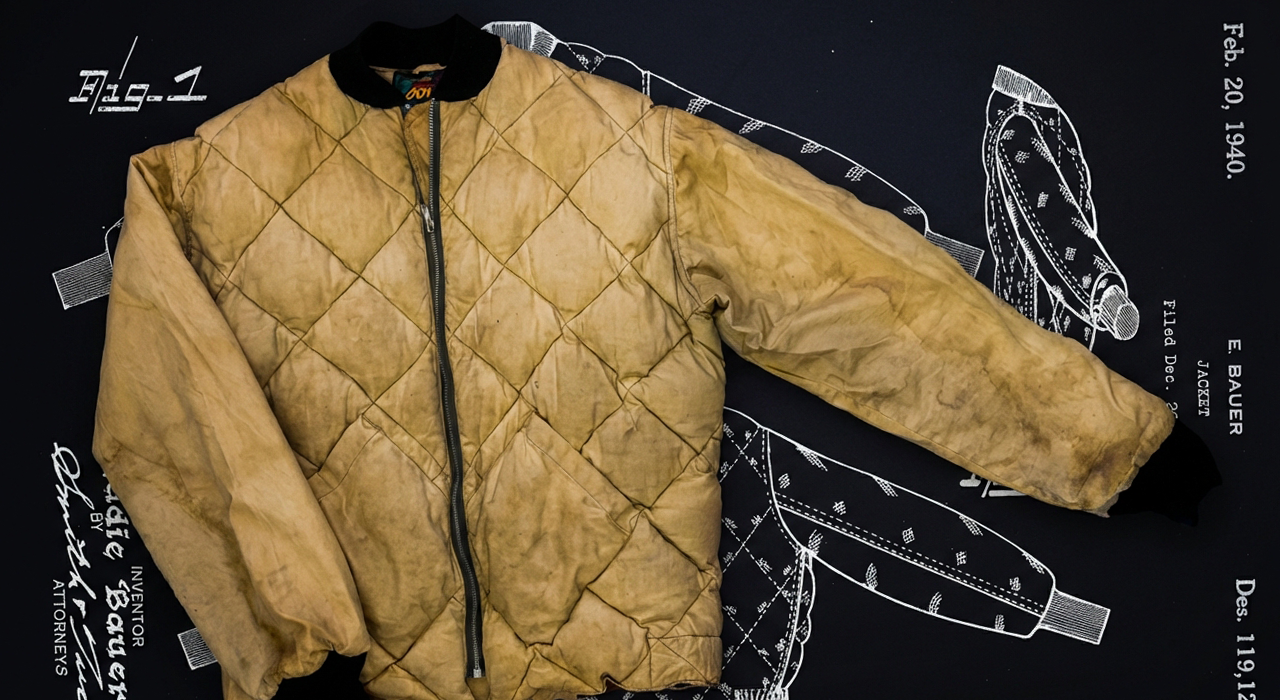
On a cold day in 1936, somewhere between a good fishing hole and a Ford parked on a remote road, Eddie Bauer started to die.
He and his buddy were hiking out with heavy sacks of fish on their backs, wrapped in the overbuilt wool layers serious outdoorsmen of the era swore by. They sweated under the load, stripped down to lighter wool, and kept moving.
Then the wind shifted. The exertion dropped. The sweat cooled.
Eddie began to slow, then stumble. By the time he slumped against a tree, shivering and dull, the cold was inside him. In the versions he later told, he had just enough clarity left to pull a pistol and send two shots into the air, hoping his friend would hear.
His friend did. Eddie lived.
When he recovered, he didn’t walk away from the woods. He walked toward a question: what if you could be just as warm, at a fraction of the weight—and without having to strip layers every time the work got hard?
That question, and the man stubborn enough to chase it, would quietly rewrite the outdoor world.
Without him, the down jacket as we know it might never have become a thing you could simply buy, pull on, and take to the ends of the earth.
His name was Edward “Eddie” Bauer.
And for about 40 years, from the 1930s into the 1960s, he was the authority on down.
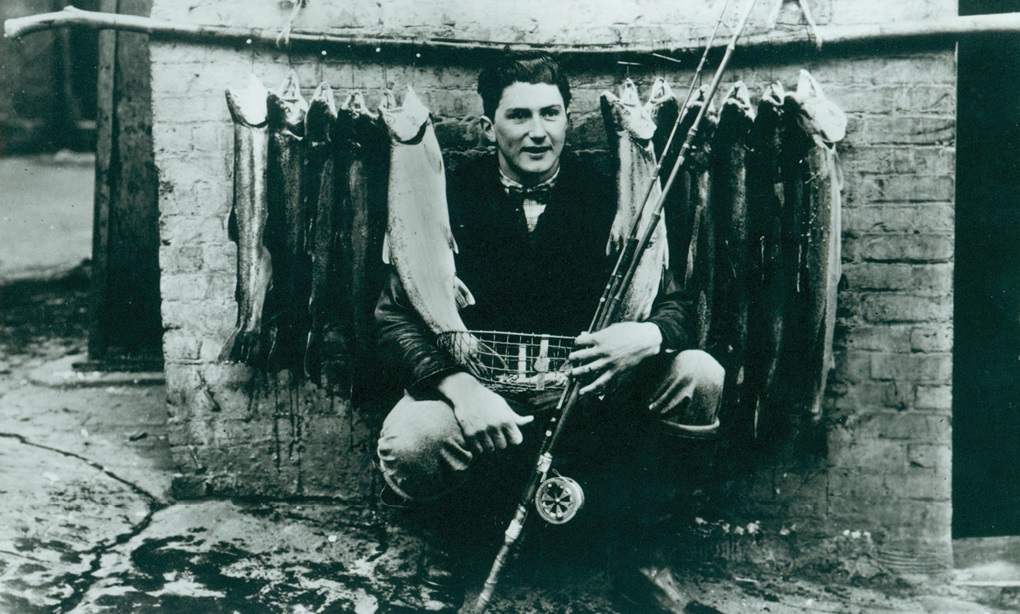
From log cabin to counter and backcountry
Eddie Bauer grew up a world away from glossy catalogs.
He spent his early years in a log cabin on Orcas Island in Washington’s San Juan archipelago, where his father hunted, farmed, and taught him how to catch his own food. Eddie got his first gun at eight—a Winchester .22—and learned to shoot game birds, fish, and read water and weather.
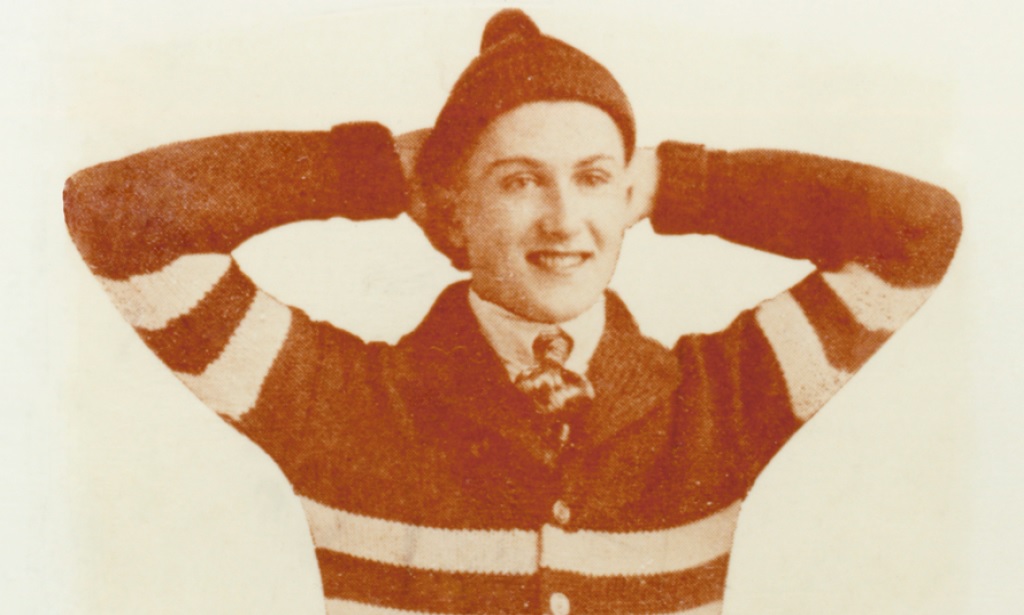
In 1909, the family moved to Seattle. Eddie became a caddy at the Seattle Golf Club, then an errand boy and stocker at Piper & Taft, a downtown sporting-goods store. He left school after eighth grade and finished his education on the shop floor, learning to tie flies, make and repair fishing rods, restring tennis rackets, and refinish golf clubs. By 17 he was managing a department.
When he wasn’t working, he was out—skiing, hunting, fishing, and competing in golf and tennis tournaments. That dual life, behind the counter and out in the field, would define how he approached product design later. He wasn’t just selling gear. He was breaking it, fixing it, and then dreaming about something better while the shop lights were still on.
A shop in the back, a vise on the bench, and a seasonal life
The first thing with his name on it wasn’t a parka. It was a vise.
In 1920, with his father co-signing a $500 loan, Eddie rented 15 feet of floor space at the back of Bob Newton’s Gun Shop in Seattle. He called it “Eddie Bauer’s Tennis Shop.” He repaired and restringed rackets for the booming Seattle Tennis Club scene, and he did it with an invention of his own: a custom racket-stringing vise that sped up the work.
In his first year, he earned around $10,000—a massive sum for a young man with an eighth-grade education.
He immediately rolled the winnings into something bigger. He secured a $10,000 bank loan to match his own capital, and opened “Eddie Bauer’s Sport Shop” at 211 Seneca Street. Now it wasn’t just rackets. It was fishing tackle, traps, shotguns, golf clubs—the tools for any sport that got you out of town.
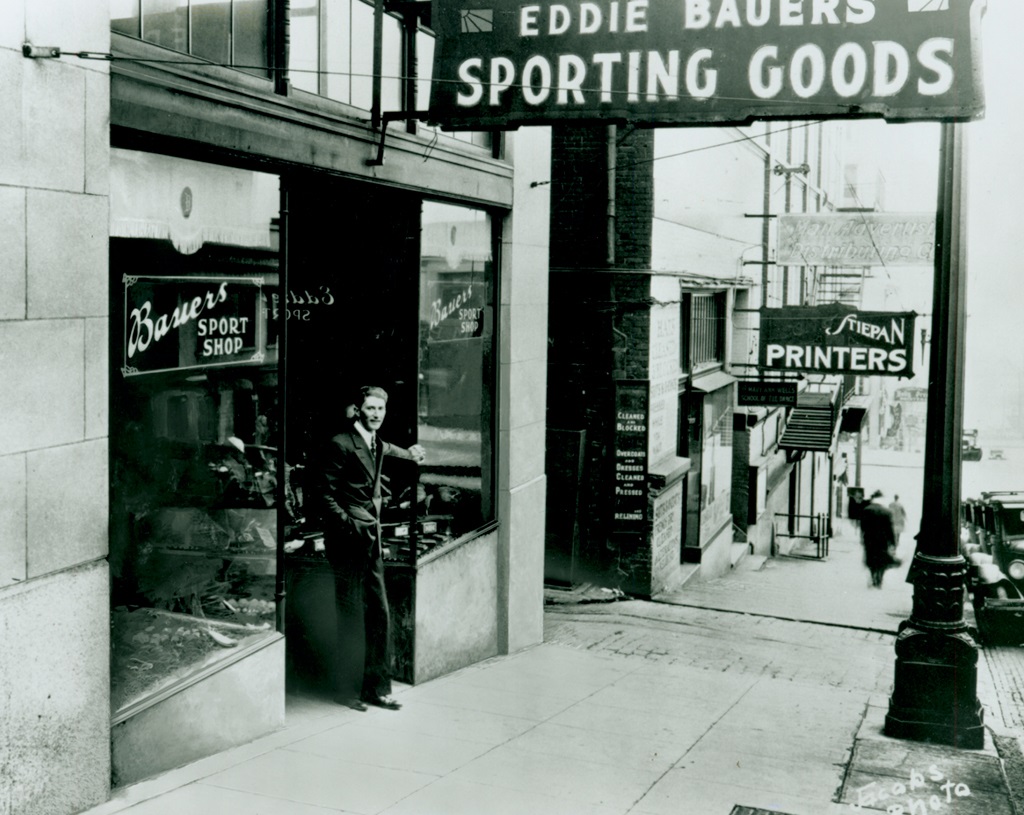
When tennis season and summer traffic died in the fall, Eddie did the unthinkable for a modern retailer: he locked the door.
Every Labor Day, the shop would close. It would stay closed until February.
Those months were his laboratory, and the Cascades, his test track. He spent them hunting, fishing, skiing, camping—living the life his customers wanted, in the same woolen uniforms they wore.
He was also building a network: wealthy landowners, club members, serious hunters and anglers. The kind of people who could afford better gear, if anyone would bother to make it.
Feathers, shuttlecocks, and a new kind of insulation
Before he changed jackets, he changed badminton.
By the mid-1930s, badminton was booming. Shuttlecocks were imported, expensive, and inconstant. Eddie, already steeped in racket repair, saw an opening. In 1935 he patented a shuttlecock design that was so good it effectively became the standard for the game.
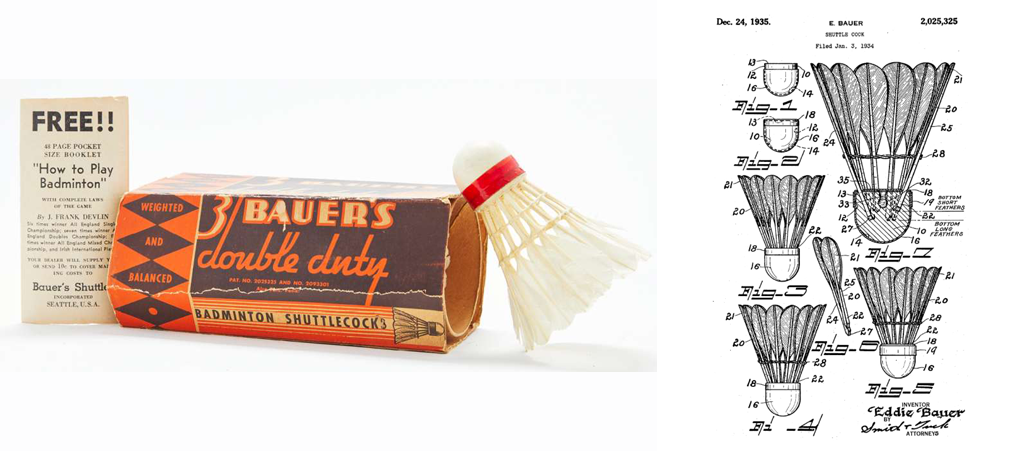
That shuttlecock shop was more than a fun side hustle. It gave him an intimate understanding of feather behavior—stiffness, resilience, breakage—a supply network of people who could get him feathers and down at scale, and cash and credibility. It also put a raw material right under his nose that his ancestors had already trusted for survival: goose down.
And it’s somewhere in here, the legend of his near-fatal winter walk connected to something older—stories his father told him about an uncle, a Cossack soldier in Manchuria during the 1904–05 Russo‑Japanese War. That uncle, his father said, would have frozen to death if not for the down-filled coats the Cossacks wore.
Those coats, though, had serious problems. They were basically bags stuffed with feathers: huge, unwieldy, “like wearing a fat suit.” Warm, yes, but so puffy and inefficient you wouldn’t choose them for serious work.
Eddie had both the memory of those coats and, thanks to his shuttlecock work, the means to experiment with something better.
The winter that changed everything
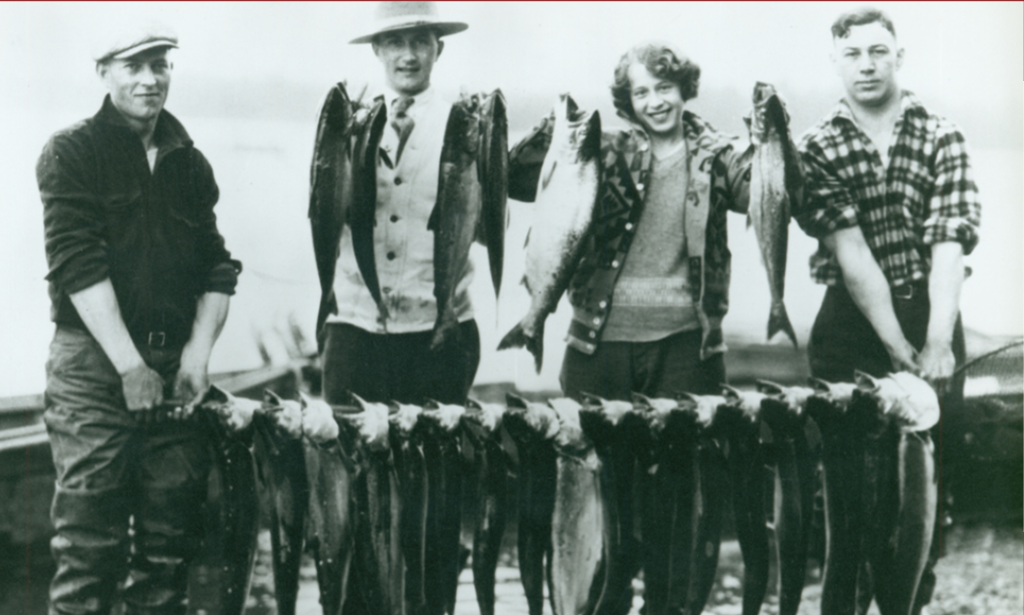
The fishing trip in 1936 is where the myth usually begins: Eddie in wool, wet and freezing, nearly dying until a down jacket appears in his mind like a revelation.
Strip the marketing varnish away, and what’s left still matters.
He and his partner did get soaked. Wool, for all its virtues, has weight. So do full sacks of fish. The combination almost killed him.
But the key idea he walked away with wasn’t “wool is bad.” It was more specific: he wanted the warmth he knew wool could give, but with less weight and less bulk on his body while he worked. He wanted a garment he could keep on through exertion, not constantly take off and put back on as he soaked and chilled.
And he had a material in mind: down, with its absurd warmth-to-weight ratio.
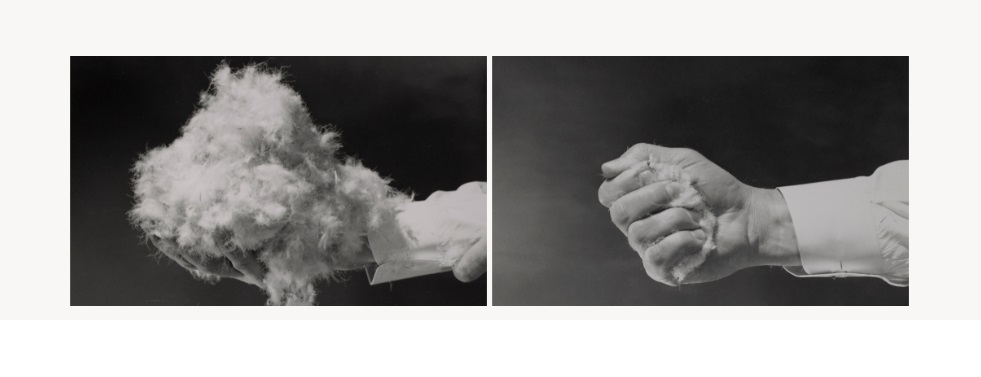
There were already down garments in the world. 18th‑century Russians had eiderdown pieces. The Ainu of Hokkaidō used seabird skin and down. The Volga Germans came from a climate where serious winter garments were a matter of life and death.
Eddie didn’t invent the concept of stuffing feathers into clothing.
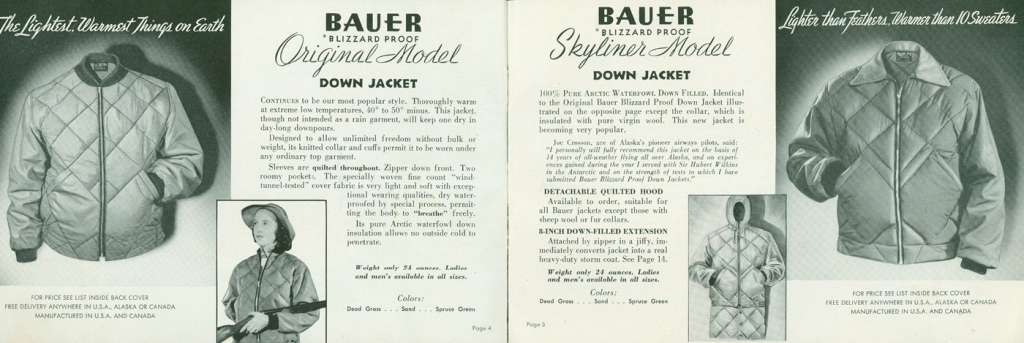
What he did was more specific, and arguably more important for you and me: he invented the first modern, quilted, commercial down jacket in the United States—and he made it something normal people could buy, wear, and trust.
The Skyliner: the first modern down jacket
In 1936, fresh from that near miss, Eddie ordered 25 pounds of goose down.
Most people in Seattle at the time would have had no idea where to start. Eddie already knew feather suppliers through his patented shuttlecocks. He took that 25‑pound bale and a bolt of fabric to a seamstress and asked for something odd: a quilted jacket.
Not a bag. Not a fat suit. A coat where the down was divided into pockets, held in place, controlled so it couldn’t slump to the bottom and leave “cold spots.”
In other words: he wanted structure.
The solution was the now-classic diamond quilting: a grid of stitched lines that broke the jacket into dozens of small baffles. Each diamond held a consistent amount of down. The shell itself wasn’t meant to insulate; it was there to hold the true insulation—down—right where your body needed it.
He tested early versions in the field. He made jackets for friends. The reaction was immediate.
Customers wrote back with the kind of astonishment that’s hard to appreciate now, in an era when a lightweight puffy is just another SKU.
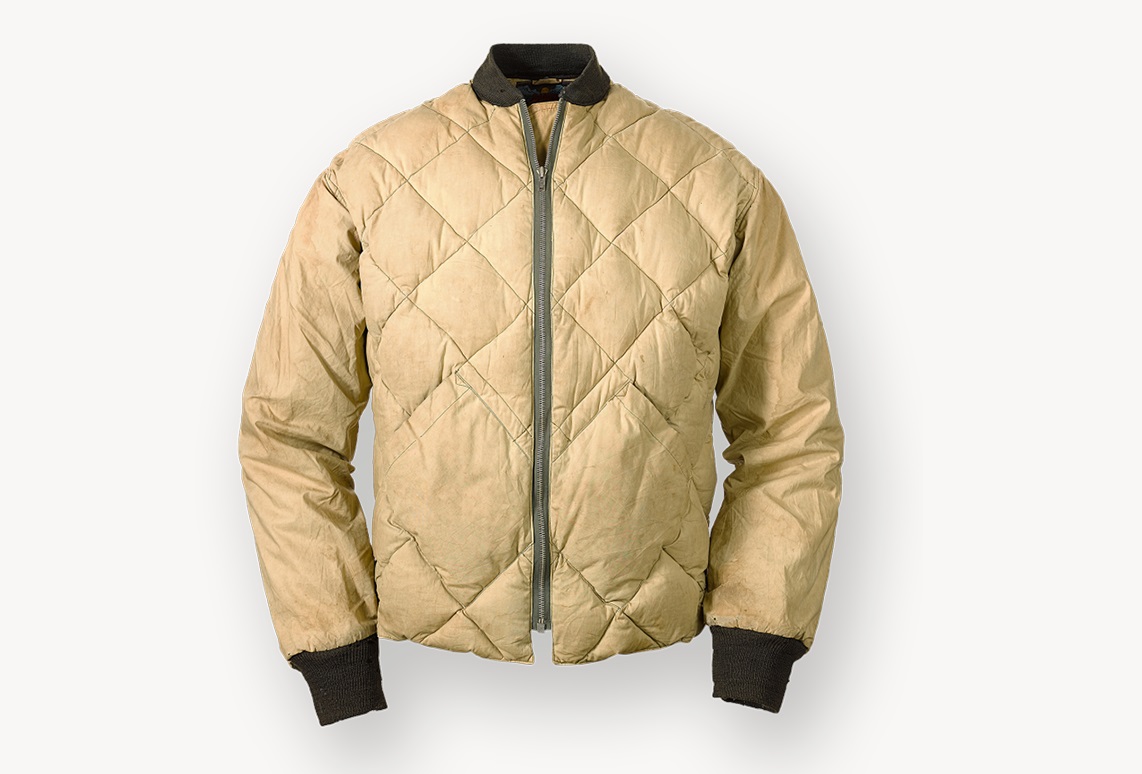
Eddie called this new design the Skyliner. In 1940, he secured a U.S. patent for it—the first quilted down jacket patent in the country.
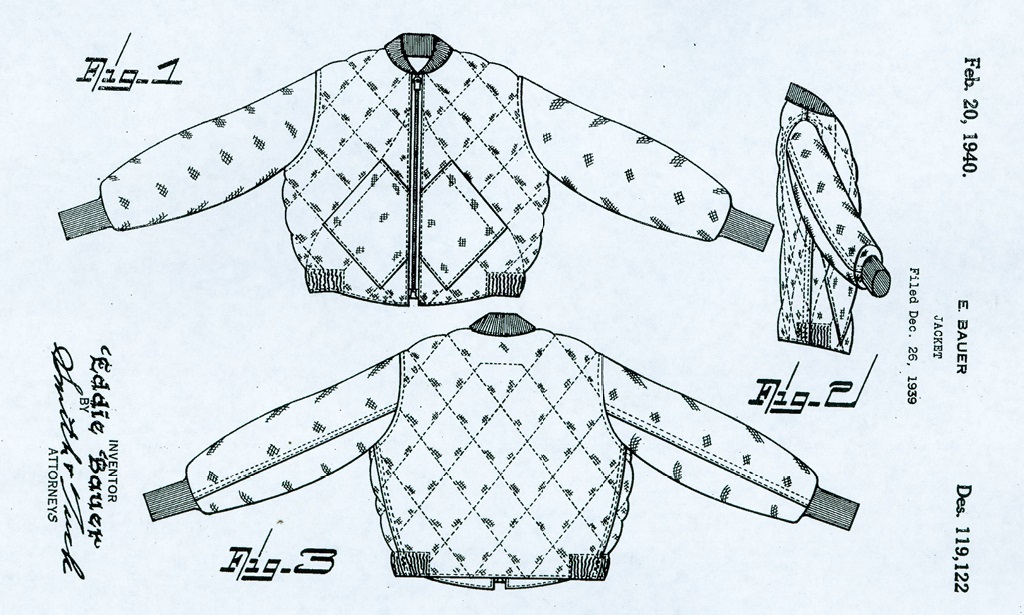
And then he did what he always did: he kept going. He pushed the concept into vests, hunting coats, booties, pants, sleeping bags, quilts, and even tents. If there was a way to put down in it, he tried.
The war years: every feather for the front
In December 1941, Pearl Harbor was bombed. America entered World War II.
Eddie’s business entered it with her.
The Army Air Forces needed cold-weather gear—desperately. Planes were flying higher, farther, over oceans and mountain ranges, in unpressurized, barely heated cockpits. If a bomber crew went down in the North Atlantic or over Alaska, the cold could kill them before the crash did.
The government put out a call for cold-weather sleeping bags and parkas. A ship carrying gear to Alaska sank. Supplies were short. Worse, there wasn’t much commercial down or feather capacity in the States at all. Waterfowl weren’t a big part of the American diet. Feathers and down weren’t piling up.
The War Department picked up the phone.
They called the legends: Leon Leonwood Bean on the East Coast, Abercrombie & Fitch, other regional outfitters. And they called the man in Seattle whose name was already whispered among bush pilots and backcountry hunters: Eddie Bauer.
First, they wanted anything he could scrounge. Bauer mobilized his network. Trucks rolled from Maine, Wisconsin, and New York to Seattle, piled with gear from other makers, to be sorted and redistributed.
Then Washington did something more drastic: it banned commercial use of down and feathers. Every plume was for the war.
Bauer’s response was characteristically pragmatic. He partnered with Ducks Unlimited and sent out a plea: waterfowl hunters across the country were asked to send in not just meat, but feathers and down. Eddie’s shop would clean and process them for military use.
The first sleeping-bag order was modest on paper: 1,000 bags. He filled it. Other firms lagged. And he became the reliable go-to. Depending on the source, he ended up producing over 200,000 down-filled sleeping bags during the war. He also answered frantic orders like a government request for 10,000 packboards in 48 hours, pulling other manufacturers into his orbit to meet the deadline.
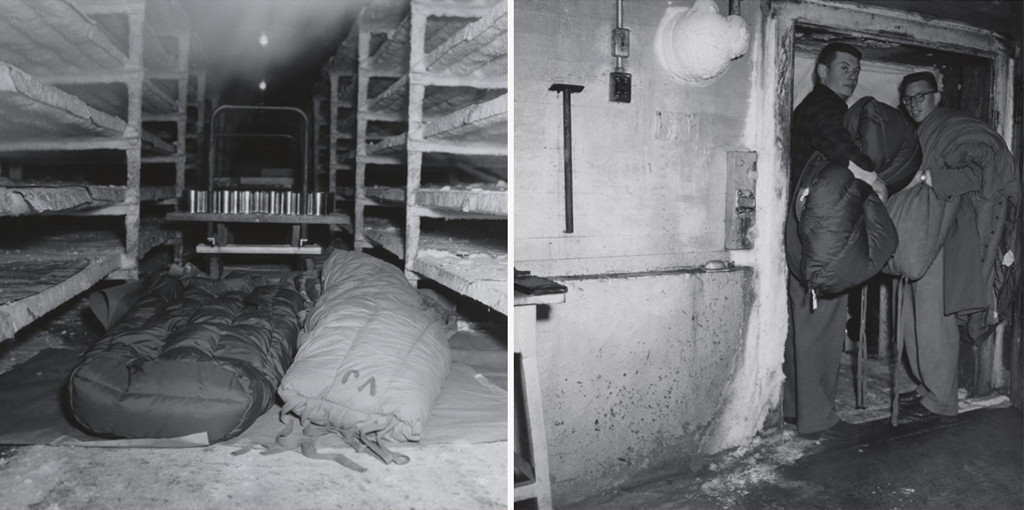
Because he had designed many of the patterns competitors were trying to copy, he understood not just the insulation, but how to cut, sew, and pack gear more efficiently. His sleeping bags rolled smaller. More of them fit in a plane or on a truck. That mattered.
Soon, when the military thought “down,” they thought “Bauer.”
The B-9: warmth at 20,000 feet
In 1943, the Army Air Forces came back with a very specific request.
They needed a flight suit that could keep pilots warm at −70°F, at altitude, for three hours in an unheated cockpit.
Bauer’s answer was the B-9 flight parka, paired with A-8 flight pants.
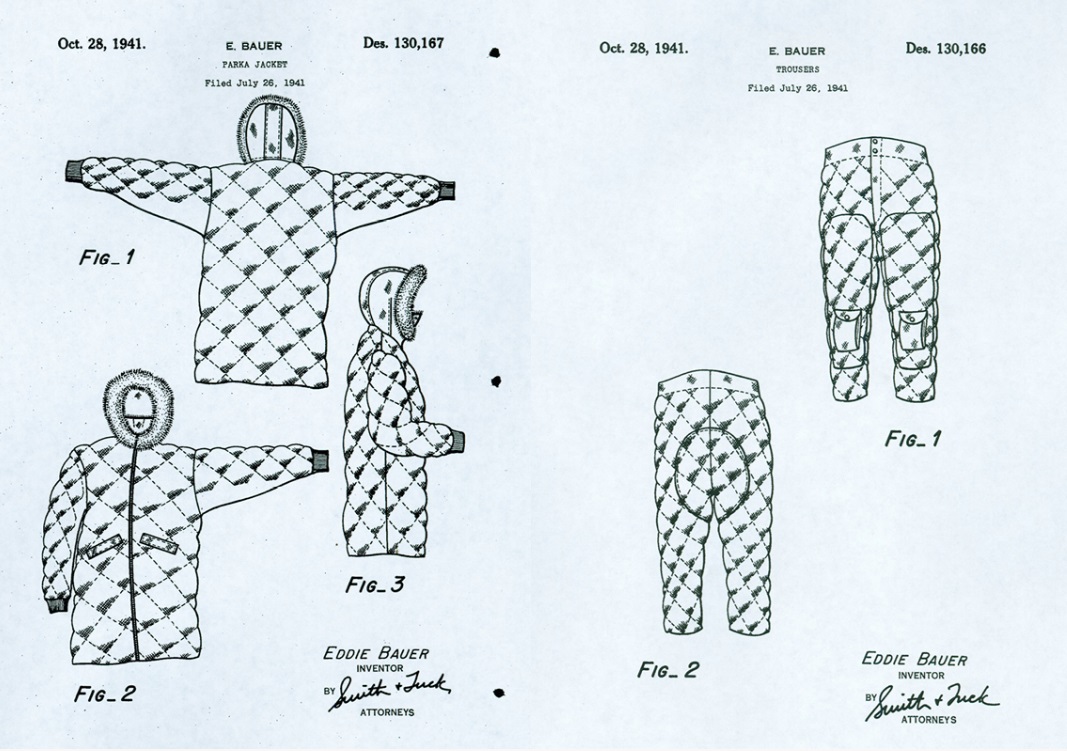
On paper, it was just another contract. In reality, it was the full expression of his down-gear philosophy in a single, brutal spec.
The B-9 was filled not just with down, but with a heavy mix of down and feathers—pure down was in short supply and feathers added structure and durability. It was built with a dense, almost uncompressible loft that made the garment feel like a stiff shell of insulation—the opposite of today’s soft, squashable puffies. It was cut with a short front zipper that ended above the waist because pilots mostly sat; there was no reason to introduce a long, drafty opening over the lap. And it was reinforced along the sleeves and other critical points with extra cotton layers, plus underarm gussets for mobility in cramped cockpits.
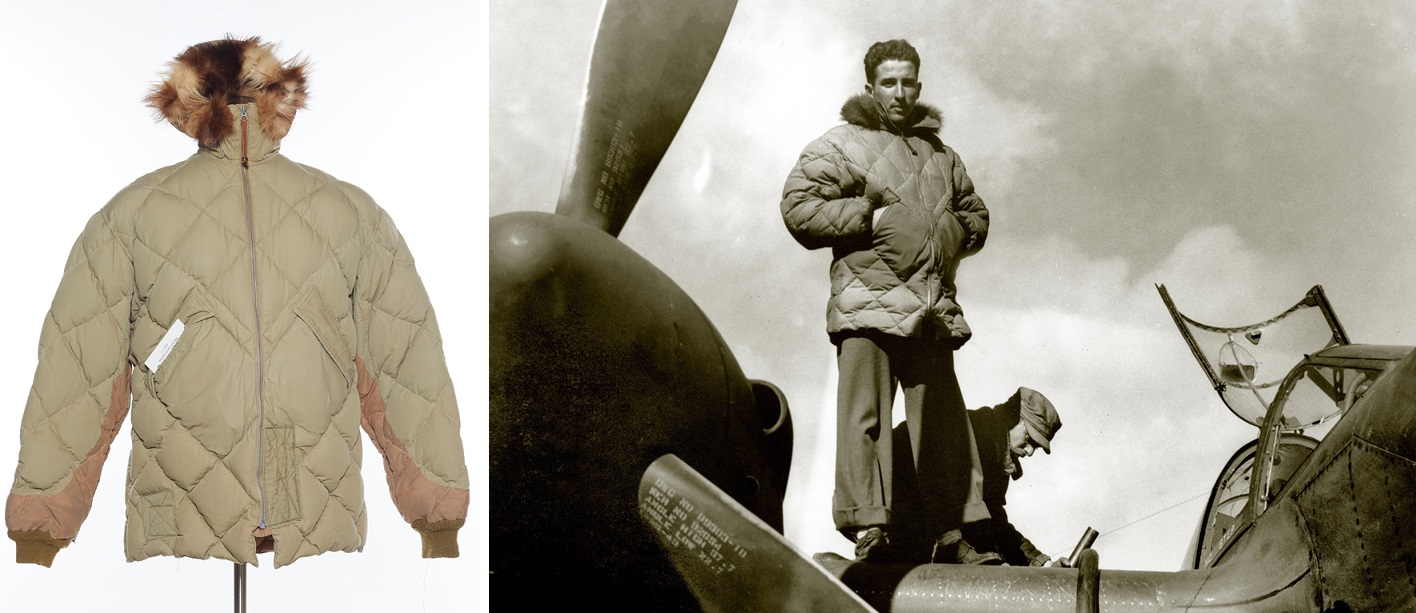
Then there was the hood.
It was lined in mouton (sheepskin processed to resemble beaver or mink), with a clever convertible system. Worn down, it formed a high, insulated collar around the neck. Snapped up, it became a tight, visibility-friendly hood that sealed completely around the face. Multiple drawcord and tab settings let the wearer cinch it in stages, from merely snug to claustrophobically tight, to block wind and spindrift.
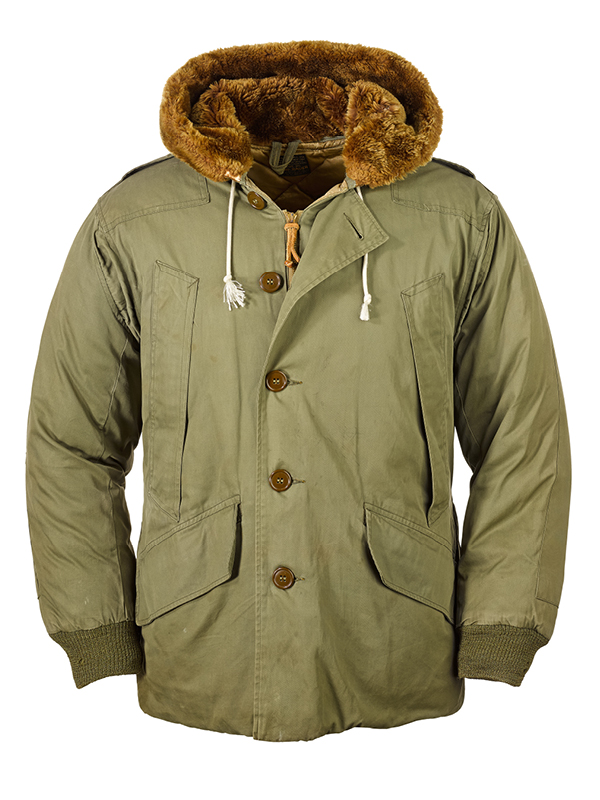
If you’ve ever looked at a modern expedition hood and wondered where the obsession with micro‑adjustable face apertures came from, this is one of the early ancestors.
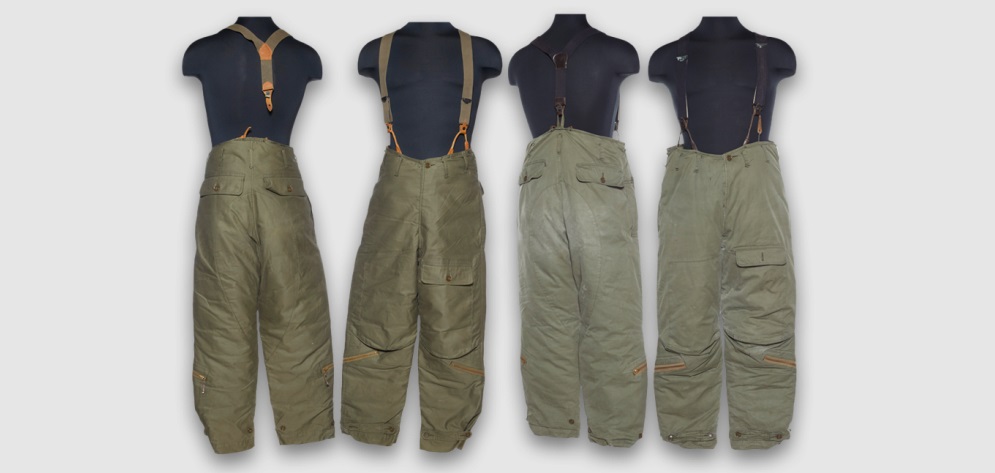
The B-9 became a kind of myth in its own right. A story circulated that if a pilot fell into water wearing a B-9 with 25 pounds of gear, the jacket would keep him afloat.
Physics says that’s… optimistic, unless you had some extra flotation sewn in. Down provides buoyancy, but not that kind. As with so many wartime legends, the truth is simpler: it was really, really warm, and pilots remembered that.
Warmth, and a signature.
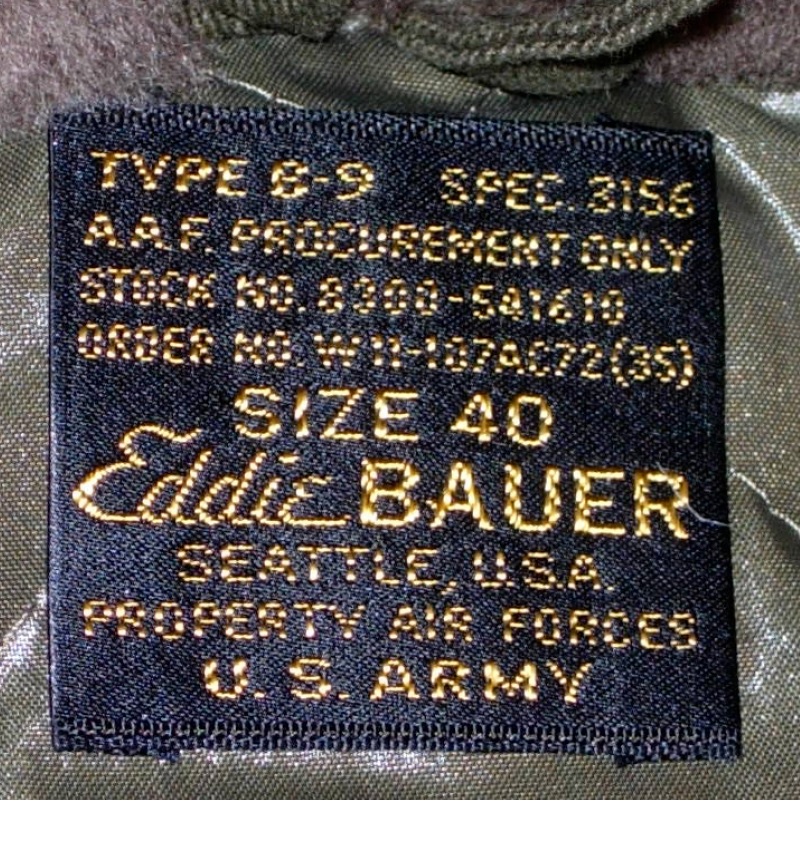
Every piece sent to the military carried a label with Eddie’s script autograph. When those pilots came home and found themselves shivering again in civilian wool and leather, they remembered the name stamped inside the parka that had kept them alive at 20,000 feet.
After the war, Bauer did something that would give modern privacy advocates hives: he asked the government for a list of every servicemember who’d been issued one of his products.
Amazingly, they handed it over.
In 1946, he launched a mail-order catalog and sent one to every name on that list.
America’s first wave of down believers opened their mail and found a familiar signature on a glossy cover—and a chance to bring that warmth back into civilian life.
The Kara Koram: a storm on K2
If the war made Eddie’s name, the mountains made his legend.
By the early 1950s, high-altitude climbing was moving into the public imagination. Annapurna and Everest were being scouted and climbed. K2, the world’s second-highest peak, loomed darker—technically harder, more remote, deadlier. Roughly one person would die there for every four who reached the summit.
In 1953, a team of seven Americans and one Brit set out to attempt K2. Three of the Americans were from Seattle. They knew who to call.
They walked into Eddie Bauer’s shop and asked for a parka built for something no American had yet done: survive on K2.
Eddie named his answer after the massif itself: the Kara Koram.
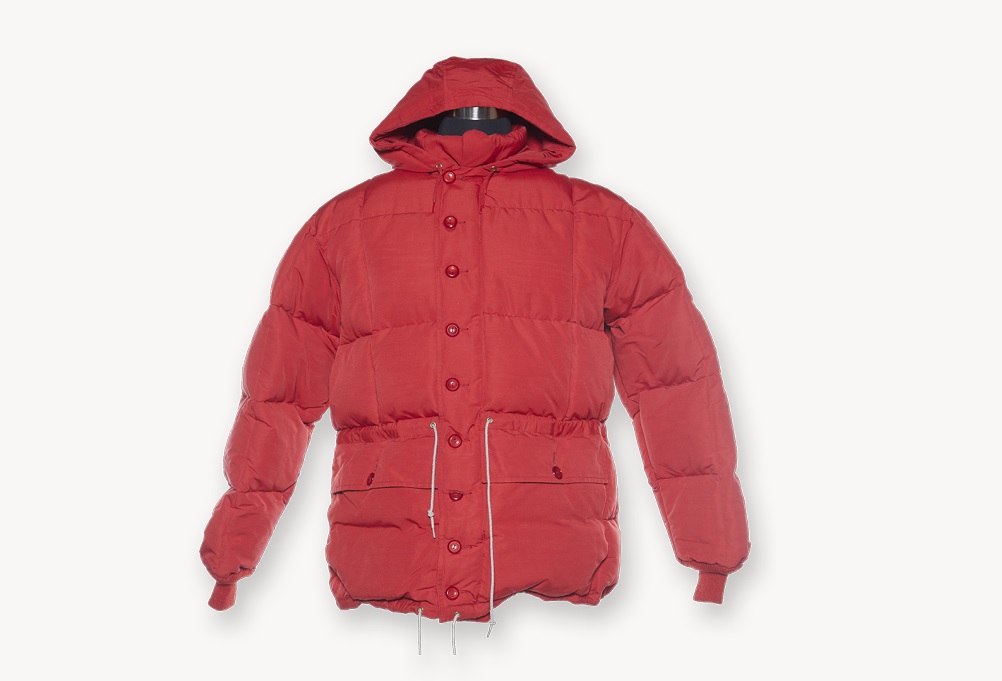
It was lighter and more mobile than the bunker-like B-9, yet brutally warm, with high-loft down in meticulously divided baffles, a cut that allowed climbing movement, cinch systems at the waist and hem to seal in heat, and a hood designed for storms, not show.
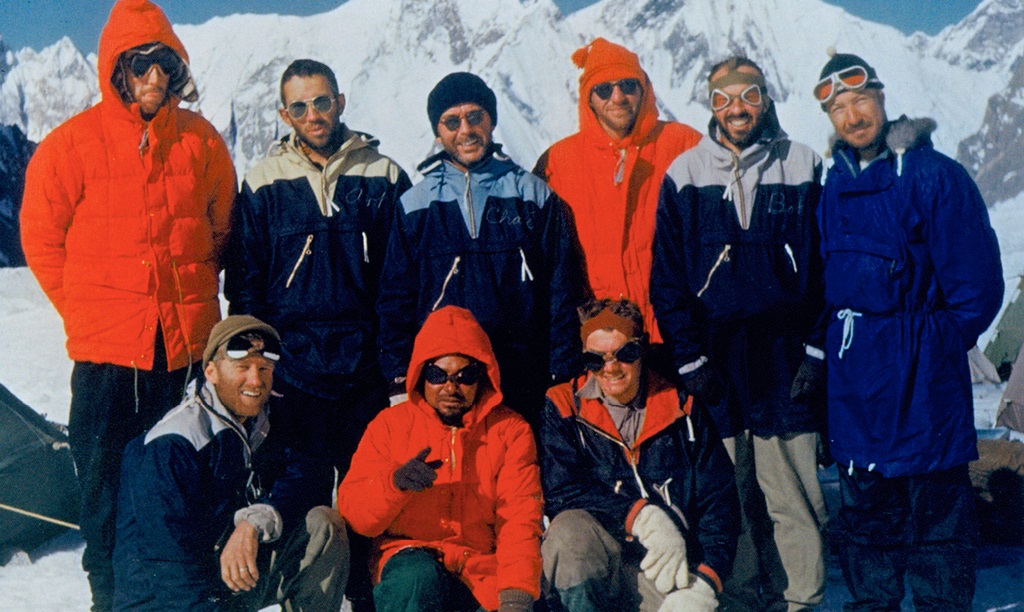
The expedition never reached the summit. They were pinned down at Camp 8 by a vicious storm, then forced into a desperate retreat when geologist Art Gilkey developed life-threatening blood clots in his legs.
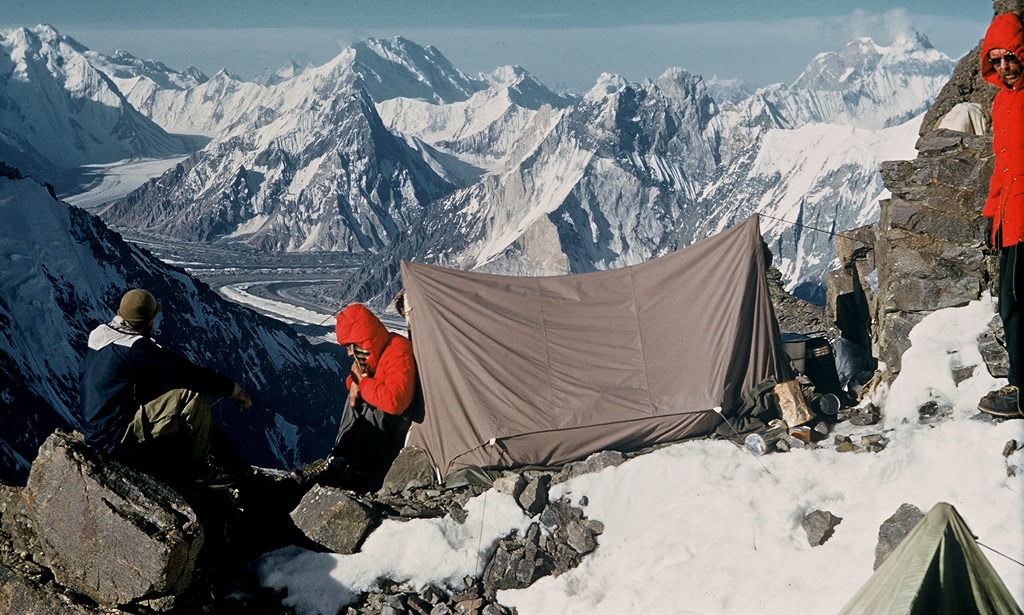
In one of mountaineering’s most famous moments, climber Pete Schoening arrested a catastrophic group fall—six teammates roped together, sliding toward oblivion—by plunging his ice axe behind a boulder and holding.
They still lost Gilkey. Somewhere during the descent, while his companions were repositioning him on the rope, he vanished—likely taken by an avalanche, possibly having freed himself to spare his friends the burden.
Expedition leader Charles Houston would later call that jacket “the finest article of cold-weather, high-altitude equipment I have ever seen.”
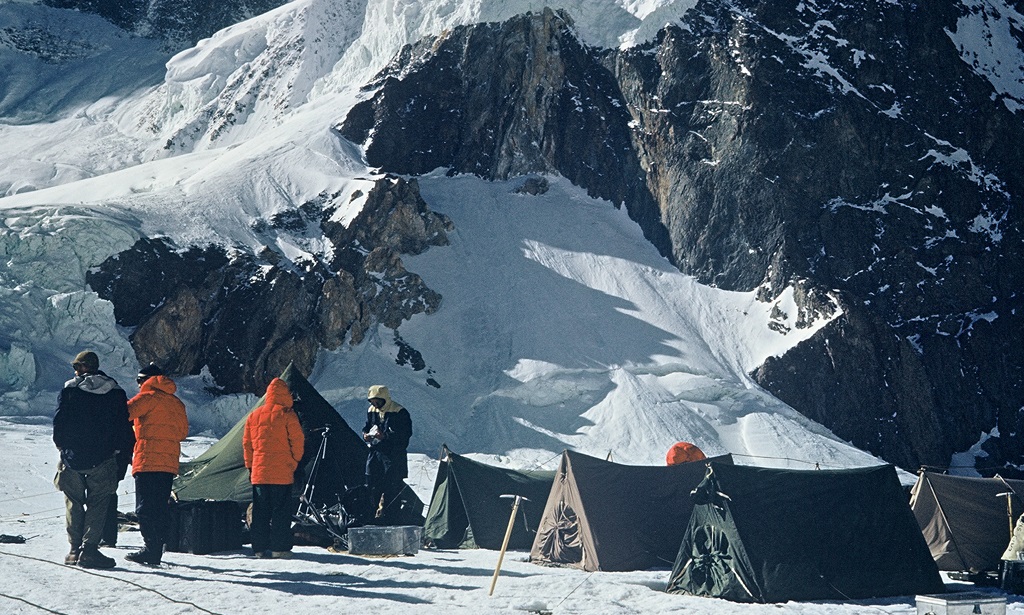
The story of the failed K2 attempt became legend. So did the parka.
The name “Kara Koram” stuck, eventually blending into a whole family of expedition pieces in the Bauer line.
Everest, Antarctica, and the nylon age
A decade later, another Seattle climber came knocking.
James W. “Jim” Whittaker was leading the first American expedition to Mount Everest in 1963. He and his twin brother Lou were fixtures of the Northwest climbing scene. When Jim needed gear for the Himalaya, he went to the same place the K2 team had: Eddie Bauer.
By now, the material palette had shifted.
Eddie, ever cautious, had been slow to adopt synthetics. Nylon was strong but suspiciously light. More importantly, it didn’t breathe like his beloved cotton. His “Expedition Cloth” shells were 100% Egyptian cotton twill—hard-wearing, comfortable, able to develop a patina, but not exactly ideal in a wet snowstorm.
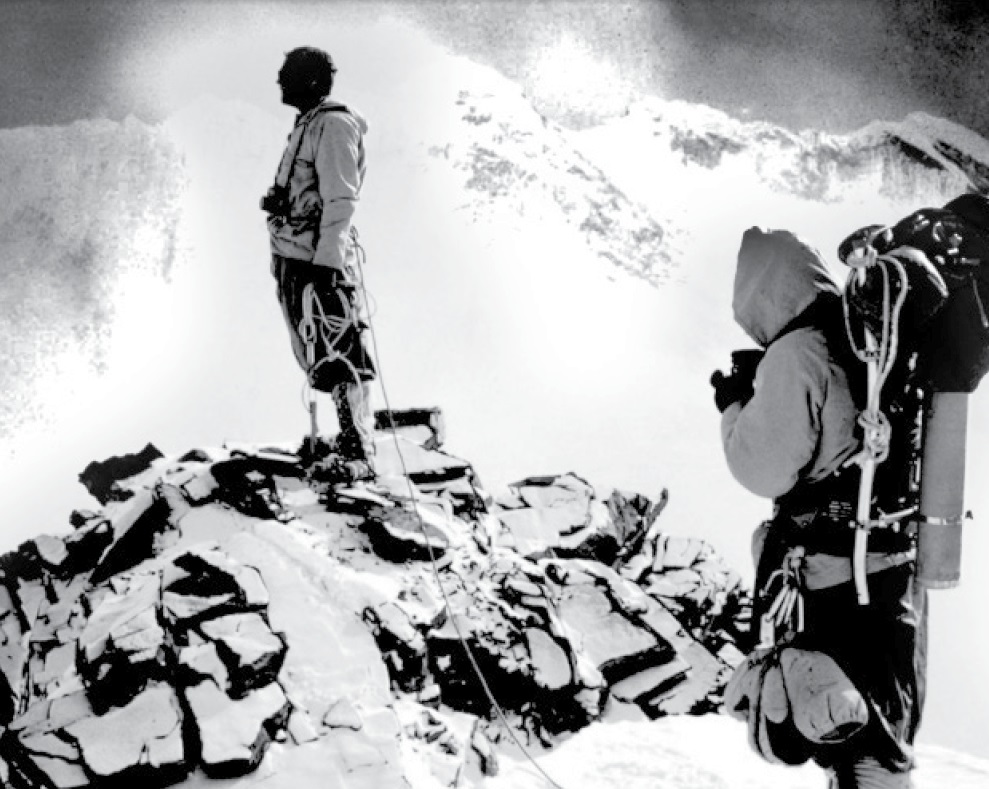
Eventually, function won. For the Everest parka, Bauer combined a nylon-based outer to shed wind and snow with mammoth amounts of high-quality down for loft, early Velcro closures for fast glove-friendly use, and a complex hood lined with wolverine fur (highly frost-resistant) and tipped with coyote fur to create a warm pocket of air around the face and keep exhaled moisture from freezing on the ruff.
The result was a monster of a jacket: lighter than his all-cotton predecessors at equivalent warmth, far more compressible, and tailored to the peculiar demands of the death zone.
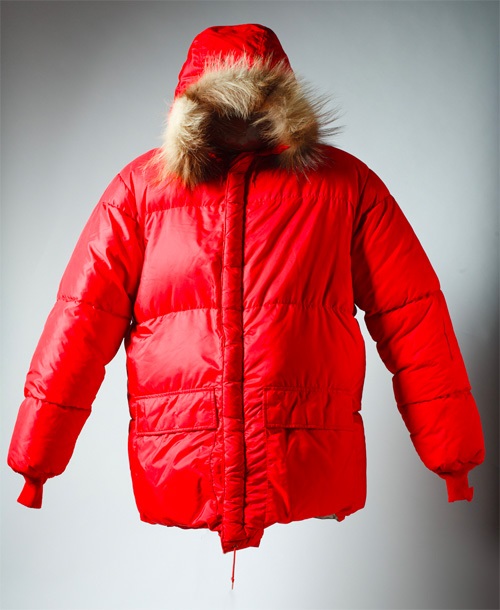
Whittaker wore it to the top of the world, standing on the summit with an American flag snapping in the jet-stream wind.
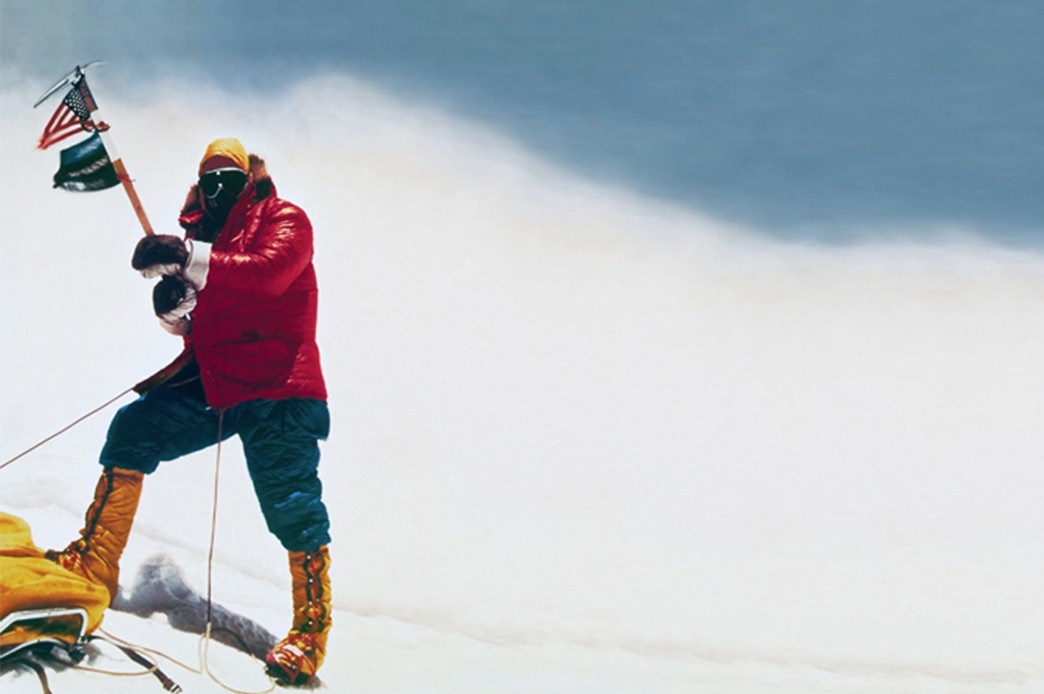
Decades later, at a 50th-anniversary event, his original parka sat behind glass in a museum. Jim, now in his 80s, reportedly told the crowd that if he ever climbed Everest again, he’d need to get his jacket back. It was a good line. It was also exactly what Eddie would have wanted: a tool so trusted that a man would rather pry it out of a display case than upgrade.
Bauer’s down gear showed up in Antarctica too, on scientific expeditions and polar traverses. For a time, if you were going where the maps got vague and the temperatures absurd, you wore something with his script signature on the tag.
Strange hoods, avocado shells, and the coming competition
Through the 1960s and ’70s, outdoor culture exploded.
New brands rose: The North Face, Patagonia, Marmot. Synthetic fleece arrived. Lightweight nylon parkas became mainstream. The technical “arms race” shifted from just surviving cold to balancing warmth, weight, breathability, and cost in ways that would have seemed like science fiction in 1937.
Bauer’s line evolved along with it.
In the ’70s, his Karakoram Expedition parkas appeared in loud colors—”avocado” among them—with tucked-in storm cuffs, big branded buttons, and even more elaborate hoods, now built entirely without fur in response to changing tastes.
One such hood looked like something out of a sci‑fi sketchbook: a tall, conical down-filled tower that cinched into a warm tube around the head, with a down-stuffed brim to create a swirling pocket of air in front of the face—a technical attempt to replace fur’s function with geometry and fill.
There were down balaclavas, too: full-face masks ribbed in the back, designed to keep a climber’s cheeks from going white and waxy in Himalayan blasts.
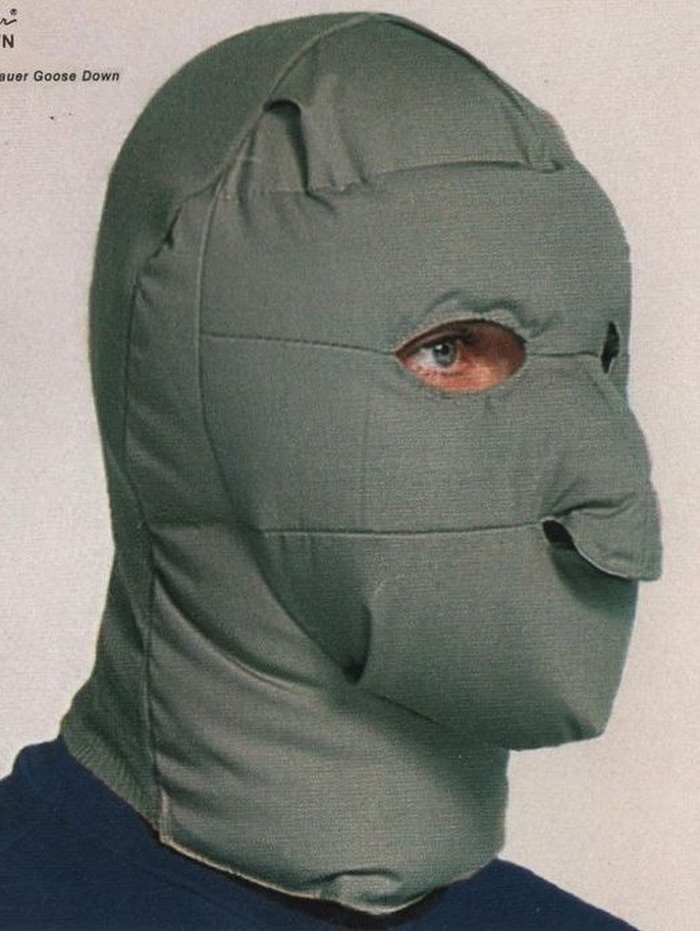
To contemporary eyes—trained on sleek baffles and minimalist cuts—these designs can look strange. Overbuilt. Almost comical.
But you can see the throughline: they were problem-solving taken to its logical, obsessive extreme. The question was always: how do we hold more controlled warmth around a human body in impossible places?
The challenge was that, by then, Eddie wasn’t the only one asking it.
Canada Goose, machines, and the industrialization of down
From the 1930s through the 1950s, down gear construction was brutally manual.
Someone—often many someones—had to hand-stuff each baffle, weighing and teasing feathers into chambers, hoping to avoid thin spots and clumps. It was skilled work. It was also slow and expensive.
Eddie Bauer had mastered this process and its quirks. But as demand grew and competitors appeared, a bottleneck remained: human fingers and goose plumes.
North of the border, a Canadian manufacturer that would later rename itself Canada Goose approached the problem differently. In the late 1960s or early 1970s, they developed a mechanical down-filling system: a machine that could blow calibrated quantities of down into baffles quickly and evenly.
It was, essentially, a down-stuffing engine.
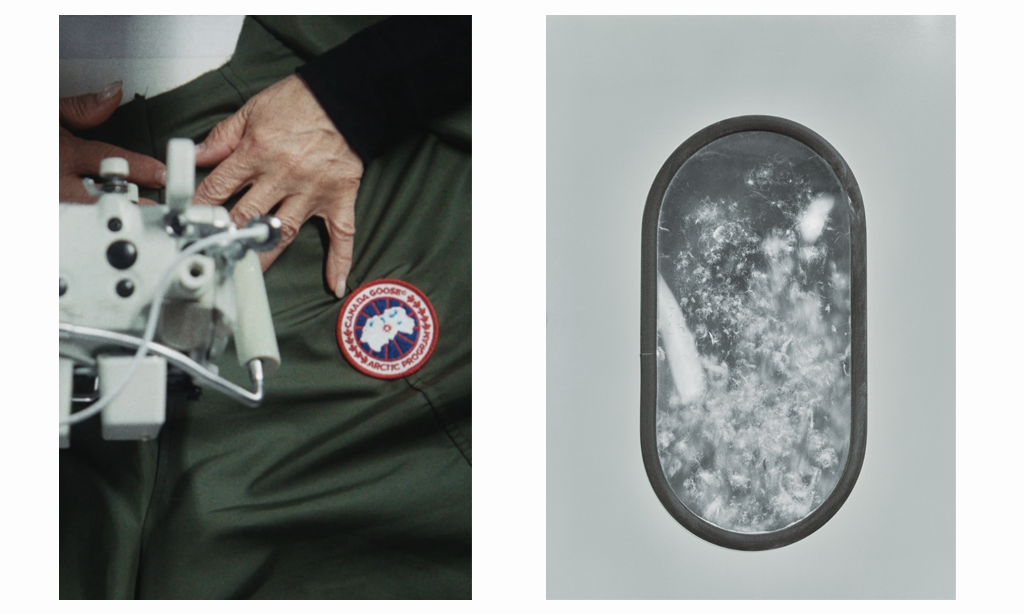
The impact was quiet but enormous. Suddenly, consistent, high-quality down garments could be produced at scale and cost levels that opened the door for new players. Canada Goose became so good at it that they started making down jackets not just under their own label, but under others’—including, at times, Eddie Bauer’s.
You can draw a rough industry timeline like this: in the 1930s, Eddie Bauer pioneers the modern quilted down jacket (the Skyliner) and refines down gear for pilots and outdoorsmen. In the 1940s, wartime production ramps up: sleeping bags, B‑9 parkas, military contracts. In the 1950s and ’60s, he creates high-altitude icons like the Kara Koram and Everest parkas and outfits Antarctic use. By the late 1960s and ’70s, Canada Goose mechanizes down filling, while The North Face and Patagonia rise—initially built on fleece and synthetic shells, then increasingly mixing in down with new fabrics.
Stepping back: the man behind the tag
For all the gear, it’s easy to lose the man in the myth.
Eddie Bauer was not just a “brand founder.” He was a particular kind of person: immigrant stock, eighth-grade education, relentlessly self-taught and self-propelled, equally at home in a duck blind and at a drawing board.
He built gear because he used gear—hard. He closed his shop for months to go live outside. He patented shuttlecocks, jackets, even a fishing lure (the BNB Flasher, in 1972) because if something frustrated him, he’d rather reengineer it than complain.
Perfectionism was not a marketing angle. It was a personality trait that spilled into everything he touched, from shot patterns to stitching. In 1960, he and Stine founded Wanapum Kennels to breed and train Labrador retrievers; by 1974 they’d been named Retriever Breeder of the Year.
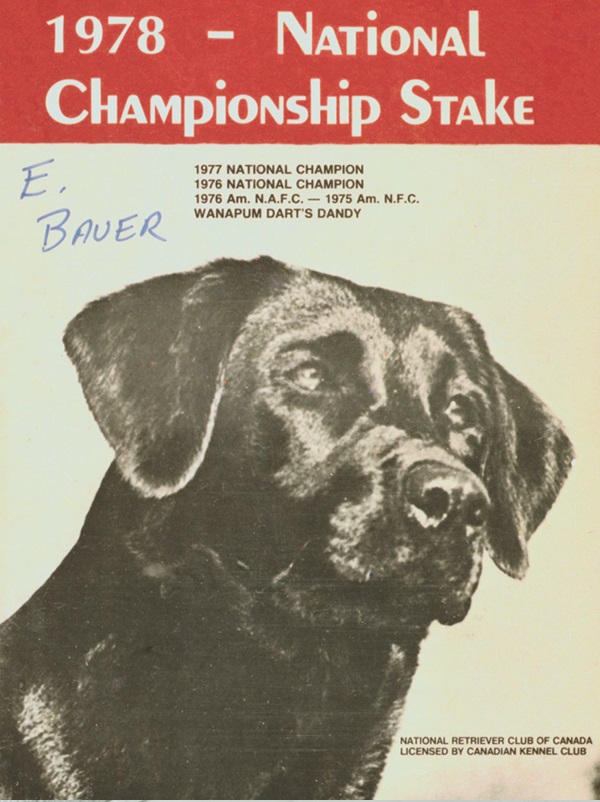
In 1960, their son Eddie Christian and William Niemi’s son joined the business. But by then, the elder Eddie was tired. A back injury and four decades of grind were catching up.
In 1968, Eddie and Eddie Jr. sold their interest in the company to partner William F. Niemi and his son for $1.5 million. In 1971, Niemi sold Eddie Bauer Inc. to General Mills.
The brand would go on to shift owners and directions many times—toward malls, mass markets, and lifestyle positioning far from K2.
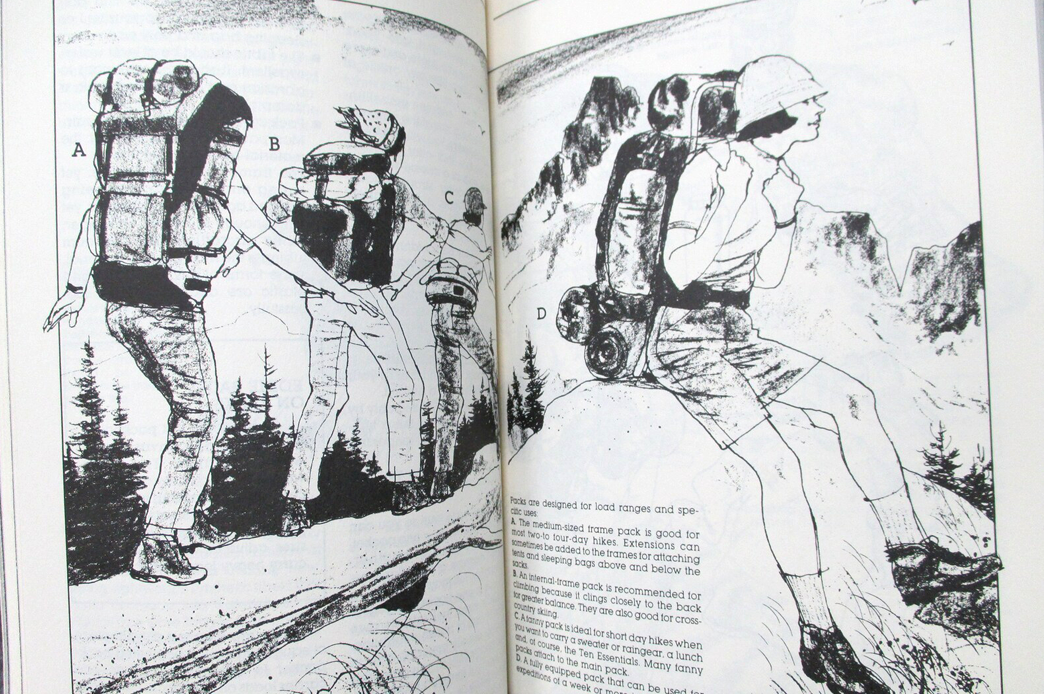
Eddie went back to dogs, fishing, and writing. Between 1982 and 1983, he co-authored three guidebooks under the Eddie Bauer name: on backpacking, family camping, and cross-country skiing. They read like you’d expect: practical, unpretentious, written by someone who had pitched a hundred tents in the rain.
On April 18, 1986, the great Eddie Bauer passed away in Bellingham, Washington.
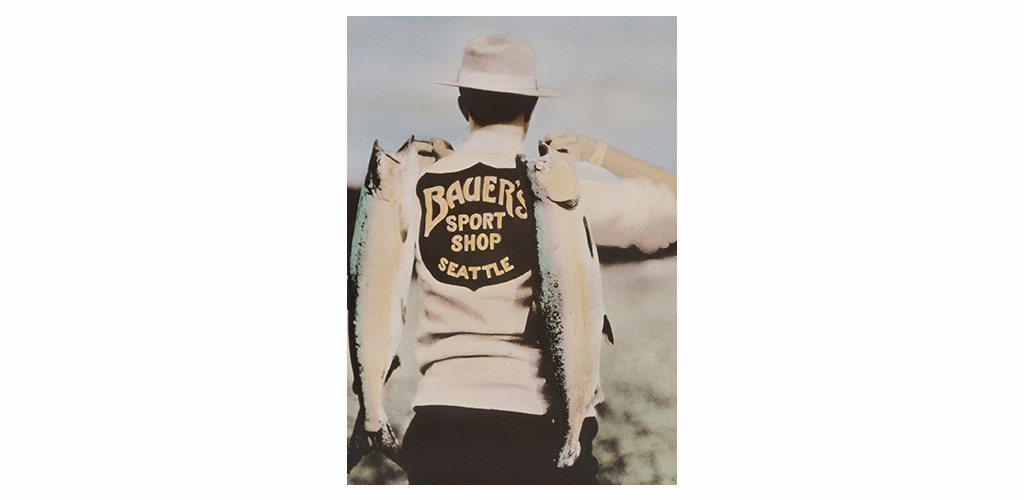
Signature in the seams
Walk into a mall today and “Eddie Bauer” might mean a lightweight puffer in a neutral color, a Subaru-branded edition, a pair of jeans. It’s easy to forget that for a long, strange, brilliant window of time, that same script signature meant you were looking at the sharp end of cold-weather gear design.
The DNA is still out there, if you know where to look. You can see it in vintage B‑9s and Kara Korams, in museum Everest parkas still holding their loft, and in small companies like Crescent Down Works in Seattle, founded by Anne Michelson—who once worked in Eddie Bauer’s down‑testing lab in 1969. Their hand‑filled jackets feel less like fashion and more like a continuation of a particular philosophy.
The modern down jacket is an industrial object now, iterated by Patagonia and The North Face, filled by machines perfected by Canada Goose, cut from fabrics that would have blown 1937’s mind. But if you unzip enough of them, the pattern underneath looks familiar: baffles, controlled loft, lighter warmth, real use in bad places.
A man almost froze under a tree one winter. He didn’t decide that the outdoors was too dangerous. He decided his jacket wasn’t built correctly.
But it’s worth remembering that your jacket got there, in part, because a kid from a log cabin once ordered 25 pounds of goose down and asked a seamstress to try something different.


Michael Knispel
Editor-In-Chief
Mike’s our editor-in-chief, storyteller, and master traveler. He’s been at the helm for over a decade, spearheading our stories, partnerships, and brand at large.



 WAYS TO CARRY