



 Carry Awards
 Insights
 Liking
 Projects
 Interviews
 Carry Candy
 Community and Marketplace
Culture
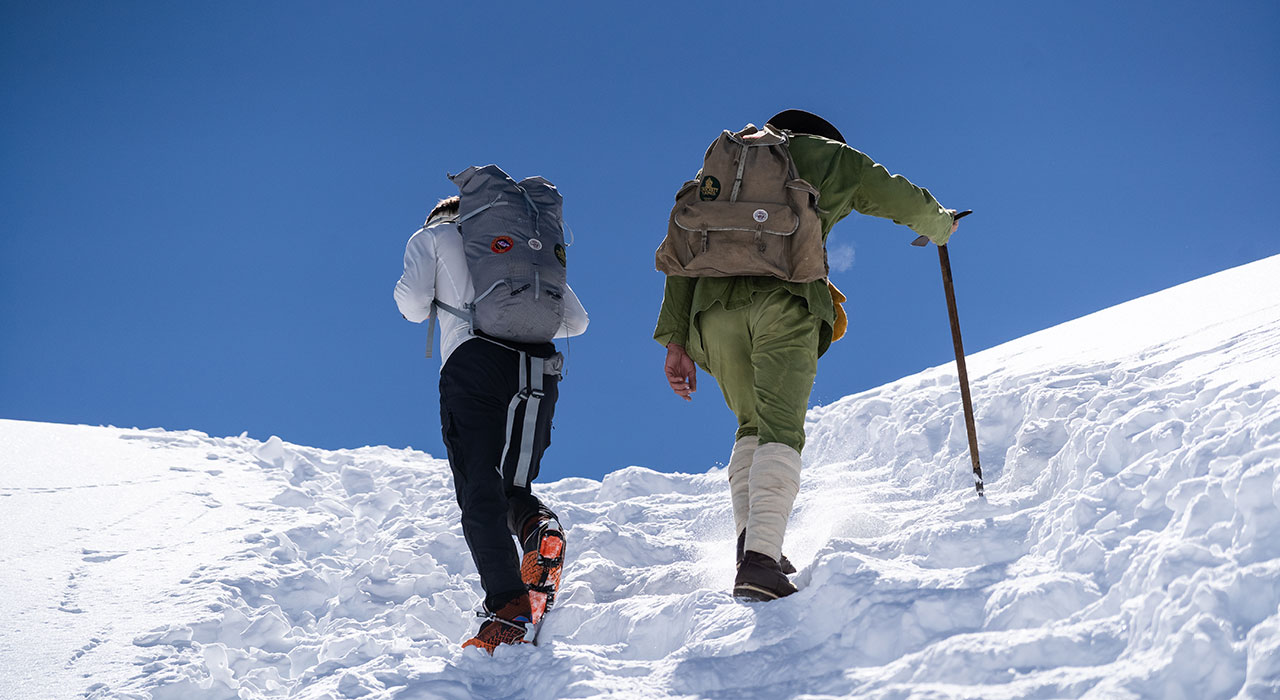
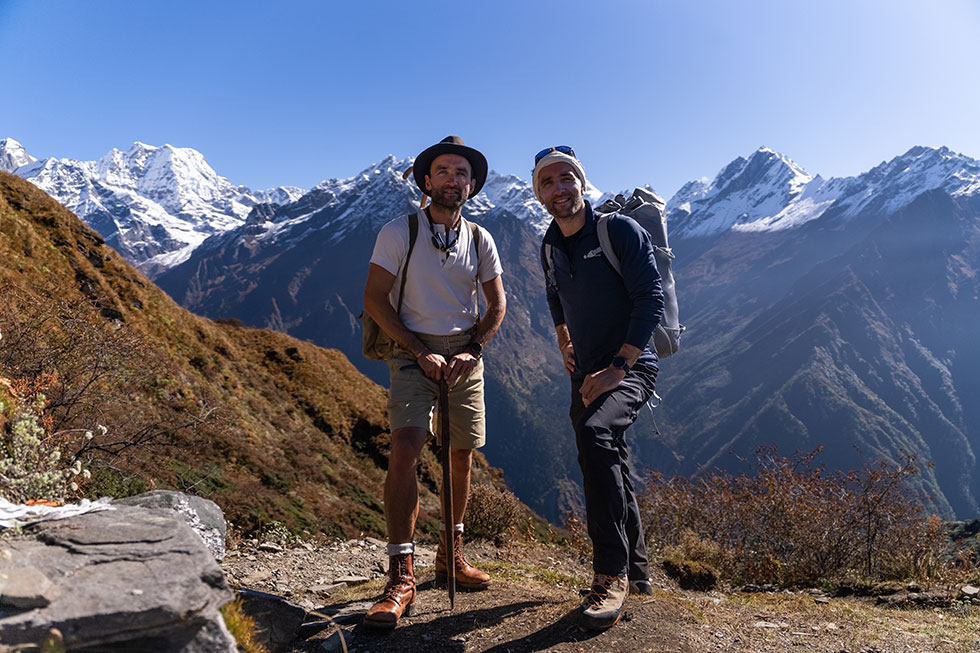
Ross and Hugo Turner are genetically identical professional adventurers. By dressing one in cutting-edge technical apparel and the other in 100-year-old heritage kit on the world’s toughest expeditions, they are conducting the ultimate A/B test on modern gear.
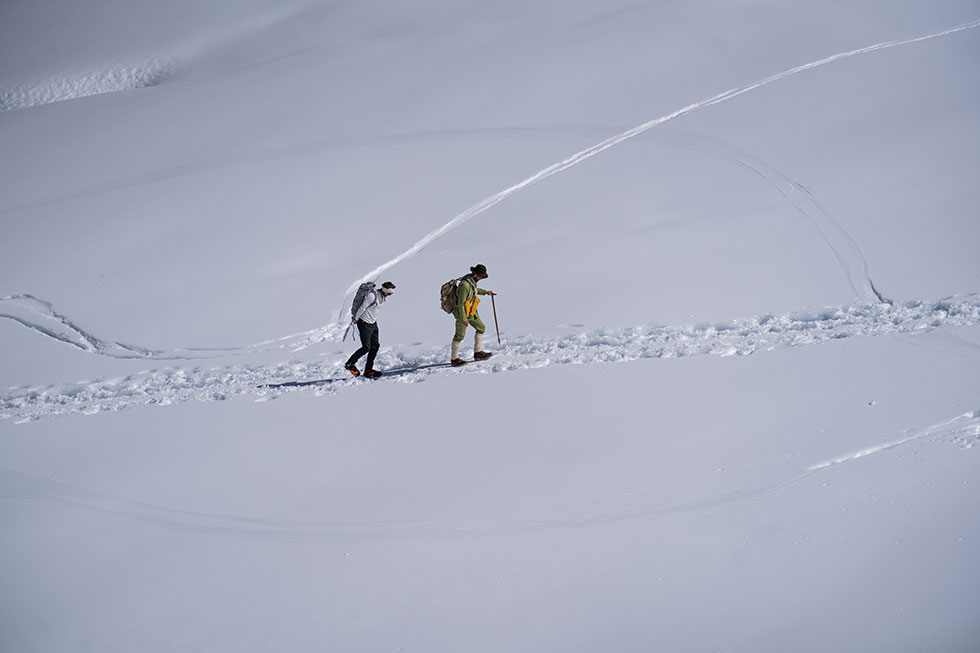
On the vast, blinding expanse of the Greenland Ice Cap, two figures struggle against the wind. To a distant observer, it looks like a tear in the space-time continuum.
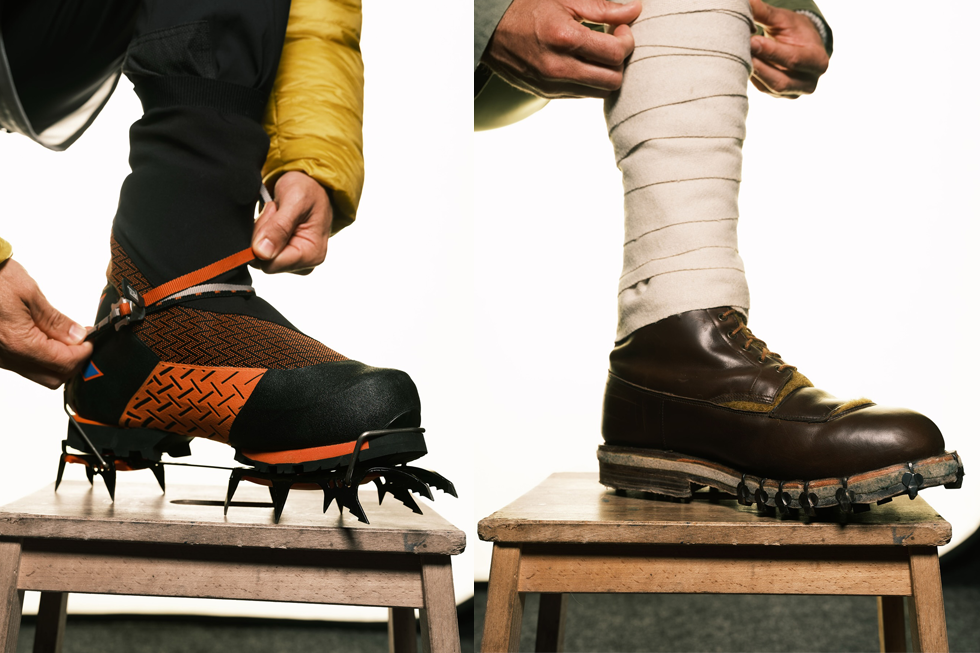
One figure is a vision of modern mountaineering: clad in streamlined, synthetic insulation, waterproof membranes, and modern plastic boots. The other looks like he just stepped out of a sepia-toned photograph from 1914: wrapped in heavy wool, gabardine cotton, and cumbersome leather boots treated with dubbin.
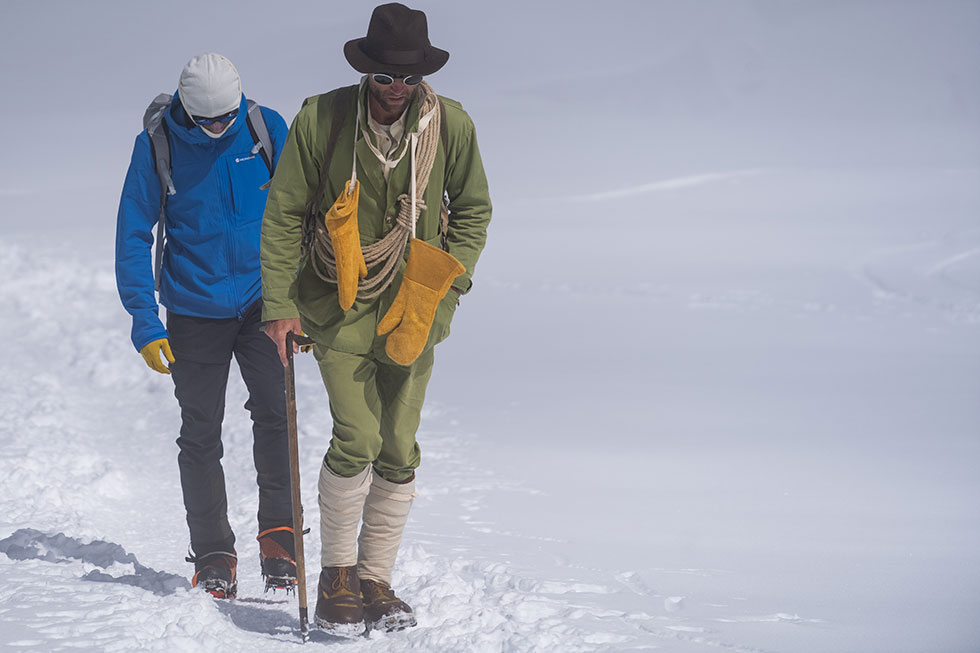
They are struggling up the ice at the exact same pace. They share the same parents. They share 100% of their DNA. Ross and Hugo Turner—The Turner Twins—are professional adventurers, but they are also living, breathing scientific instruments. In a world obsessed with the “cutting edge,” they’re using their unique genetic mirror to ask a fundamental question about adventure gear: exactly how far has a century of textile innovation taken us? And what have we perhaps forgotten?
Their findings are enough to make any adventurer rethink their entire layering system.
The Catalyst: A Broken Neck
The Turner Twins’ trajectory into the world of high-stakes exploration wasn’t born from a childhood obsession with Everest; it spawned from a near-tragedy.
At age 17, just prior to their 18th birthday, Hugo dove into the sea and hit a sandbank. He fractured his C7 vertebra. In a week where eight other people were admitted to the same hospital with similar injuries, Hugo was the only one to walk out. The proximity to permanent paralysis was a profound wake-up call.
“We had a midlife crisis at 17,” Ross explains. “Life got put in perspective.”
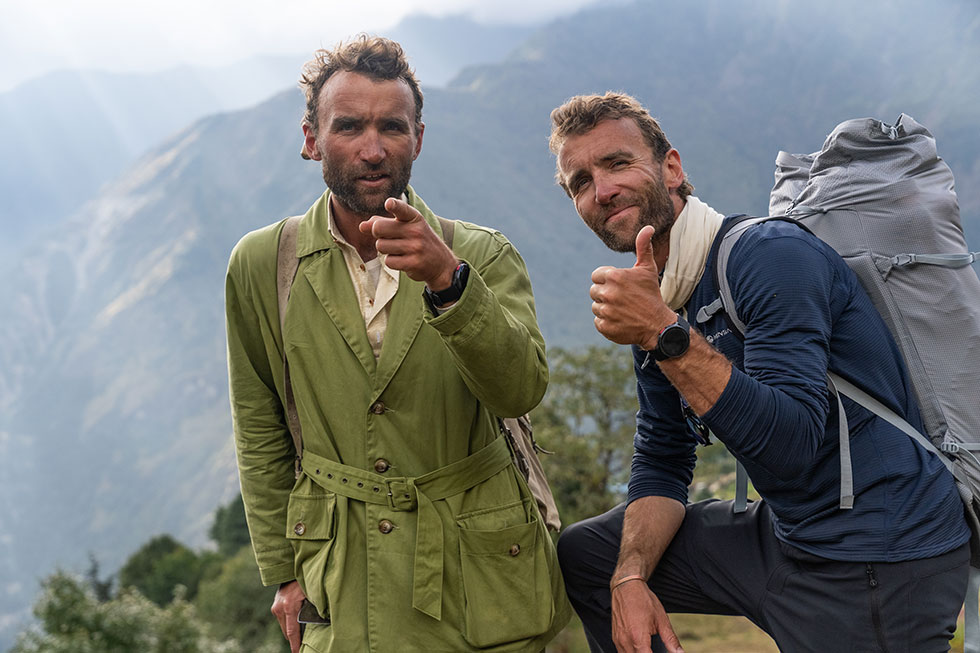
They needed to live and test their limits. They started by rowing the Atlantic to raise funds for Spinal Research, a UK-based charity they’ve worked with for years. But the real epiphany came on a London tube train years later, reading about the centenary of Ernest Shackleton’s Imperial Trans-Antarctic Expedition. They looked at the grayed photos of men in tweed on the ice and wondered: How did they survive?
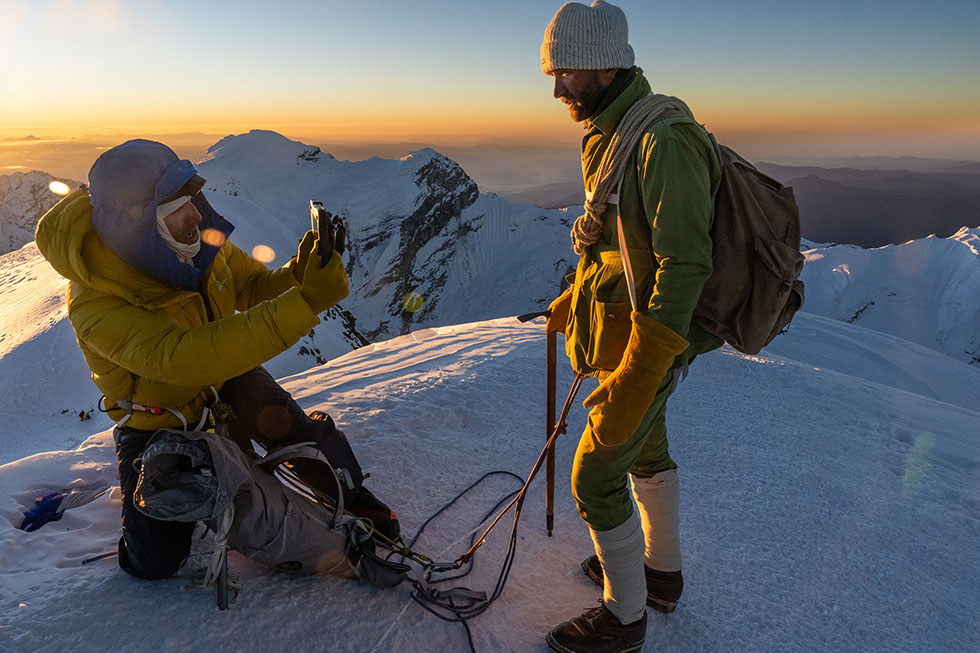
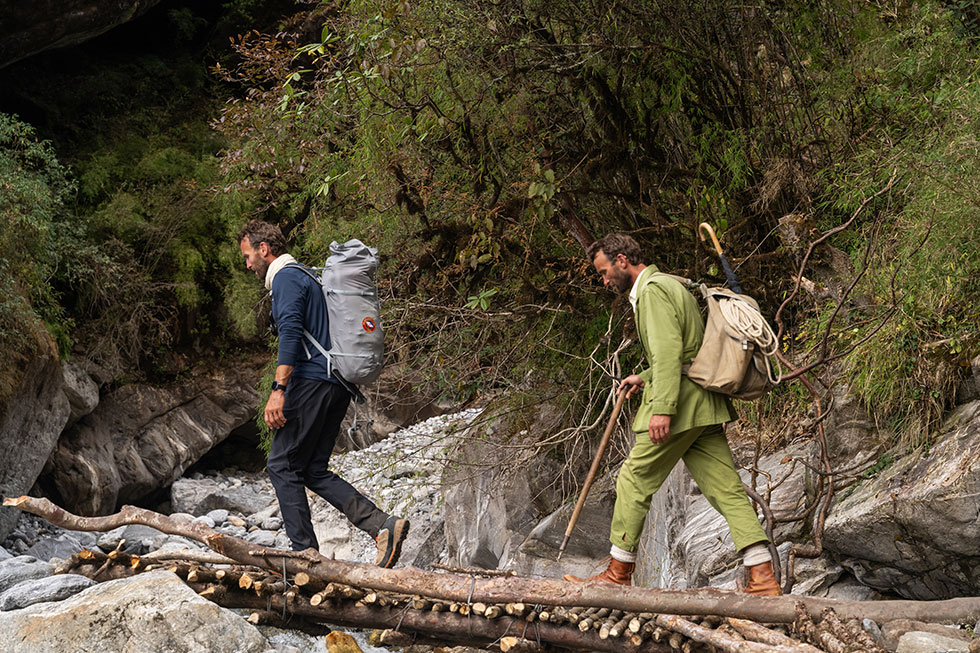
They realized they possessed the ultimate scientific tool: a perfect control subject and a perfect variable. If they went on an expedition, and Ross wore modern kit while Hugo wore historic replicas, any difference in performance—be it core temperature, calorie burn, or cognitive function—could be attributed solely to the gear, not genetics.
The “time travel” experiments were born.
The Gear Archaeology
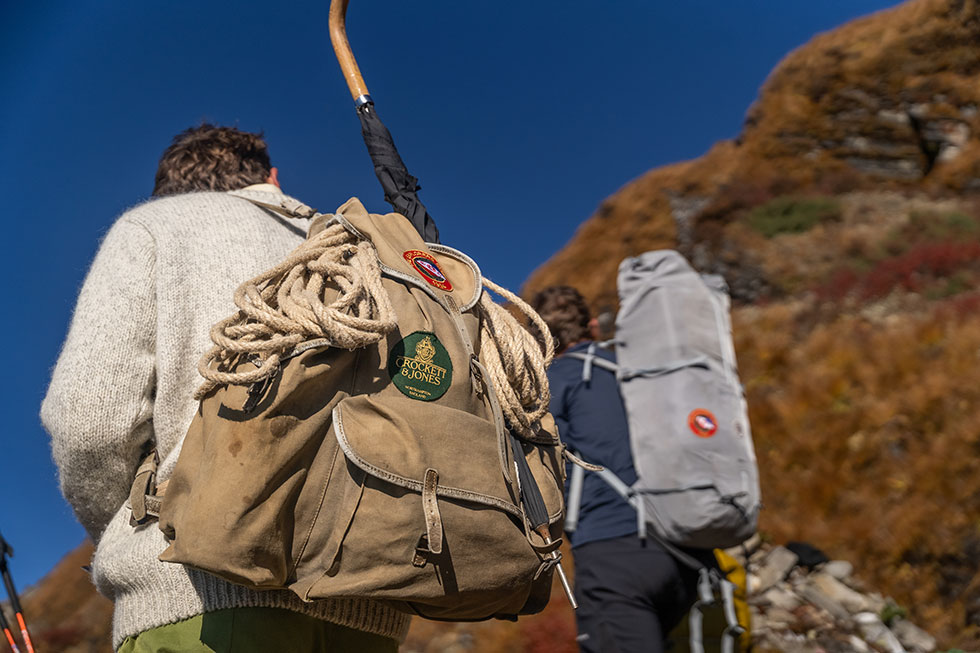
Now, here’s the fun bit for gear geeks like us: it’s not cosplay; it’s rigorous historical reconstruction. “There’s no point in saying, ‘Oh, it looks correct,'” Hugo says. “If it’s just an adventure in traditional dress, it’s not a proper test.”
To ensure genuine data, they dive deep into the archives of carry history. Their rule is strict: materials must be 100% natural—wool, silk, cotton, fur, and leather.
The process of recreating this kit is a monumental challenge in supply chain archaeology. They track down the original manufacturers, many of whom are still operating as heritage brands in the UK, and convince them to restart production lines that have been dormant for decades.
A prime example is the footwear. For a recent expedition recreating George Mallory’s 1924 Everest attempt, they partnered with Crockett & Jones in Northampton, the actual manufacturer of Shackleton’s boots.
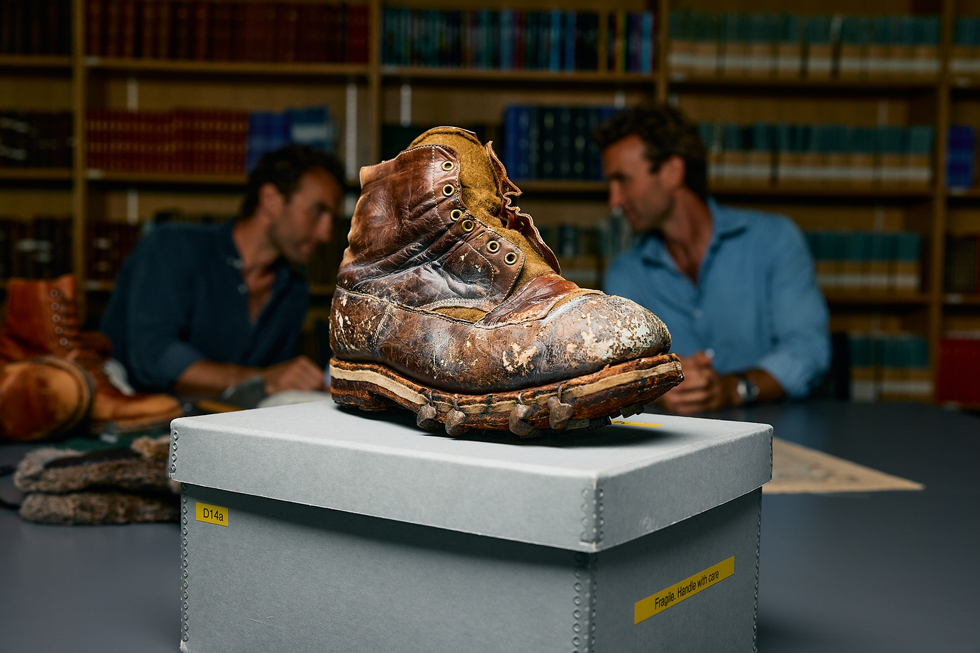
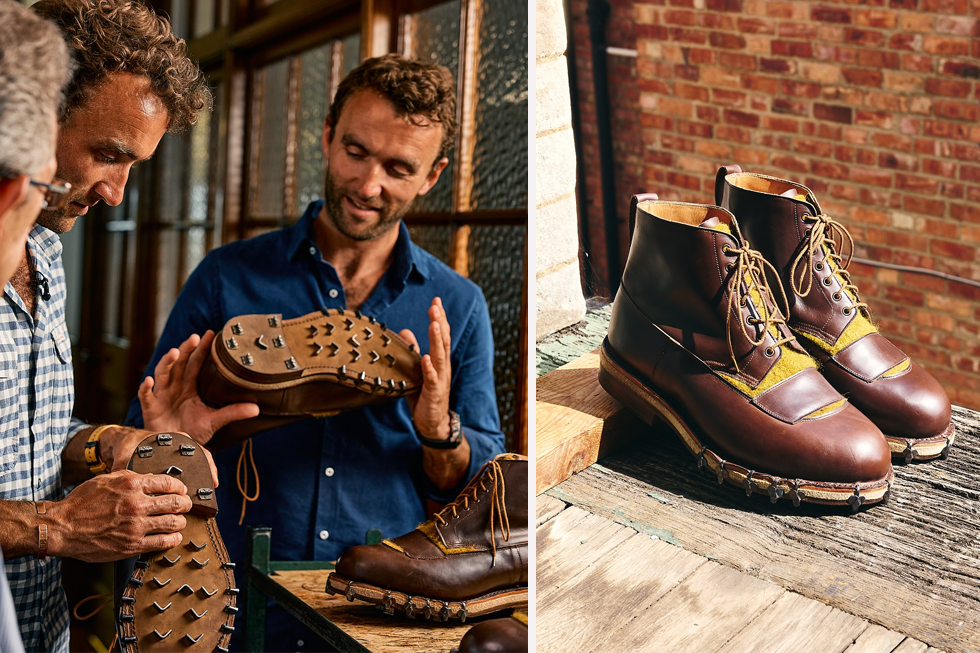
“Their commercial boot, the Snowdon, was the basis for the first Mallory boot,” Ross details. But early tests on Mt. Elbrus proved disastrous; the boots weren’t warm enough for high altitude. The redesign process was agonizingly complex, involving 18 months of prototyping.
Crockett & Jones had to stop their modern production line just to build these prototypes. The final product was a masterpiece of forgotten technology—a literal “sandwich” for the feet. It featured a leather inner boot, totally covered by a thick layer of yurt felt wool, then encased in yet another leather outer boot, all sitting on a massive rubber midsole for insulation.
“The Mallory shoe went through 40 pairs of hands doing little technical details,” Ross says. “It was an enormous undertaking because boots like that nowadays simply aren’t made.”
The Extreme Data Lab
While one twin is dressed like a 1920s gentleman explorer, both are wired up with technology that would make NASA jealous.
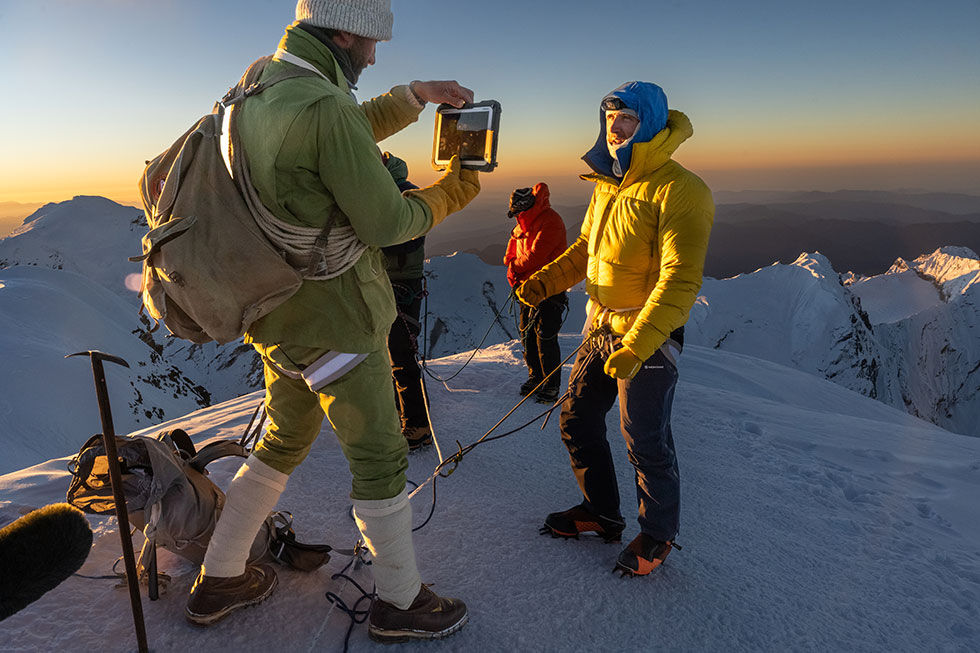
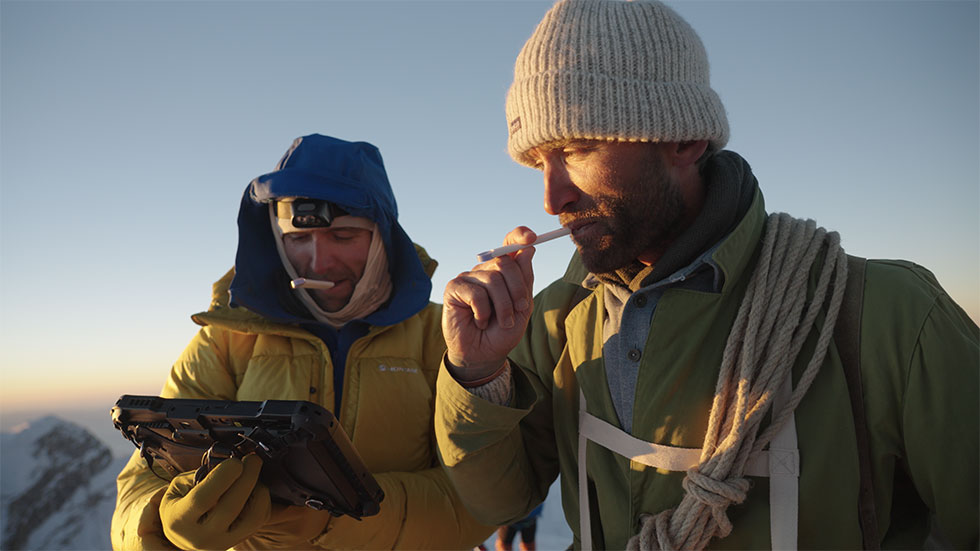
Gone are the days of lugging heavy machinery up mountains. Today, their biometrics are tracked by ingestible sensor pills that monitor core temperature from the inside out, patches that analyze sweat composition, and smartphone-connected hygrometers taped to their skin to measure moisture buildup under layers.
“We are taking technology way outside its comfort zone,” Ross notes. They recently adapted pediatric thermometer patches—meant to track a baby’s fever via an app—hacking the software to register temperatures from 0 to 50 degrees Celsius to create thermal maps of their bodies during climbs.
They measure cognitive decline in hypoxia, gut microbiome changes under stress, and precise metabolic rates. It’s this hard data that separates their work from mere nostalgia.

Mythbusting the Modern Narrative
So, what happens when you pit 1924 against 2024? The results confront the very foundation of the modern outdoor industry’s marketing machine.
The assumption is that a century of GORE-TEX, PrimaLoft, and ripstop nylon has exponentially increased our safety and warmth. The Twins’ data suggests the gap is much narrower than we think.
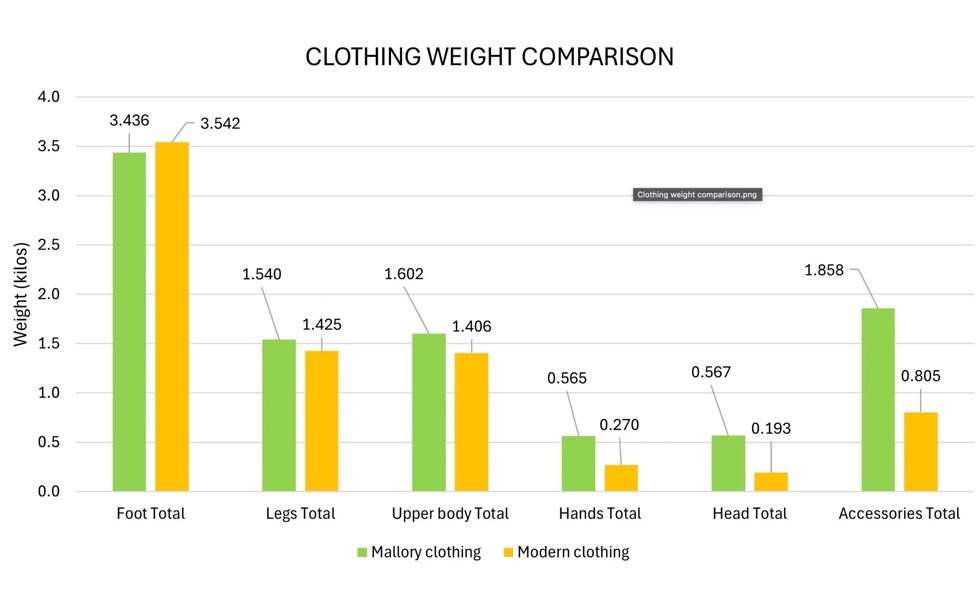
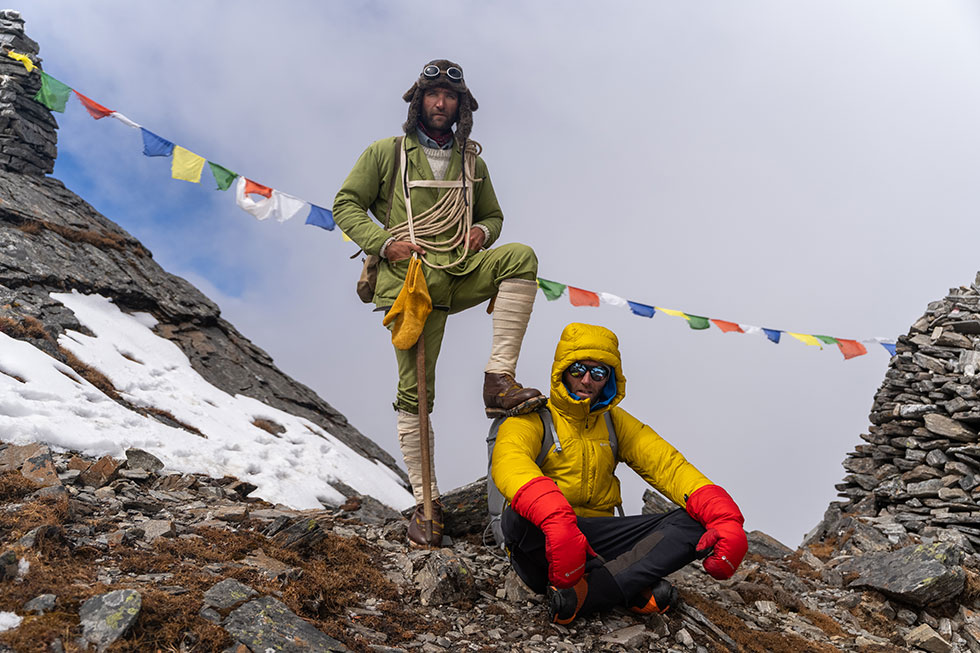
During their simulation of Mallory’s Everest expedition, the data showed that on summit night, the average body temperature difference between the twin in modern down and the twin in complicated layers of silk, wool, and gabardine was a staggering 1.8°C.
“In a hundred years, you’ve gained—arguably—one degree of efficiency per 50 years,” Ross reveals.
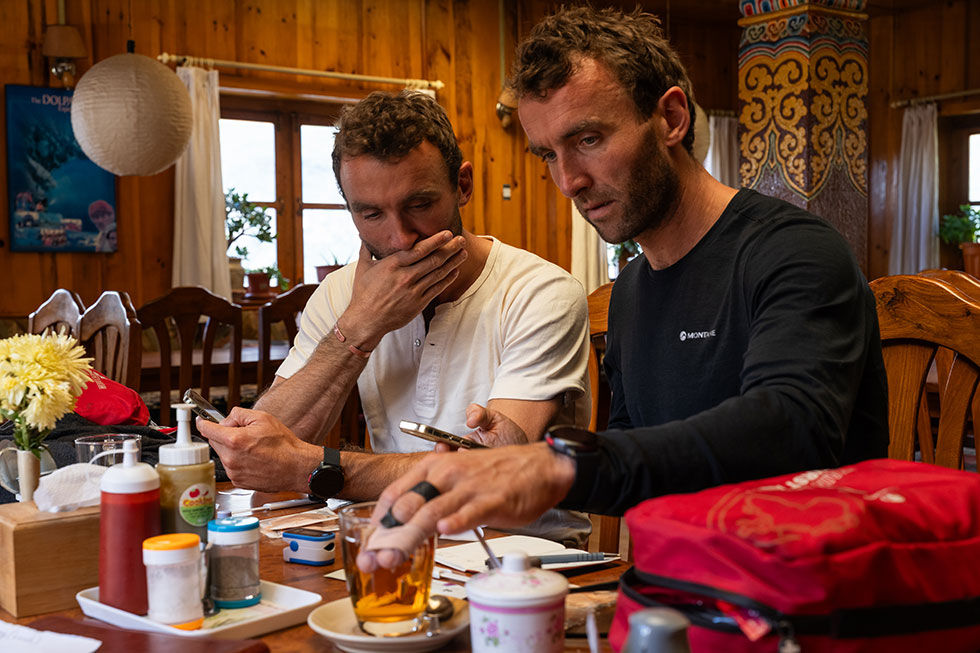
Furthermore, they found that natural materials managed moisture in ways modern synthetics struggle to replicate. While trekking across Greenland, the twin in the woollen jumper wasn’t clammy.
“There’s so much air in between the cable knit,” Ross describes. “Your back becomes just a huge field of frost. We just wipe it down and the air kind of wicks off the back. That moisture is gone.”
The historic gear worked spectacularly well, but it came with a caveat: it required immense skill to operate.
The Lost Art of Layering
The true takeaway from the Turner Twins’ experiments isn’t that we should all burn our technical shells and start wearing tweed. It’s that technology has made us lazy with our micro-climate regulation.
Modern gear allows for a “set and forget” mentality—one big zip to regulate temperature from -20°C to 0°C. The old explorers, by contrast, were masters of active management.
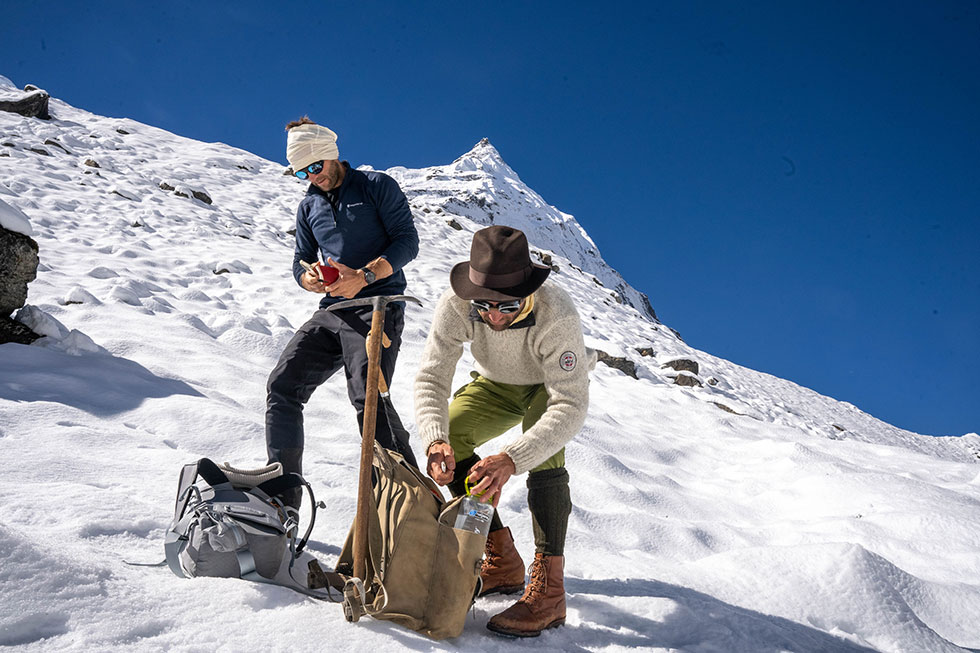
They analyzed Mallory’s layering system and found genius in its complexity. He wore six layers on his torso. He placed a silk shirt over a wool jumper, trapping air in a way that mimicked the loft of modern down.
“They were extremely well-informed and educated about how their kit worked,” Ross argues. “They knew exactly what they were doing.”

The data proves that the gear of the past is capable, but it has a narrower operating window. If you stop moving in Mallory’s kit at 8,000 meters, you will freeze quickly. Modern gear buys you a safety margin if you become static.
For the Twins, the ultimate lesson for any modern adventurer is to reclaim that lost knowledge. “Find your own limitations with the kit you have,” Ross advises. “A lot of people go on projects and pack way too much because they think, ‘I need technical item X, Y, and Z.’ Understanding that old-school mentality of what you actually need is probably more efficient.”
The Turner Twins are proving that while protective gear has evolved, the human engine hasn’t. The most crucial piece of carry isn’t something you can buy; it’s the knowledge of how to use what you have, whether it was made last year, or a century ago.
You can follow the Turner Twins’ adventures here.






Michael Knispel
Editor-In-Chief
Mike’s our editor-in-chief, storyteller, and master traveler. He’s been at the helm for over a decade, spearheading our stories, partnerships, and brand at large.



 WAYS TO CARRY