



 Carry Awards
 Insights
 Liking
 Projects
 Interviews
 Carry Candy
 Community and Marketplace
Brands
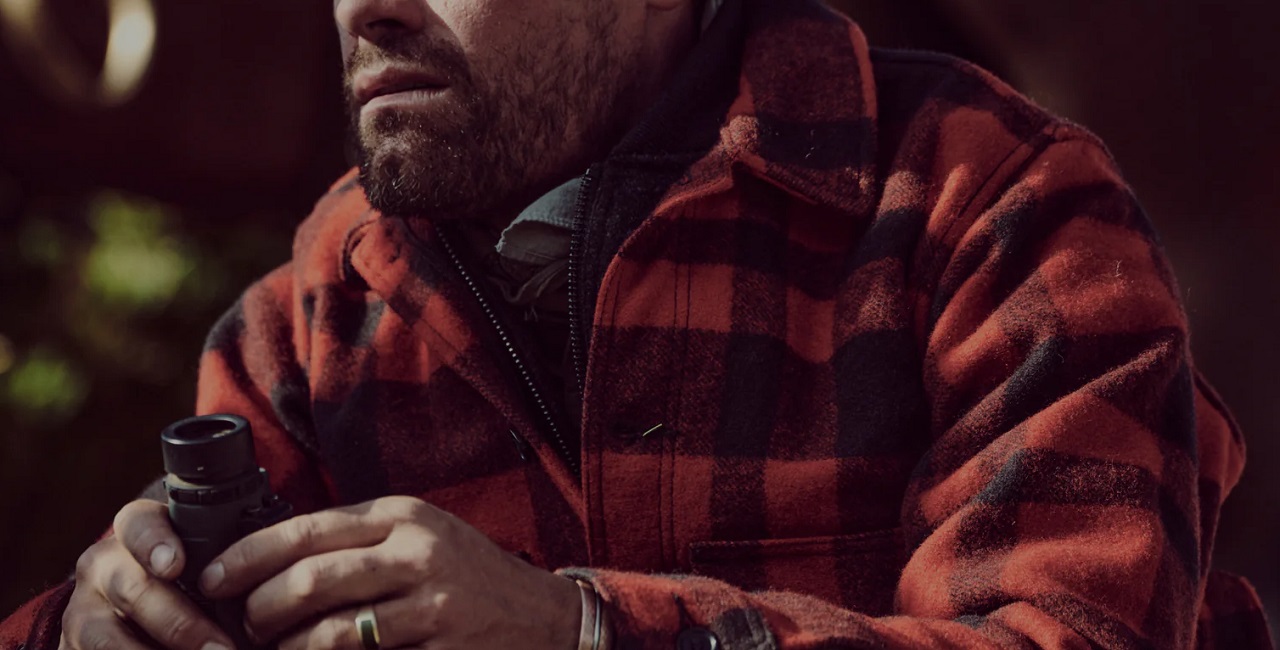
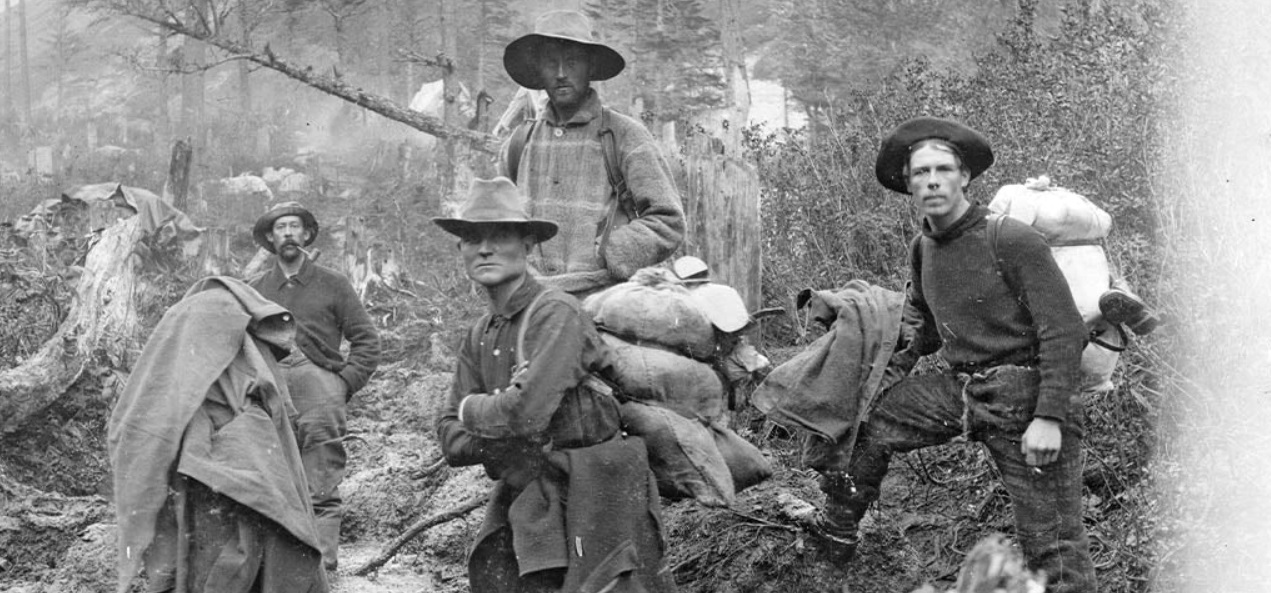
It’s winter 1898 somewhere along the freezing Chilkoot Pass. The man ahead has lost feeling in his fingers. All around, the mountainside tells its own story: empty champagne crates, cast-iron stoves, oak furniture, an abandoned piano — detritus from the tens of thousands who’ve already descended on the Klondike, lured by gold and riches, wildly unprepared for the practicalities of the year-long mission ahead.
Some knew how to pack sensibly. They stopped in at that little shop back in Seattle — the fella said he made the best gear around, with the kind of conviction that meant business. So far, his gear’s holding up. That Mackinaw Wool coat feels like an iron shell. Whether anyone will find gold is anyone’s guess; surviving the winter is the more pressing concern. Out here, at this latitude, quality reveals itself very quickly.
Clinton C. Filson: Outfitter to the Klondike
Unlike his early clientele, Clinton C. Filson was not a trapper, prospector, or mountaineer. He was a practical and methodical man who knew how to listen to his customers: the ones doing the work out in the wild, who demanded exceptional tools not only to thrive but survive.
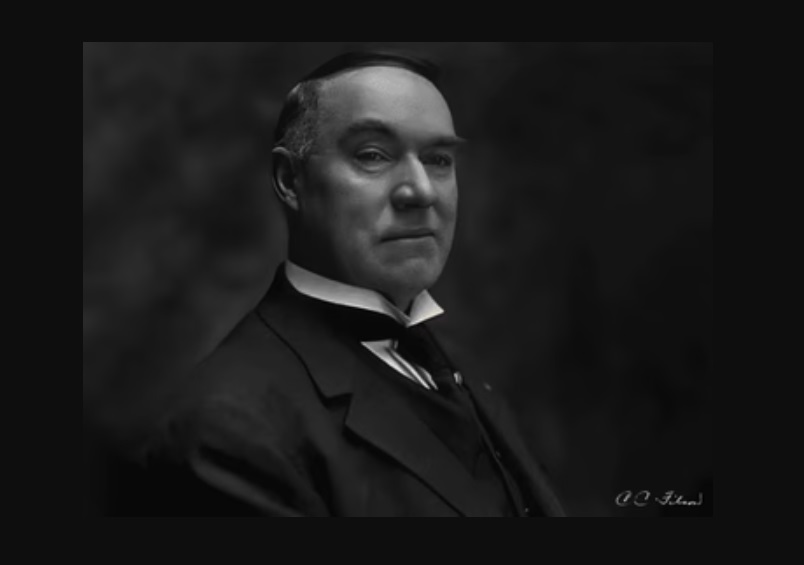
Born in 1850, Filson was always a self-starter. He spent years as a Nebraska homesteader before heading west, working as a conductor on the Chicago, Milwaukee, St. Paul and Pacific Railroad. He arrived in the Pacific Northwest in the early 1890s, initially settling in Kirkland, Washington — then a town with serious industrial ambitions, built around British entrepreneur Peter Kirk’s proposed steel works and his dream of making Kirkland the Pittsburgh of the West. Filson invested in property there, co-owned a brick building, opened a hardware store, and served as the town’s postmaster in 1894. When Kirkland’s plans collapsed, he relocated to Seattle and opened a small loggers’ outfitting store, the Seattle Woolen House, at 903 First Avenue — where the Federal Office Building now stands.
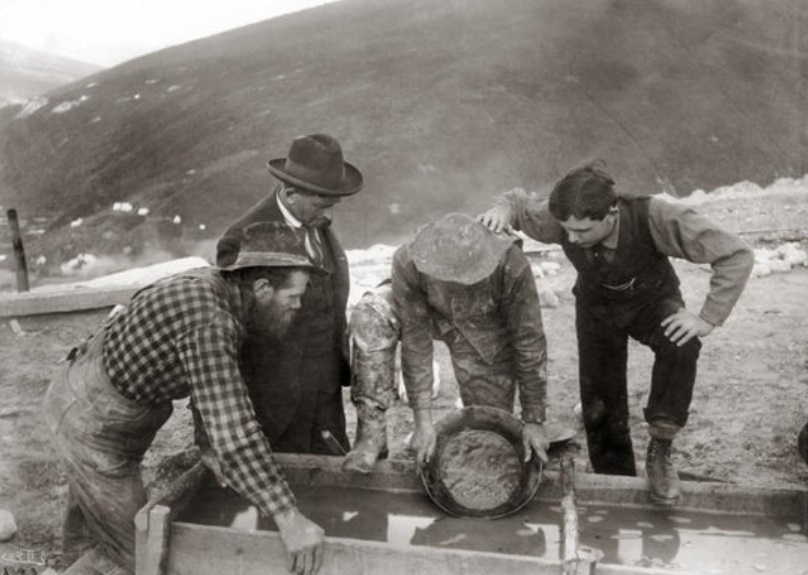
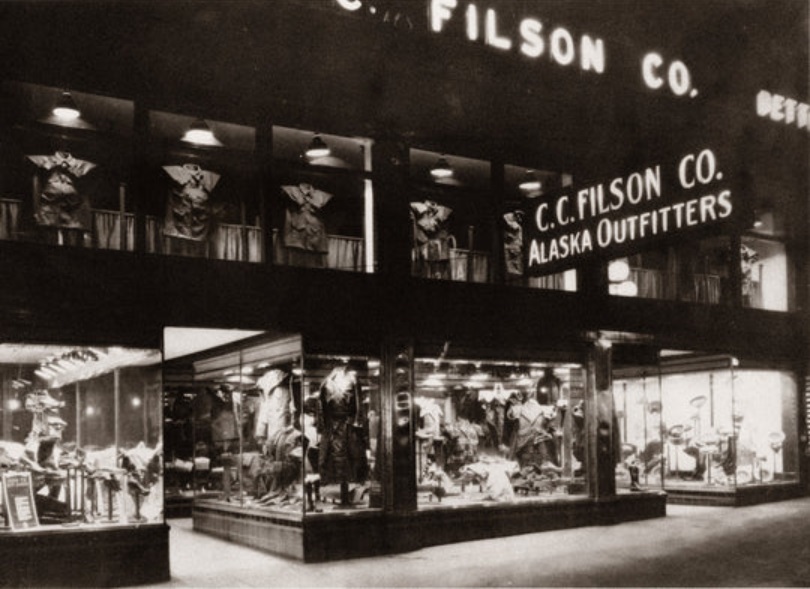
In the summer of 1897, Seattle transformed almost overnight. Storefront windows filled with prospecting equipment. Steamship companies advertised passage north. Steam whistles echoed across Elliott Bay as hardware merchants, outfitters, and freight companies sprang up to service the rush. The city marketed itself aggressively as the ‘Gateway to Alaska’.
You couldn’t travel light. To enter Canada, you had to carry roughly a ton of supplies — enough food and equipment to survive a year in the Yukon. Since no man could haul that much in a single trip, most spent weeks shuttling loads up and down the passes. Men made dozens of trips carrying loads on their backs. Some hauled more than 2,000 kilograms before ever seeing a speck of gold.
With tens of thousands pouring northbound through Seattle, Filson was suddenly at the heart of the action. He founded C.C. Filson’s Pioneer Alaska Clothing and Blanket Manufacturers that year: clothing, blankets, boots, and sleeping bags, all built to the highest standard possible.
Promising ‘unfailing goods’, Filson operated on complete two-way honesty. Prospectors unable to visit Seattle could write him a letter describing their requirements and have complete outfits assembled and shipped north. As one customer remarked at the time: “Just write and tell Filson what you want and pay his bill when the goods come. He trusts you and you can bank on him.”
It is worth noting what kind of man this commercial reputation required. Filson was not a craftsman himself in the traditional sense — he was a listener, a systems thinker, a man who had spent his working life in logistics and supply, from the railroad to the post office to the hardware counter. His genius was not in the needle and thread but in understanding, precisely and without sentimentality, what working men needed and then making sure they got it. The catalogue was his medium. The letter of trust was his handshake.
After the Gold Rush
The easy gold and the Rush didn’t last, largely over by 1899: a literal ‘flash in the pan’. Rather than folding, Filson moved with the times, without budging from his initial M.O.
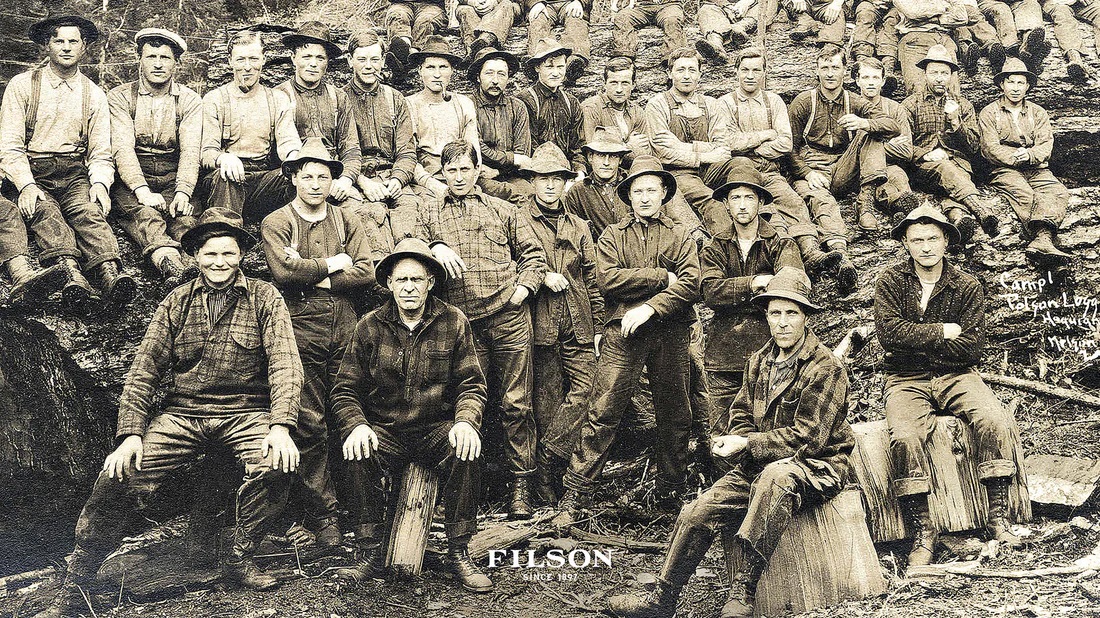
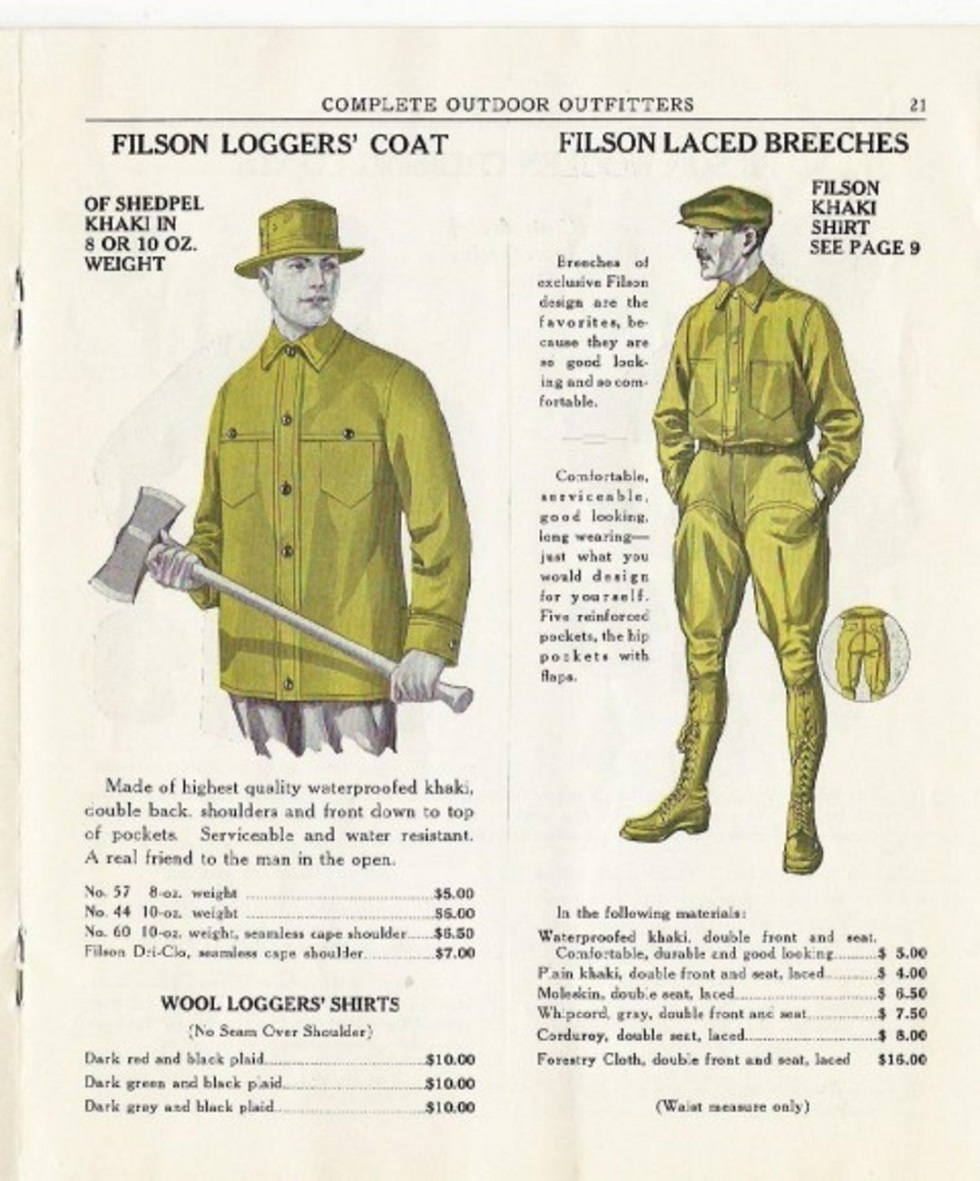
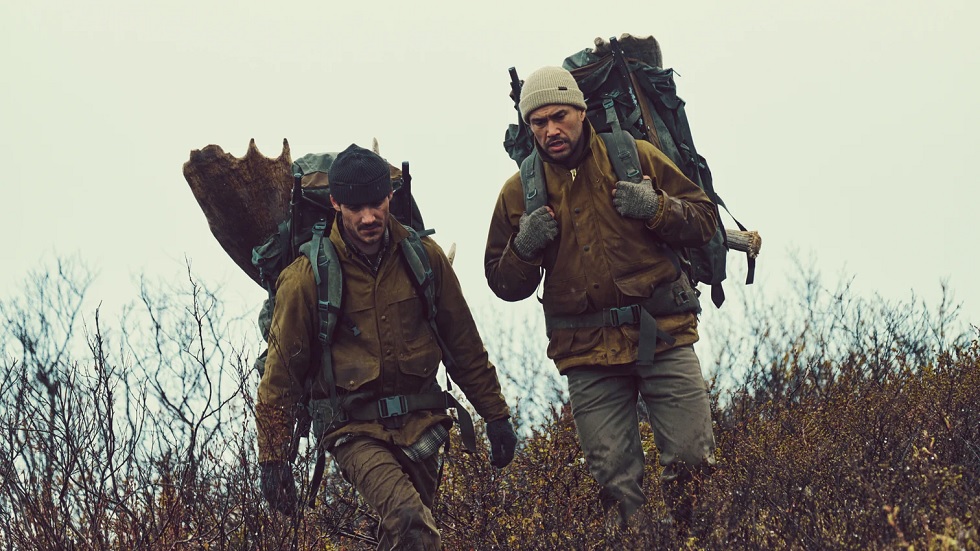
Across the Pacific Northwest, crews were working among Douglas firs so enormous they often exceeded 300 feet. The work was dangerous, wet, repetitive, and unforgiving. Men spent entire winters in logging camps with clothing expected to withstand rain and constant repair. Filson’s garments became fixtures of this industry, admired for their durability and reliability. Fishing fleets, hunters, and trappers got on board too: the permanent outdoor workers of the region.
The brand continued to supply simple, honest products crafted from exemplary materials that over time would become Filson signatures.
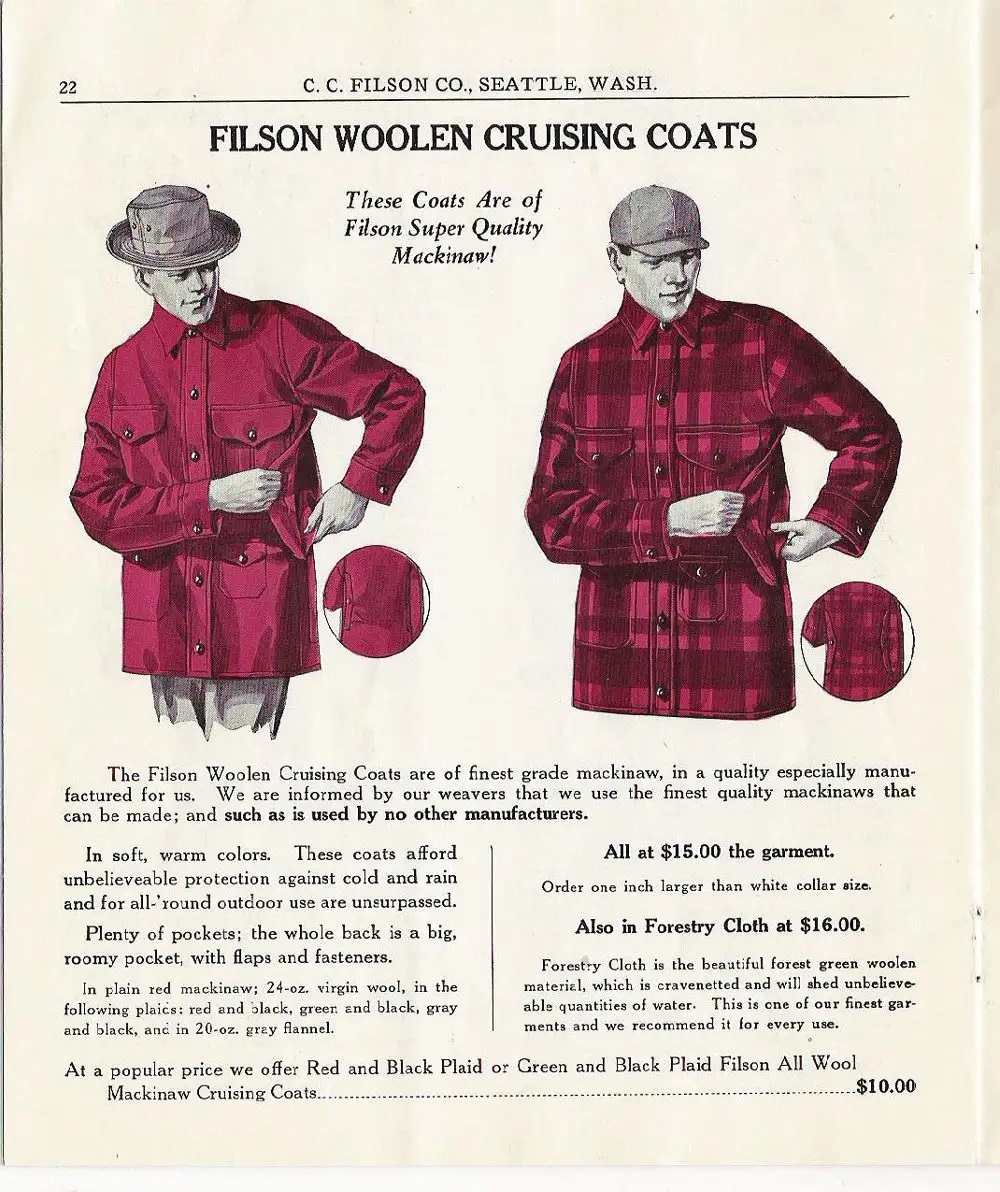
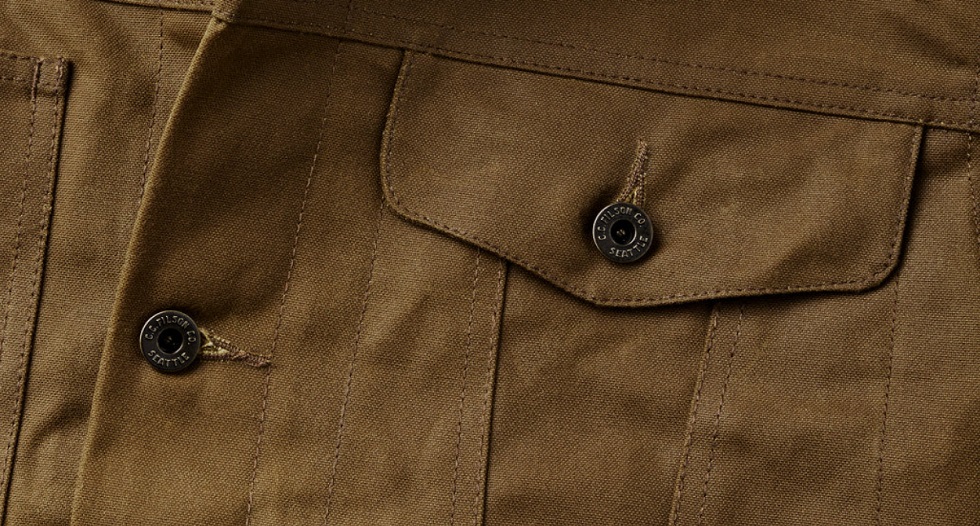
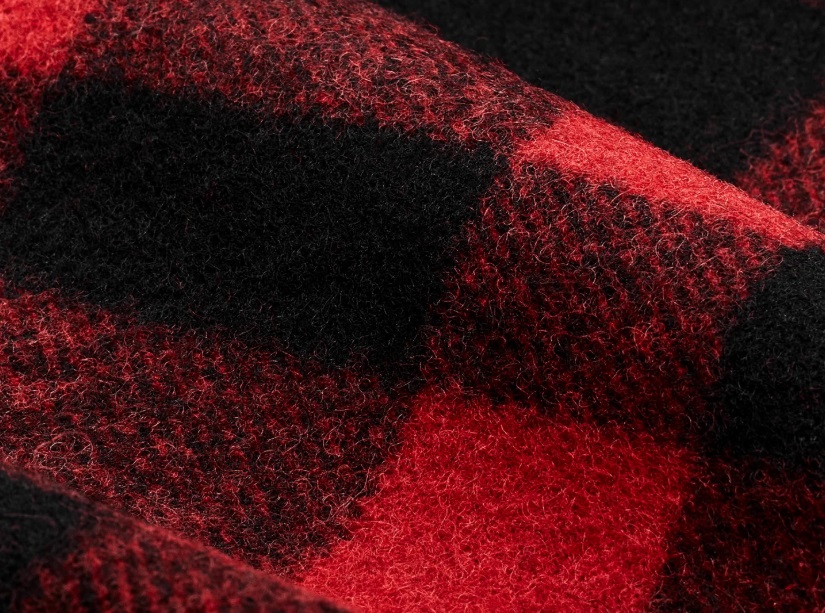
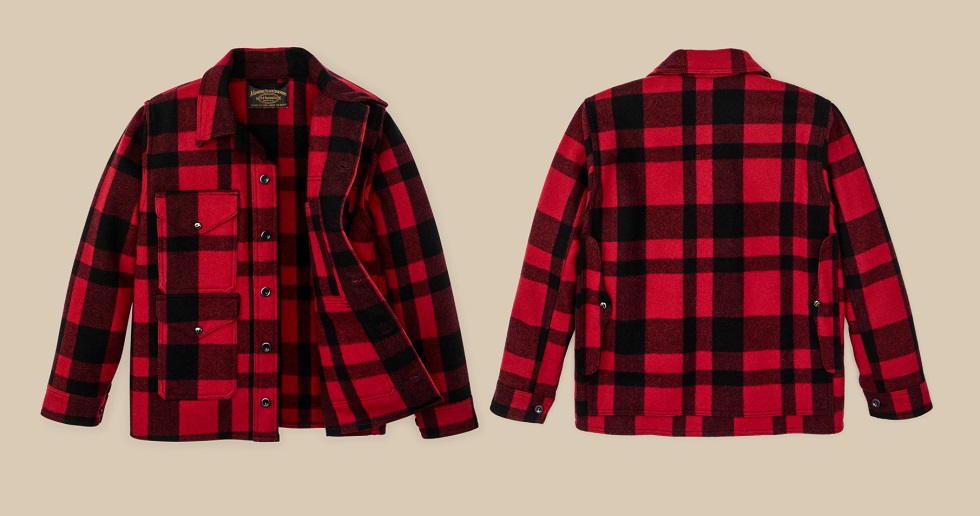
Tin Cloth: a tightly woven cotton canvas saturated with a paraffin-based wax, virtually impenetrable to rain and brush. And the famous Mackinaw wool, woven to a weight that most modern consumers would find almost ridiculously heavy — typically 24–26 oz, generously overbuilt by today’s standards. Add double-stitched seams, brass hardware, and reinforcement at every stress point, and these were wool shells: tools more than fashion garments, which retained warmth even when soaked.
Filson’s mail-order catalogues frequently featured letters from prospectors, woodsmen and hunters whose livelihoods depended on reliable equipment. The message was invariably the same: the products did the job.
Filson worked until his death in December 1919 — he never retired. The Seattle Post-Intelligencer noted his passing with the headline “Pioneer Dies After Long Life in City.” Ownership passed to his widow Winifred and his nephew George Stroble, and the family ran the company for the next 50 years.
The Filson Family Era
For half a century Filson sustained, almost stubbornly, its original vision: to create essential, remarkably high-quality goods for the working outdoorsman. Fashion? Not interested. Expansion? Not important. The brand stayed small and precise; what was going on outside its lane was of little interest or concern.
Naturally, the product line barely changed. The Mackinaw Cruiser jacket, the Tin Cloth pants, the canvas bags with their bridle leather trim — all made with the same robust simplicity they’d been made with since 1897: in Seattle, by people who understood what they were for.
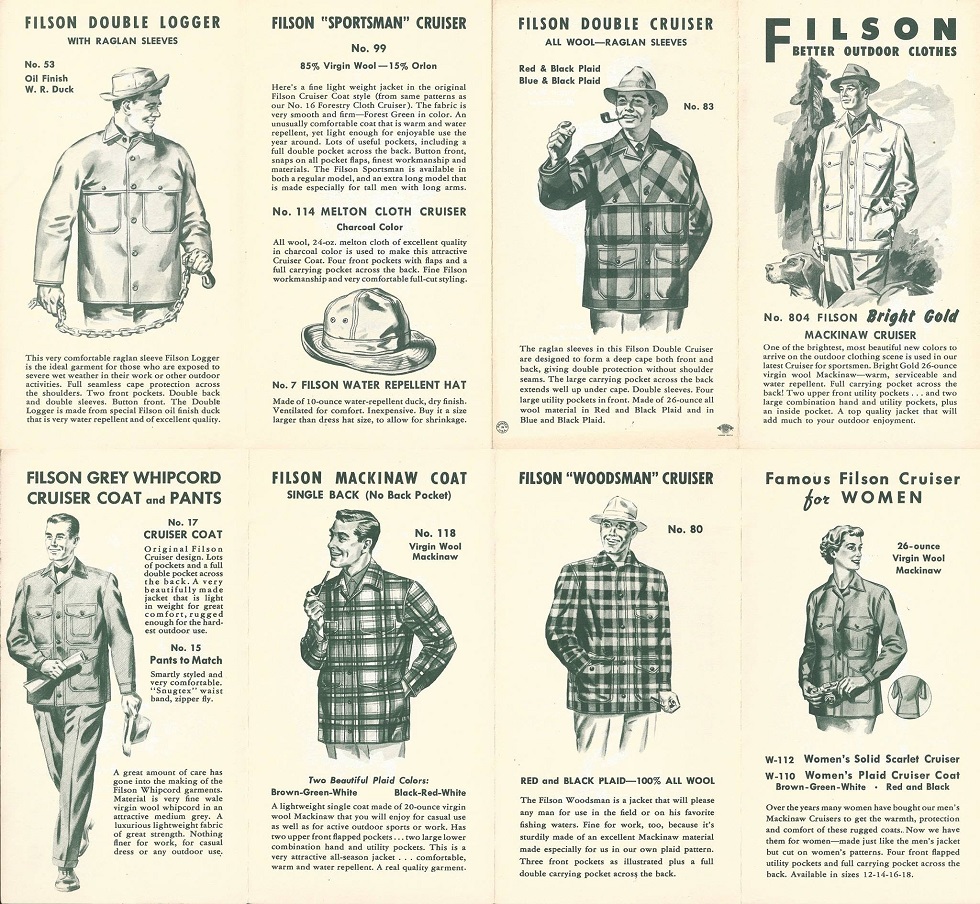
Filson products occupied a category somewhere between clothing and heirloom. Customers in 1930 could rest assured they were buying essentially the same garment their fathers had bought in 1910, and their sons would buy in 1950.
Tin Cloth jackets softened, darkened and accumulated decades of wear. Hunters passed them down to sons, as the garments acquired lineage. It was not uncommon for a century-old Mackinaw Cruiser to return to Filson having survived multiple owners, hunting trips, winters, and generations of repairs. While the label might be illegible, the jacket not only remained intact, but perfectly functional.
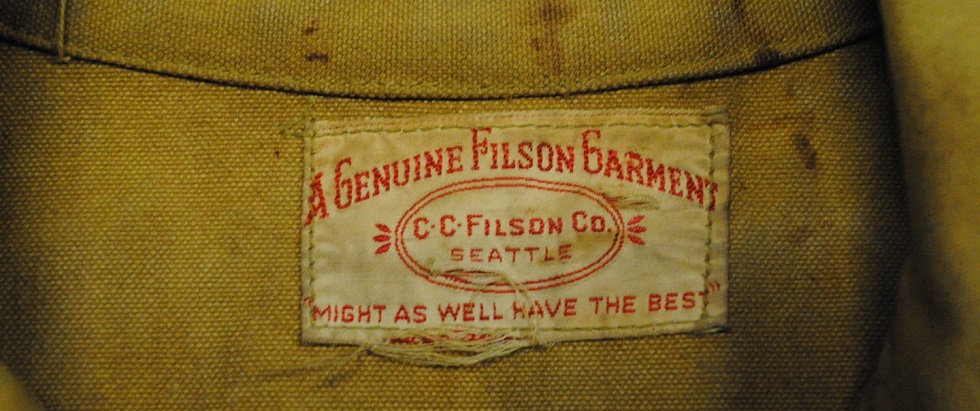
Fred Poyner IV recounts the testimonial of one customer whose father purchased an upland coat in 1945 after returning from WWII: “It was handed down to me and I’ve handed it off to my eldest son, grouse blood and all. He still wears it. It’s going on 70 and I just turned 70.”
In 1970, the family sold the company to a former Alaskan distributor, and it shrank to a shadow of itself. The product line reportedly contracted to around 35 items. Many of its great heritage designs were discontinued. Filson remained known to a niche circle of serious outdoorsmen and very few beyond that.
The Comeback
By 1981, synthetic fabrics were reshaping the outdoor industry. Gore-Tex was on the rise. Lightweight performance gear was the future. Filson, meanwhile, looked increasingly like a relic from another century.
That same year, skiwear entrepreneur Stan Kohls purchased Filson and saved it from extinction.
Kohls recognised he hadn’t acquired just a clothing company, but a repository of some of the most enduring workwear designs ever made. He approached the Filson archives like a curator, treating them less like dusty inventory than an archaeological dig. Out came forgotten hunting coats, forestry garments, and field bags designed for professions that barely existed anymore. One by one, they returned to production, the line expanding again from 35 items to 250, restoring the brand’s original prestige.
Smartly, Kohls refused modern materials — only Filson’s original specs would suffice. No Velcro, no synthetics, no technical crossover from modern sportswear. The holy trinity survived: Tin Cloth, Mackinaw wool, and bridle leather. And the products continued to sustain their Seattle homebase, crafted by American workers, to the same C.C. Filson standard.
Kohls successfully rejuvenated Filson and ran it like this for 23 years. When he sold it in 2004, it had become a rare entity: one of the few truly authentic American heritage brands with a devoted cult following among hunters, fishermen, loggers, and increasingly, a fresh generation who’d grown tired of poor-quality, disposable goods.
The Corporate Era
The Kohls era wouldn’t last either. In 2005, Filson went corporate.
Acquired by LA-based private equity group Brentwood Associates and former Polo Ralph Lauren executive Doug Williams — with Kohls retaining a minority stake and a board seat — Williams took operational control. He saw a brand with an extraordinary reputation for ruggedness and quality, and wanted to leverage that to a broader audience. He introduced casual wear and explored new retail channels. He hired a succession of CEOs, each with a slightly different vision for what Filson could become: a former Patagonia executive in 2006, a new president in 2010.
Brentwood sold Filson to Bedrock Manufacturing Co. in 2012, a Dallas-based firm founded by entrepreneur Tom Kartsotis — who had previously founded the Fossil Group and luxury brand Shinola Detroit. Kartsotis had a track record of building premium heritage brands, a demonstrated interest in American manufacturing, and an apparent understanding of what made Filson special. Under his early stewardship, the company invested in its Seattle manufacturing operation, opening an extensive new production facility in the SODO district in June 2013, more than doubling capacity and creating over 100 new jobs. For a moment, it looked like Filson might thread the needle, growing the brand commercially while preserving the manufacturing integrity that gave it meaning.

From 2015 onwards, the Filson story took yet another turn. Production shifted increasingly overseas, with layoffs at its Seattle and Kent manufacturing facilities. In 2023, plans were announced to outsource most of the remaining Seattle production — up to two-thirds of it — to a garment contractor near Los Angeles. As of 2025, US-made products accounted for just 35% of the Filson line, down from 90% a decade earlier, and the Seattle-area workforce had dropped from 369 employees to under 100.
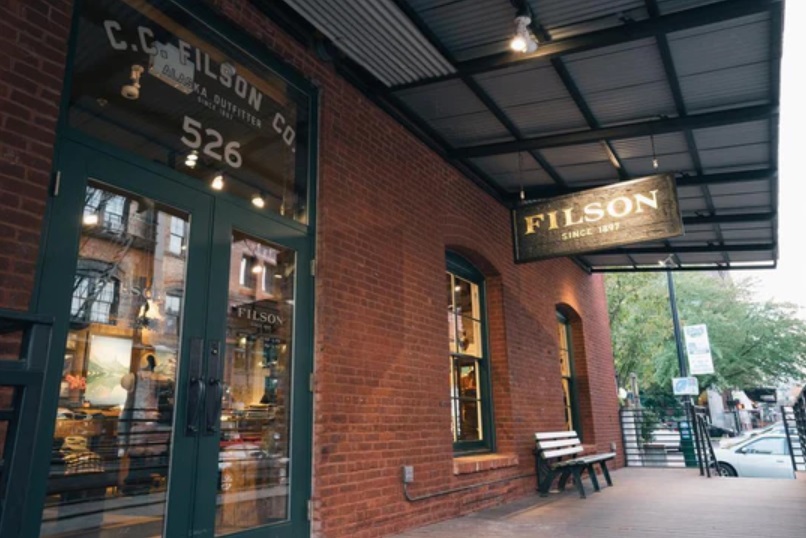
The product line expanded in directions that Kohls and C.C. Filson himself would have shaken their heads at: candles, drinkware, dog accessories, jewellery. The company now operates 15 retail stores across the US, Canada, and Italy — including locations in Milan and Cortina d’Ampezzo. In January 2025, Bedrock recruited former Eddie Bauer CEO Tim Bantle as President, signalling that Filson’s commercial ambitions are set to continue along these modern trajectories.
The Tension Between Commerce and Craft
Filson’s drift is not a unique story. It is, in fact, one of the most well-worn narratives in American manufacturing. Woolrich, founded in 1830 and once the outfitter of Civil War soldiers and Antarctic expeditions, followed a near-identical arc: decades of quiet integrity, overseas production, lifestyle expansion, and eventual sale to a European investment group. Barbour in the UK has navigated similar pressures, balancing its waxed-cotton heritage against the demands of a global fashion audience. Even LL Bean — long held up as the gold standard of American outdoor retail — has steadily shifted production offshore while maintaining the brand’s wholesome identity. The tension between what a heritage brand is and what corporate ownership needs it to become is structural, not incidental. Growth targets and quarterly returns are simply incompatible with the economics of making a 24-oz wool jacket by hand in Seattle.
The arithmetic is unforgiving. American garment workers earn Seattle wages — among the highest in the country — while comparable labour overseas costs a fraction of that. The domestic textile infrastructure that once supplied Filson has largely disappeared over four decades of offshoring; even sourcing heritage-spec materials requires navigating a global supply chain. Filson’s own product pages carry the quiet disclosure “Made in USA with imported material” on their Seattle-made garments — a reminder that provenance has always been more complicated than the mythology implied. None of this is unique to Filson. It is simply the reality of making things in America in 2026.
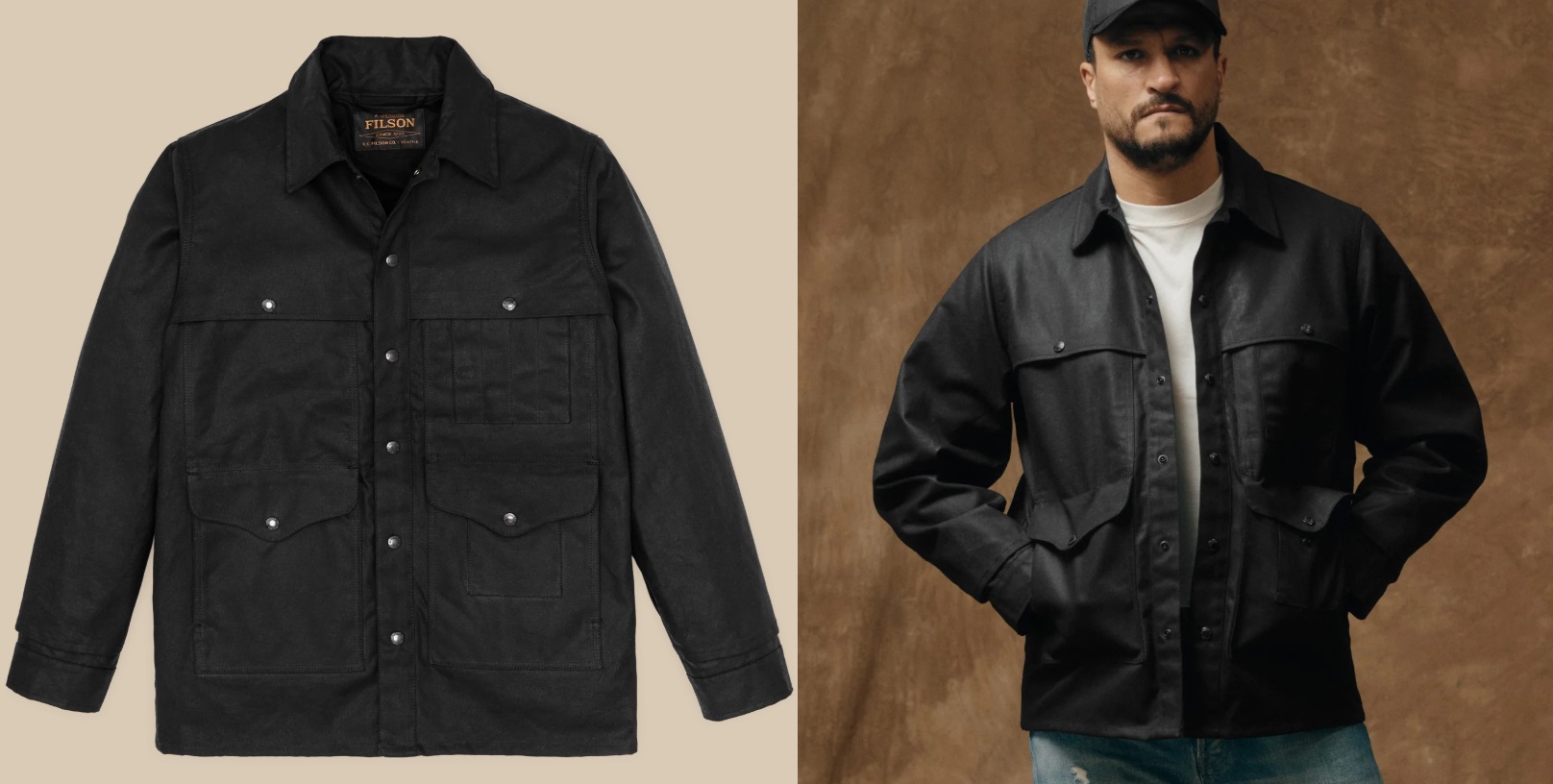
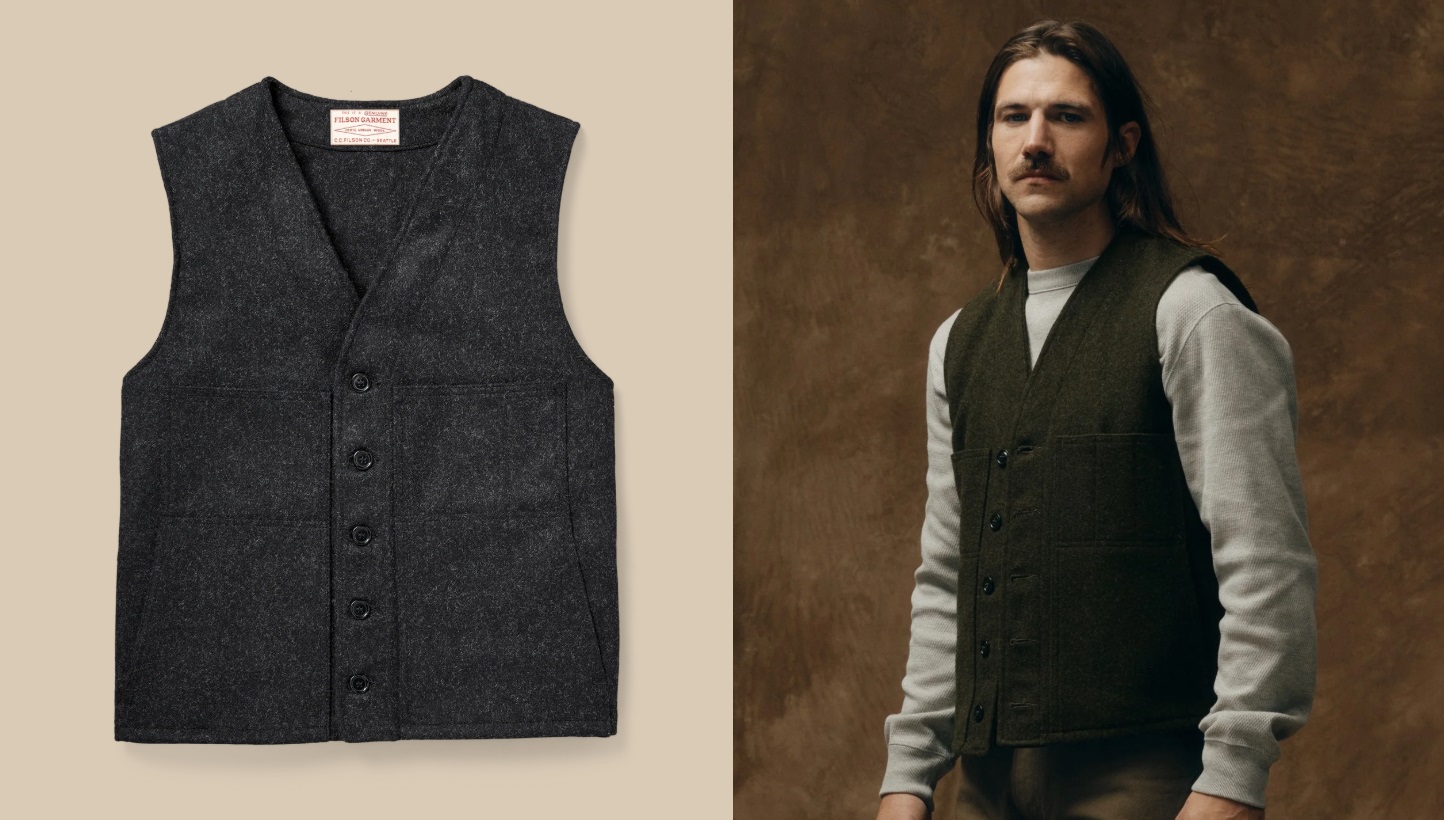
What is particular to Filson is the scale of the gap between what the brand promises and what the full product range now delivers. The heritage core — the Mackinaw Cruiser, the Mackinaw Vest, the classic Tin Cloth jackets — remains made in Seattle to the original specs, and Filson is transparent enough to label it distinctly: “Made at Filson, Seattle. Trusted quality for more than 50 years.” The broader line, expanded under successive corporate owners into insulated jackets, casual wear, and lifestyle accessories, carries the same name and price premium but was never built to the same standard. The brand name does the same work for both, and the customer has to read the small print to know which they’re holding.
What Filson Still Gets Right
It would be too easy — and not entirely fair — to write Filson off as a cautionary tale. The heritage line is genuinely still there, still made to spec, still available to anyone willing to seek it out. The Mackinaw Wool Vest at 24-oz virgin wool, the Tin Cloth Cruiser at 14-oz waxed canvas: these are not compromised products. They are, by any reasonable measure, among the best-made outdoor garments available in America today.
The repair service, too, is a genuine expression of the original ethos that has survived every ownership change. Filson still darns, binds, replaces panels, resets snaps, and sources hardware for garments no longer in production — backing it all with a lifetime guarantee against failure of materials and workmanship. In an era when most brands at this price point treat a garment as disposable the moment it leaves the shop floor, this commitment to longevity is not nothing. It is, in fact, exactly what C.C. Filson promised: that you could trust the product, and that if it failed you, the company would make it right.
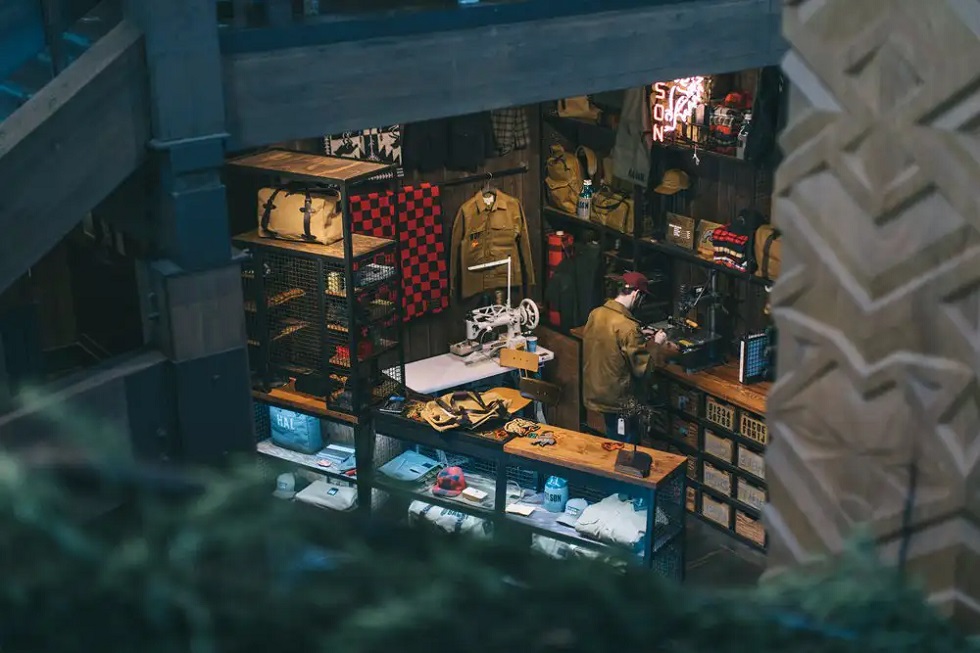
The devoted customer base has not evaporated either. Filson retains a loyalty that most brands would trade almost anything for — people who have been buying the same jacket for thirty years, who pass garments to their children, who regard the brand not as a purchase but as a relationship. That kind of loyalty is extraordinarily hard to build and, so far, has proven remarkably resistant to the brand’s corporate evolution. It is, perhaps, the most durable thing Filson has ever made.
The Spirit
Brands, like garments, evolve. They get patched, re-stitched, handed to new owners who wear them differently. Not all of those changes are losses. The question worth asking of Filson — now and in the years ahead — is not whether it looks exactly as it did in 1897, but whether the spirit that animated it then is still recognisable in what it makes today.
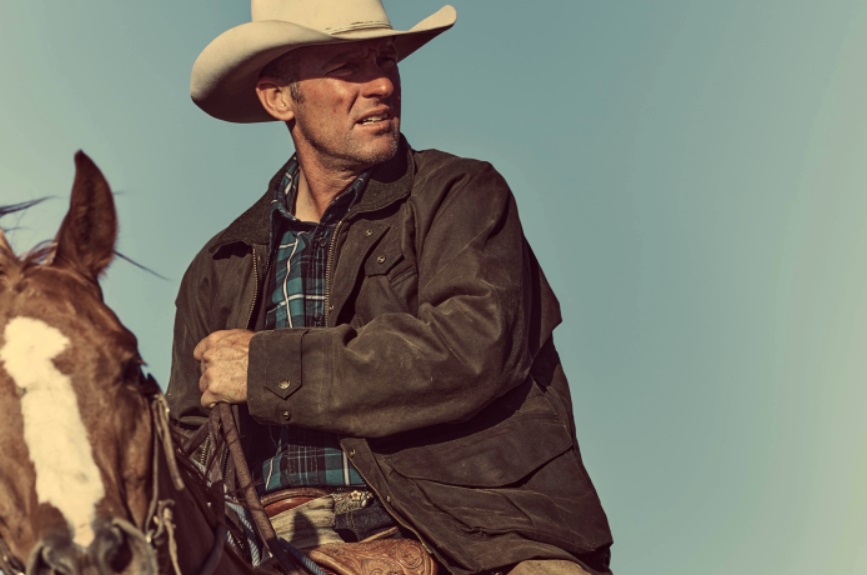
That spirit was never really about Seattle, or wool weights, or even American manufacturing. It was about the conviction that the person buying your product deserves the absolute best you can give them — that trust, once offered, must be honoured in every stitch. C.C. Filson built a business on that idea in a city that was reinventing itself overnight, for customers whose lives depended on getting it right. He didn’t cut corners because his customers couldn’t afford for him to.
The Mackinaw Cruiser is still being made in that building on First Avenue South. The repair team is still fixing jackets older than most of their customers. Somewhere in that continuity — however much the catalogue has grown around it — the original promise is still being kept.
Here’s hoping it always will be.








 WAYS TO CARRY