



 Carry Awards
 Insights
 Liking
 Projects
 Interviews
 Carry Candy
 Community and Marketplace
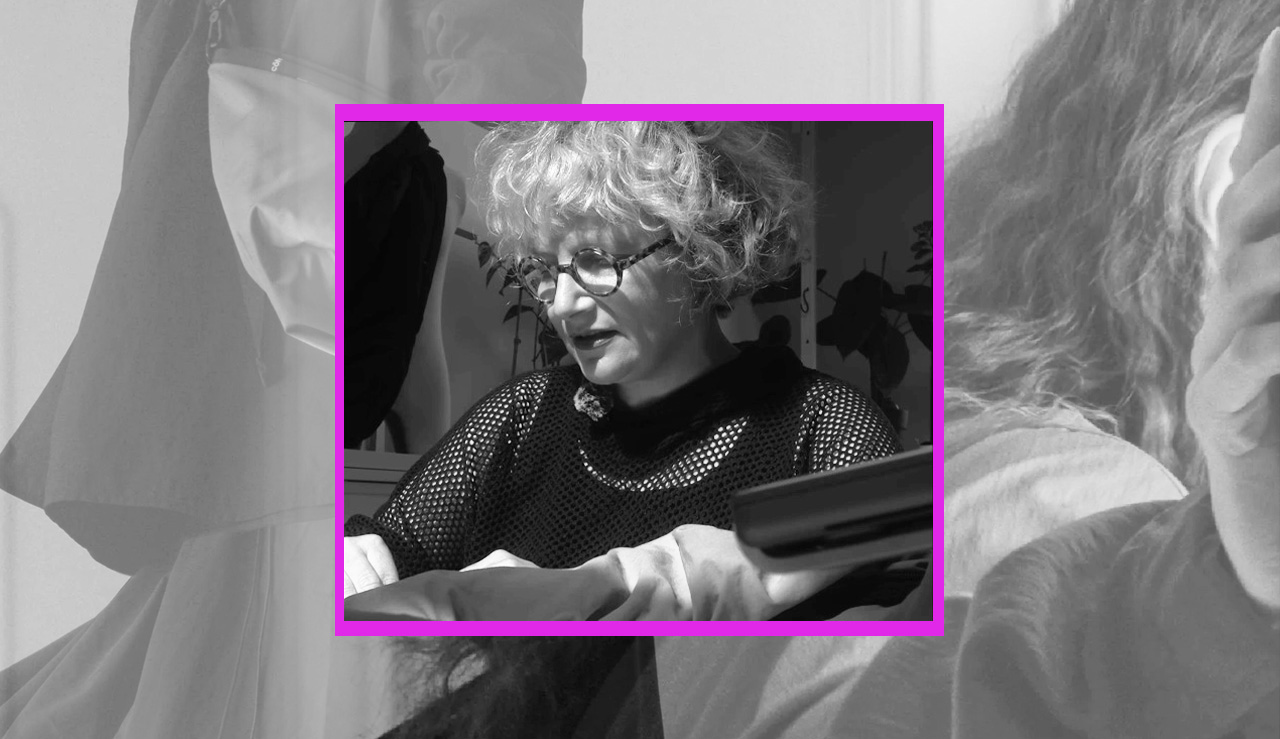
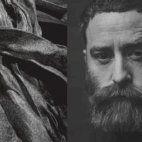
For many years, Emilie Arnault remained a mystery. The designer behind Côte&Ciel’s sculptural bags was private, off the airwaves. Her work became a bridge between high-fashion artistry and everyday softgoods, and a bastion of good taste among the in-crowd. But Arnault herself? She stayed in the background. Creating. Feeling. In a state of play.
But there’s been a shift in the last few years. Côte&Ciel’s creative powerhouse has conducted a few interviews. Put a face and personality to the bags that fans and designers alike have been in awe of. So, on a recent trip to Paris, we were lucky enough to steal some of her time.
“There is a need for creation,” says Emilie Arnault. “The goal is to make this need for creation also useful for others.”
It’s a simple statement that contains everything you need to know about the French designer. While other brands chase trends and seasonal narratives, Arnault is chasing something else entirely: the point where form, function, and feeling converge. Her path to this unique intersection began not in fashion, but in science. “I never studied fashion,” she explains. “I studied industrial design, but before that, I studied sciences.” This background instilled a deep appreciation for explaining phenomena and a rational spirit, which she now applies to design.
Though she found the precision required of a pure scientist a challenge, her love for physics and biology, coupled with an innate urge to create with her hands, eventually led her to an art school, and from there, to industrial design.
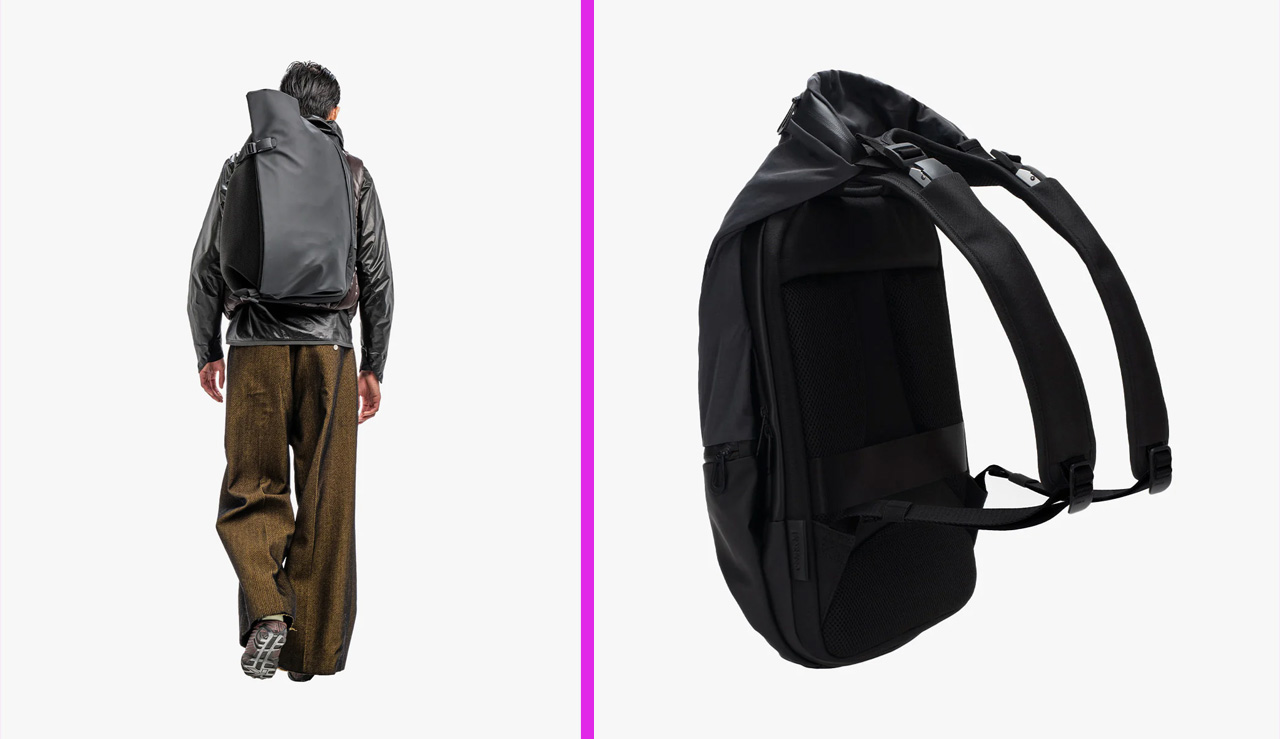
The story of the Isar — Côte&Ciel’s iconic bag — started with designing something for her partner who needed something practical for work. He required a bag that could carry his computer and his running gear. “He was a designer, a bit messy with the daily things, but very organized with his work things,” she recalls. “So that’s why I divided the bag into two parts: computer under the shoulder strap to be overprotected and a huge simple very minimal piece of fabric at the front so he can just throw things in.” Nothing more, nothing less. At that point, people were coming off Blackberries, starting to use iPhones for day-to-day work and life. There wasn’t really a fashion brand catering to the traveling creative who was always on the move and needed gear built for that reality.
What emerged was something unexpected, deliberately defying existing bag norms. Arnault remembers that in 2008, everyone was “obsessed with protection” and “very proud to carry computers” – leading to computer bags that looked like computer bags. “I wanted to do something completely different,” she asserts. She wanted tech hidden, “everything looking like technical zippers, you couldn’t see them.” She challenged conventional backpack design, which assumed a top-opening when placed on a surface. “Come on,” she thought, “a backpack you never put it on a table, it’s on your back… you turn it on your shoulder and you open it.” She rejected the categorization of bags into business, sport etc. The Isar was designed to transcend those boxes.
This wasn’t an accident. Arnault doesn’t design the way most bag makers design. Her process is one of constant “experiment.” “I just have an idea. I don’t have a drawing. I don’t draw,” she explains. Instead, she begins with a roll of fabric in her hand. “I just manipulate it like a kid would do with play-doh,” she says. This allows for a “conversation with the material.” If the fabric resists a certain shape, she tries something else. Functionality, then, isn’t pre-imposed but “integrating into the system by itself.” Zippers, for example, might initially be about creating a certain volume, only later revealing themselves as pockets or entry points.
Her refusal to draw as a first step is a key differentiator. She likens it to a musical composer: “When you are a composer, it’s not possible to create music without the sound, right? You need the sound to create music.” For Arnault, the fabric is the sound. “A fabric has a sound. A fabric has a touch. It has even a smell,” she insists. “You cannot have it with paper… I need this to create.” While drawing can be a way to communicate an idea, she believes it can “fake beauty” that the material itself cannot sustain.
It’s an approach that sits somewhere between industrial design and sculpture, where bags are akin to buildings. “I’m using, I’m creating shapes with a simple surface. So most of what you see outside is linked to what is inside,” she elaborates. Just as a building’s inner walls create its outer form, the lining inside her bags can create “inner tension to control the outer shape.” This relationship means that mockups and prototypes are crucial in development, as the “beauty outside is linked to the inner beauty really.” It’s all about physics – tension, push, and pull that define the object.
Her interaction with textiles is equally intuitive. “I cannot tell you,” she says when asked about finding the perfect fabric. She recalls a friend laughing at her in fabric markets because she wasn’t looking, but “touching everything.” It’s a “blind approach,” deeply linked to the subconscious. The handfeel of a fabric dictates its destiny: thick textiles naturally lead to “very sleek shapes… with long curves,” while light fabrics need to be “hurt… to twist it to create crinkle in order to have a resistance” and build tension. It’s part of the magic, something she cannot control, a welcome relief in a world obsessed with control.
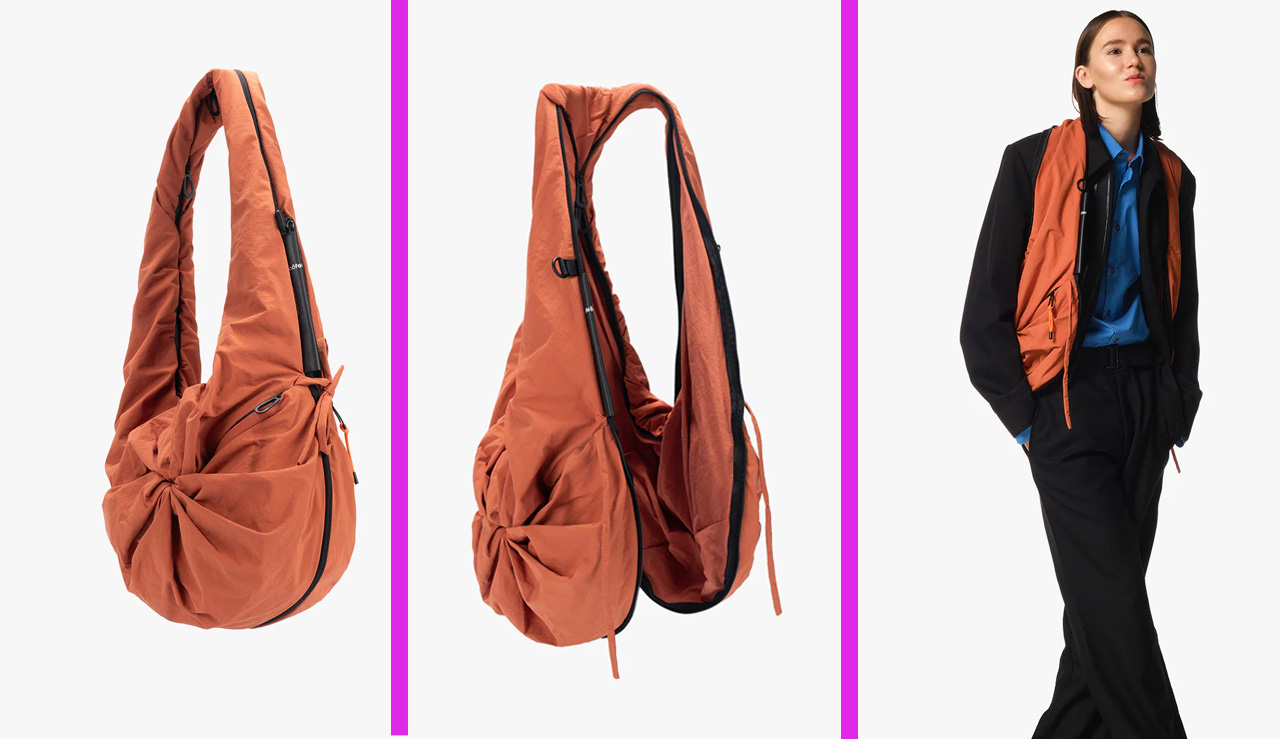
This freedom allows her to embrace a highly subjective view of functionality. For Arnault, functionality isn’t just about numerous pockets or straps. “A bag which is tremendously nice for a person who wants to express individuality,” she explains, “that’s already… functionality.” The Isar, for example, doesn’t stand straight on the floor, a feature some find inconvenient. But for Arnault, its primary function is to be carried on the back. If you want a bag that stands, “you take a briefcase, you take a luggage.” Its functionality is for the person on the move, for the “messy” designer husband who needs both work and sport hidden seamlessly.
The perpetual energy in her designs comes from this “playful aspect” of constantly asking, “What if I do that?” She finds infinite possibilities in manipulating materials. “It’s building stories in my head,” she says. “That’s the energy.” But she also credits the context and the people she works with – their vision, their needs, and the changing market – as creative constraints she strives to turn into something positive.
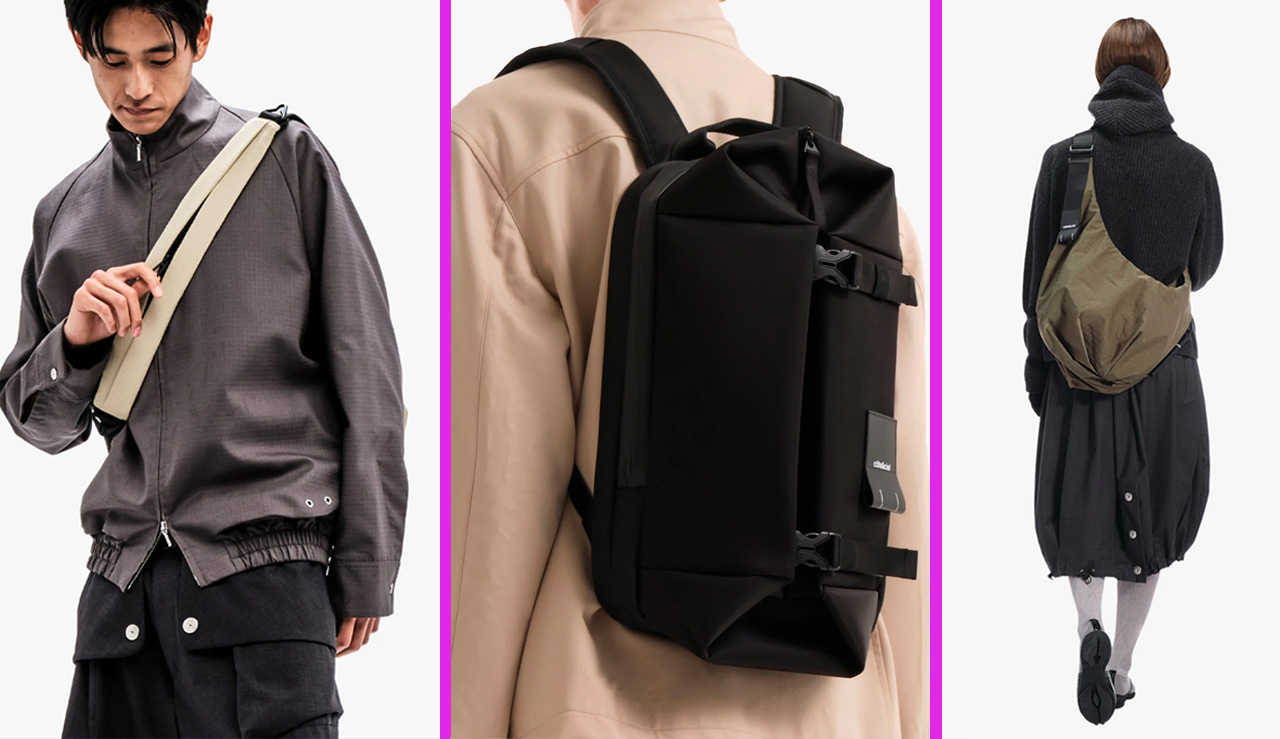
Ultimately, Côte&Ciel strives to transcend mere bag-making. “We want to create objects, not bags,” she states. The brand aims to create “functional shapes” that take on different meanings and uses depending on the wearer. “What makes the difference between bag and garment?” she muses, noting both are made of fabric. “What do you put inside? When you wear a backpack… your body is also inside of the bag.” This blurring of lines, this “experimenting the liminal space between a garment and a bag,” is the direction they are taking.
“When you’re creative, you also need a box to be able to think out of the box, right?” Arnault says. “And that box, I’m not afraid of it.” It’s this balance—between freedom and constraint, between feeling and thinking, between sculpture and utility—that defines her work.
And it’s this balance the carry world needs more of.






Michael Knispel
Editor-In-Chief
Mike’s our editor-in-chief, storyteller, and master traveler. He’s been at the helm for over a decade, spearheading our stories, partnerships, and brand at large.



 WAYS TO CARRY