



 Carry Awards
 Insights
 Liking
 Projects
 Interviews
 Carry Candy
 Community and Marketplace
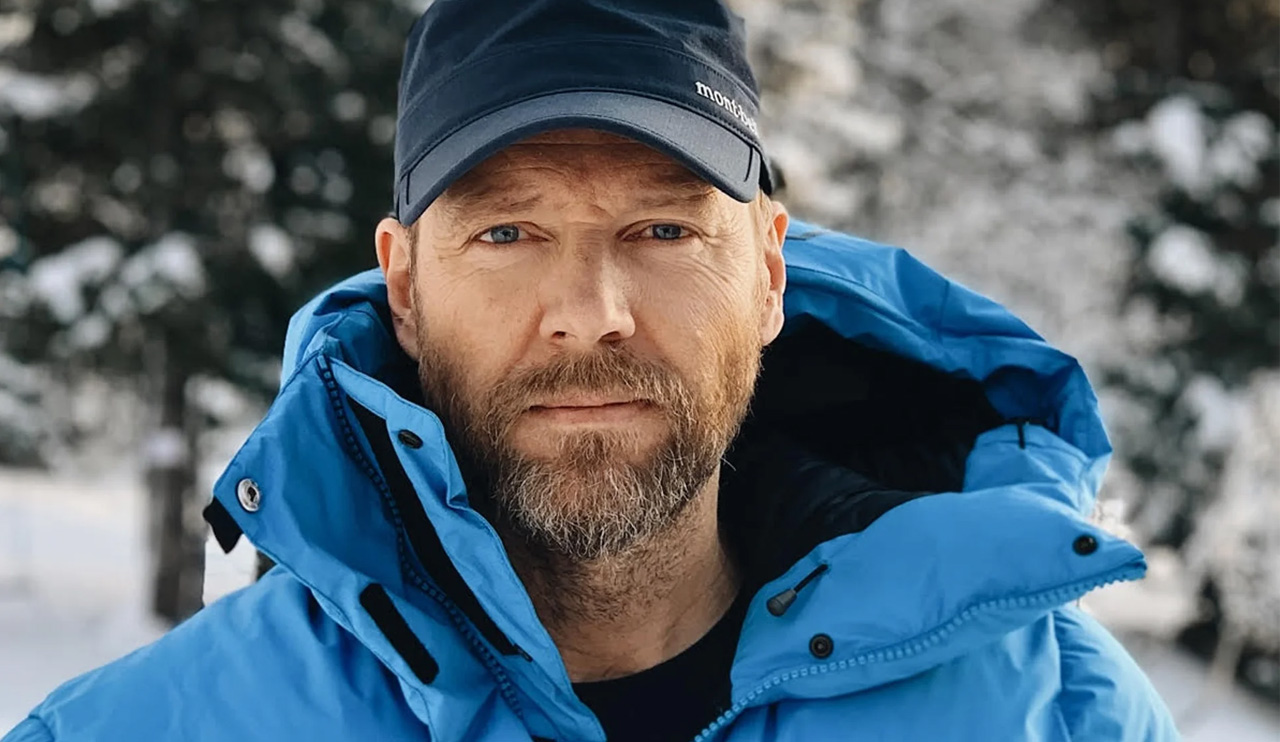
There’s a particular kind of madness required to succeed in the outdoor industry—and then there’s the kind required to actively resist it.
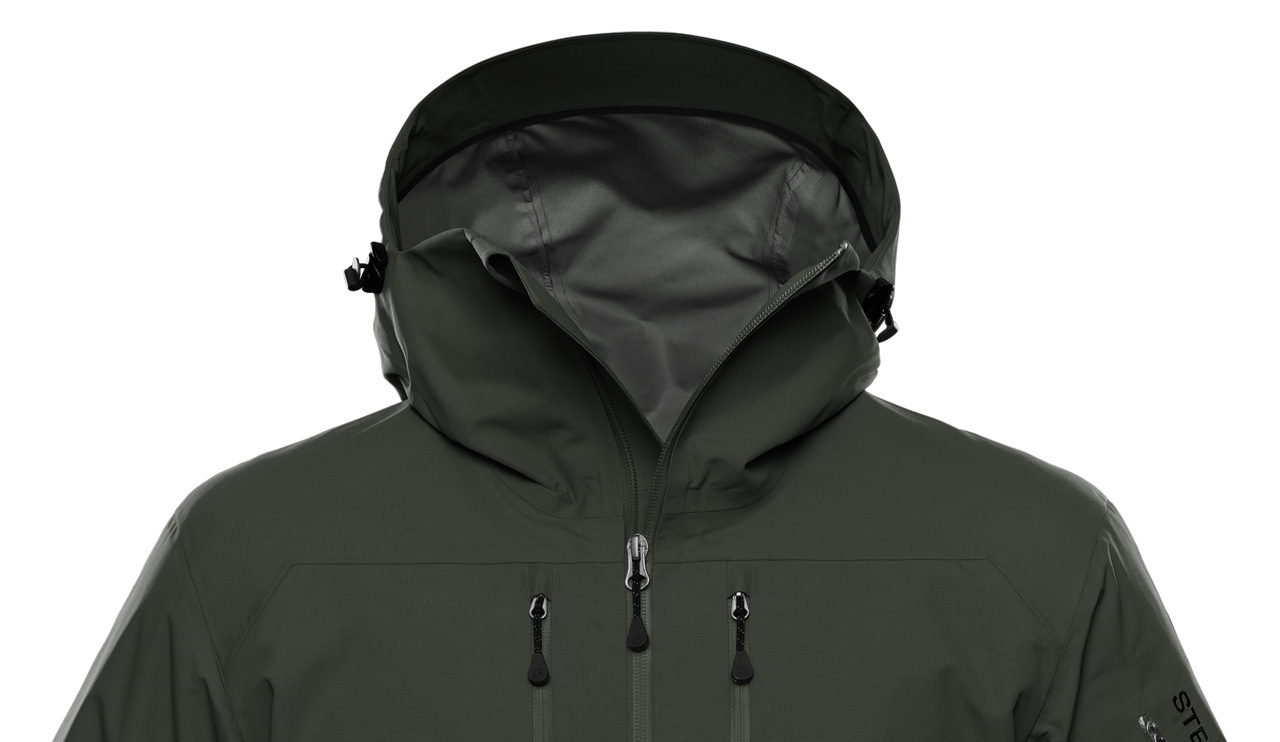
Most brands live and die by the calendar. Spring/Summer drops in January. Fall/Winter hits shelves in July. The outlet cycle begins before the season even ends. It’s a hamster wheel of newness, and everyone from factory floor to sales floor is sprinting just to stay in place. Then there’s Stellar Equipment. The Swedish brand has spent the last decade doing something that sounds either brilliantly subversive or commercially suicidal: they simply refuse to play the game. Their best-selling Shell Jacket went untouched from 2015 to 2021. Not because they got lazy, but because it didn’t need to change.
Stellar’s approach is different: fewer products, better materials, no markdowns, no outlets. Buy once. Use it for a decade. We sat down with their founder to talk needles-per-stitch, aerogel insulation, the death of the outlet model, and why sometimes the most radical thing a brand can do is change nothing at all. So we sat down with co-founder John Crawford-Currie and thought we’d share the whole interview here.
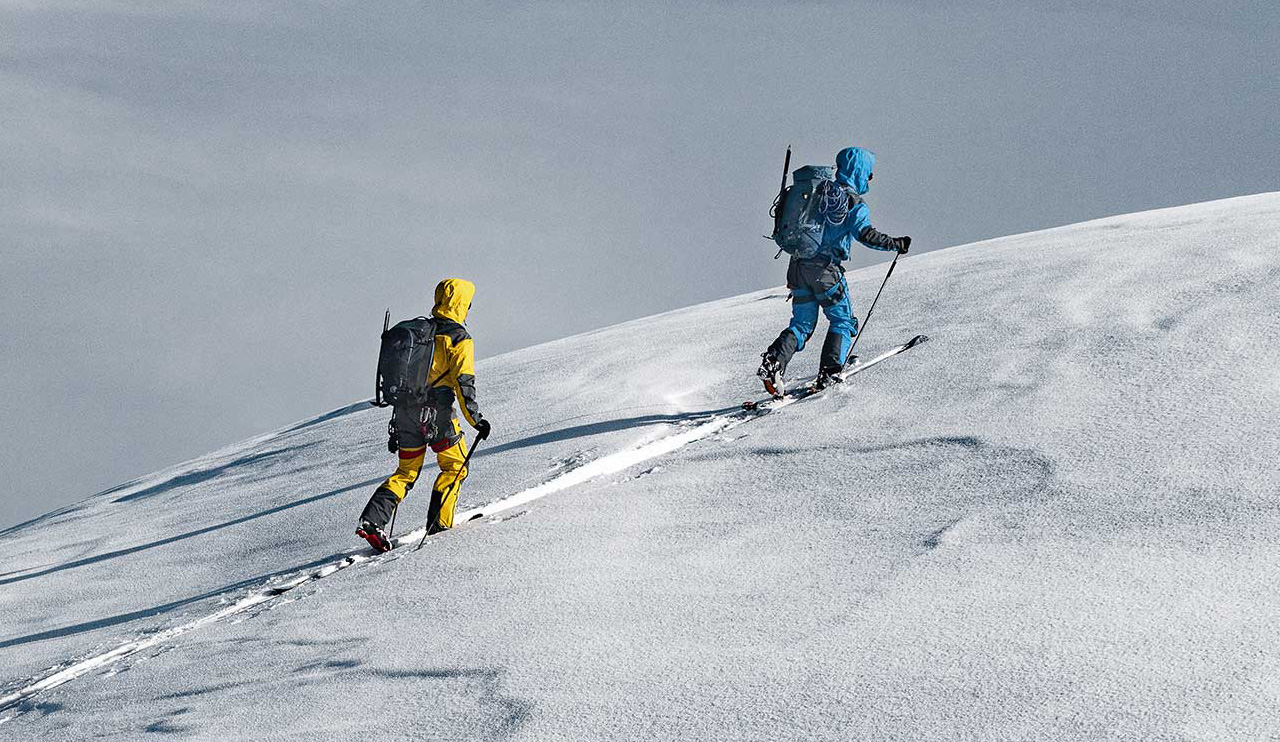
Q: In an industry driven by seasonal churn, Stellar Equipment famously left its best-selling Shell Jacket and Ultralight Down Jacket unchanged from 2015 to 2021. You have stated that you only change a product when you find superior materials or conceive an enhanced design. From an engineering perspective, what specific material or construction thresholds must be crossed to trigger a “2.0” update? How does refusing to adhere to a traditional seasonal calendar allow you to conduct deeper R&D into the durability science of your gear compared to the standard “6-month refresh” cycle?
A: Usually a 2.0 starts in one of two places: our team (staff / athletes / ambassadors) start to comment on something in a very similar way, so it becomes obvious there’s a detail we can improve. Or our customer service gives us a heads up that something looks like a pattern, not just a few random cases. They are all skiers and outdoor people, so they’ve become very good at raising that flag.
One striking example was down leakage on one garment — but only in one color and only a few sizes. After a pretty painful investigation the factory discovered that one production line was running too many stitches on each needle. Those needles are German-made and coated in black to keep friction down, but you can only use them for a set amount of stitches. After that they get dull, and you can get leakage. Now they’ve installed a control system at the factory where needles have to be checked and measured before you get a new one.
Other times it’s wear that doesn’t show up until years in — like ventilation zippers rubbing and slowly chafing the fabric, or small hardware issues because suppliers change processes.
On the material side, Stellar Shell 2.0 was exactly that kind of threshold: we moved to a new 3-layer Dermizax™ NX with a 100% pre-consumer recycled nylon face fabric. The recycled part was interesting, but what made it a no-brainer was that it also had better hand feel and better durability — and in that case we basically rebuilt the whole jacket while keeping the DNA.
If you want a simple “engineering threshold” from our side: it’s when the change is measurable in real use — durability, breathability, handfeel, weight-to-warmth — and it’s a big enough step that it motivates a full update and retooling.
And the no-season calendar helps in a very practical way: it gives us time to let products age in the real world, collect feedback directly, and actually iterate properly. That’s basically the whole idea — we only update when we can actually improve something.
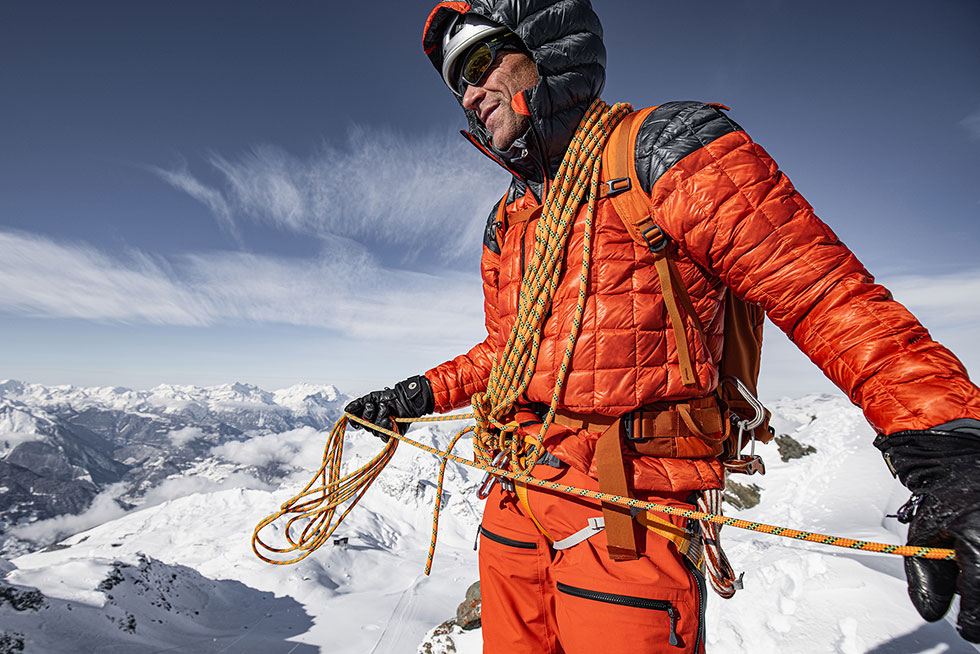
Q: You have been vocal that the outdoor business is stuck in a system where cost-effectiveness and hype often trumps great design, promoting a churn mentality through constant new collections. How does your direct-to-consumer model, which removes the pressure from retail middlemen to fill shelves with “new” items, specifically impact the longevity of the materials you choose? If you aren’t designing for the outlet rack, are you able to use construction techniques, like specific seam allowances or laminations, that wholesale brands simply cannot afford?
A: Short answer — yes. But of course it’s more complex.
DTC removes a lot of the “newness pressure”, and it means we can put more of the money into the product itself. We can use very high-end materials that are hard to motivate in a traditional wholesale model, where you have to protect margins for distributors and retailers and still end up at a competitive shelf price.
A good example is our shell fabric. Dermizax™ NX is one of the best membranes out there right now, and for our use, it hits a really good sweet spot in breathability and durability — and those two things are the most important for the type of skiing and use we build for. On the insulation side, we can do things like 1020 fill power in our Hyperlight Down Hoodie in four colors, which is pretty unusual. And our Ultralight Down Hood is 850FP in a beautiful Japanese 10-denier ripstop, and we run it as hoodie, jacket and vest, for women and men, in a full color range. Only very big brands can match that kind of program.
And yes, it also shows up in boring things like seam construction, reinforcements, and lamination choices — details that don’t photograph well, but that are expensive to do right.
But to be honest, one of our biggest challenges is also the downside of being online only: people don’t get to touch the fabric in a shop. I remember walking through one of the big stores in Chamonix, touching jackets from all the big brands, and thinking: we put an almost stupid amount of effort into handfeel. And then it hit me: nobody gets to experience that unless they already own one of our pieces.
Another thing that’s underestimated is color continuity. People want to look good, but most people don’t buy a full 7-piece layering system in one year. So when they come back a year or two later to add a missing layer, they really appreciate being able to find the same colors and make the system work visually over time.
That said — DTC is not some magic advantage anymore. Overhead has skyrocketed, and in reality we’re competing with Netflix, Nike, Wendy’s and Duolingo for attention on that little screen. Every day we’re not communicating online is basically a day where we don’t exist.
And the other limitation is that when you go down into shorts, tights, tees — the competition hardens and suddenly you’re also up against Adidas, Lululemon, Uniqlo, even H&M, who can produce huge volumes at a totally different cost. Our Uruguayan merino is great, but we can’t pretend we can win that game at a low price point.
So yes — DTC helps us build fewer, better things and keep them in the range long enough to make them great. But it also forces you to be very honest about where you can be world-class — and where you simply shouldn’t play.

Q: Carryology readers are material geeks who appreciate the science behind the fabric. Stellar splurges on things like 1020 fill power RDS-certified down, synthetic insulation developed for space exploration, and other innovative and ultralight fabrics. Could you walk us through the technical “why” behind choosing some of these specific hyper-performance materials? When deconstructing the durability of these components, how do you balance the tension between “ultralight” performance and the ruggedness required for a product intended to last a lifetime rather than a season?
A: Haha — to be honest it’s obsession and nerdiness, and maybe not always so great from a business perspective.
We always ask our suppliers if they have any “new secret stuff”, or materials that are just too expensive or too limited for most brands to bother with. Sometimes that actually happens. The 1020 fill power down is a good example. If I’m honest, the difference between 1000 and 1020 is pretty academic — but we’re attracted to the idea of using the absolute best there is when it’s measurable. And it’s fun to be able to do something the big guys often can’t, because the supply is so small and so expensive.
On the synthetic side, we use PrimaLoft® Cross Core™ Gold in some of our midlayer pants because it insulates even when compressed. That’s a very real use case — you sit in the lift chair and it still works. It’s based on aerogel technology, and you can feel that it behaves differently. It also feels a bit “self-regulating” in use — hard to explain, but you notice it.
We’re also very much about handfeel. A lot of fabrics can have the exact same specs on paper, but it’s the ones that feel right — the drape, the “quietness”, the softness — that are always the hardest and most expensive to get. Two examples I love: our Italian Merino Fleece Blend (double knit, merino on the inside, durable stretch fleece on the outside — feels like wool, behaves like fleece), and the Japanese woven 3D-stretch material we use in Free Padded and Flexlight Hood, where fabric + insulation + stitching becomes one integrated stretchable unit. It’s insanely comfortable and breathable, but still more weather resistant than you’d expect.
When it comes to ultralight we’re not chasing records. Making the world’s lightest down jacket is not that hard — but would it be useful? For us it’s always an optimization challenge: weight, down quality and fill, durability, and the features you actually need. A good example is Guide Hyperlight Down Hood — that’s about as light as we want to go. Extreme, but still usable, and with enough down to actually keep you warm. The tradeoff is that you don’t get all the trims, adjustments, pockets and comfort details — because it’s meant to be a fast-and-light emergency piece, not a daily driver.
And we’ve learned the hard way that if you make something too extreme, it can attract the wrong expectations — and then people are disappointed when it behaves exactly like an extreme product. So we try to be very clear about intent: some pieces are built to be everyday workhorses, others are built as fast-and-light tools. Either way, we’re not chasing novelty — we’re chasing a sweet spot that stays relevant for years.
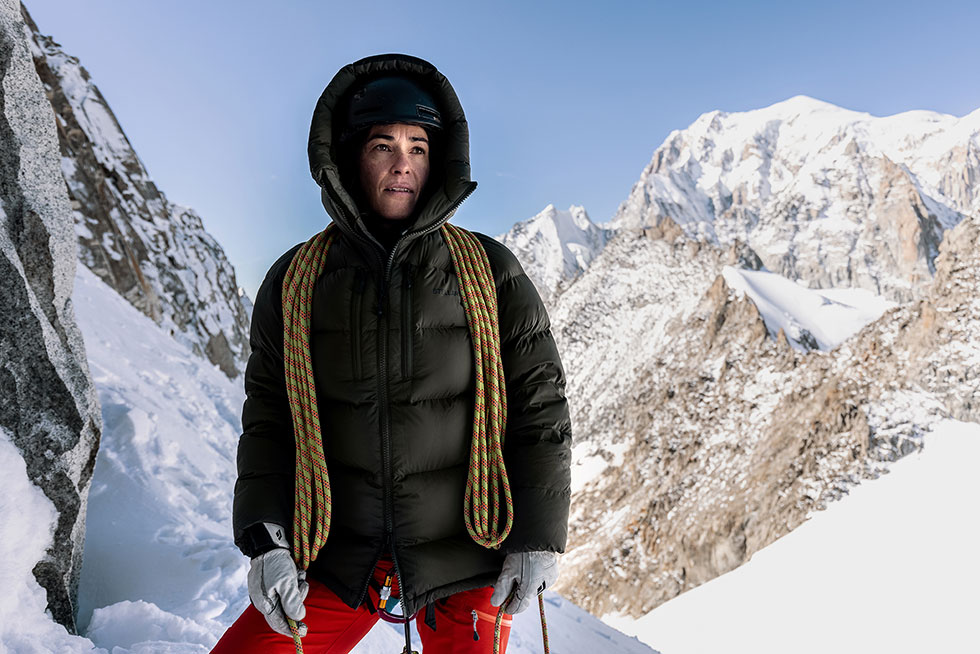
Q: Stellar claims to ensure full control over every manufacturing process by working directly with factories in Japan and the USA that are at the forefront of commercially viable sustainability practices. How does maintaining a direct line to your factories allow you to catch and correct the “micro-failures” (like zipper delamination or seam abrasion) that often plague more mass-produced technical outerwear? Any chance you could give us some insight into what one of those scenarios may have looked like? Secondary to that, does working directly with these specialty factories give you a leg up on innovative and sustainable techniques?
A: For us it’s basically a matter of good relations and physical presence.
When you work direct with the factories, and you’re actually there, you can catch the small stuff early — and when something goes wrong you can solve it like adults, not like lawyers. We always try to overcome production issues through respectful dialogue and root cause work, not penalties. That builds trust, and it also makes it possible to go deeper than “replace the batch and move on.”
A good example is that we actually abandoned welded constructions a few years back. We saw welds failing in real use, and our honest feeling was that it had become more sensitive over time — sweat, wear, maybe changes in compounds. I can’t prove the exact why, but the result was clear enough: it wasn’t as durable as we wanted it to be. So we went back to stitching. For me that’s more craftsmanship anyway — it’s harder to perfect, but it’s also a more intuitive long-term solution. That decision also impacts production lines, so it’s not a small change.
And sometimes it’s not even a “failure”, it’s just quality control and collaboration. We once got a batch of fleece hoodies in the wrong color because someone mixed up numbers in a file and nobody caught it. That’s a serious situation, but we worked it out in a pragmatic way: we accepted them and sold them, and the supplier helped us later by lowering minimum order quantities on other products. It could have turned ugly, but we solved it as partners.
On our side, we don’t outsource this. Our own team is involved, led by our Production Manager Stina Brage and our Senior Designer Karin Kinander, and we work closely with our dedicated production contact at Toray. Depending on the pipeline, we’re there every 2–3 months. That’s the only way you really get control over the “micro” details.
On sustainability and innovation: yes, working with specialty factories gives you a leg up — but it’s not one silver bullet technique. It’s more that you’re in an environment where people are very skilled, very clean, very consistent, and where new materials and processes actually get implemented properly. And to be honest, a lot of “micro-failures” in the industry lately are connected to the fact that regulation is changing chemistry across the whole supply chain. Some older solutions performed better — but they were worse for the environment. That’s a real transition the whole industry is going through.
So it’s not magic. It’s just a situation where 1+1 becomes 3: good factories, close relationships, and being physically present enough to catch small problems before they become big ones.

Q: Stellar Equipment emphasizes its layering system over standalone pieces, focusing on modularity and utility. When you are designing a piece of gear that might not be updated for seven years, how do you future-proof its integration into the wider Stellar System? How does this “systems thinking” approach influence your decisions on fit and articulation, ensuring that a base layer bought in 2018 still functions perfectly with a shell purchased in 2024 or vice versa?
A: That’s a tough one, because it’s not like we have one fixed formula that you can write down on a whiteboard. Materials behave so differently.
But yes — we do have our own fit guidelines that we develop over time. It’s more like a system of guardrails: how layers should stack, how sleeves should move, how a midlayer should sit under a shell without feeling “tight”, that kind of thing. And when we find a technical solution we really like — an adjustment, a trim, a pocket layout — we often end up using it across a range of products. It becomes intuitive for the user, and sometimes it becomes a signature solution for us.
A lot of it is also visual future-proofing. We try to reduce the number of visual elements on our gear, because details that are easy to add to make things look more “exciting” are also what make products age. We call it reductive design. And color continuity is a big part of the system too. Most people don’t build a full layering system in one year, so we’ve worked hard on a palette where you can cross-match almost anything. You can go full monochrome, or spice it up with contrast, and you can still come back two years later and find something that fits into the system.
Fit has evolved as well. We’ve moved from a narrower “European fit” to something a bit more relaxed — not boxy North American, but somewhere in between. A Scandinavian fit. The tricky part is doing that without breaking people’s expectations: a size Large still has to feel like a size Large. But our return rates have actually dropped significantly, so I think we’re getting pretty on point.
And honestly, the best proof is just how customers actually buy. They build systems over time. One customer review basically nailed what we’re trying to do:
“Last item to complete my equipment. Basic colors make it easy for combining pieces. I now run with 2 combos for the entire season… Started 4 years ago and completed step by step… This was possible due to continuity in the line up… So, for once sustainability is not a wasted word.”
When someone writes that, you think: ok — they really got it.
Q: You’ve noted that many brands market themselves as “sustainable” while simultaneously shipping vast amounts of surplus inventory to outlet stores to clear space for “new” collections. It can feel like “eco-materials” are often used to mask the wastefulness of the business model itself. Do you believe the industry is currently confusing “sustainable ingredients” (like recycled textiles) with “sustainable systems”? Why is the industry so hesitant to address the “wear-and-tear mentality” and the massive environmental footprint of the sales cycle itself (trade shows, sample production, and outlet distribution)?
A: Hey — we’re not perfect. We make new stuff, made from plastic. That can never be “sustainable” in the pure sense. So for us the baseline is just: let’s try to do things in a better way where we actually can.
My simple definition is: buy less, but buy better. Quality over time. A product that stays in use for years will always beat a “good material” used in a throwaway system.
There’s been a revolution in recycled materials. Some of it is genuinely great. But the rhetoric is also misleading. A fashion item made from recycled fabric is still a fashion item. A t-shirt with an environmental slogan is still a t-shirt. And the customer can’t really see what’s going on in the supply chain anyway.
What we see in testing is that it’s not obvious. We can find recycled fabrics that look great and feel great — then we get the lab reports and it’s just “sorry, no.” If it lasts half as long, is it really better? Durability matters, because wear is also pollution.
At the same time, we’ve also found recycled fabrics that are amazing. The ultralight recycled Japanese 10-denier fabric we use for our Ultralight Down Concept is incredible — you feel the quality immediately, and people use them hard, and they still hold up extremely well. So it’s not “recycled bad” — it’s just not automatic.
And then there’s the bigger issue: the system. The markdown / outlet cycle is completely insane. Brands run 30–40% off in early January — some already in December — and at the same time they’re out selling “next year’s” product to retailers, often basically the same thing in a new shade. Add Black November on top and it becomes this exhausting race to the bottom. Retailers are getting fed up too — it’s constant price pressure and surplus management.
Why don’t brands change? Because they’re stuck. To change the system you’d have to tell retailers: “sorry, no new stuff next year — you’ll just have to keep selling what you already have.” That sounds insane in the traditional model, even if it’s the only honest way out.
What we try to do instead is system-level: we don’t do seasonal collections, we don’t use discounts/outlets as a business model, and we keep color continuity so people can build their kit step-by-step over years instead of replacing everything. It doesn’t solve everything, but at least it attacks the root problem, not just the ingredients.

Q: In the traditional wholesale model, a significant portion of the retail price goes to distributors and retailers rather than the product itself. When a traditional brand has to feed a wholesale network, where does the “quality compromise” usually happen first? What should customers look for under the hood? What are you most proud of not compromising on in this regard?
A: From my experience, the first compromise in wholesale is usually the top products. The ones you really want to do — the big down pieces, the best fabrics, the “1000 fill power” type of ideas. There’s a reason so few brands make truly great big down jackets. They’re expensive, risky, and hard to sell through a traditional network.
Next comes the details. Long ventilation zippers get shortened. Trims get removed. Pockets get removed. Things that sound small on paper, but that actually change the experience a lot in real use.
If you want to look “under the hood”, the simplest tell is honestly fabric handfeel. It sounds complicated, but it’s not. Compare two down jackets, close your eyes, feel the fabric. You’ll know which one is better. Shiny, plastic, rubbery feel — that’s usually a cheaper fabric. Same with shells: those loud, crinkly 3-layer jackets… it doesn’t have to be like that. Great 3-layer shells can be smooth and quiet, but it’s harder to make, and it costs more.
Then look at execution: seams that are clean and smooth, folds that sit sharp, and details you can actually use. Pullers you can reach with gloves, when you’re wearing alpine gear and a backpack. That kind of stuff is not glamorous, but it’s what makes gear disappear when you’re moving. For me the best gear is the one you forget you’re wearing — that’s kind of the ultimate goal for a layering system.
For down, the big thing is loft and the right amount of fill. It’s a bit counterintuitive: people sometimes mistake “heft” for warmth. But warmth comes from loft and trapped air. If you overstuff a baffle so it can’t loft properly, you’re not getting the benefit you think you are. Loft matters more than weight.
And from a deeper perspective, the biggest difference is feedback. If you buy a piece from a wholesale brand this winter, it was on the design table two years ago and shown at trade shows last year. If you have comments next winter, those comments are on a three-year-old product that is already “done.” That’s not a moral thing — it’s just the structure.
So what I’m most proud of is actually our direct line to customers, and the continuity we can build. Even if we also compromise sometimes, we’ve been able to make some pretty serious top-of-the-line pieces — like Hyperlight, our Expedition Down Parka, and the Aerogel range — and at the same time keep something as basic (and important) as color matching consistent across the full system over time. That matters more than people think.
And just to be clear — this isn’t about hating on retail. Retail is important, especially in ski towns and local communities. It’s just a tough system for building long-life products.
Q: You’ve built Stellar Equipment around the principle that we should buy less, but buy better: It can feel like a lonely path to walk away from the traditional retail calendar. As a product enthusiast yourself, are there other designers or brands in the carry or outdoor worlds that you feel are successfully executing this same ethos that our readers should keep an eye on? Who do you personally look to for inspiration when it comes to maintaining sustainable quality and resisting the pressure to constantly reinvent the wheel for the sake of sales?
A: I was very impressed with Rapha when they started. Clean designs built in systems, easy to build a timeless kit, and a culture/community where you could feel they were “in the know”.
I also think Houdini have been doing a great job. Great branding, very Scandinavian cool, and an uncompromising devotion to sustainability. Different from us, but very well executed.
And Arc’teryx… they’re kind of the goat in my mind. They brought technical excellence into the outdoor world for a much wider community. And yes, I think they might be straying a bit now — you can read it between the lines — but you can’t argue with what they’ve done.
Outside apparel, I have a lot of respect for Hilleberg. They basically do exactly what they want to do, and people wait for it. That level of discipline is rare.
In the carry world, I’ve also been into Shimoda Designs — really well thought through camera packs, proper harness, built for real use.
And in skiing, Season Eqpt. is pretty interesting to me because the philosophy is almost the same as ours — but applied to hard goods. Less churn, more longevity, keep it simple, make it last.
But to be honest — it is a lonely path. People are so used to how the system works that they don’t really “get” us at first, and that makes the economics harder too. Also from a logistics perspective you almost need to be bigger to do what we’re trying to do smoothly. I’d love to sit down and chat with someone who has pulled this off long-term, and ask: how did you scale without breaking the philosophy?







Brandon Vulaj
SENIOR EDITOR
Brandon, Senior Editor, always understands the finer details. He can talk for hours about softgoods, brands and fabric innovation, so hit him up for a chat, on or off the record.



 WAYS TO CARRY