



 Carry Awards
 Insights
 Liking
 Projects
 Interviews
 Carry Candy
 Community and Marketplace
Insights
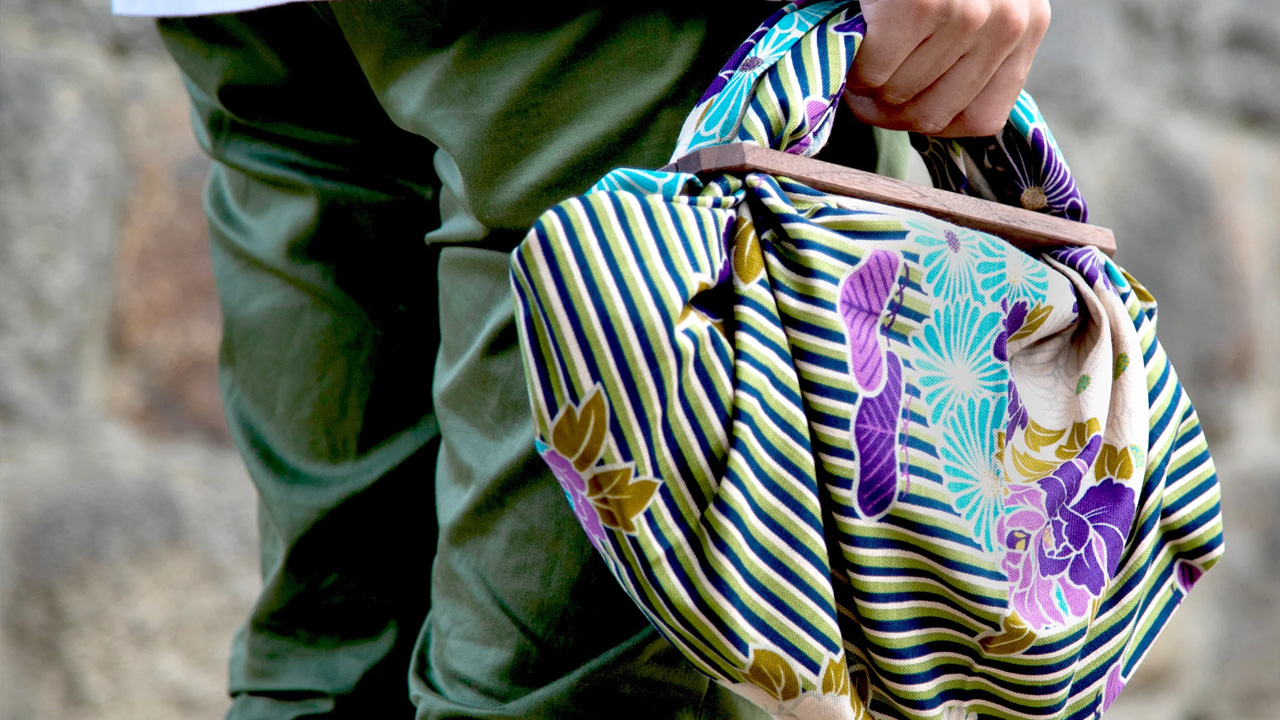
Japan’s oldest bag is a square of cloth.
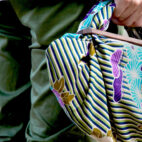
No handle. No zipper. No structure of any kind. Just a hemmed square of fabric that, depending on who is holding it and what they know, can become a tote, a gift wrap, a bottle carrier, a bento bundle, or a wall hanging — in about thirty seconds flat. It has no fixed form because it has never needed one. The furoshiki is as simple as a bag can possibly be, and that simplicity is precisely why it has survived for over 1,300 years.
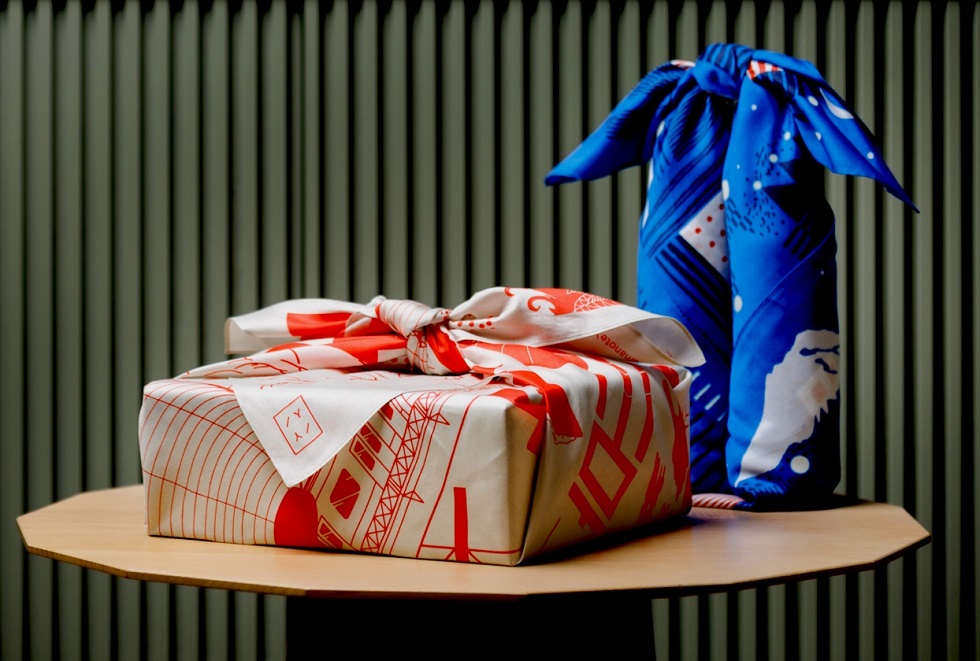
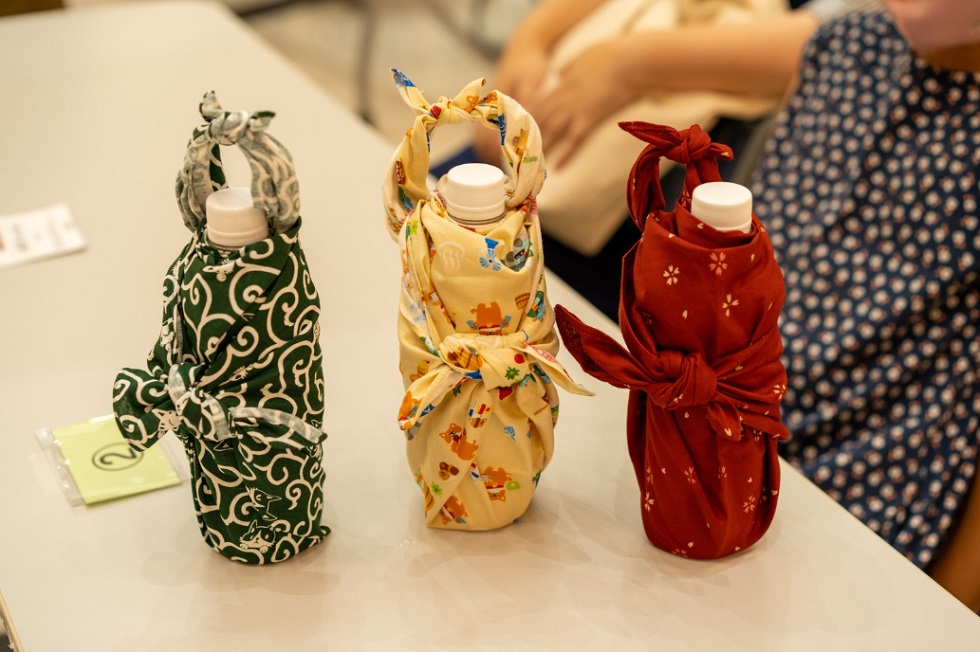
It has been many things in that time. A sacred temple cloth. A bathhouse accessory. A marker of family lineage. An everyday market bag. An environmental manifesto. Each era found something different in it, not because the object changed, but because it never had to. The furoshiki’s genius is that it asks almost nothing of the material and everything of the person using it — and generation after generation, people have risen to meet it.
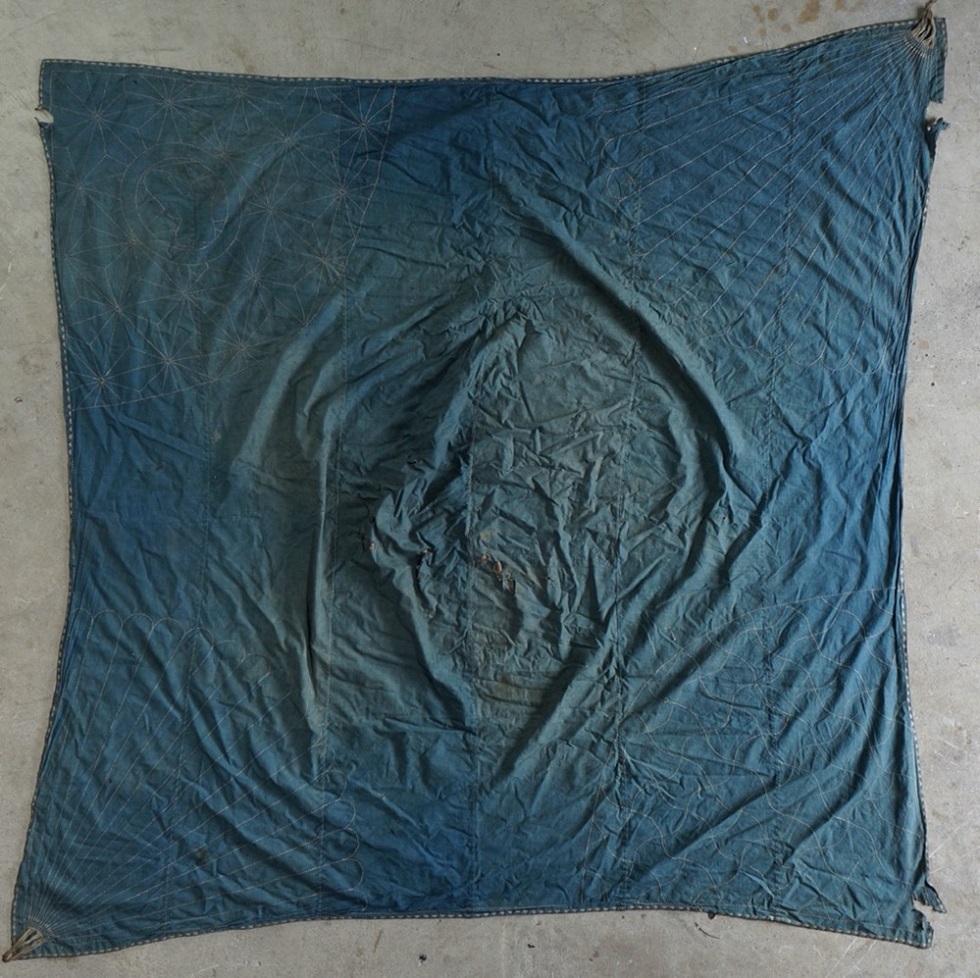
It begins, as so much of Japanese material culture does, in a temple.
During the Nara period — 710 to 794 AD — the cloth that would eventually become the furoshiki was called tsutsumi, meaning simply “wrapping.” Its purpose was not domestic. It was devotional. These cloths were used to protect precious objects inside Japan’s early Buddhist temples: sacred texts, lacquerware, ceremonial instruments. The tsutsumi was not a bag. It was a guardian. To be wrapped in one was to be considered worth protecting.
For centuries, that association held. The cloth carried status by proximity — it touched things that mattered. But history, as it tends to do, had other plans.
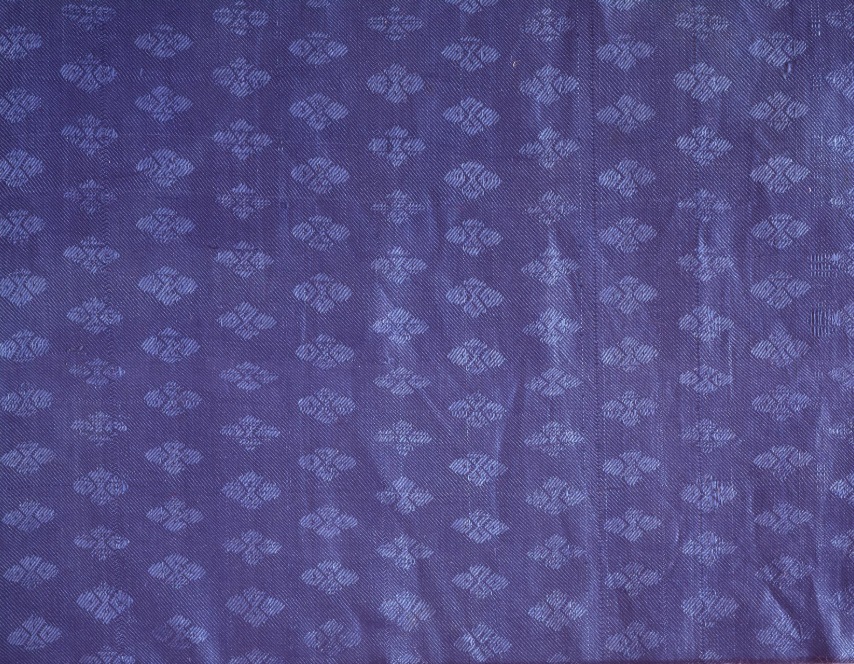
The pivot came sometime during the Muromachi period, around 600 years ago, and it came — improbably — from a bathhouse.
Shogun Yoshimitsu Ashikaga had constructed a grand bathhouse in Kyoto, and he invited the high-ranking lords of the region to join him. The problem, as anyone who has ever used a communal changing room will understand, was one of identity: how do you keep your kimono from getting mixed up with someone else’s? The solution was elegant and immediate. Visitors began packing their belongings in cloth decorated with their family crest — their mon — so that ownership was visible at a glance. When they stepped out of the bath, that same cloth became a mat beneath their feet.
From this moment of aristocratic practicality, a name was born. Furo (風呂) means bath. Shiki (敷) means to spread. Furoshiki: bath spread. The cloth had been named, as the reel script puts it, after its lowest point — the moment it went from wrapping sacred temple objects to serving as a post-bath floor mat. And yet the name stuck, and the object only grew from there.
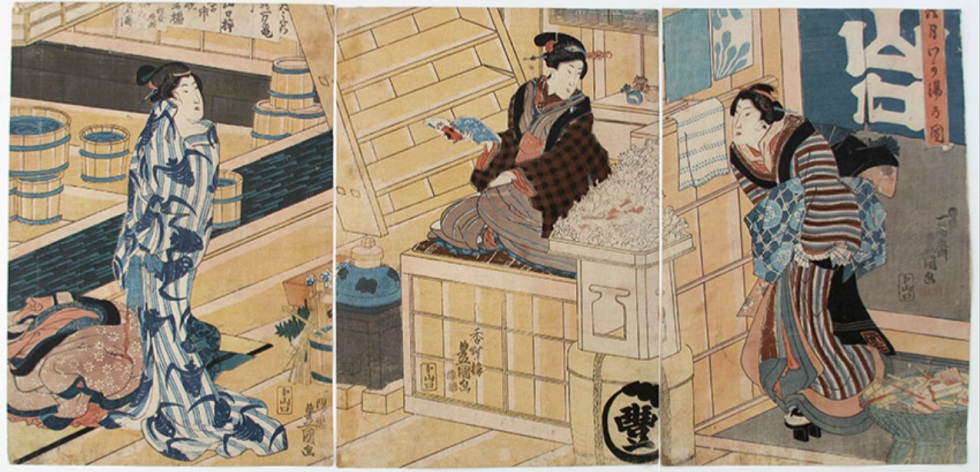
What followed was the democratization of the furoshiki. As public bathhouses became more accessible during the Edo period, the cloth spread beyond the aristocracy. Common people began using it not just at the bath but everywhere: to carry food to market, to transport tools, to bundle gifts, to wrap bento boxes. The family crest — once the exclusive mark of the nobility — became available to common people during the Meiji period, and suddenly furoshiki bearing personal crests were everywhere. The cloth had traveled from temple altar to bathhouse floor to the hands of ordinary Japan, and it had only become more useful along the way.
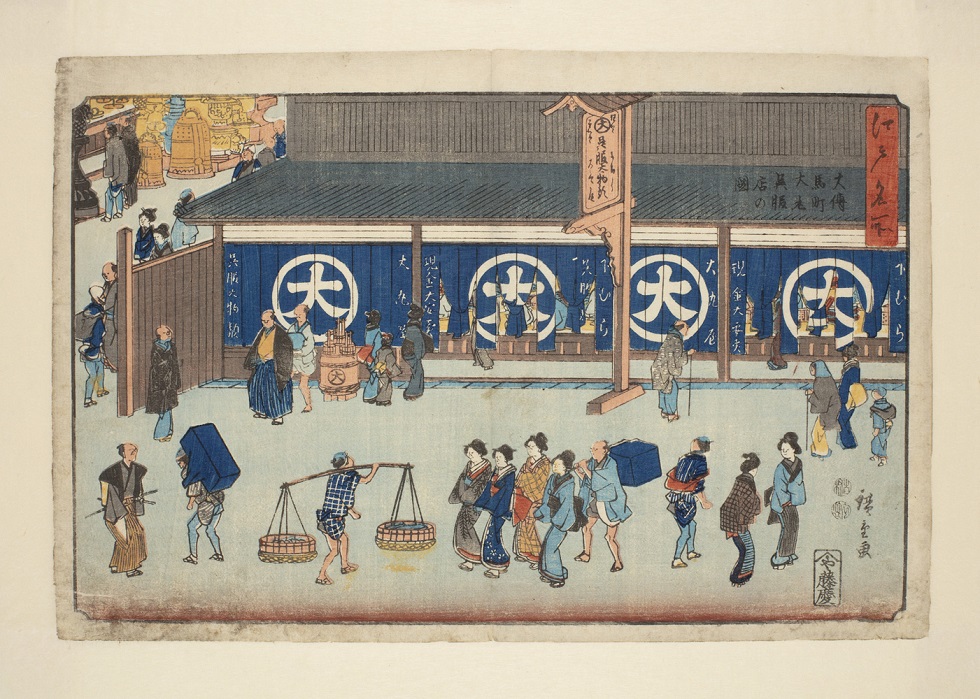
At its peak, the furoshiki was an art form.
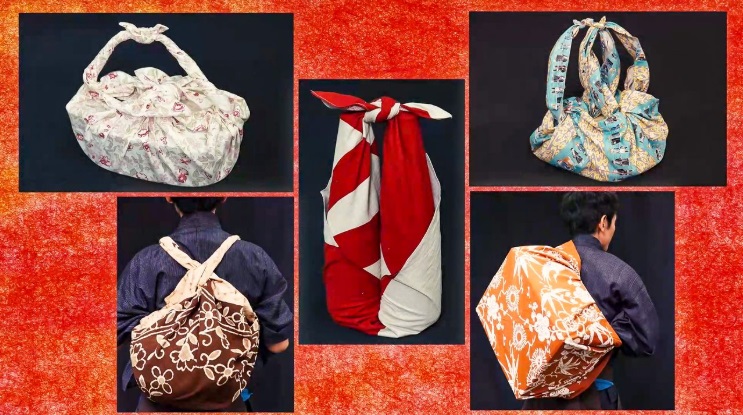
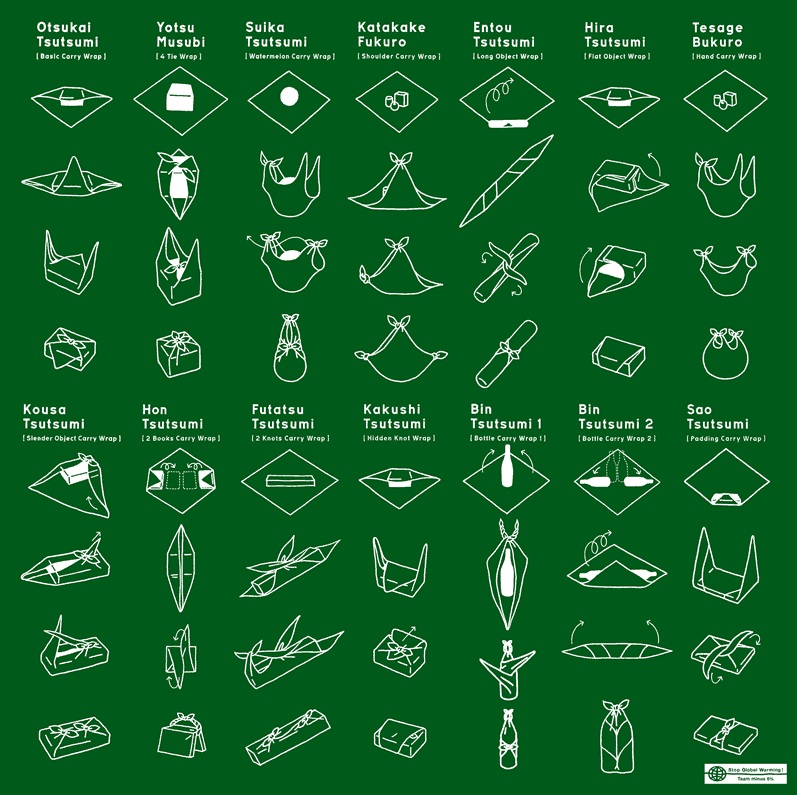
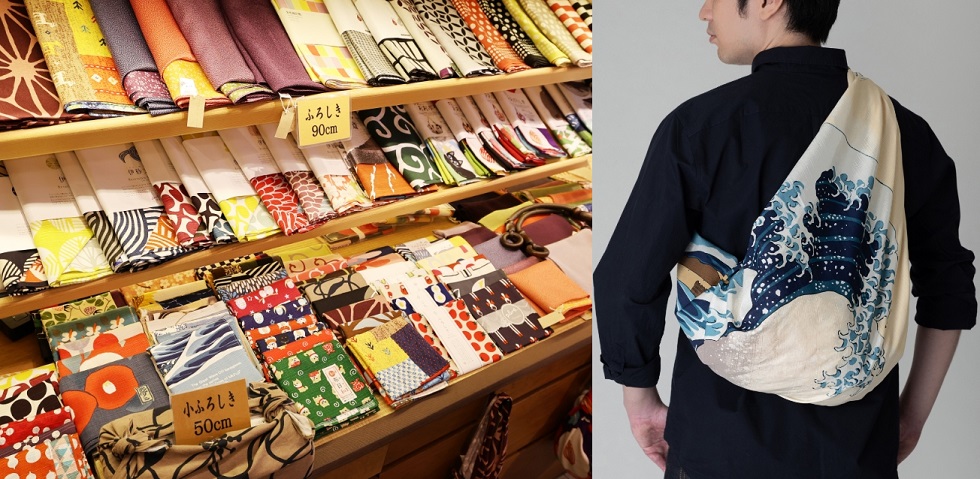
Craftspeople developed dozens of distinct folding and tying techniques, each suited to a different purpose: the hon tsutsumi for books, the suika tsutsumi for round objects like watermelons, the bin tsutsumi for bottles of sake. Sizes ranged from 45 centimeters square — small enough for a bento — to over a meter across, large enough to carry a week’s worth of goods. Materials ran the full social spectrum: silk for the wealthy, with hand-painted designs in cranes and pines and seasonal motifs; indigo-dyed cotton or hemp for those with less to spend. The cloth you carried announced something about you before you said a word.
This was furoshiki at its most confident: a single square of fabric that could become, through nothing more than a few knots, a bag, a gift wrap, a sling, a wall hanging, or a tablecloth. No hardware. No instructions. Just cloth and ingenuity.
Then came the postwar years, and the furoshiki nearly disappeared.
The story is familiar. Japan industrialized, then rebuilt, then modernized at speed. Western goods flooded in. Plastic bags appeared at every shop counter, free and disposable. Paper wrapping was cheap. The furoshiki — which required a moment of knowledge, a practiced hand — began to feel like a relic. Families who had used them for generations set them aside. The cloth that had survived a thousand years of Japanese history was nearly undone by the convenience of a plastic bag.
By the latter half of the twentieth century, furoshiki had retreated to the margins: specialty shops, older households, ceremonial occasions. The everyday object had become a nostalgic one.
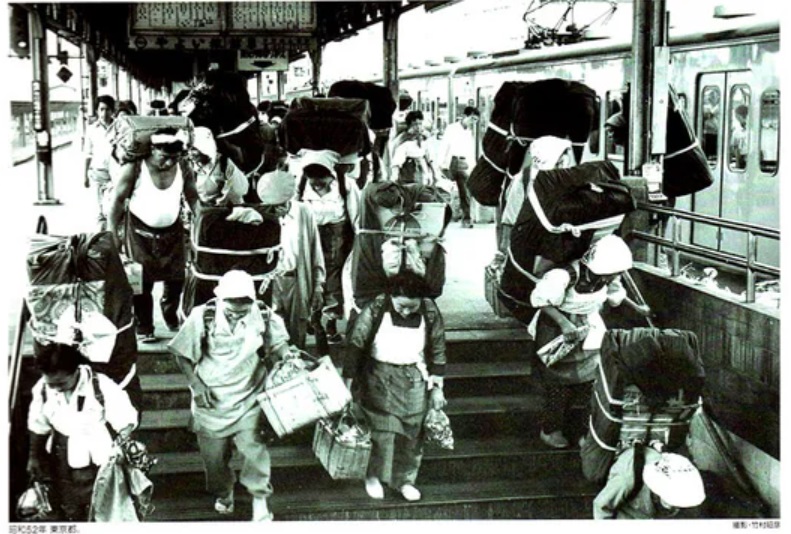
But the furoshiki, true to form, was not finished.
The revival came from an unexpected direction: environmentalism. In 2006, Japan’s Minister of the Environment, Yuriko Koike, stood before the cameras holding a specially designed furoshiki — what she called the “Mottainai Furoshiki” — and made the case for the cloth as a living answer to the plastic waste crisis. Mottainai, the Japanese philosophy of waste not, want not, had always been furoshiki’s quiet ideology. Now it had a platform.
The timing was right. Japan, and much of the world, was beginning to reckon with the cost of disposability. The furoshiki offered something that no reusable tote bag quite managed: it was beautiful, it was ancient, and it required nothing to manufacture beyond the cloth itself. You already owned it. You just had to learn the knots.
The response was immediate. A 2006 furoshiki fair at Tokyo’s Printemps Ginza department store sold 800 cloths in two weeks — a store that had previously moved around ten a month. Manufacturers who had been quietly keeping the tradition alive found themselves with waiting lists. Younger designers began reimagining the furoshiki for contemporary life: as handbag wraps, as yoga straps, as scarves, as bento carriers for the Instagram age.
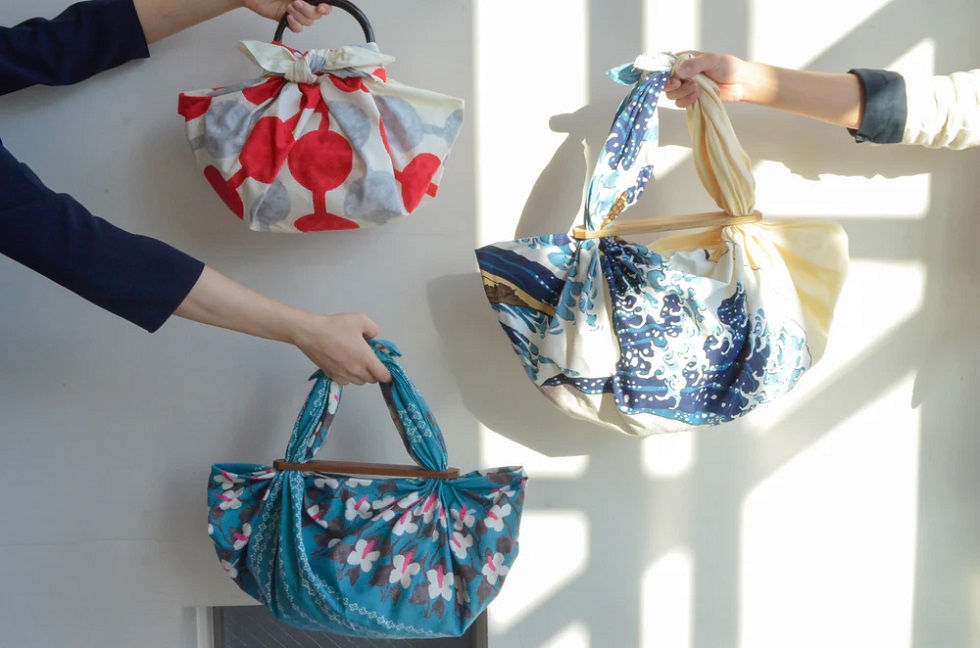
Internationally, the story was the same. By 2020, The Observer was reporting a surge of interest in the UK, driven by the same sustainability logic. The cloth that had once wrapped temple treasures was now being used to wrap Christmas gifts in London.
What makes furoshiki remarkable — what has always made it remarkable — is not any single use, but its refusal to be fixed to one.
Most objects have a purpose and stick to it. The furoshiki has always been something else: a surface for projection, a blank square that becomes whatever the moment requires. In the Nara period, it was reverence. In the Muromachi bathhouse, it was identity. In the Edo marketplace, it was practicality. Today, it is sustainability, and craft, and a quiet argument against the throwaway.
The Ministry of the Environment of Japan has published a guide to 14 different folding patterns. Kyoto manufacturers founded in 1937 are still operating. Designers are incorporating furoshiki handles into modern bags, turning the ancient cloth into a modular accessory system. And somewhere in a bedroom in Tokyo or London or New York, someone is learning their first furoshiki knot from a video, wrapping a gift in cloth instead of paper, and participating — without necessarily knowing it — in a 1,300-year-old tradition.
Look at a furoshiki long enough and you begin to see what it actually is: not a bag, not a wrap, not a cloth. It is a philosophy made textile. The philosophy that nothing needs to be single-use. That beauty and function are not in competition. That the simplest solution, arrived at with care, tends to be the one that lasts.
The furoshiki has been a sacred guardian, a status marker, a bathhouse mat, a street-market bag, and an environmental manifesto. It has been named after its lowest moment and risen from it. It has survived industrialization, plastic, and the postwar urge to modernize everything into obsolescence.
Feature image: credit




Michael Knispel
Editor-In-Chief
Mike’s our editor-in-chief, storyteller, and master traveler. He’s been at the helm for over a decade, spearheading our stories, partnerships, and brand at large.



 WAYS TO CARRY